Ozempic & Wegovy Injection Site Irritation: Fix
Painful lumps, bruising, redness, and lingering soreness are among the most common complaints from GLP-1 patients. Here is why injection sites react the way they do, how to minimize it with technique, and which peptides providers prescribe for patients with persistent nodules or slow healing.
In this article
Key Takeaways
- Most injection site reactions are caused by cumulative tissue damage from re-using the same spot, cold medication, or sub-optimal needle angle.
- Site rotation (at least 1-2 inches from the last injection), room-temperature pens, and a 90-degree angle resolve most cases without any peptide.
- BPC-157 is the first-line peptide for stubborn nodules and slow-healing sites. It promotes angiogenesis at injured tissue and works systemically.
- Normal soreness resolves in 24-48 hours, bruising in 5-10 days, and palpable nodules in 2-6 weeks. Persistent lumps past 8 weeks warrant a provider visit.
- Red streaks, fever, or a hot, growing lump signal infection. Stop self-treating and seek care immediately.
Quick Facts
Most Common
Soreness, bruising, small red spots, palpable nodules
Uncommon but Real
Persistent lumps, hardness lasting weeks
Warn Signs
Hot, growing, streaking, fever: see a provider immediately
Prevention
Site rotation, room-temp pen, slow injection, 90 degree angle
Primary Peptide for Repair
BPC-157 (subcutaneous or capsules)
Timeline
Normal soreness 24-48h; nodules 2-6 weeks; persistent = provider
What You Might Be Seeing
GLP-1 injections are subcutaneous, meaning the needle deposits medication into the fat layer just beneath the skin. Most patients tolerate them well. A meaningful minority develop reactions that range from mild cosmetic annoyance to genuinely painful complications. When you get a peptide through PeRx, it is prescribed by a licensed provider and compounded in a US-based, FDA-regulated 503A pharmacy, the same regulated pathway many everyday prescriptions go through.
The common presentations:
Transient soreness and stinging. A mild ache for a few hours after injection, often worse with colder medication or faster injection. Resolves within a day. This is normal and does not require intervention.
Bruising. Small purple or yellowish marks that appear within 24 hours and fade over 5 to 10 days. Caused by the needle clipping a small blood vessel. More common on the abdomen due to richer vascularization. Not harmful.
Redness and itching. A small pink or red circle around the injection site, sometimes itchy, appearing within an hour and fading within 24 to 48 hours. Usually a mild local reaction to the medication or needle entry, not a true allergy.
Palpable nodules. Small firm lumps under the skin that you can feel but may not see. Most are fluid or minor inflammatory accumulations that reabsorb within 2 to 6 weeks. A few persist and become chronic.
Chronic hard nodules. Firm lumps that persist beyond 6 to 8 weeks. Uncomfortable to sit or lean on. These represent organized scar-like tissue or lipodystrophy (fat-tissue remodeling). They are the main reason patients seek peptide support for this problem.
Why Injection Sites React
Repeated trauma to the same tissue
Weekly injections for months deliver cumulative mechanical trauma to a limited area. Even with perfect technique, the tissue absorbs small amounts of damage with each needle pass. Skin that has been punctured fifty times heals differently than skin that has been punctured once. Patients who rotate sites aggressively (changing body region week to week, not just inches within the same region) have dramatically fewer chronic problems.
Fluid volume distending the tissue
A standard semaglutide dose delivers 0.5 to 0.75 mL of fluid. That volume has to go somewhere. It disperses through the subcutaneous fat, causing temporary swelling and stretch. Patients with thinner subcutaneous fat layers (lean abdomens, upper arms in older adults) have less room for the fluid and experience more pain.
Cold medication
Ozempic, Wegovy, and Mounjaro live in the refrigerator. Cold fluid is more viscous and stings noticeably more than room-temperature fluid. A meaningful fraction of patient-reported injection pain comes down to injecting straight from the fridge without letting the pen warm up.
Needle characteristics and technique
GLP-1 pens use fine needles, but technique still matters. Slower injection (over 6 to 10 seconds) causes less tissue distention than rapid delivery. A perpendicular 90-degree angle deposits medication into the fat layer cleanly; a shallower angle can deposit it closer to the dermis where it irritates more.
Individual healing variability
Older patients, smokers, diabetics with poorly controlled glucose, and anyone on chronic corticosteroids heal slower at the tissue level. These patients develop chronic nodules at higher rates. Post-menopausal women also have less elastic subcutaneous tissue, which contributes to persistent lumps.
Technique Fixes That Actually Help
Before considering any pharmacological support, the following technique corrections prevent or dramatically reduce injection site problems for most patients.
Warm the pen. Remove from the fridge 15 to 30 minutes before injection. Let it reach room temperature. Do not apply heat.
Rotate body regions, not just spots. Three main regions: abdomen (avoiding a 2-inch circle around the navel), outer thighs, upper arms. Rotate weekly across regions. Within a region, move at least 1 to 2 inches from your prior injection point.
Inject at a true 90-degree angle into pinched fat. Shallower angles deposit medication too close to the skin surface.
Inject slowly. Count to 6 to 10 as you press the pen button. Rapid injection forces a volume bolus into a confined space, causing more pain and more tissue distention.
Hold the pen in place for 5 to 10 seconds after you finish pressing to let the medication fully enter the tissue rather than backflowing out the needle track.
Apply gentle cold for 5 minutes after injection if the site is already sore. Ice packs reduce vasodilation and bruising. Do not apply cold before injecting because it constricts vessels and makes absorption less predictable.
For detailed visual instructions, see the PeRx injection guide.
When Peptides Are the Right Call
Peptide support is not for every patient with mild transient irritation. It makes sense when one or more of these apply:
You have persistent nodules lasting more than 6 to 8 weeks that are uncomfortable to sit, lean on, or wear clothing against.
You heal slowly from any skin injury. A normal scratch takes weeks, bruises linger, minor cuts scar more than you would expect. This pattern predicts chronic injection site problems.
You are running out of good injection sites because previous sites are still too tender to reuse. Accelerating healing at the old sites extends your rotation options.
You have active inflammation (redness, warmth, significant tenderness) that persists beyond 72 hours after a single injection. Inflammatory-modulating peptides help resolve this pattern.
The Peptide Options
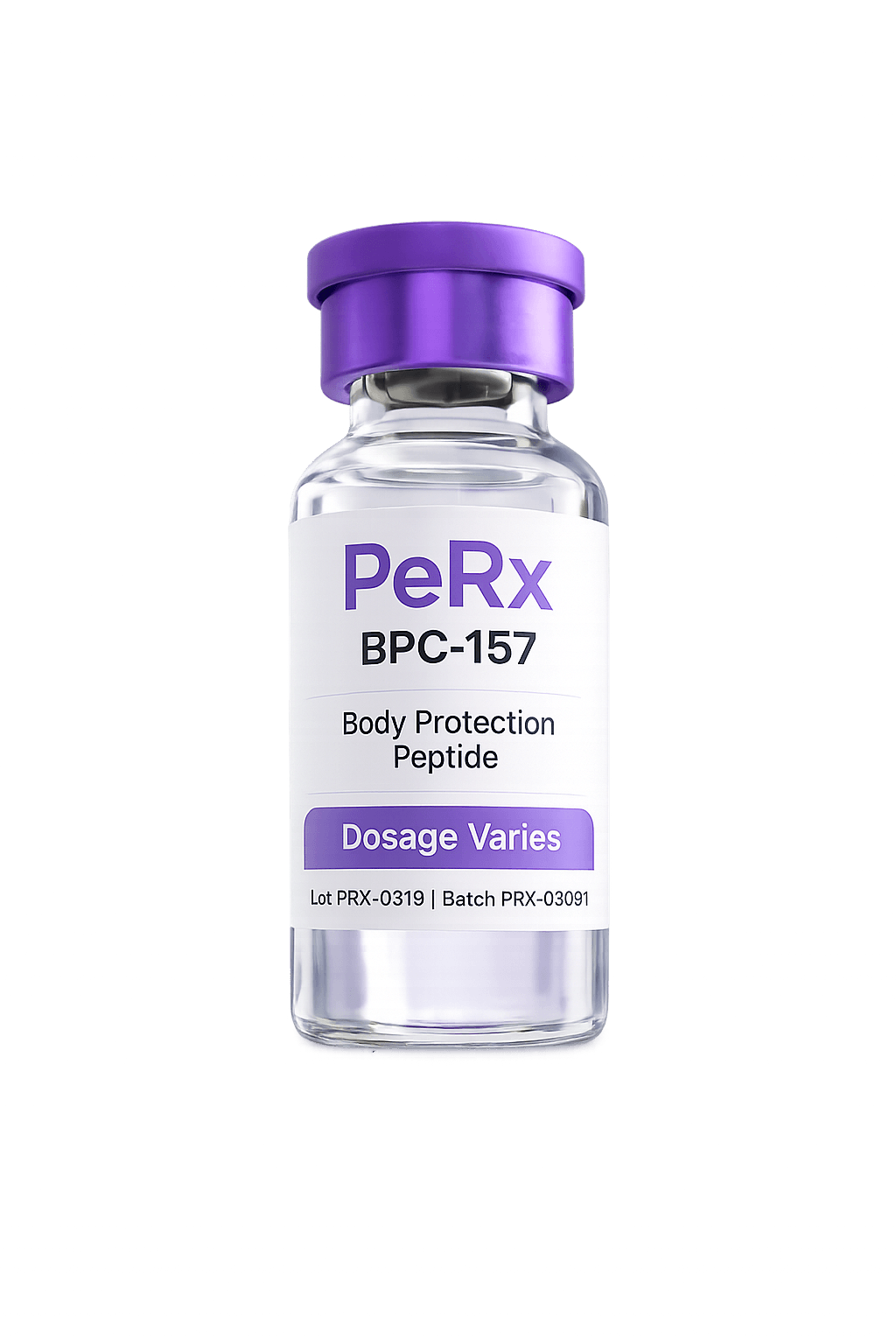
BPC-157 (injectable)
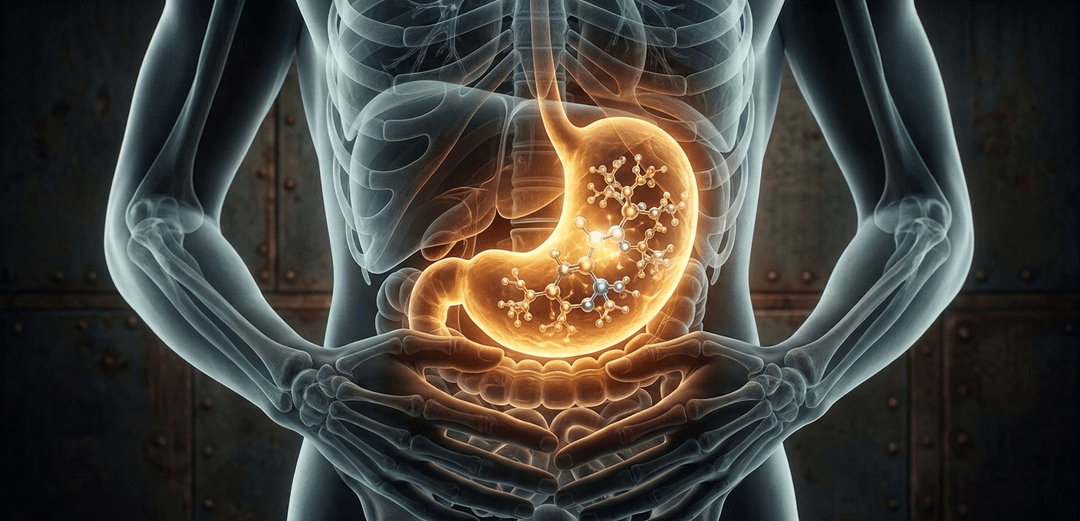
BPC-157 is the first-line peptide for injection site issues. It was originally isolated from human gastric juice for its role in stomach lining repair, but its mechanism, upregulating VEGF, promoting new blood vessel formation, and modulating nitric oxide signaling, applies to any tissue that needs to heal.
For patients with chronic nodules or slow-resolving injection sites, subcutaneous BPC-157 is dosed for 4 to 8 weeks. Most patients notice softening of persistent lumps within 2 to 3 weeks and substantial improvement by week 6. BPC-157 acts systemically, so the injection location does not need to be near the affected site.
Vasireddi N et al., "Emerging Use of BPC-157 in Orthopaedic Sports Medicine: A Systematic Review," 2025. Covers the broader BPC-157 tissue-repair literature. View study
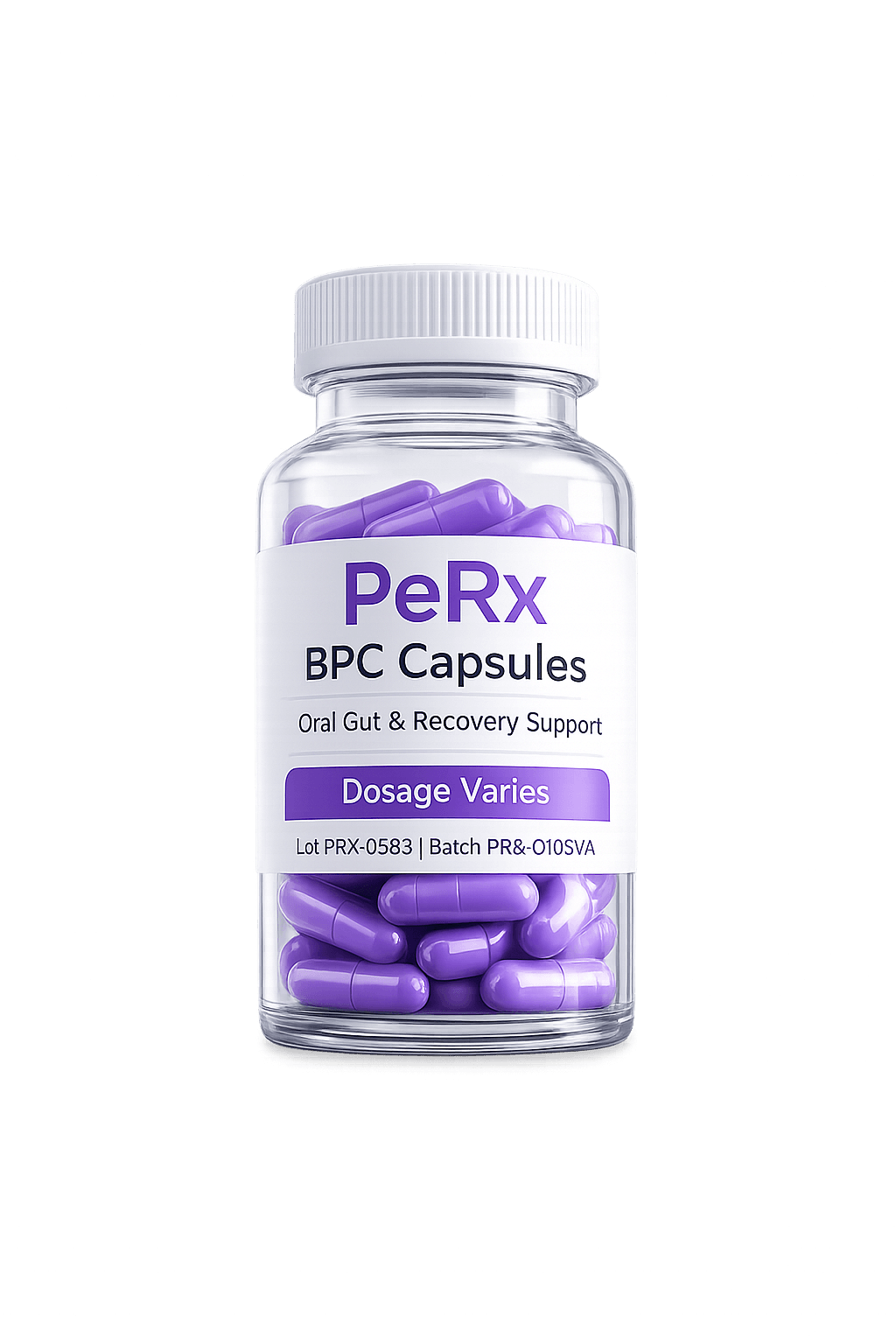
BPC-157 Capsules
For patients who do not want another injection on top of their weekly GLP-1, BPC-157 is also available in oral capsule form. Oral bioavailability is lower than subcutaneous, but the gut absorbs enough for meaningful systemic effect, and localized GI benefits are often stronger with oral delivery.
Capsules are a reasonable choice for milder injection site concerns, for patients with mixed symptoms (site irritation plus gut distress from the GLP-1), and for anyone who feels overwhelmed by multi-injection protocols.
BPC-157 / TB-500
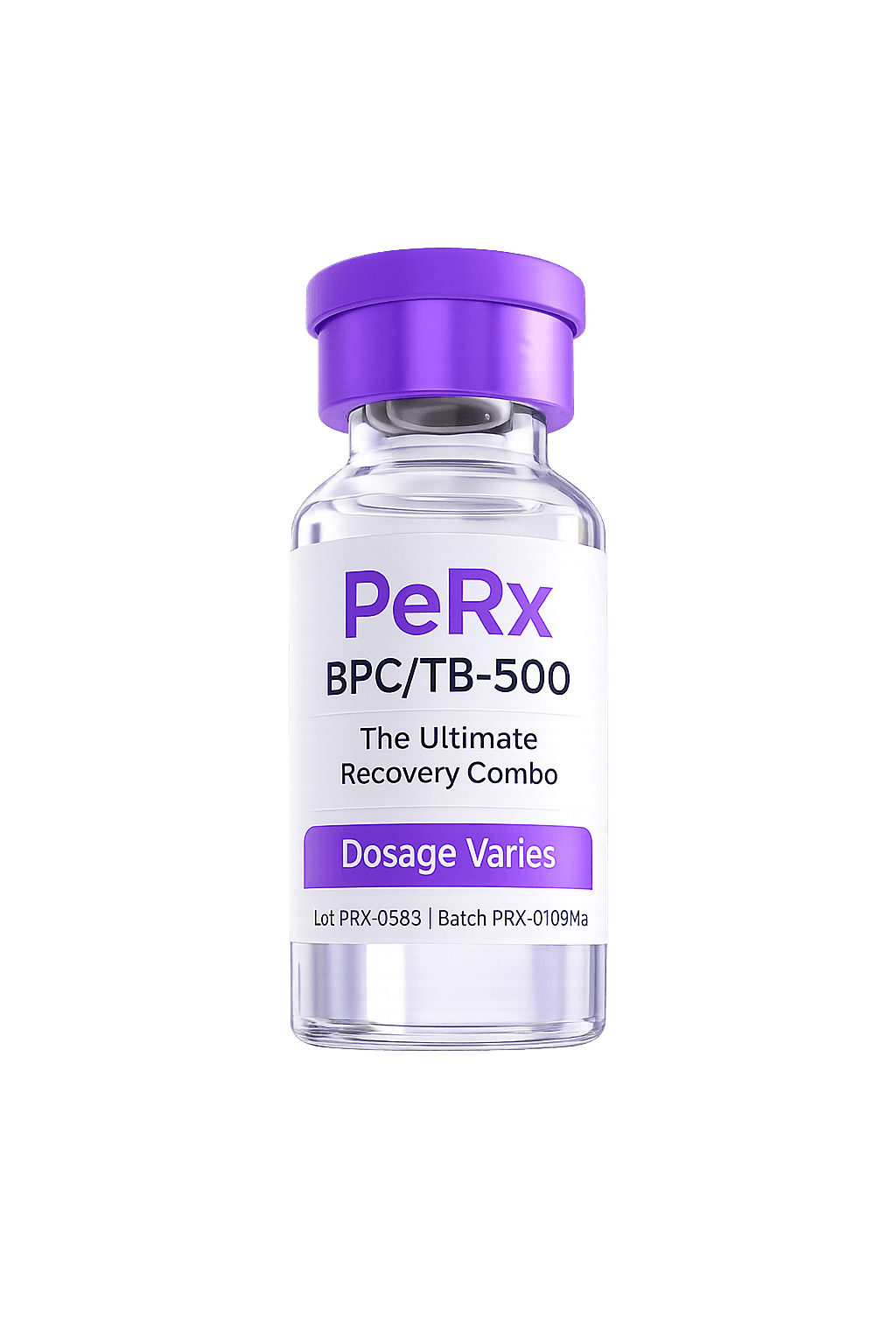
The BPC-157/TB-500 combination is used for patients with deeper or more stubborn tissue problems. TB-500 (thymosin beta-4 family) promotes cell migration and supports actin remodeling, which matters when tissue needs to reorganize at a scale BPC-157 alone struggles with.
For chronic nodules that have not responded to 4 weeks of BPC-157 alone, or for patients who also have unrelated soft-tissue issues (tendinopathies, old sports injuries), the combination is typically more effective than either alone.
When to Call a Provider
Peptide support is for stubborn healing, not for acute problems. Call your prescriber (or seek urgent care) if you notice any of the following:
Fever or chills accompanying an injection site reaction. Suggests infection.
Red streaks extending outward from the injection site, especially along the lines of the nearest veins. Suggests spreading infection that needs immediate treatment.
A lump that is hot, actively growing, or exquisitely painful. This is not a normal post-injection nodule.
Hives, throat tightness, or difficulty breathing after an injection. This is an allergic reaction and is a medical emergency.
A nodule that is firm, growing slowly, and not painful but has been there for more than 3 months. While usually benign, any persistent skin lesion of unknown origin should be examined to rule out other causes. Each order ships fully reconstituted and ready to use, delivered overnight in refrigerated packaging, with nothing to mix on your end.
Ozempic & Wegovy Injection Site Irritation: Common Questions
Related Guides
Continue reading about peptides and protocols that pair well with this guide.
Peptide Therapy in Scottsdale: 2026 Sonoran Guide
A plain guide to peptide therapy in Scottsdale for staying active as you age: what it costs across local clinics, med spas, and telehealth, who tends to use it here, and how pharmaceutical-grade peptides reach any Phoenix-area address without a clinic visit.
Peptide Therapy for Athletes: WADA Rules & Use
Athletes were among the earliest adopters of peptide therapy, and for good reason. Faster recovery between training sessions, accelerated injury repair, and improved body composition are directly relevant to athletic performance. But there are rules, and understanding the competitive landscape matters as much as the pharmacology.
Peptide Therapy in Irvine: 2026 Orange County Guide
A plain guide to peptide therapy in Irvine: who runs it here, how a longevity stack fits together, what it costs across longevity clinics and telehealth, and how pharmaceutical-grade peptides reach any Orange County address without an office visit.
Ready to address stubborn injection site problems?
Pharmaceutical-grade BPC-157 and related tissue-repair peptides, prescribed by a licensed provider and shipped ready to use. Our provider will recommend a protocol based on your specific symptom pattern.
Medical Disclaimer
The information provided on this website, including all articles, guides, and educational content, is for informational and educational purposes only and is not intended as medical advice, diagnosis, or treatment. Nothing on this site should be construed as a substitute for professional medical advice from a qualified healthcare provider.
The majority of peptides discussed on this site are not approved by the U.S. Food and Drug Administration (FDA) for the indications described. They are classified as bulk drug substances and are available only through a licensed prescribing provider and compounding pharmacy. All treatments require a valid prescription and provider oversight.
The majority of published research on peptide therapies has been conducted in preclinical (animal) models. While early human data is encouraging, comprehensive clinical trial data remains limited for most peptide compounds. Individual results may vary significantly based on health status, injury type, and other factors. No specific outcomes are guaranteed.
Certain peptides discussed on this site are classified as prohibited substances by the World Anti-Doping Agency (WADA) and are banned by major sports organizations including the NFL, NCAA, UFC, NBA, MLB, NHL, and PGA. If you are subject to anti-doping testing, consult your governing body before considering any peptide therapy.
Statements on this website have not been evaluated by the Food and Drug Administration. Products and therapies discussed are not intended to diagnose, treat, cure, or prevent any disease.
© 2026 Wellness MD Group PC DBA PeRx. All rights reserved.