Peptide Therapy Guide
Best Anti-Aging Peptides in 2026: Longevity & Cellular Repair
Updated May 9, 2026
Aging is driven by telomere shortening, declining NAD+ levels, collagen loss, and cellular senescence. These peptides target those root mechanisms to support longevity from the inside out.
Every cell division shortens your telomeres — the protective caps on chromosome ends. When they get too short, cells stop dividing and become senescent, contributing to tissue degradation and immune decline. Meanwhile, NAD+ levels drop roughly 50% between ages 40 and 60, impairing the 500+ enzymatic reactions that depend on it for DNA repair, energy production, and sirtuin activation.
Anti-aging peptide therapy is not about looking younger. It targets the measurable biological processes where aging actually happens: chromosome integrity, cellular energy, collagen architecture, and mitochondrial function. The goal is to function younger at the cellular level.
The biology of aging breaks down across what longevity researchers call the twelve hallmarks: genomic instability, telomere attrition, epigenetic alterations, loss of proteostasis, disabled macroautophagy, deregulated nutrient sensing, mitochondrial dysfunction, cellular senescence, stem cell exhaustion, altered intercellular communication, chronic inflammation, and dysbiosis. No single intervention addresses all twelve. The peptides used in 2026 anti-aging protocols target a subset — primarily telomere maintenance, NAD+ availability, mitochondrial signaling, and tissue regeneration via growth-factor pathways — chosen because they have the clearest mechanistic story and the most clinical or preclinical data.
What anti-aging peptide therapy *is not*: it is not a substitute for the foundational interventions that move the biological-aging needle most. Sleep quality (7-9 hours, deep slow-wave architecture), resistance training (3-4x weekly), protein intake (1.6-2.2 g/kg lean mass), VO2 max preservation, and metabolic health (low visceral fat, normal HbA1c, fasting insulin) outweigh any peptide protocol. Peptides are an additive layer on top of those — useful for patients who have already optimized the basics and want to push further.
50%
NAD+ decline between ages 40 and 60
1-1.5%
collagen loss per year after age 25
500+
enzymatic reactions dependent on NAD+
14%
GH decline per decade after age 30
12
hallmarks of aging (peptides target a defined subset)
How Peptides Help With Anti-Aging
Telomere Protection
Epitalon activates telomerase, the enzyme that rebuilds telomere length. Research shows it can slow telomere shortening and support longer cell viability, healthier immune function, and slowed biological aging at the chromosomal level.
Cellular Energy Restoration
NAD+ peptide therapy directly replenishes the coenzyme required for DNA repair, energy metabolism, and sirtuin activation (the "longevity genes"). Patients typically report improved energy, mental clarity, and exercise capacity within weeks.
Collagen Remodeling
GHK-Cu stimulates fibroblast production of collagen types I and III, increases glycosaminoglycan synthesis, and promotes extracellular matrix remodeling. The effects are systemic — benefiting skin, joints, tendons, and blood vessels.
Growth Hormone Axis Restoration
Endogenous growth hormone output declines roughly 14% per decade after age 30. Sermorelin, CJC-1295/Ipamorelin, and Tesamorelin restore the hypothalamic-pituitary GH axis through different mechanisms — GHRH analogs and ghrelin-receptor agonism — without exogenous HGH. The downstream effect is improved body composition (more lean mass, less visceral fat), deeper sleep, and faster recovery, all of which feed back into healthspan.
Mitochondrial Biogenesis & Metabolic Flexibility
MOTS-c is the only known mitochondrial-derived peptide. It activates AMPK — the same metabolic master switch exercise activates — promoting mitochondrial biogenesis, fat oxidation, and metabolic flexibility. Endogenous MOTS-c levels decline with age and are higher in physically active individuals. Provider-prescribed MOTS-c protocols are typically run 8-12 weeks alongside resistance training, not as a substitute for it.
Top Peptides for Anti-Aging
GHK-Cu/Epitalon
$299/moSkin + Cellular Renewal
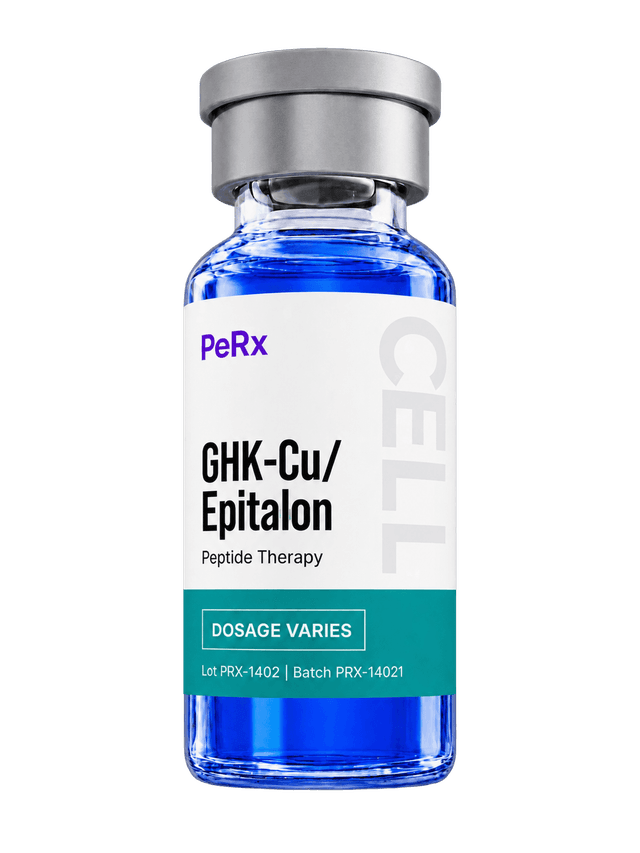
GHK-Cu/Epitalon combines collagen-boosting skin rejuvenation with telomere-protecting cellular longevity in a single vial. GHK-Cu rebuilds skin structure while Epitalon addresses aging at the DNA level.
GHK-Cu
$229/moThe Skin Rejuvenation Peptide
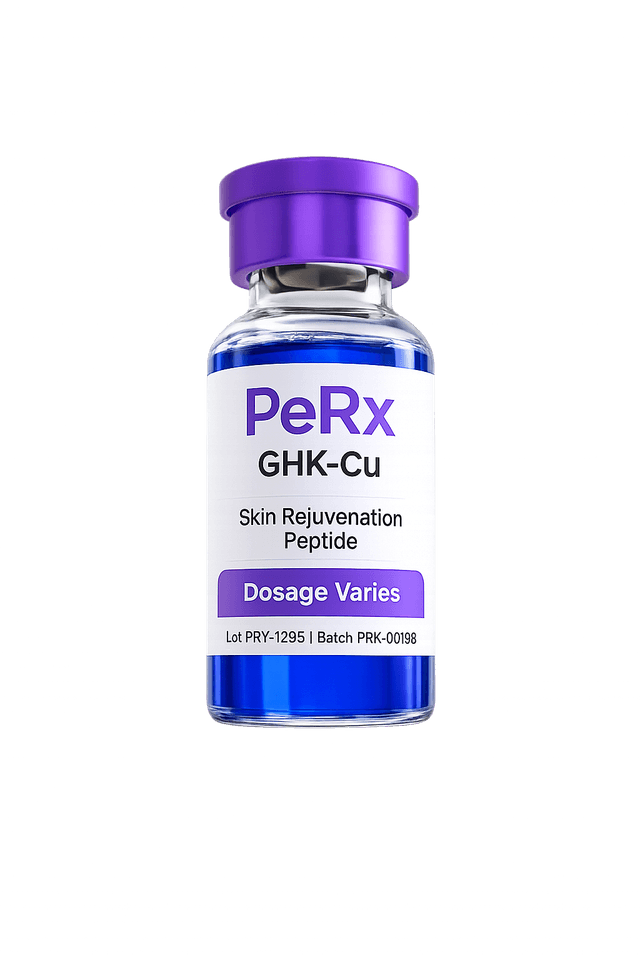
GHK-Cu (Copper Peptide) is a naturally occurring tripeptide with remarkable regenerative properties. It stimulates collagen production, promotes wound healing, and has powerful anti-aging effects on skin tissue.
NAD+
$229/moThe Cellular Energy Coenzyme
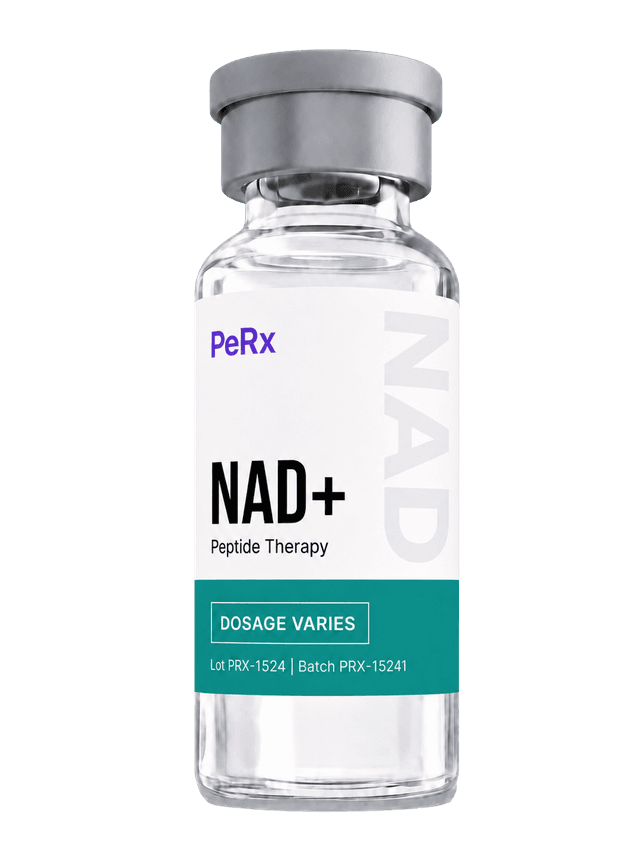
NAD+ (Nicotinamide Adenine Dinucleotide) is a critical coenzyme found in every cell, essential for energy metabolism, DNA repair, and cellular signaling. NAD+ levels decline with age, and supplementation supports mitochondrial function, cognitive clarity, and longevity pathways.
Epitalon
$229/moThe Longevity Peptide
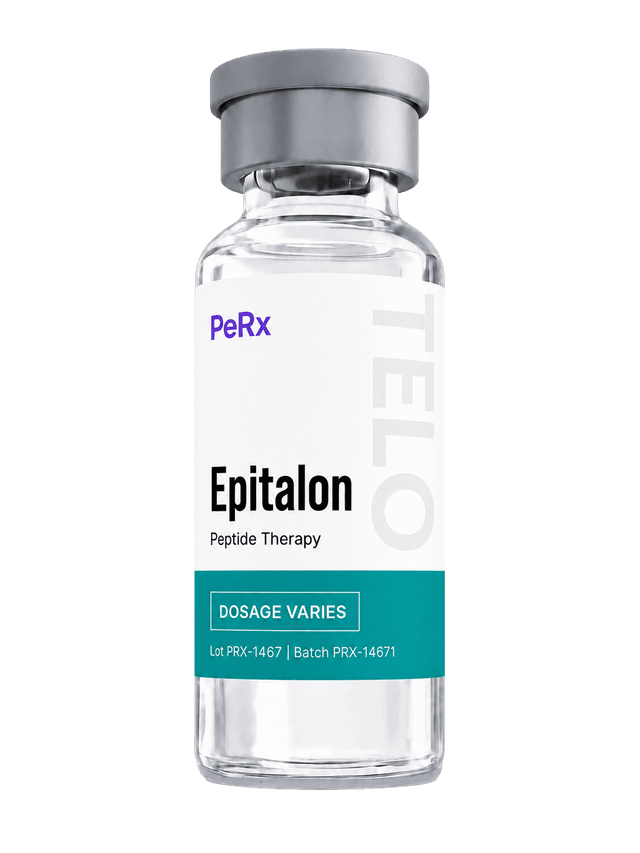
Epitalon is a synthetic tetrapeptide known to activate telomerase, which may lengthen telomeres and protect DNA from aging. It was developed by Russian scientists and has shown promise in slowing cellular aging and extending cellular lifespan.
Sermorelin
$229/moThe Growth Hormone Optimizer
Sermorelin is a growth hormone-releasing hormone (GHRH) analog that stimulates the pituitary gland to produce and release natural growth hormone. Unlike synthetic HGH, sermorelin works with your body's natural feedback mechanisms for safer, more physiological results.
Glutathione
$199/moThe Master Antioxidant
Glutathione is the body's most powerful endogenous antioxidant, critical for detoxification, immune support, and cellular protection. Subcutaneous delivery bypasses digestive breakdown for superior bioavailability.
Quick Comparison
| Peptide | Best For | Administration | Price |
|---|---|---|---|
| Skin rejuvenation, collagen, telomere protection | Subcutaneous injection | $299/mo | |
| Collagen, skin firmness, tissue renewal | Subcutaneous injection | $229/mo | |
| Cellular energy, DNA repair, anti-aging | Subcutaneous injection | $229/mo | |
| Cellular aging, sleep quality, telomere support | Subcutaneous injection, cyclical | $229/mo | |
| Sleep, body composition, anti-aging | Subcutaneous injection, bedtime | $229/mo | |
| Antioxidant defense, detox, skin health | Subcutaneous injection | $199/mo |
Frequently Asked Questions
What is the best peptide for anti-aging?
Based on clinical research and mechanism of action, GHK-Cu/Epitalon is the top-ranked peptide for anti-aging. Skin + Cellular Renewal. Take our free health assessment and use the Virtual Cell to see which peptides match your biology.
How long do peptides take to work for anti-aging?
Most patients notice initial improvements in anti-aging within 2-4 weeks of consistent use, with more significant results over 8-12 weeks. Timelines vary based on the specific peptide, your health status, and protocol adherence.
Can I combine peptides for anti-aging?
Yes. Many patients benefit from combining peptides that target anti-aging through complementary mechanisms. PeRx offers pre-formulated combo products, and your provider can recommend the best combination for your goals.
Do I need a prescription for anti-aging peptides?
Yes. All peptide therapies at PeRx require a valid prescription from a licensed healthcare provider. The prescription is included as part of the PeRx process — select your peptide, complete a health screening, and a provider will review and prescribe your personalized protocol.
Are anti-aging peptides safe?
When prescribed by a licensed provider and sourced from an FDA-registered 503A compounding pharmacy, peptides for anti-aging have a strong safety profile. Every PeRx patient undergoes a health screening before receiving a prescription.
Not sure which is right for you?
Take our free health assessment and use the Virtual Cell to discover which peptides match your biology.
Try the Virtual CellRelated Pages
Medical Disclaimer
The information provided on this page is for educational purposes only and is not intended as medical advice, diagnosis, or treatment. Peptide therapy requires a valid prescription from a licensed healthcare provider. Individual results may vary. No specific outcomes are guaranteed.
The peptides on this site are not FDA-approved. They are compounded by licensed pharmacies under provider supervision. Certain peptides are prohibited by WADA and major sports organizations. Statements on this page have not been evaluated by the FDA. These products are not intended to diagnose, treat, cure, or prevent any disease.