Peptides for Weight Loss
PeRx prescribes peptides for weight loss through licensed US providers, compounded at FDA-registered 503A pharmacies and shipped ready to use to all 50 states. The core options are GLP-1 medications, semaglutide and tirzepatide, as a once-weekly injection today and a needle-free sublingual liquid soon, alongside growth hormone peptides that protect muscle while the weight comes off. Peptide therapy for weight loss here is provider-led from the first dose: you complete an assessment, a provider reviews it, and the dose moves on a schedule they set. Peptides for weight loss ship only once that prescription is approved.
Weight-Loss Peptides Available at PeRx
Showing 6 peptides in Weight Loss
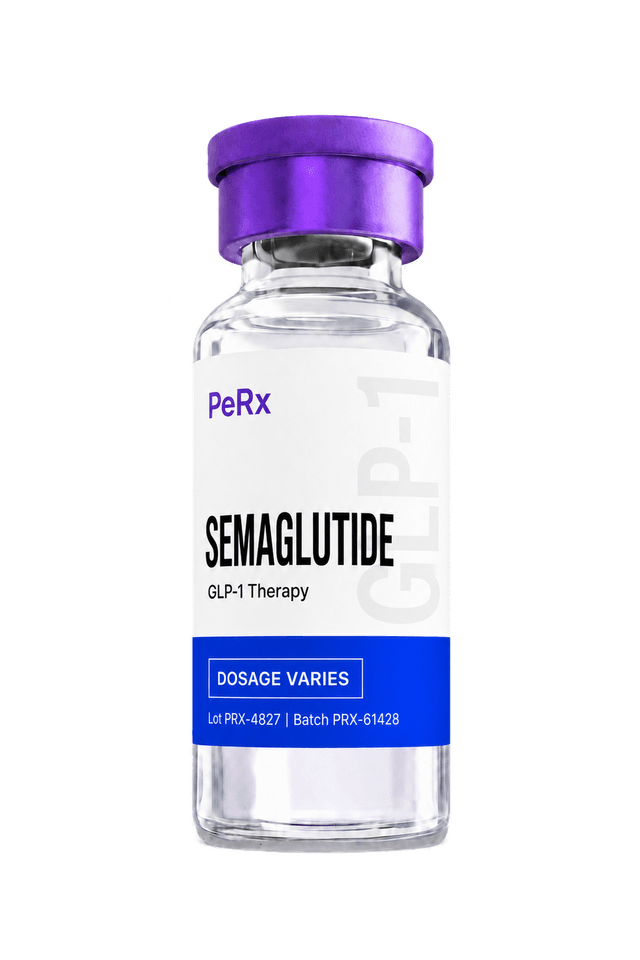
Semaglutide
Once-Weekly GLP-1 for Weight Management
Learn more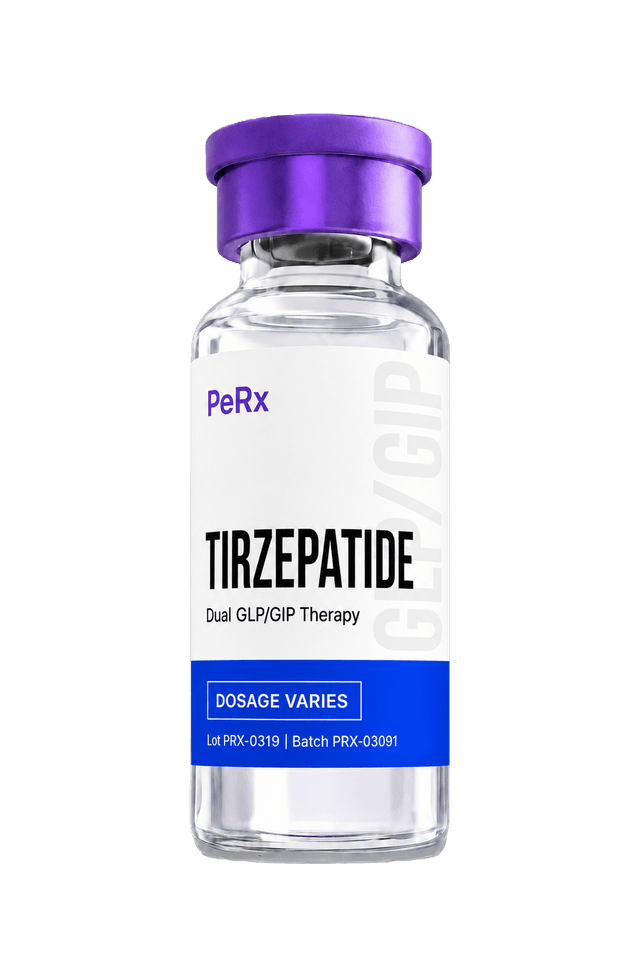
Tirzepatide
Once-Weekly Dual GIP/GLP-1 for Weight Management
Learn more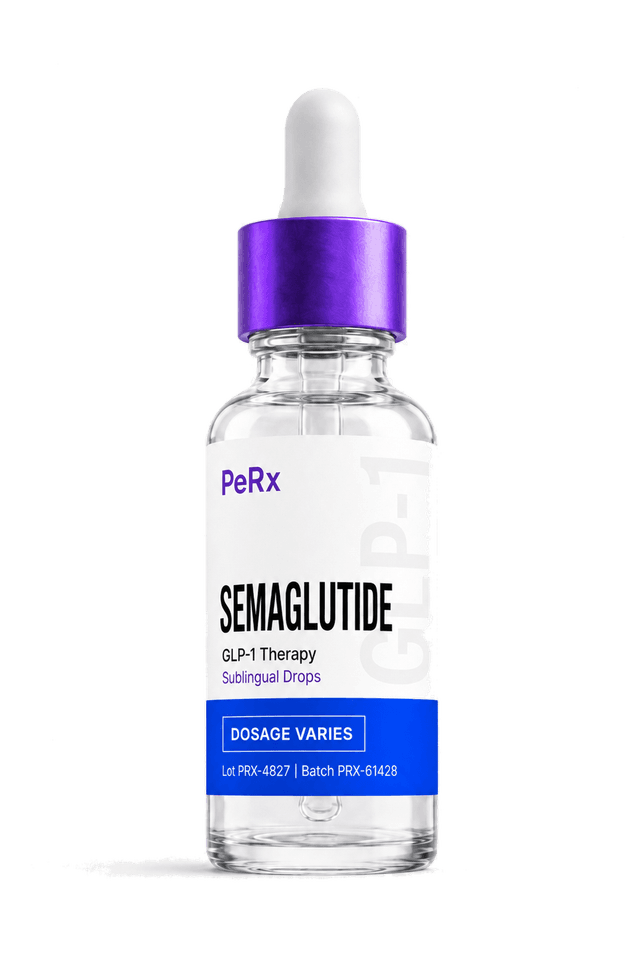
Semaglutide (Sublingual)
Once-Weekly GLP-1, No Needle
Learn more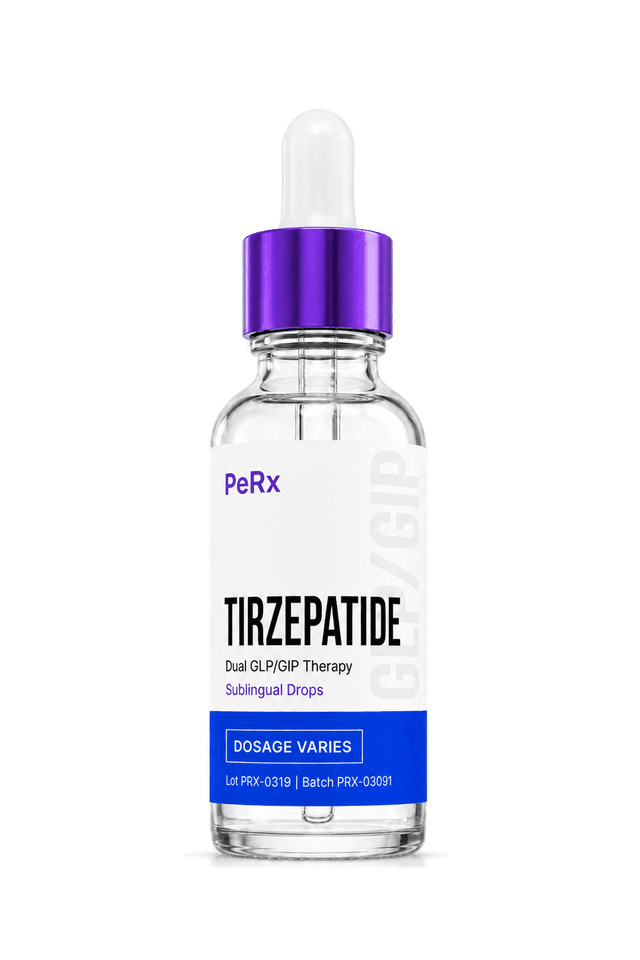
Tirzepatide (Sublingual)
Once-Weekly Dual GIP/GLP-1, No Needle
Learn more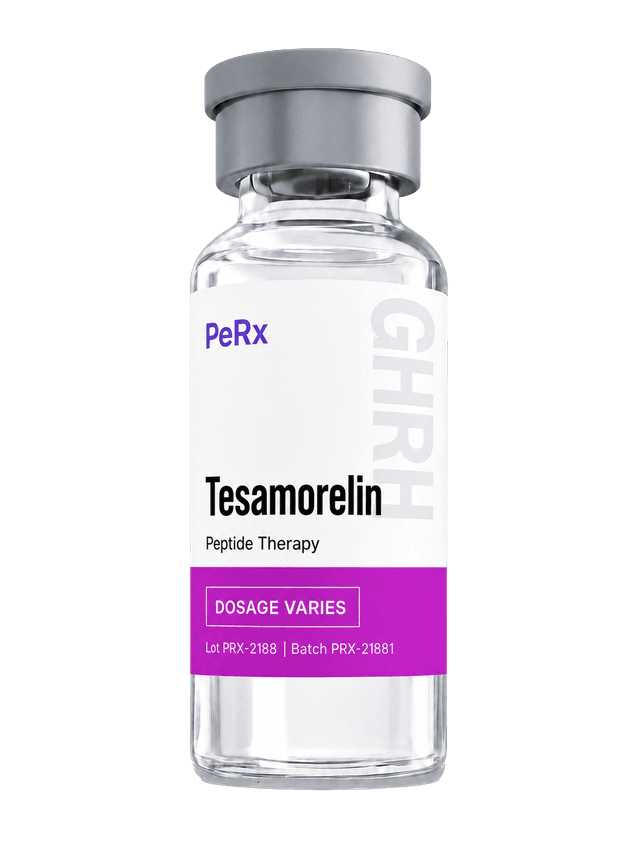
Tesamorelin
Metabolic Optimization Peptide
Learn more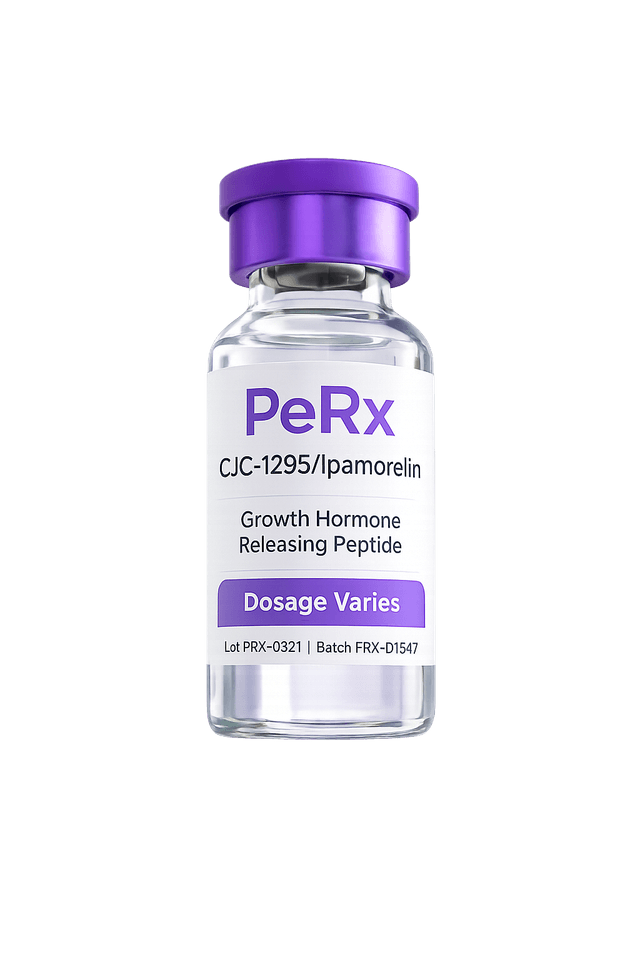
CJC-1295/Ipamorelin
Pulsatile Growth Hormone Release
Learn moreHow Peptides Support Weight Loss
Semaglutide and tirzepatide are the peptides for weight loss with the deepest clinical record, and they work on the signals that decide how hungry you are rather than on fat cells directly. After a meal the small intestine releases incretin hormones, GLP-1 among them. GLP-1 tells the pancreas to release insulin in proportion to blood sugar, slows stomach emptying, and tells the appetite centres of the brain that you have had enough. The natural hormone lasts minutes; semaglutide is a modified copy engineered to last about a week, which is why one dose covers seven days.
Tirzepatide is a dual GIP/GLP-1 agonist. It activates the GLP-1 receptor and also the GIP receptor, the second major incretin pathway, which is expressed in fat tissue in a way the GLP-1 receptor is not. Engaging both is the mechanistic difference between the two, and it is why a provider may reach for tirzepatide when a single pathway has not been enough.
What patients notice is appetite suppression in its practical form: less preoccupation with food, feeling full sooner, smaller portions without much effort. Those changes may support a calorie deficit you can hold for months, which is where most attempts fail. Peptide injections for weight loss do not replace that deficit; they make it easier to keep.
One honest note on evidence. The large trials behind these molecules studied the FDA-approved branded medications. PeRx prescribes compounded semaglutide and tirzepatide prepared with vitamin B12, and compounded peptides for weight loss are not FDA-approved and were not the products in those trials. Peptide therapy for weight loss here rests on the same mechanism, with a provider watching how you respond. A fat loss peptide such as AOD-9604 or MOTS-c works on metabolism rather than appetite and is covered under Fat Loss.
Injections vs Sublingual: Which Format?
Peptide injections for weight loss are the standard format, and for good reason: a subcutaneous injection delivers the full dose reliably, once a week, by a route with decades of safety data behind it. PeRx ships the injectable as a pre-mixed vial with insulin syringes, alcohol swabs and step-by-step instructions. The needle is short and fine, most people use the abdomen or thigh, and it takes under a minute. First time? Read Where to Inject Semaglutide and Tirzepatide before your first dose.
The sublingual GLP-1 exists for people who will not use a needle. It is the same molecule as a liquid: measure 1 mL, hold it under the tongue for 45 seconds, then swallow, once a week, no needle involved. Part of the dose absorbs through the lining of the mouth and the rest is swallowed. Sublingual delivery has not been tested in human efficacy trials and absorption is less predictable than injection, so your provider will talk through whether it fits your goals. Both sublingual options are coming soon; you can join the waitlist from their product pages.
How to choose: if you want the most established route, peptide shots for weight loss are it. If the needle is the reason you never started, sublingual is the reason to. Peptide injections for weight loss and the sublingual liquid are prescribed and titrated the same way, so the decision is about format, not about who is eligible for peptides for weight loss.
Peptides for Weight Loss for Men & Women
The mechanism is the same in both sexes. GLP-1 and GIP receptors do not care who you are, and semaglutide and tirzepatide are prescribed to men and women on the same dose ladder. What differs is the context a provider is working in, and that is where tailoring happens.
Peptides for weight loss in women often come up around perimenopause and menopause, when falling estrogen shifts fat toward the abdomen and the old approaches stop working. The appetite effect of a GLP-1 does not depend on estrogen, which is why it still works in that window; the specifics are in Semaglutide and Menopause. Pooled trial data suggest women tend to lose a somewhat larger percentage of body weight than men and tend to report more nausea early on, so providers often hold each step a little longer. These medications must stop at least two months before trying to conceive, and peptides for weight loss in women are never prescribed during pregnancy or breastfeeding.
Weight loss peptides for men tend to be discussed in terms of visceral fat and muscle. Men carry more of the deep abdominal fat that drives insulin resistance, and usually have more lean mass to protect. That is the real issue with weight loss peptides for men: the scale drops, but part of what drops is muscle unless resistance training and adequate protein are in the plan.
Which brings up peptides for weight loss and muscle gain. A GLP-1 reduces appetite; it does not build muscle. That is why Tesamorelin and CJC-1295/Ipamorelin sit on this page: growth hormone secretagogues that support body composition and muscle preservation while you are in a deficit. Pairing one with a GLP-1 is how providers approach peptides for weight loss and muscle gain as a single plan. More options live under Muscle Growth, and the protocol is in Preserve Muscle on GLP-1.
Who Is a Candidate & Safety
A peptide for weight loss is a prescription medication, and eligibility is decided by a provider, not at checkout. PeRx prescribes to adults 21 and older who complete the health assessment. Providers generally consider a GLP-1 appropriate at a body mass index of 30 or above, or 27 or above with a weight-related condition such as high blood pressure, high cholesterol or sleep apnea, alongside changes to diet and activity. If you are near a healthy weight and after the last few pounds, a peptide for weight loss is usually not the right tool, and a provider will say so.
Some histories rule it out. Nobody with a personal or family history of medullary thyroid carcinoma or Multiple Endocrine Neoplasia type 2 should take a GLP-1. A history of pancreatitis, gallbladder disease, gastroparesis, type 1 diabetes, severe kidney disease, bariatric surgery or an eating disorder needs a careful conversation, as does current insulin or sulfonylurea use. Pregnancy, breastfeeding and a planned pregnancy within six months are hard stops. Screening covers each of these before a provider sees your file.
Expect side effects, mostly in the gut. Nausea, constipation and diarrhea are common in the days after a dose increase and usually ease; smaller meals and avoiding rich food help more than people expect. Severe abdominal pain, especially spreading to the back, means seek care immediately. Nausea and Gut Issues on GLP-1s covers what helps.
Compounded medications require a valid prescription, and every refill of a peptide for weight loss at PeRx is reviewed by a provider before it ships. Peptide therapy for weight loss in compounded form is not FDA-approved, results vary, and a peptide for weight loss works best as one part of a prescription weight loss plan that includes what you eat and how you move.
How to Start with PeRx
Starting peptides for weight loss at PeRx takes three steps and no office visit.
First, take the 60-second assessment. It asks about your goals, your health history and the screening questions above. Then choose your medication and save a card. You are not charged at that point.
Second, a licensed provider reviews your file. If they approve, they set your starting concentration, write the prescription, and only then is your card charged. If they do not approve, you are not charged at all.
Third, the pharmacy ships one vial, pre-mixed and ready to use, in cold-chain packaging with syringes and instructions. A GLP-1 vial covers four weekly doses, so the next ships every 28 days after a provider confirms your dose. We email you before every renewal, you can pause or cancel any time, and the dose only moves when the provider moves it.
PeRx exists for people who want peptides for weight loss prescribed properly, with a clinician paying attention, rather than a box that ships the same strength forever. The assessment is below; if you still have questions, talk to us first.
Frequently Asked Questions
Do peptides work for weight loss?
GLP-1 peptides for weight loss reduce appetite and slow stomach emptying, which makes a calorie deficit easier to sustain. The evidence for the FDA-approved branded versions is extensive. Compounded versions have not been studied in those trials, results vary, and provider oversight is part of why it works.
What are the best peptides for weight loss?
There is no single answer. Semaglutide and tirzepatide are the peptides for weight loss with the strongest evidence for appetite control, and tirzepatide acts on two receptors rather than one. Which one suits you depends on your history, tolerance and goals, which is exactly what the provider review decides.
Are peptide injections for weight loss safe?
For the right patient under provider supervision, the injection route itself is routine. Gut side effects are common and usually ease. A thyroid cancer history, pancreatitis and pregnancy are exclusions. Compounded medications are not FDA-reviewed, which is why peptides for weight loss come with screening and ongoing check-ins.
Do you need a prescription for weight-loss peptides?
Yes. Semaglutide and tirzepatide are prescription medications in every form, including compounded and sublingual, and so are tesamorelin and CJC-1295/Ipamorelin. Anything sold without one is unregulated. At PeRx a licensed provider writes the prescription before any charge, then reviews every refill.
Are weight-loss peptides different for men and women?
The medication and the dose ladder are the same. Providers adjust the pacing and the plan around it: women often need slower early steps and must stop before a planned pregnancy, while weight loss peptides for men usually come with a stronger focus on protecting muscle and reducing visceral fat.
Compare GLP-1 Peptides for Weight Loss
| Product | Mechanism | Format | Best for | Status |
|---|---|---|---|---|
| Semaglutide | GLP-1 agonist | Weekly injection | General weight management | Available |
| Tirzepatide | Dual GIP/GLP-1 | Weekly injection | When a provider wants both incretin pathways | Available |
| Semaglutide (Sublingual) | GLP-1 agonist | Weekly sublingual liquid | Needle-free preference | Coming soon |
| Tirzepatide (Sublingual) | Dual GIP/GLP-1 | Weekly sublingual liquid | Needle-free, dual pathway | Coming soon |
| Tesamorelin | GHRH analog | Daily injection | Visceral fat and muscle preservation alongside a GLP-1 | Available |
| CJC-1295/Ipamorelin | GHRH + ghrelin-receptor agonist | Daily injection | Body composition and recovery alongside a GLP-1 | Available |
Not sure which peptide is right for you?
Take our 60-second assessment. A licensed US provider reviews and recommends a protocol if appropriate.