NAD+ vs Glutathione: Which One Do You Actually Need?
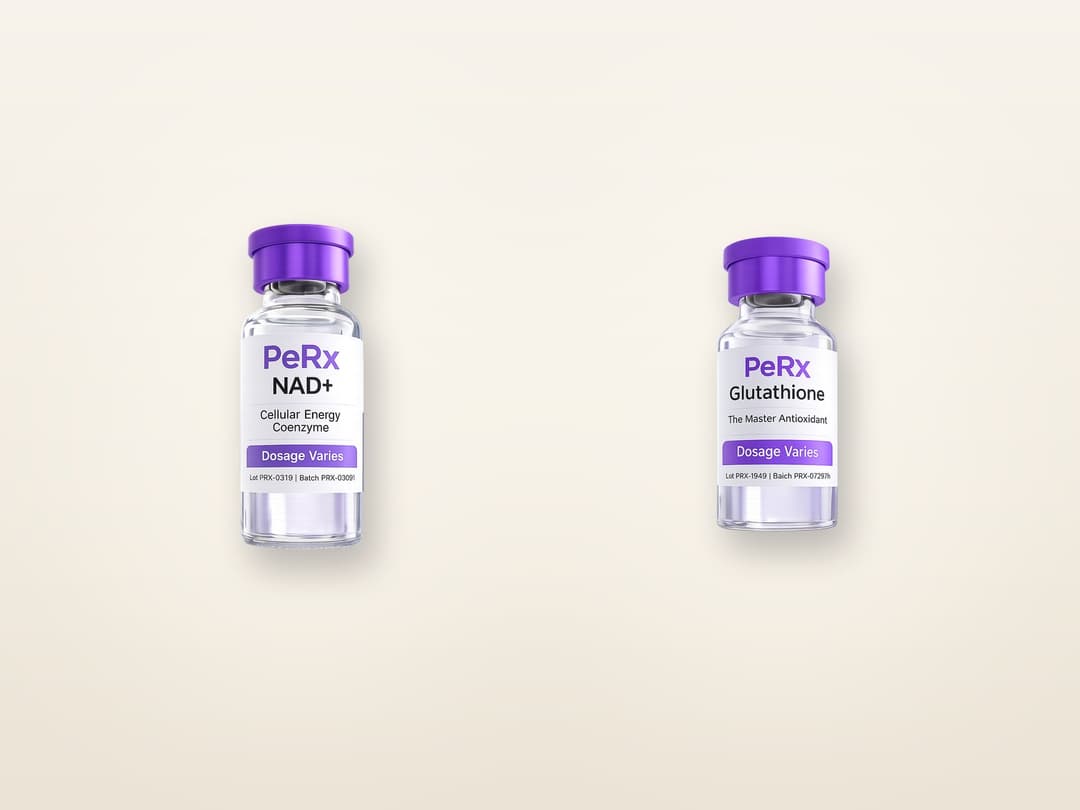
They get compared constantly, but they do almost opposite jobs. NAD+ is the cellular energy and repair coenzyme. Glutathione is the body’s master antioxidant, built for detox and cellular protection. One runs the machinery, the other protects it. Here is how to tell which one fits your goal, and when using both makes sense.
In this article
Key Takeaways
- NAD+ and Glutathione do nearly opposite jobs: NAD+ is the cellular energy and repair coenzyme, Glutathione is the master antioxidant for detox and protection.
- Choose NAD+ for energy, cognitive clarity, recovery, and longevity. It fuels the mitochondria and the sirtuin and PARP repair enzymes.
- Choose Glutathione for detox, oxidative-stress reduction, immune support, and skin. It neutralizes free radicals and supports Phase II liver detoxification.
- They are complementary, not competing. NAD+ runs the machinery and Glutathione protects it, so using both can make sense when goals span energy and protection.
- Glutathione is technically a tripeptide; NAD+ is a coenzyme. Both are delivered as ready-to-use subcutaneous injections at PeRx.
The Short Answer
NAD+ vs Glutathione in one paragraph
These two get lumped together because both are injectable longevity-and-wellness therapies, but they solve different problems. NAD+ is a coenzyme that powers cellular energy and DNA repair, so it lives in the energy, focus, and longevity lane. Glutathione is the body’s master antioxidant, built for detoxification and protecting cells from oxidative damage. The simplest way to hold it: NAD+ runs the machinery, Glutathione protects it. If your goal is energy and repair, lean NAD+. If it is detox and protection, lean Glutathione. They also work well together, for the reason explained below.
What Each One Actually Does
NAD+, short for nicotinamide adenine dinucleotide, is a coenzyme found in every cell. It is central to energy metabolism, and it fuels the sirtuin and PARP enzymes that handle DNA repair, gene expression, and mitochondrial function. NAD+ levels fall with age, and the goal of supplementing it is to restore that cellular energy and repair capacity. This is why NAD+ is associated with energy, cognitive clarity, recovery, and longevity pathways. It is, in plain terms, about keeping the cell’s power and repair systems running. When you get a peptide through PeRx, it is prescribed by a licensed provider and compounded in a US-based, FDA-regulated 503A pharmacy, the same regulated pathway many everyday prescriptions go through.
Verdin E, "NAD+ in aging, metabolism, and neurodegeneration," Science, 2015. View study
Glutathione is the body’s most important built-in antioxidant. It is a tripeptide, three amino acids joined together, and its job is protection. It neutralizes free radicals, regenerates other antioxidants such as vitamins C and E, supports Phase II detoxification in the liver, and shields mitochondria and DNA from oxidative damage. Where NAD+ produces and repairs, Glutathione defends and detoxifies. That difference in purpose is the whole comparison.
Averill-Bates DA, "The antioxidant glutathione," Vitamins and Hormones, 2023. View study
Side by Side
| NAD+ | Glutathione | |
|---|---|---|
| What it is | A coenzyme in every cell | The master antioxidant (a tripeptide) |
| Core role | Cellular energy and DNA repair | Antioxidant defense and detox |
| Mechanism | Fuels mitochondria, sirtuins, and PARPs | Neutralizes free radicals, supports Phase II liver detox |
| Best for | Energy, focus, recovery, longevity | Detox, oxidative stress, immune support, skin |
| Think of it as | The power and repair system | The cleanup and protection system |
What it is
- NAD+
- A coenzyme in every cell
- Glutathione
- The master antioxidant (a tripeptide)
Core role
- NAD+
- Cellular energy and DNA repair
- Glutathione
- Antioxidant defense and detox
Mechanism
- NAD+
- Fuels mitochondria, sirtuins, and PARPs
- Glutathione
- Neutralizes free radicals, supports Phase II liver detox
Best for
- NAD+
- Energy, focus, recovery, longevity
- Glutathione
- Detox, oxidative stress, immune support, skin
Think of it as
- NAD+
- The power and repair system
- Glutathione
- The cleanup and protection system
When to Choose NAD+
NAD+ is the more direct choice when your goal is energy, mental clarity, recovery, or general longevity. Because it sits at the center of how cells produce energy and repair their DNA, it targets the feeling of running low that often comes with age. People reach for it for sustained energy without stimulants, sharper focus, faster recovery, and as a longevity-pathway play. If you had to sum up the NAD+ candidate in one phrase, it is someone who feels their cellular batteries are running down and wants to recharge the system itself.
When to Choose Glutathione
Glutathione is the more direct choice when your goal is detoxification, lowering oxidative stress, immune support, or skin health. Its mechanisms point straight at clearing damage rather than producing energy. People reach for it after periods of high oxidative load, for liver and detox support, for immune resilience, and for skin brightness, where its antioxidant role is most associated. The Glutathione candidate, in one phrase, is someone who wants to protect and clean up the cell rather than power it.
Can You Use Both?
Yes, and there is a logic to it. The two are complementary because they address different sides of the same cellular reality. NAD+ drives energy production and repair, and that metabolic activity naturally generates oxidative byproducts. Glutathione is the antioxidant system that helps clear those byproducts and protect the cell. One produces and repairs, the other protects. Used together, they cover both halves.
This is a provider decision
Whether to combine NAD+ and Glutathione, at what doses, and in what sequence is a decision for your prescribing provider based on your goals and history, not a default protocol. PeRx does not sell them as a fixed combination vial, so a combined approach means two separate prescriptions your provider decides are appropriate. See why peptide therapy needs a physician for how that decision gets made.
How They Connect in the Cell
There is a deeper reason the two work well together, and it is worth understanding. When Glutathione neutralizes a free radical it gets used up and has to be recycled back to its active form. The enzyme that does that recycling runs on NADPH, a molecule closely related to NAD+. In other words, your antioxidant system depends on the same family of coenzymes that NAD+ belongs to. A healthy NAD pool indirectly supports Glutathione’s ability to keep doing its job.
This is why calling them complementary is more than marketing. NAD+ keeps the cell’s energy and repair machinery running, that machinery produces oxidative stress as a byproduct, and Glutathione clears that stress while leaning on NAD-family coenzymes to stay active. They are two parts of one system. That does not mean everyone should take both, but it does explain why the combination has a real biochemical logic rather than being two unrelated products bundled together.
Why We Use Subcutaneous, Not IV
NAD+ is best known as an IV drip, often run over one to several hours in a clinic, and infusing it quickly is known to cause flushing, nausea, or a racing sensation. Glutathione is also commonly given by IV. PeRx uses subcutaneous injection for both instead: a small shot from a ready-to-use vial you keep refrigerated at home. The slower absorption of a subcutaneous dose is gentler than a fast infusion, and it removes the clinic visit entirely.
The trade-off is that a subcutaneous dose is smaller and steadier than a large IV bolus, so the approach favors consistent regular dosing over occasional high-dose infusions. For most people pursuing energy, longevity, or antioxidant-support goals at home, that consistency is the point. Your provider sets the dose and schedule that fit your goal.
An Honest Word on the Evidence
A straight read of the science: the cellular roles of both molecules are well established. NAD+’s place in energy metabolism and DNA repair, and Glutathione’s role as the master antioxidant, are textbook biochemistry. What is less settled is the size of the clinical effect from the injectable forms. Much of the strongest human research on NAD+ has studied precursors rather than direct NAD+, and the human evidence for injectable Glutathione in areas like skin and neurological health is mixed and still developing.
Martens CR et al., "Chronic nicotinamide riboside supplementation is well-tolerated and elevates NAD+ in healthy middle-aged and older adults," Nature Communications, 2018. View study
Allen J, Bradley RD, "Effects of oral glutathione supplementation on systemic oxidative stress biomarkers in human volunteers," Journal of Alternative and Complementary Medicine, 2011. View study
That is a reason to use them under guidance and to keep expectations realistic, not a reason to dismiss them. Effects tend to be gradual rather than dramatic. A provider who is honest about where the evidence is strong and where it is still emerging is doing their job. Anyone promising a guaranteed transformation from either molecule is overselling what the data currently supports. The related GHK-Cu vs NAD+ comparison covers another common longevity pairing decision. Each order ships fully reconstituted and ready to use, delivered overnight in refrigerated packaging, with nothing to mix on your end.
Nad vs Glutathione: Common Questions
Related Guides
Continue reading about peptides and protocols that pair well with this guide.
Is Glutathione FDA Approved? Antioxidant Status
Glutathione is the most abundant antioxidant in your body. Oral glutathione supplements are sold everywhere. IV and injectable glutathione are used in clinics worldwide. But the FDA approval picture is more nuanced than you might expect. Here is what glutathione actually is, how different forms are regulated, and what the science supports.
Where to Inject Glutathione: Sites & Rotation
Glutathione is a subcutaneous injection. The four standard sites all work, but where you place it, how you rotate, and a few small technique details change comfort and consistency more than most people expect. Here is the practical guide patients ask for after their first vial arrives.
NAD+ Injection: The Longevity Molecule, Explained
Hollywood's most talked-about anti-aging treatment used to require a $1,000 IV drip and four hours in a clinic. The same molecule, discovered in 1906, studied by Harvard, and endorsed by half the celebrity A-list, now comes as a simple at-home injection. Here's what NAD+ actually does, why your levels are dropping every year, and whether the hype is justified.
Not sure which one fits your goal?
Take our 5-minute health assessment. A licensed provider reviews your goals and history, then recommends NAD+, Glutathione, or another option that actually fits. Shipped ready to use. No labs required to start.
Medical Disclaimer
The information provided on this website, including all articles, guides, and educational content, is for informational and educational purposes only and is not intended as medical advice, diagnosis, or treatment. Nothing on this site should be construed as a substitute for professional medical advice from a qualified healthcare provider.
The majority of peptides discussed on this site are not approved by the U.S. Food and Drug Administration (FDA) for the indications described. They are classified as bulk drug substances and are available only through a licensed prescribing provider and compounding pharmacy. All treatments require a valid prescription and provider oversight.
The majority of published research on peptide therapies has been conducted in preclinical (animal) models. While early human data is encouraging, comprehensive clinical trial data remains limited for most peptide compounds. Individual results may vary significantly based on health status, injury type, and other factors. No specific outcomes are guaranteed.
Certain peptides discussed on this site are classified as prohibited substances by the World Anti-Doping Agency (WADA) and are banned by major sports organizations including the NFL, NCAA, UFC, NBA, MLB, NHL, and PGA. If you are subject to anti-doping testing, consult your governing body before considering any peptide therapy.
Statements on this website have not been evaluated by the Food and Drug Administration. Products and therapies discussed are not intended to diagnose, treat, cure, or prevent any disease.
© 2026 Wellness MD Group PC DBA PeRx. All rights reserved.