Nausea & Gut Issues on GLP-1s: What Helps
GI side effects are the single biggest reason patients stop Ozempic, Wegovy, and Mounjaro. Here is why GLP-1 receptor activation hits the gut so hard, which simple changes resolve most cases, and which peptide helps when the basics have not been enough.
In this article
Key Takeaways
- 40-60% of GLP-1 users experience nausea in pivotal trials. GI side effects are the single biggest driver of patients quitting the drug.
- The mechanism is intentional. GLP-1 receptors in the gut and brain stem slow gastric emptying and trigger nausea pathways. Most patients adapt in 4-8 weeks.
- The single highest-leverage fix is smaller meals eaten over 20-30 minutes. Hydration and fiber from whole foods resolve most constipation cases.
- BPC-157 is the gut-specific peptide. It was originally isolated from gastric juice and directly upregulates mucosal repair. Available as capsules or SubQ injection.
- Severe bloating, vomiting partially undigested food, or persistent inability to tolerate meals can signal gastroparesis. Stop self-managing and call your provider.
Quick Facts
Nausea Incidence
40-60% of GLP-1 users in pivotal trials
Dropout Driver
GI side effects cause most GLP-1 discontinuation
Mechanism
Slowed gastric emptying + brainstem nausea signaling
First-Line Fix
Smaller, slower meals + hydration
Gut-Specific Peptide
BPC-157 (injectable or capsules)
Timeline
Most GI symptoms resolve in 4-8 weeks with acclimation
Why GLP-1s Hit the Gut
GLP-1 receptor agonists work on purpose by slowing down your digestion. That is not a side effect. It is the mechanism. When food sits in your stomach longer, you feel full for longer, you eat less, and you lose weight. The problem is that this mechanism is not subtle. When you get a peptide through PeRx, it is prescribed by a licensed provider and compounded in a US-based, FDA-regulated 503A pharmacy, the same regulated pathway many everyday prescriptions go through.
GLP-1 receptors are distributed throughout the gastrointestinal tract, the pancreas, and the brain stem. When activated, they:
Slow gastric emptying. The stomach normally empties a meal over 1 to 2 hours. On semaglutide or tirzepatide, that can extend to 3 to 5 hours. Food sitting in the stomach longer creates a persistent feeling of fullness and, for some patients, active nausea.
Signal the brainstem directly. The area postrema in the brain stem is one of the primary nausea-triggering zones, and it has GLP-1 receptors. Activation produces the queasy, "I might throw up" feeling that is different from simple fullness.
Reduce gastric acid secretion. This is usually beneficial but can alter normal digestion patterns and contribute to bloating and irregular bowel function.
Promote reflux in some patients, for a reason worth understanding. Reflux on a GLP-1 is not an acid surge, and that distinction changes what actually fixes it. The driver is the same delayed gastric emptying described above. When the stomach holds a meal for 3 to 5 hours instead of 1 to 2, it stays fuller and more distended for longer, and a distended stomach triggers more frequent transient relaxations of the lower esophageal sphincter, the valve between the stomach and the esophagus. Retained contents then have both the time and the pressure to wash back up, which the patient feels as heartburn or regurgitation even though acid output has, if anything, gone down. Because the problem is retained volume and pressure rather than excess acid, the interventions that help are the ones that empty the stomach faster and keep gravity on your side: smaller meals, staying upright for an hour or two after eating, and not lying down on a full stomach.
Why early reflux often fades on its own
The reflux picture on GLP-1s is genuinely mixed, and that is worth saying plainly. The delayed-emptying mechanism above can provoke reflux early, but the weight loss the drug produces tends to reduce reflux over time, since excess abdominal weight is itself a major driver of GERD. For many patients the early reflux eases as the dose stabilizes and weight comes down. Persistent or worsening reflux, especially with difficulty swallowing or food sticking, is a reason to call your provider rather than wait it out.
Modulate gut motility throughout the intestine. The small bowel and colon also slow down. This is what causes the constipation so many patients experience, and the sense of prolonged fullness even after the stomach has emptied.
In the STEP 1 trial (semaglutide for obesity), 44% of participants reported nausea, 24% reported diarrhea, 24% reported constipation, and 16% reported vomiting at some point during 68 weeks. For tirzepatide in SURMOUNT-1, nausea affected 29% of participants at the 15 mg dose.
The Symptom Spectrum
Early phase (weeks 0-8): nausea and reduced appetite
The first 8 weeks after starting or increasing the dose are when GI side effects are most intense. Patients often describe mild persistent queasiness, fullness after a few bites, and occasional active nausea. Vomiting is less common but does occur. Most patients acclimate within 4 to 8 weeks as the body adapts to the new digestive rhythm.
Mid phase (weeks 8-24): constipation and bloating
Once nausea subsides, constipation and bloating often become the dominant issues. This is not because the drug changes at this point. It is because total food and water intake has dropped substantially and the slowed gut motility has less to work with. Patients often interpret this as the drug causing constipation when in fact the patient is undereating fiber and under-hydrating.
Persistent phase (beyond 24 weeks): chronic discomfort
Most patients feel substantially better by six months. A smaller number develop persistent bloating, early satiety that prevents adequate intake, or a chronic gastroparesis-like pattern. This group is where peptide support starts to matter. Ignoring chronic gut symptoms is also not safe. Persistent inadequate nutrition causes the muscle loss, hair loss, and skin changes covered in our other GLP-1 articles.
The Interventions That Actually Help
Most GI side effects on GLP-1s resolve with a few specific behavioral changes. Try these before anything pharmacological.
Smaller, slower meals. Eat half of what you previously considered normal, over 20 to 30 minutes instead of 10. This is the single highest-impact change for nausea. The stomach tolerates smaller volumes delivered slowly much better than a full meal eaten quickly.
Hydration between meals, not during. Drinking with meals adds volume to a stomach that is already struggling. Drink water between meals instead. Target 2.5 to 3 liters daily.
Avoid high-fat meals during titration. Fat slows gastric emptying further. During the first 8 weeks, keep meals closer to lean protein + low-GI carbs + vegetables. Re-introduce higher-fat foods once the body has adapted.
Daily fiber from whole foods. Chia seeds, oats, berries, leafy greens. Fiber supplements (psyllium) work but often make bloating worse if hydration is inadequate.
Movement after meals. A 10-15 minute walk after eating helps the digestive tract restart when GLP-1s have slowed it. Sitting immediately after a meal prolongs the uncomfortable fullness.
Slower dose titration if symptoms are severe. If you hit a wall on your current dose, ask your provider about staying at the current dose longer before the next increase. Weight loss continues on plateau doses.
Where BPC-157 Fits In
For patients whose GI symptoms persist beyond 8 to 12 weeks despite doing all of the above, BPC-157 is the peptide with the strongest evidence for gut-specific benefit. Remember that BPC-157 was originally isolated from human gastric juice because researchers noticed the stomach had a remarkable ability to heal itself. BPC-157 is the fragment responsible for that effect.
In the broader research literature, BPC-157 has been shown to:
• Accelerate healing of gastric and intestinal lesions in animal models
• Upregulate VEGF and growth factor receptors that maintain mucosal integrity
• Improve gut motility in dysmotility models (relevant for slowed-emptying patients)
• Support the gut-brain axis signaling, which has implications for nausea pathways
The reflux angle is where the mechanism gets interesting. The same Zagreb research group that first characterized BPC-157 also studied it in models of esophageal injury and lower esophageal sphincter failure, the exact tissue and valve involved in GLP-1 reflux, and reported improved sphincter function and faster healing of the esophageal lining. That work is preclinical and not a license to treat reflux with a peptide, but it is the reason BPC-157 is the gut peptide that maps onto this particular GLP-1 side effect rather than a generic recovery tool borrowed from sports medicine.
Human research is more limited, but the mechanism is well-characterized and the safety profile is excellent. For GLP-1 patients whose GI symptoms are limiting their quality of life or preventing adequate intake, BPC-157 is a reasonable adjunct to the behavioral interventions above.
Sikiric P et al., "Stable gastric pentadecapeptide BPC 157: novel therapy in gastrointestinal tract," Curr Pharm Des, 2011. Foundational review of the gut-specific research. View study
BPC-157 Delivery Options
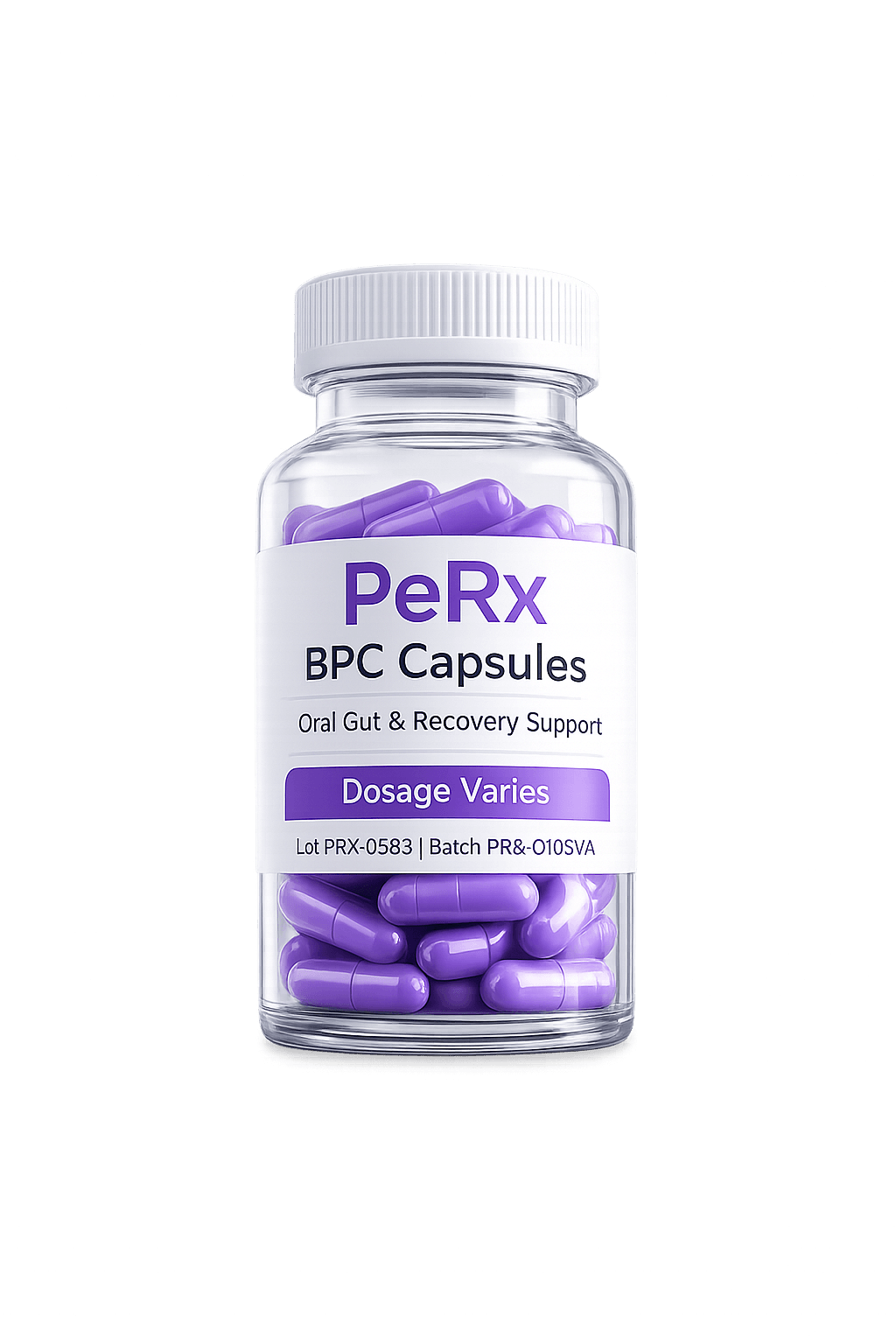
BPC-157 Capsules
For gut-specific concerns, oral BPC-157 has a direct-contact advantage: as the capsule dissolves, the peptide has local access to the gastric and intestinal lining on its way to absorption. This makes oral delivery particularly sensible when the target tissue is the gut itself.
Capsules are typically the first-line form for GLP-1 related GI symptoms. They also avoid adding another injection to a patient already doing weekly subcutaneous dosing of their GLP-1.
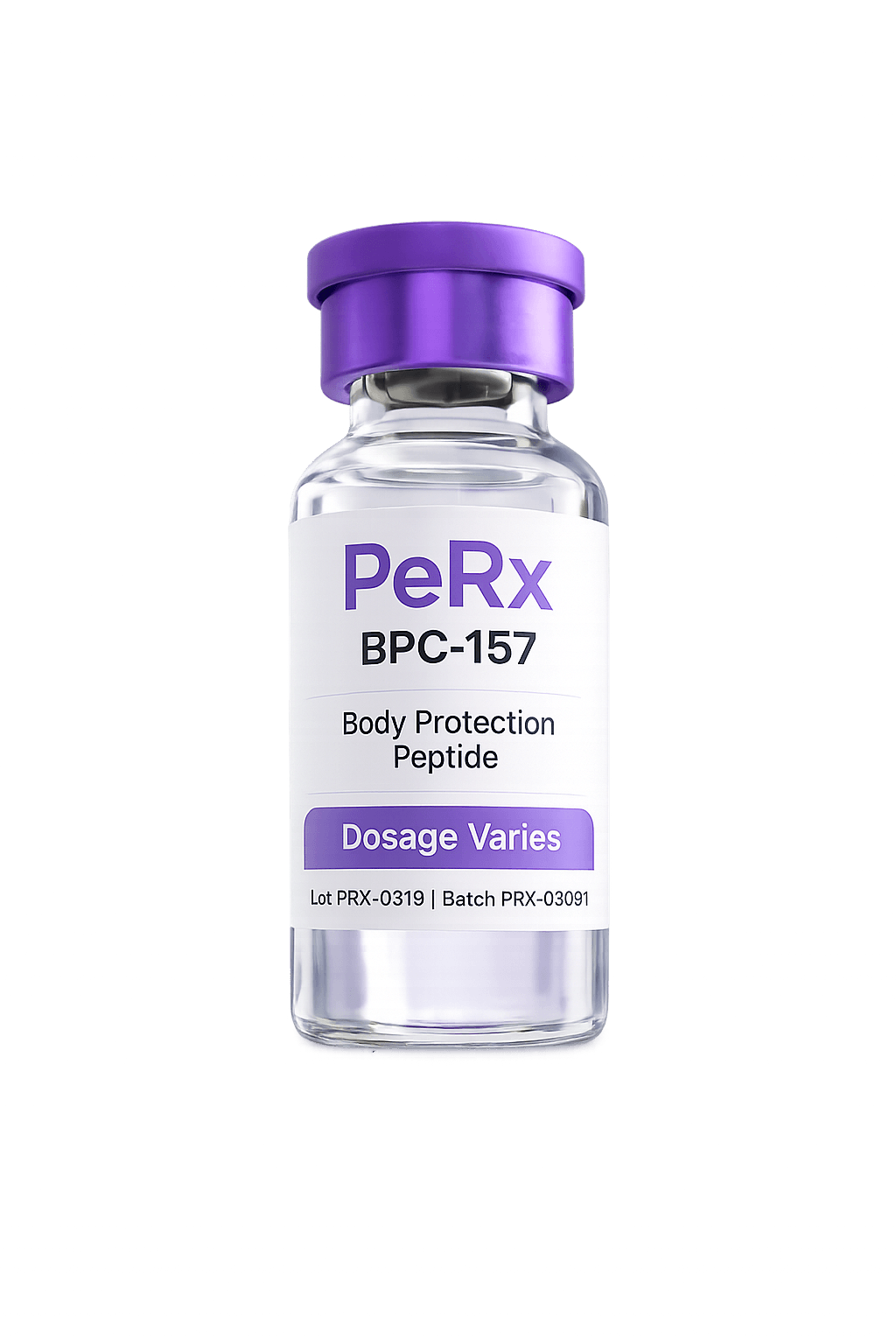
BPC-157 (injectable)
Subcutaneous BPC-157 has higher systemic bioavailability than oral and is the right choice when GI symptoms coexist with other issues BPC-157 addresses: injection site problems from the GLP-1 pen, slow-healing tendons, general tissue recovery.
Injectable BPC-157 is also the more researched form; the bulk of the 100+ published studies on BPC-157 use subcutaneous administration. For patients who want the form with the strongest evidence base, this is it.
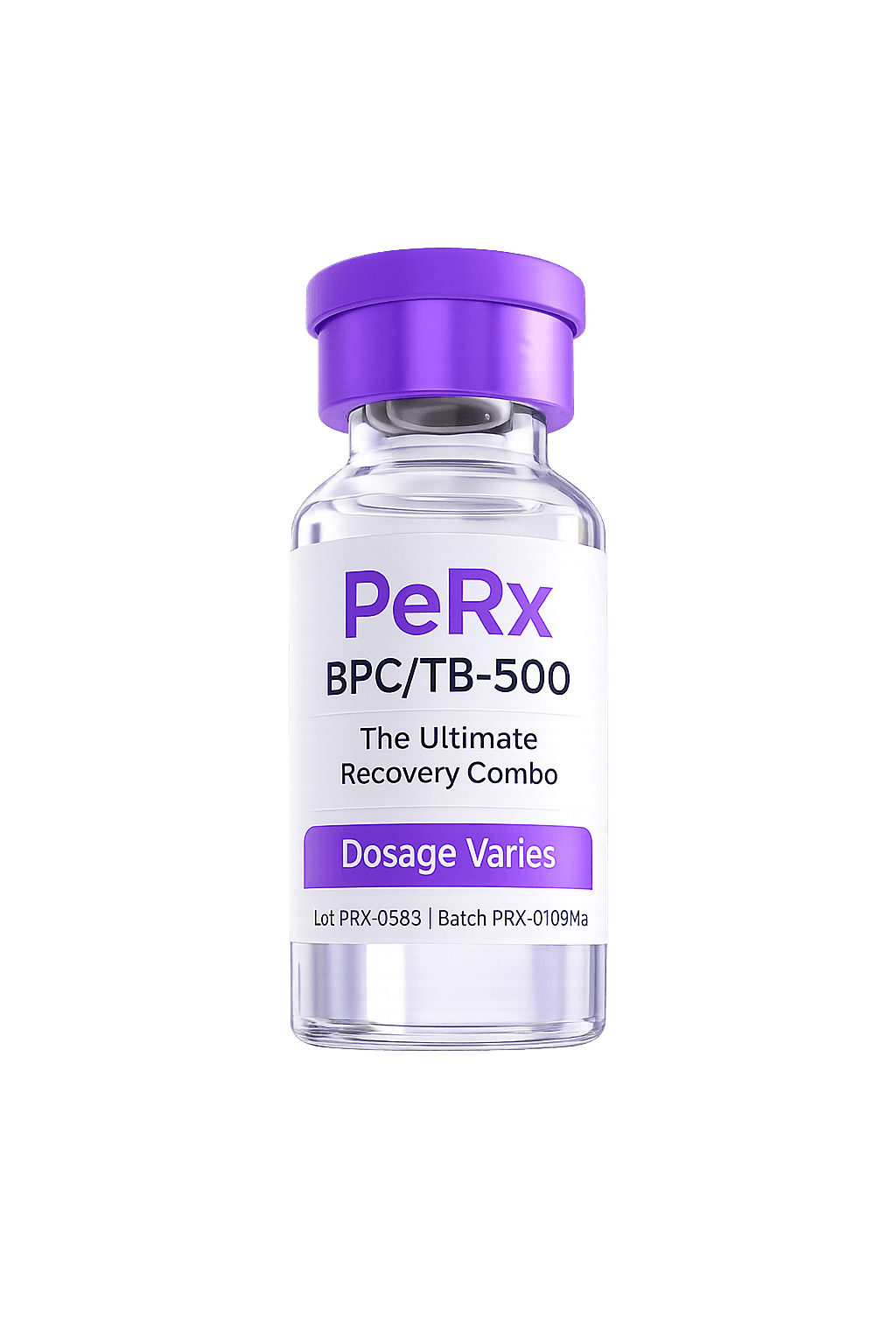
BPC-157 / TB-500
For patients with broader tissue concerns in addition to GI symptoms (older patients with multiple healing issues, athletes carrying chronic injuries), the BPC-157/TB-500 combination expands the repair coverage.
TB-500 adds cell migration support and actin remodeling, which extends the benefit beyond what BPC-157 alone provides. This is typically not needed for isolated GI symptoms but is the right choice when gut issues are one of several concerns.
When to Call a Provider
Most GLP-1 GI symptoms are uncomfortable but not dangerous. Contact your prescriber (or seek urgent care) for any of the following:
Persistent vomiting that prevents you from keeping down fluids for more than 24 hours. Dehydration risk.
Severe abdominal pain that is constant, worsening, or located in the upper abdomen radiating to the back. Rule out pancreatitis, which is a rare but serious GLP-1 complication.
Vomiting partially undigested food hours after eating, especially if worsening over weeks. Suggests a more problematic gastroparesis pattern that needs evaluation.
Blood in stool or vomit. Always evaluate immediately.
Severe constipation with abdominal distension that does not respond to hydration, fiber, and laxatives over 3 to 5 days. Rule out obstruction. Each order ships fully reconstituted and ready to use, delivered overnight in refrigerated packaging, with nothing to mix on your end.
Nausea & Gut Issues on GLP-1s: Common Questions
Related Guides
Continue reading about peptides and protocols that pair well with this guide.
Peptides for Gut Health: Evidence, Options and Limits
Two peptides carry almost all of the gut research: BPC-157, a fragment of a protein in human gastric juice, and KPV, a three-amino-acid piece of a melanocortin hormone. Most of what is known about either comes from rat and mouse models, not from trials in people. This guide lays out what those models measured, where the oral capsule fits, who a prescriber screens out, and what PeRx does and does not prescribe for the gut.
Is Epitalon FDA Approved? 2026 Legal Status
No. Epitalon has never been tested in Western clinical trials. Its entire evidence base comes from four decades of research at one Russian institute by one scientist: Vladimir Khavinson. That research reported telomerase activation in cultured human cells, a result that has never been independently replicated. Here is why Epitalon never entered the FDA drug-approval pipeline, where it sits in the July 2026 compounding review, and what the Russian data actually shows.
Cleveland Peptide Therapy: Sourcing & Costs
A plain guide to peptide therapy in Cleveland: how to tell a real pharmacy from a gray-market seller, what it costs across local clinics, med spas, and telehealth, and who tends to use it here. Plus how pharmaceutical-grade peptides reach any Northeast Ohio address without a clinic visit.
Ready to resolve persistent GI symptoms?
Pharmaceutical-grade BPC-157, available in capsule or injectable form, prescribed by a licensed provider and shipped ready to use. Our provider will recommend a form and protocol based on your specific symptoms.
Medical Disclaimer
The information provided on this website, including all articles, guides, and educational content, is for informational and educational purposes only and is not intended as medical advice, diagnosis, or treatment. Nothing on this site should be construed as a substitute for professional medical advice from a qualified healthcare provider.
The majority of peptides discussed on this site are not approved by the U.S. Food and Drug Administration (FDA) for the indications described. They are classified as bulk drug substances and are available only through a licensed prescribing provider and compounding pharmacy. All treatments require a valid prescription and provider oversight.
The majority of published research on peptide therapies has been conducted in preclinical (animal) models. While early human data is encouraging, comprehensive clinical trial data remains limited for most peptide compounds. Individual results may vary significantly based on health status, injury type, and other factors. No specific outcomes are guaranteed.
Certain peptides discussed on this site are classified as prohibited substances by the World Anti-Doping Agency (WADA) and are banned by major sports organizations including the NFL, NCAA, UFC, NBA, MLB, NHL, and PGA. If you are subject to anti-doping testing, consult your governing body before considering any peptide therapy.
Statements on this website have not been evaluated by the Food and Drug Administration. Products and therapies discussed are not intended to diagnose, treat, cure, or prevent any disease.
© 2026 Wellness MD Group PC DBA PeRx. All rights reserved.