PT-141 Side Effects: The Honest Numbers by Dose
Most PT-141 side effects are mild and short-lived, but a few are worth understanding before your first dose. Here are the real clinical-trial rates for each one, how long they last, and the practical steps that reduce them.
In this article
Key Takeaways
- Nausea is the headline side effect, reported by roughly 40% of trial participants. For most people it is mild, peaks early, and fades within a couple of hours, often easing further with repeated use.
- Flushing (about 20%) and headache (about 11%) are the next most common, both transient. Injection-site reactions occur in roughly 13% and are minor.
- PT-141 causes a small, temporary blood-pressure rise (about 6 mmHg systolic, 3 mmHg diastolic) that resolves within hours. It is a hard contraindication in uncontrolled hypertension or cardiovascular disease.
- Skin and gum darkening (hyperpigmentation) is uncommon, around 1% in trials, and tied to frequent or excessive use. Staying within the dosing limits is the main way to avoid it.
- The biggest lever on side effects is simple: eat light around dosing, consider a pre-dose anti-nausea medication on your provider’s advice, and respect the once-per-24-hours and roughly 8-per-month limits.
Side Effects by the Numbers
| Side effect | How common | Typical duration |
|---|---|---|
| Nausea | ~40% | Peaks within 1 hr, eases over 2-3 hr |
| Flushing | ~20% | Transient, under a few hours |
| Injection-site reaction | ~13% | Minor, fades same day |
| Headache | ~11% | Transient, hours |
| Vomiting | ~5% | Early, short-lived |
| Blood-pressure rise | ~+6/+3 mmHg avg | Resolves in ~8-12 hr |
| Skin/gum darkening | ~1% | Builds with use, may persist |
Nausea
- How common
- ~40%
- Typical duration
- Peaks within 1 hr, eases over 2-3 hr
Flushing
- How common
- ~20%
- Typical duration
- Transient, under a few hours
Injection-site reaction
- How common
- ~13%
- Typical duration
- Minor, fades same day
Headache
- How common
- ~11%
- Typical duration
- Transient, hours
Vomiting
- How common
- ~5%
- Typical duration
- Early, short-lived
Blood-pressure rise
- How common
- ~+6/+3 mmHg avg
- Typical duration
- Resolves in ~8-12 hr
Skin/gum darkening
- How common
- ~1%
- Typical duration
- Builds with use, may persist
Kingsberg SA et al., "Bremelanotide for the Treatment of Hypoactive Sexual Desire Disorder" (RECONNECT Phase III trials), Obstet Gynecol, 2019; and the Vyleesi (bremelanotide) FDA prescribing information. View study
That table is the honest version. Most write-ups on PT-141 either wave the side effects away as "generally well tolerated" or list them without telling you how common any of them actually are. The numbers above come straight from the clinical trials that supported the FDA approval. The pattern they show is consistent: the common effects are mild and brief, the one that makes people quit is nausea, and the two that genuinely require judgment are the blood-pressure rise and the small pigmentation risk. The rest of this guide takes them one at a time, with what to do about each. One variable this guide does not have to dwell on is product quality: PeRx compounds PT-141 in a US-based, FDA-regulated 503A pharmacy and third-party tests every batch, which takes contamination off the list of things that can go wrong.
Nausea: The Big One
Nausea is the side effect that defines the PT-141 experience for most people. It shows up in roughly 40% of users. For many it is mild, a brief wave in the first 30 to 60 minutes that passes. For a minority it is significant, and it is the single most common reason people discontinue. About 5% experience vomiting.
The cause is mechanistic, not a sign anything is wrong. PT-141 acts on melanocortin receptors in the brainstem that influence the gut, the same receptors that made the original tanning-peptide researchers queasy decades ago. Because it is tied to how the drug works, you cannot eliminate it entirely, but you can blunt it a lot. The good news that often gets buried: many people report the nausea diminishes with repeated use as the body adjusts. The mitigation section below has the specifics.
Blood Pressure
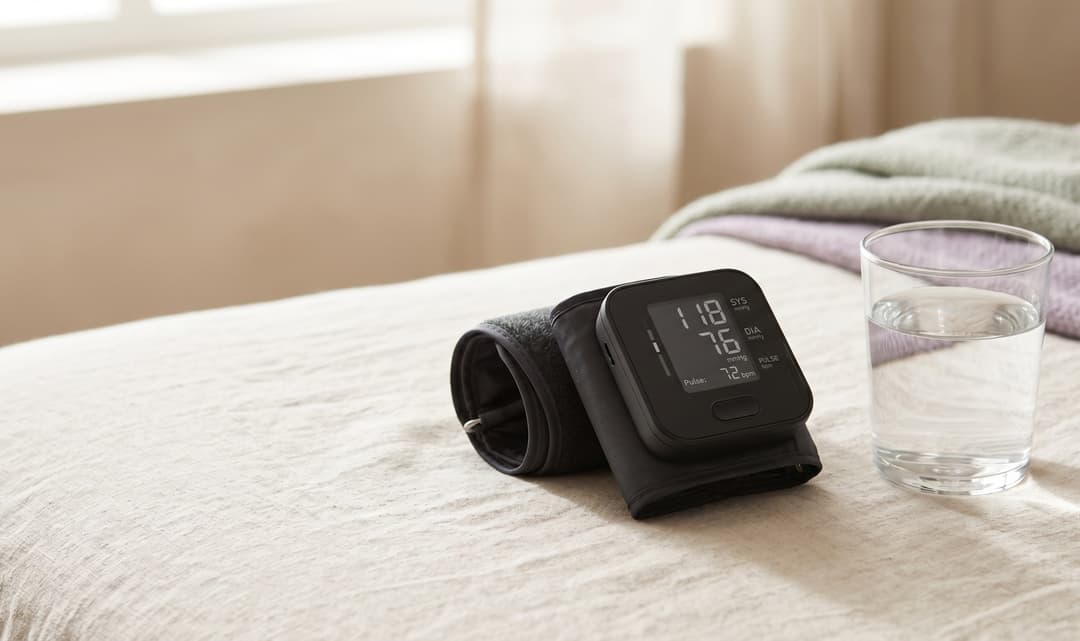
PT-141 causes a temporary rise in blood pressure, on average about 6 mmHg systolic and 3 mmHg diastolic, that peaks a few hours after dosing and settles back to baseline within roughly 8 to 12 hours. For a healthy person, a change that small and brief is not clinically meaningful. For someone with uncontrolled hypertension or established cardiovascular disease, it is a real concern and a firm contraindication.
This single effect drives several of the dosing rules. It is why PT-141 is limited to one dose per 24 hours, why your provider will ask about your cardiovascular history before prescribing, and why honest disclosure of any heart or blood-pressure conditions matters. The limit is not bureaucratic caution. It is the specific guardrail for this specific effect. It is also why PeRx routes every PT-141 order through a licensed provider who reviews your cardiovascular history before anything ships.
Skin and Gum Darkening
This is the side effect people search for under "PT-141 tanning" and "PT-141 skin darkening," and it traces straight back to the drug’s origin as a refined tanning compound. PT-141 retains some activity at the MC1 receptor, which controls melanin production. At recommended doses, clinically meaningful hyperpigmentation is uncommon, around 1% in trials. With frequent or excessive use, it becomes more likely, and it can appear on the face, gums, or breasts.
Two things make this one worth respecting. First, the darkening may not fully reverse after stopping. Second, it is dose-dependent, which means it is largely within your control. Staying inside the recommended ceiling of about 8 doses per month is the single most effective way to avoid it. Any new or changing skin pigmentation, or changes to moles, should be reported to your provider.
Flushing, Headache, and the Minor Set
Flushing, a warm reddening of the face and chest, occurs in roughly 20% of users and passes on its own within a few hours. Headache affects about 11% and is similarly transient. Injection-site reactions, minor redness or a small bruise where you injected, occur in around 13% and fade the same day. None of these typically requires more than patience. If any of them is severe or unusually persistent, that is worth a note to your provider, but for the vast majority they are background noise rather than a reason for concern.
How to Minimize Side Effects
Most of the discomfort, especially the nausea, responds to a handful of simple habits. This is the practical checklist.
Side-Effect Mitigation Checklist
Eat light
Avoid heavy meals around dosing. A large meal tends to amplify nausea rather than cushion it.
Pre-dose anti-nausea
Ask your provider about taking ondansetron about 30 minutes before PT-141 if nausea has been an issue.
Start low
Begin at a lower dose and increase gradually under provider guidance so your body acclimates.
Stay within limits
One dose per 24 hours, about 8 per month. This caps the blood-pressure and pigmentation risks.
Give it a few uses
Nausea often decreases over the first several doses. Do not judge tolerance on the first try alone.
Rotate sites
Move your injection spot each time to keep injection-site reactions minimal. See the how-to-use guide for technique.
Side Effects in Men vs Women
Most of the incidence numbers above come from the trials in premenopausal women that supported the FDA approval, where nausea, flushing, and headache dominated. The picture in men, where PT-141 is used off-label, is broadly similar for those effects, but two points are specific to men. The first is spontaneous erections, which in the original melanocortin research were the headline finding rather than a problem; at therapeutic doses they are generally the intended result, not a side effect. The second matters more: the rare but serious risk of a prolonged erection. An erection lasting more than four hours is priapism, a medical emergency that needs immediate care to avoid lasting damage. It is uncommon, but every man using PT-141 should know that threshold before the first dose.
For women, the effect that matters most in practice is nausea, simply because it is the most common reason people stop. The mitigation steps are the same regardless of sex: eat light, consider a pre-dose anti-nausea medication, and give it a few uses. The blood-pressure rise and the small pigmentation risk apply equally to everyone. So does the bottom line on who should not use it at all: neither men nor women should take PT-141 with uncontrolled hypertension or cardiovascular disease.
Drug Interactions Worth Knowing
A few interactions are worth flagging before you start. PT-141 can reduce the effectiveness of naltrexone, the medication used for alcohol and opioid dependence, because of overlapping receptor activity, so the two are generally not used together. PT-141 can also slow gastric emptying for a few hours after a dose, which delays the absorption of oral medications taken around the same time. If you rely on a time-sensitive oral medication, separate it from your PT-141 dose by several hours and confirm the spacing with your provider. And because PT-141 and PDE5 inhibitors like sildenafil both nudge blood pressure, combining them is something to do under provider guidance rather than on your own, even though the two are sometimes paired deliberately. The how to use PT-141 guide covers that combination in more detail.
When to Call Your Provider
Contact your provider promptly if you notice
Severe or persistent nausea or vomiting that does not settle, especially if it is making the medication intolerable.
Symptoms of high blood pressure such as a pounding headache, vision changes, or chest discomfort after dosing.
New or spreading skin or gum darkening, or any change in a mole.
Any reaction that feels like an allergy (rash, swelling, difficulty breathing) requires urgent medical attention, not just a provider call.
PT-141 is contraindicated in uncontrolled hypertension and cardiovascular disease. If you have a heart or blood-pressure condition, that conversation should happen before you ever start, not after a reaction.
For the rest of the picture, the main PT-141 guide covers how the drug works and the how to use PT-141 guide walks through dosing and timing, which is where a lot of side-effect management actually happens. The injectable form also matters here, since the abandoned nasal spray caused worse blood-pressure spikes, as covered in oral vs injectable PT-141. If you are weighing whether PT-141 is right for you at all, the PT-141 vs Viagra comparison lays out how it differs from blood-flow medications.
PT-141 Side Effects: Common Questions
Related Guides
Continue reading about peptides and protocols that pair well with this guide.
PT-141 Dosage Chart: Units, Limits, Men vs Women
Every other dosage chart on this site describes a daily or nightly routine. PT-141 is the exception: you dose it per event, not per day, and the two numbers that matter most are ceilings, not schedules. This page converts milligrams to insulin-syringe units at the PeRx concentration, anchors everything to the one FDA-approved reference dose, and answers the men-versus-women question with the data that actually exists, as of September 8, 2026.
PT-141 While on a GLP-1: Libido, Timing, Evidence
Sex drive fading a few months into semaglutide or tirzepatide is one of the more common complaints nobody warns you about, and the internet handles it badly. GLP-1 explainers list low libido as a possibility and stop at "talk to your doctor." PT-141 pages sell desire as if the weekly injection half their readers already take does not exist. This page does what neither side does: it sorts out why libido actually shifts during GLP-1 weight loss, what to rule out before adding anything, and how a clinic that prescribes both medications thinks about the pairing.
Where to Get Peptides in St. Petersburg (2026 Guide)
A plain guide to peptide therapy in St. Petersburg: what it costs across med spas, IV lounges, and telehealth, and who tends to use it in a Gulf-coast city where a lot of people stay active well past retirement. Plus how pharmaceutical-grade peptides reach any Pinellas County address without a clinic visit.
Ready to get started?
Pharmaceutical-grade PT-141, prescribed by a licensed provider who reviews your history first.
Medical Disclaimer
The information provided on this website, including all articles, guides, and educational content, is for informational and educational purposes only and is not intended as medical advice, diagnosis, or treatment. Nothing on this site should be construed as a substitute for professional medical advice from a qualified healthcare provider.
The majority of peptides discussed on this site are not approved by the U.S. Food and Drug Administration (FDA) for the indications described. They are classified as bulk drug substances and are available only through a licensed prescribing provider and compounding pharmacy. All treatments require a valid prescription and provider oversight.
The majority of published research on peptide therapies has been conducted in preclinical (animal) models. While early human data is encouraging, comprehensive clinical trial data remains limited for most peptide compounds. Individual results may vary significantly based on health status, injury type, and other factors. No specific outcomes are guaranteed.
Certain peptides discussed on this site are classified as prohibited substances by the World Anti-Doping Agency (WADA) and are banned by major sports organizations including the NFL, NCAA, UFC, NBA, MLB, NHL, and PGA. If you are subject to anti-doping testing, consult your governing body before considering any peptide therapy.
Statements on this website have not been evaluated by the Food and Drug Administration. Products and therapies discussed are not intended to diagnose, treat, cure, or prevent any disease.
© 2026 Wellness MD Group PC DBA PeRx. All rights reserved.