BPC-157 Peptide: Benefits, Dosage & Complete Guide
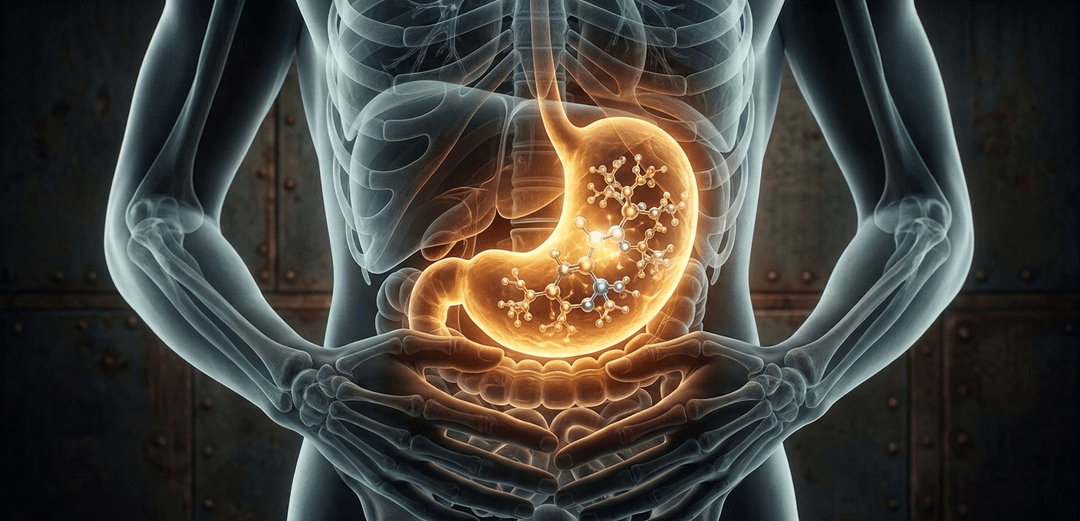
A peptide discovered in a Croatian lab in the early '90s is now one of the most studied healing compounds in regenerative medicine. Here's what the science actually says, where it came from, and what you should know before starting.
In this article
Key Takeaways
- BPC-157 is a 15-amino-acid peptide derived from human gastric juice with 100+ published studies spanning 30 years.
- It promotes tissue repair by upregulating growth factor receptors (VEGF, FGF), modulating nitric oxide, and supporting blood vessel formation.
- Primary uses include tendon/ligament repair, gut healing, joint recovery, and post-surgical healing.
- Most protocols use subcutaneous injection at 250-500 mcg/day for 4-8 weeks. Results typically begin within 1-2 weeks.
- BPC-157 is not FDA-approved. It is available through compounding pharmacies with a provider prescription.
Quick Facts
Full Name
Body Protection Compound-157
Type
Synthetic pentadecapeptide (15 amino acids)
Origin
Derived from human gastric juice
Published Studies
100+ spanning 30 years
Primary Uses
Tissue repair, gut healing, joint recovery
Administration
Subcutaneous injection
The Origin Story
BPC-157 peptides are lab-made copies of a 15-amino-acid fragment found naturally in human gastric juice, and the story of how that fragment was discovered explains almost everything about what it does. In the early 1990s, a pharmacologist named Dr. Predrag Sikiric was working at the University of Zagreb in Croatia, studying something that most people never think about: how the stomach heals itself. When you get BPC-157 through PeRx, it is prescribed by a licensed provider and compounded in a US-based, FDA-regulated 503A pharmacy, the same regulated pathway many everyday prescriptions go through.
Think about what your stomach deals with on a daily basis. It produces hydrochloric acid strong enough to dissolve metal. It churns food with muscular contractions. It's constantly exposed to digestive enzymes that break down proteins. And yet, despite all of that, the stomach lining repairs itself so efficiently that most people will go their entire lives without a single gastric ulcer.
Dr. Sikiric wanted to know why. What was it about gastric juice that made this kind of rapid, reliable healing possible?
His team isolated a larger protein they called BPC (Body Protection Compound) from human gastric juice. Then they zeroed in on a specific fragment: a 15-amino-acid sequence that appeared to be responsible for the protein's protective and regenerative properties. They named it BPC-157.
What they found next was unexpected. When they tested this peptide fragment in animal models, it didn't just help with stomach lining repair. It accelerated healing in tendons. Ligaments. Muscles. Nerves. Bone. The compound that the body produced to protect the gut seemed to have the ability to promote repair almost everywhere.
Since that initial discovery, BPC-157 has become one of the most widely studied peptides in regenerative research, with over 100 published papers spanning three decades. The first publication appeared in 1993, and the research hasn't slowed down. In fact, interest has only accelerated. A 2025 systematic review looked at the full body of BPC-157 literature and found consistent healing effects across multiple tissue types and injury models.
Sikiric P et al., first described BPC-157 in 1993. Vasireddi N et al., "Emerging Use of BPC-157 in Orthopaedic Sports Medicine: A Systematic Review," 2025. View study
1993
Discovery in Zagreb
Dr. Sikiric isolates a 15-amino-acid peptide from human gastric juice at the University of Zagreb.
2009
Multi-System Evidence
50+ papers published. Healing effects confirmed in muscle, bone, nerve, and vascular tissue.
2021
Clinical Data Published
87.5% of knee pain patients report significant, lasting relief for 6–12 months.
1997
First Tendon Studies
Research expands beyond the gut. Achilles tendon healing accelerates in animal models.
2018
"Wolverine Peptide" Goes Mainstream
Athletes and biohackers adopt BPC-157. The "Wolverine Stack" with TB-500 emerges.
2025
Systematic Review + Safety Data
100+ papers reviewed. Pilot study confirms zero adverse effects on major organ biomarkers.
Why This Matters
BPC-157 isn't a synthetic drug designed in a lab from scratch. It's a fragment of a protein your body already makes. The researchers didn't invent it. They found it, isolated it, and figured out how to use it. That distinction matters when you're thinking about how it interacts with your body's existing repair systems.
How BPC-157 Actually Works
This is where things get interesting. BPC-157 isn't a painkiller. It isn't a steroid. It doesn't override your body's systems or artificially suppress anything. Instead, it works by amplifying your body's own repair mechanisms. Here's what's happening at the cellular level.
It builds new blood vessels where you need them most
This is probably BPC-157's most important trick, and it's the one that explains why it works so well for tendons, ligaments, and joints.
These connective tissues are notoriously slow healers. The reason is simple: they have terrible blood supply. Your bicep has blood vessels running all through it, constantly delivering oxygen and nutrients and carrying away waste. Your Achilles tendon? Not so much. And without adequate blood flow, healing crawls along at a frustrating pace.
BPC-157 addresses this directly by promoting angiogenesis, the formation of new blood vessels. It upregulates VEGF (vascular endothelial growth factor) and activates the VEGFR2 receptor pathway, essentially telling your body to build new capillary networks at the injury site. More blood vessels means more oxygen, more nutrients, and more repair cells reaching the damaged tissue.
This isn't theoretical. Animal studies have shown measurable increases in capillary density at injury sites treated with BPC-157.
Hsieh MJ et al., "Therapeutic potential of pro-angiogenic BPC157 is associated with VEGFR2 activation and up-regulation," Journal of Molecular Medicine, 2017. Cell and rodent models. View study
What you're looking at: Two experiments that demonstrate how BPC-157 builds new blood vessels. Top row (migration assay): Researchers grew a layer of endothelial cells (the cells that line your blood vessels), then scraped a clean gap through the middle. They measured how quickly the cells migrated to close the gap, which is a key step in forming new blood vessels. At 0 hours (left), all groups have the same gap. By 16 hours, the BPC-157 treated groups (right columns) have significantly narrower gaps, meaning the cells moved faster to fill the wound. Bottom row (tube formation assay): The same endothelial cells were placed on a gel that mimics the body's tissue environment. The cells naturally organize into tube-like networks, which is literally how new capillaries form. The untreated group (left) forms sparse, disorganized tubes. The BPC-157 groups form denser, more interconnected networks, with the highest dose showing the most robust vessel formation. This is the cellular mechanism behind how BPC-157 restores blood supply to injured tendons, ligaments, and other poorly vascularized tissues.
BPC-157 promotes blood vessel formation. Endothelial cell migration assays (top) and tube formation assays (bottom) show dose-dependent increases in angiogenic activity, the mechanism behind BPC-157's ability to deliver healing resources to injured tissue.
Huang T et al., Drug Design, Development and Therapy, 2015; 9: 2485-2499. · CC BY-NC 3.0
Click image to zoom
It activates your collagen-building machinery
Once new blood vessels bring resources to the injury site, the actual rebuilding can begin. BPC-157 stimulates fibroblasts, the cells responsible for producing collagen. Collagen is the structural protein that makes up tendons, ligaments, and connective tissue. It's basically the scaffolding your body uses to rebuild damaged structures. That mechanism is why it shows up in recovery protocols for the people who load connective tissue hardest, from powerlifters and strongman athletes to triathletes and Ironman competitors managing overuse tendinopathy.
What's notable is that studies show BPC-157 doesn't just speed up collagen production. It appears to improve the quality of the collagen being laid down. Treated tendons in animal models developed more organized, better-aligned collagen fibers compared to untreated controls. That's the difference between tissue that's technically healed and tissue that's actually strong.
BPC-157 also upregulates growth hormone receptor expression in tendon fibroblasts. In simpler terms, it makes the repair cells at the injury site more responsive to your body's own growth signals, creating a positive feedback loop for healing.
Chang CH et al., Journal of Applied Physiology, 2011. View study
It manages inflammation without shutting it down
Here's something most people don't realize: inflammation isn't inherently bad. The initial inflammatory response after an injury is actually necessary. It's how your body signals that something is wrong, cleans up damaged cells, and recruits repair resources to the area. The problem is when inflammation becomes excessive or chronic, at which point it starts causing more damage than it prevents.
Anti-inflammatory drugs deal with inflammation by suppressing it across the board. That reduces pain, but it also interferes with the healing process itself. BPC-157 takes a different approach. Research suggests it modulates the inflammatory response, dialing down the excessive parts while allowing the productive aspects to continue. It reduces pro-inflammatory markers like IL-6 and TNF-alpha without the systemic suppression that comes with broad anti-inflammatory medication.
It works through the nitric oxide system
BPC-157 interacts extensively with the nitric oxide (NO) system, which regulates blood flow, tissue protection, and wound healing throughout the body. This interaction helps explain why the peptide's effects aren't limited to one tissue type. By modulating NO pathways, BPC-157 can influence healing in the gut, the musculoskeletal system, the nervous system, and the vascular system. For readers focused on digestive symptoms specifically, the best peptides for gut health covers where BPC-157 fits alongside other options. It's also part of why it has demonstrated cytoprotective properties, meaning it actively shields cells from damage.
Angiogenesis
Builds new blood vessels via VEGF pathway, delivering oxygen and nutrients to injured tissue.
Collagen Production
Activates fibroblasts to lay down stronger, better-organized collagen at the injury site.
Inflammation Control
Modulates inflammatory response: dials down excess without shutting down productive healing.
Nitric Oxide System
Interacts with NO pathways to regulate blood flow, tissue protection, and wound healing body-wide.
What you're looking at: A map of every major signaling pathway BPC-157 activates in your body. The key takeaway is the sheer number of arrows and connections. This isn't a compound that does one thing. It triggers a cascade of repair signals: growing new blood vessels (the VEGF pathway on the left), protecting cells from damage (HO-1 and heat shock proteins in the center), opening up blood flow through nitric oxide production (the eNOS pathway), and even supporting nerve recovery through neurotransmitter modulation (bottom right). That's why it shows consistent results across so many different injury types. It's coordinating multiple repair systems simultaneously.
Molecular mechanisms of BPC-157. This pathway diagram from a 2025 review shows how the peptide activates multiple signaling cascades simultaneously: VEGF-dependent angiogenesis, nitric oxide production, ERK1/2 activation, cytoprotective factors (HO-1, heat shock proteins), and neurotransmitter modulation.
Click image to zoom
The Takeaway
BPC-157 doesn't do one thing. It coordinates multiple repair pathways simultaneously: building new blood vessels, producing stronger collagen, managing inflammation, and protecting cells from further damage. That's why it shows up in research for such a wide range of conditions. It's not a miracle compound. It's a signaling peptide that helps your body do what it already knows how to do, just faster and more efficiently.
BPC-157 Half-Life
How long does BPC-157 stay in your system? Honest answer: nobody knows precisely, because no human pharmacokinetic data has been published for the compounded peptide. Every half-life figure you see quoted online traces back to animal work, so treat exact numbers with some skepticism.
The best available data comes from a 2022 study that tracked BPC-157 in rats and beagle dogs after intravenous and intramuscular injection. The elimination half-life of the intact peptide was under 30 minutes in both species. The compound was rapidly broken down into small peptide fragments and then into single amino acids that feed into normal metabolism.
He L et al., "Pharmacokinetics, distribution, metabolism, and excretion of body-protective compound 157, a potential drug for treating various wounds, in rats and dogs," Frontiers in Pharmacology, 2022. View study
A plasma half-life measured in minutes sounds like it should be a dealbreaker. It isn't, and the reason is the difference between the peptide and the processes it triggers. BPC-157 works by switching on repair programs: capillary growth, fibroblast activation, collagen synthesis. Those programs keep running for days after the peptide itself has cleared your bloodstream. Once or twice daily dosing exists to keep a fresh signal arriving while that slower biology does the actual work, which is why a compound cleared in under an hour still shows effects measured in weeks.
One related point that trips people up: half-life and detection window are not the same thing. Anti-doping tests look for metabolite fragments, not just the intact peptide, and can detect BPC-157 in urine for up to four days after a dose. A short half-life does not mean short detectability.
BPC-157 Benefits: What It Can Do for You
The research on BPC-157 spans an unusually wide range of conditions. Most compounds are studied for one or two applications. BPC-157 has published data across tendons, ligaments, muscles, bones, the gut, the nervous system, and the vascular system. Here's where the evidence is strongest.
Tendon and ligament repair
This is BPC-157's headline use case, and it's where the preclinical data is most compelling. Studies have shown accelerated healing in models of Achilles tendon transection, MCL tears, rotator cuff injuries, and quadriceps tendon damage. Treated tissues consistently show faster recovery, improved biomechanical strength, and better functional outcomes compared to controls.
One study found that BPC-157-treated Achilles tendons healed without scar tissue formation, which is significant. Scar tissue in tendons is weaker and less flexible than normal tendon tissue, and it's a major reason why tendon injuries tend to recur.
Sikiric P et al., Journal of Physiology-Pharmacology, 2009.
Gut healing
This was BPC-157's original claim to fame, and the data here goes deep. Studies show protective and healing effects throughout the entire GI tract, from the esophagus to the colon. It's been studied for gastric ulcers, intestinal inflammation, gut damage from long-term anti-inflammatory drug use (a particularly relevant one, since that is a leading cause of gut issues), and inflammatory bowel conditions.
A 2025 systematic review from the American College of Gastroenterology confirmed BPC-157's cytoprotective and pro-healing effects throughout the gastrointestinal tract in preclinical models, noting particular promise for mucosal protection and wound healing.
Vasireddi N et al., American Journal of Gastroenterology, 2025. View study
Joint pain and mobility
In one of the few published human studies, patients with chronic knee pain received BPC-157 injections. The results were notable: 87.5% of patients reported significant pain relief that lasted six months to a year after treatment. That's not just masking pain. That kind of duration suggests structural improvement.
Lee E, Padgett B, "Intra-Articular Injection of BPC 157 for Multiple Types of Knee Pain," Alternative Therapies in Health and Medicine, 2021. View study
Nerve regeneration
BPC-157 has shown neuroprotective properties in models of traumatic brain injury, spinal cord compression, and peripheral nerve transection. It appears to support neural repair through the same angiogenic and anti-inflammatory mechanisms that drive tissue healing elsewhere. This is still an early area of research, but it's one of the more exciting frontiers for the peptide.
Recovery from training
While BPC-157 won't directly build muscle or improve athletic performance, its effects on recovery are why it's become popular in the fitness community. By calming the inflammatory response, accelerating tissue repair, and improving blood flow to stressed areas, it can potentially shorten the time between hard training sessions. Less downtime from nagging injuries. Faster bounce-back from high-volume work.
What you're looking at: Researchers created identical wounds on five groups of subjects, then tracked how they healed over 18 days. The top row shows photographs of the actual wounds at day 18. Group A (top-left) received no treatment at all, and you can see the wound is still largely open and unhealed. Group B received bFGF, a standard growth factor used in wound care. Groups C, D, and E received increasing concentrations of BPC-157 (200, 400, and 800 ng/mL). The difference is striking. The BPC-157 groups, especially at higher doses, show near-complete wound closure. The graph below quantifies this: wound area was measured every 4 days, and the BPC-157 lines (particularly the 800 ng/mL group) drop significantly faster than the untreated control, meaning the wounds shrank and closed at an accelerated rate.
Figure 1: BPC-157 significantly accelerates wound closure. Representative images at day 18 across five groups (untreated control, bFGF-treated, and three BPC-157 concentrations) with quantified wound area measurements.
Click image to zoom
What You Should Know Before Starting
We could fill this section with nothing but hype. But that wouldn't be useful to you, and it wouldn't be honest. Here's what you should genuinely be aware of before considering BPC-157.
Most of the research is in animals (but it's incredibly consistent)
The vast majority of BPC-157 studies have been conducted in rats, mice, and rabbits. A 2025 systematic review screened 544 papers and found that of the 36 studies that met their criteria, 35 were preclinical.
That said, the consistency of results across that many studies, tissue types, and research groups over three decades is unusual. It's not one lab getting lucky once. It's a pattern across 100+ publications. And the early human data that does exist is encouraging. A 2025 pilot safety study found no adverse effects on cardiac, hepatic, renal, thyroid, or glucose biomarkers. The knee pain study showed real, lasting relief in most patients. The animal data is remarkably strong, and the human data is catching up. For what patients actually report and when to call your provider, our peptide side effects guide and the dedicated BPC-157 side effects guide covers what is common, what is rare, and what deserves attention.
Vasireddi N et al., 2025 Systematic Review. Lee E & Burgess K, "Safety of IV BPC 157 in Humans: A Pilot Study," 2025.
It's banned in competitive sports
WADA lists BPC-157 under its S0 category and it's prohibited by the NFL, NCAA, UFC, NBA, MLB, NHL, PGA, and essentially every major sports organization. It can be detected in urine for up to four days. If you're a competitive athlete subject to drug testing, this is a non-starter.
If you're a recreational athlete, weekend warrior, or someone dealing with a nagging injury who isn't subject to testing, this restriction doesn't apply to you. But you should know it exists.
Set realistic expectations
BPC-157 is not a magic bullet. It accelerates and supports your body's natural repair processes, but it still takes time. Chronic injuries that have been building for years won't resolve in a week. Most people start noticing meaningful changes in the 2-4 week range, with full recovery timelines stretching to 8-12 weeks for more serious issues. Consistency matters. Patience matters. And sourcing quality matters enormously (more on that below).
Your BPC-157 Timeline
Everyone's body is different, and your injury, age, overall health, and consistency with the protocol all affect the timeline. But here's what most people experience. For a goal-by-goal breakdown, see how long BPC-157 takes to work.
Week 1-2
Early Relief
Many patients notice reduced pain and stiffness at the injury site. If you're using BPC-157 for gut issues, bloating and digestive discomfort often start improving within the first few days. Sleep quality may improve as systemic inflammation decreases. Behind the scenes, your body is calming excessive inflammation and beginning to build new capillary networks to the damaged area. Important: feeling less pain doesn't mean you're healed. Don't push it yet.
Week 2-4
Active Repair
This is when things start to feel real. Better mobility. Improved range of motion. Recovery from workouts feels faster. Gut symptoms continue trending in the right direction. At the cellular level, fibroblasts are actively laying down new collagen at the injury site, and those new blood vessel networks are maturing and delivering sustained nutrient flow. Many patients describe this phase as the turning point.
Week 4-8
Getting Stronger
The injury site starts to feel stable. Not just pain-free, but solid. Activities that used to cause flare-ups may no longer bother you. Collagen fibers are organizing and aligning into stronger structural patterns, building real integrity back into the tissue. This is a good phase to start gradually reintroducing activity you've been avoiding.
Week 8-12+
Full Recovery
Many patients report a full return to normal activity. The treated area often feels stronger than before the injury. New blood vessel networks are established, tissue remodeling is complete. For gut issues, many patients experience sustained symptom resolution. Most people finish their protocol or transition to a maintenance dose at this stage.
Safe Use, Sourcing, and Protocols
Here's something that doesn't get talked about enough: with peptides, where you get them matters as much as the peptide itself. Maybe more.
Why sourcing is the single most important decision you'll make
BPC-157 exists in a regulatory gray area. It's not FDA-approved. It's not a controlled substance. That means there's no standardized quality enforcement for the products being sold online. And there is a lot of BPC-157 being sold online.
Research has shown that a significant percentage of peptide products sold as supplements or research chemicals contain contaminants, incorrect dosages, or degraded compounds. The Arnold Schwarzenegger-backed Pump Club newsletter cited data suggesting that between 12% and 58% of peptide products tested contained substances other than what was on the label.
What can go wrong with poorly sourced peptides? Bacterial endotoxins from unsterile manufacturing. Degraded peptides that have lost their bioactivity (you're injecting something that does nothing). Incorrect concentrations (too much or too little of the active compound). Contamination with other substances entirely. These aren't hypothetical risks. The FDA has issued warning letters to companies selling improperly manufactured BPC-157 products, and the agency has specifically flagged contamination and characterization concerns.
Red Flags in Peptide Sourcing
Products marketed as "research chemicals" with wink-and-nod dosing instructions. No third-party testing documentation available. Prices that seem too low (pharmaceutical-grade peptide manufacturing is not cheap). No medical oversight or provider involvement. Products shipped without proper cold chain handling. If any of these apply, walk away.
What to look for in a source
The peptides themselves should be pharmaceutical-grade with third-party testing, full chain-of-custody documentation, and proper storage and shipping. You want to know exactly what's in the vial, that it's been tested, and that it was handled correctly from manufacturing to your doorstep.
This is exactly why PeRx exists. We connect you with a licensed provider for access to third-party tested, pharmaceutical-grade peptides with everything you need to get started safely. No hunting through sketchy websites. No guessing about purity. No rolling the dice on what's actually in the vial.
Typical protocols
Here's what typical BPC-157 protocols look like based on the research and established clinical practice.
Typical BPC-157 Protocol
Daily Dose
Per provider protocol
Administration
Subcutaneous injection
Frequency
Once or twice daily
Injection Site
Near injury or abdominal area
Cycle Length
4-8 weeks typical
Onset
Many notice effects in 1-2 weeks
The injection itself is simple. It's subcutaneous, meaning it goes just under the skin, not into muscle. Most people use a small insulin syringe. The injection site is usually either near the injury (for localized issues) or the abdominal area (for systemic effects or gut healing); our where to inject BPC-157 guide covers site selection and rotation in detail. Your PeRx provider determines the right dose and frequency for your situation, and your kit includes everything you need: syringes, alcohol swabs, and clear instructions.
How to Source Peptides Safely
The difference between pharmaceutical-grade peptides and unregulated products can impact your safety and results.
- ✕"Research chemical" labels with no dosing guidance
- ✕No third-party testing or COA documentation
- ✕Suspiciously low prices for "pharmaceutical-grade"
- ✕No medical oversight or provider involvement
- ✕No cold-chain shipping or storage protocols
- ✓Licensed provider supervision and prescriptions
- ✓Third-party testing with Certificate of Analysis
- ✓Pharmaceutical-grade with full chain of custody
- ✓Proper cold-chain storage and shipping protocols
- ✓Clear dosing instructions and medical support
BPC-157 vs. Similar Peptides
BPC-157 isn't the only healing peptide out there. Depending on what you're dealing with, a different peptide or a combination might be the better fit. Here's how BPC-157 stacks up against the other regenerative peptides in our catalog.
| BPC-157 | TB-500 | |
|---|---|---|
| Best For | Specific injuries, gut healing, tendon/ligament | Whole-body recovery, flexibility, multiple injuries |
| How It Works | Builds new blood vessels and collagen at the injury site | Regulates actin to promote cell migration body-wide |
| Scope | Targeted. Works best near the injection site. | Systemic. Distributes throughout the entire body. |
| Dosing | Per provider protocol, 1-2x/day (more frequent dosing) | Per provider protocol, 2x/week (less frequent dosing) |
| Injection Site | Near injury site (works locally) | Anywhere (works systemically) |
| Unique Strengths | Gut healing, tendon/ligament repair, nerve repair | Flexibility, cardiac protection, hair growth |
| Onset | 1-2 weeks for initial effects | 1-3 weeks for initial effects |
Best For
- BPC-157
- Specific injuries, gut healing, tendon/ligament
- TB-500
- Whole-body recovery, flexibility, multiple injuries
How It Works
- BPC-157
- Builds new blood vessels and collagen at the injury site
- TB-500
- Regulates actin to promote cell migration body-wide
Scope
- BPC-157
- Targeted. Works best near the injection site.
- TB-500
- Systemic. Distributes throughout the entire body.
Dosing
- BPC-157
- Per provider protocol, 1-2x/day (more frequent dosing)
- TB-500
- Per provider protocol, 2x/week (less frequent dosing)
Injection Site
- BPC-157
- Near injury site (works locally)
- TB-500
- Anywhere (works systemically)
Unique Strengths
- BPC-157
- Gut healing, tendon/ligament repair, nerve repair
- TB-500
- Flexibility, cardiac protection, hair growth
Onset
- BPC-157
- 1-2 weeks for initial effects
- TB-500
- 1-3 weeks for initial effects
Many people combine BPC-157 with TB-500 for complete tissue-repair coverage. BPC-157 handles growth-factor signaling at the injury site while TB-500 drives cell migration and angiogenesis systemically. Together they cover both focused and whole-body recovery. See BPC-157 vs. TB-500 for the head-to-head, our complete BPC/TB-500 combo guide for protocols and timing, and BPC-157 vs. GHK-Cu if you are weighing acute repair against tissue remodeling. For the regulatory picture, is BPC-157 FDA approved?; for goal-specific options, our joint pain and post-surgery recovery pages; and for cycling, the peptide cycling guide.
Injectable vs Capsules
PeRx offers BPC-157 in two formats: as a subcutaneous injectable (standalone or in the BPC/TB-500 combo vial) and as oral capsules. This matters because BPC-157 is one of the rare peptides that actually works when you swallow it.
Most peptides are destroyed in the stomach within minutes. BPC-157 is different. It was isolated from human gastric juice. It is stable in stomach acid for over 24 hours. Animal studies estimate oral bioavailability around 30-50%, which is exceptional for a peptide. This means oral BPC-157 actually reaches therapeutic levels, especially in the GI tract where it makes direct contact with the lining on the way through.
| BPC-157 Injectable | BPC Capsules | |
|---|---|---|
| Bioavailability | Near 100% (subcutaneous, bypasses GI tract) | Estimated 30-50% (oral, some lost to digestion) |
| Best For | Tendon, ligament, muscle injuries, localized healing, systemic + gut | Gut healing (IBS, gastritis, leaky gut), needle-free convenience |
| Localized Delivery | Yes (inject near injury site for concentrated local effect) | No (systemic via GI absorption, strongest in the gut itself) |
| Convenience | Requires refrigeration, syringes, injection technique | Daily capsule, travel-friendly, no cold chain needed |
| Cost | $229/month (standalone) or $299/month (BPC/TB-500 combo) | $200/30 capsules |
Bioavailability
- BPC-157 Injectable
- Near 100% (subcutaneous, bypasses GI tract)
- BPC Capsules
- Estimated 30-50% (oral, some lost to digestion)
Best For
- BPC-157 Injectable
- Tendon, ligament, muscle injuries, localized healing, systemic + gut
- BPC Capsules
- Gut healing (IBS, gastritis, leaky gut), needle-free convenience
Localized Delivery
- BPC-157 Injectable
- Yes (inject near injury site for concentrated local effect)
- BPC Capsules
- No (systemic via GI absorption, strongest in the gut itself)
Convenience
- BPC-157 Injectable
- Requires refrigeration, syringes, injection technique
- BPC Capsules
- Daily capsule, travel-friendly, no cold chain needed
Cost
- BPC-157 Injectable
- $229/month (standalone) or $299/month (BPC/TB-500 combo)
- BPC Capsules
- $200/30 capsules
Choose the injectable if you have a specific musculoskeletal injury, want localized delivery near the injury site, or need maximum systemic potency. Choose the capsules if gut healing is your primary goal or you want needle-free BPC-157 for general recovery support. Some practitioners start with the injectable for an acute injury, then transition to capsules for maintenance. Talk to your provider about which format fits your situation. Each order ships fully reconstituted and ready to use, delivered overnight in refrigerated packaging, with nothing to mix on your end.
BPC-157: Common Questions
Related Guides
Continue reading about peptides and protocols that pair well with this guide.
Is BPC-157 FDA Approved in 2026? The Honest Answer
No. BPC-157 has never been submitted for FDA approval and has never entered formal clinical trials. It is available as a compounded medication prescribed by licensed providers. Despite being the most widely used peptide in therapy, its entire evidence base comes from preclinical research. Here is what that means and why millions of people use it anyway.
BPC-157 Side Effects: What’s Real and What’s Unknown
BPC-157 has never been through a controlled human safety trial, and any honest discussion of its side effects starts there. Here is what users actually report, what three decades of animal research does and does not show, and how prescription screening changes the risk picture.
Ozempic & Wegovy Injection Site Irritation: Fix
Painful lumps, bruising, redness, and lingering soreness are among the most common complaints from GLP-1 patients. Here is why injection sites react the way they do, how to minimize it with technique, and which peptides providers prescribe for patients with persistent nodules or slow healing.
Ready to get started?
Pharmaceutical-grade BPC-157, delivered to your door with everything you need.
Medical Disclaimer
The information provided on this website, including all articles, guides, and educational content, is for informational and educational purposes only and is not intended as medical advice, diagnosis, or treatment. Nothing on this site should be construed as a substitute for professional medical advice from a qualified healthcare provider.
The majority of peptides discussed on this site are not approved by the U.S. Food and Drug Administration (FDA) for the indications described. They are classified as bulk drug substances and are available only through a licensed prescribing provider and compounding pharmacy. All treatments require a valid prescription and provider oversight.
The majority of published research on peptide therapies has been conducted in preclinical (animal) models. While early human data is encouraging, comprehensive clinical trial data remains limited for most peptide compounds. Individual results may vary significantly based on health status, injury type, and other factors. No specific outcomes are guaranteed.
Certain peptides discussed on this site are classified as prohibited substances by the World Anti-Doping Agency (WADA) and are banned by major sports organizations including the NFL, NCAA, UFC, NBA, MLB, NHL, and PGA. If you are subject to anti-doping testing, consult your governing body before considering any peptide therapy.
Statements on this website have not been evaluated by the Food and Drug Administration. Products and therapies discussed are not intended to diagnose, treat, cure, or prevent any disease.
© 2026 Wellness MD Group PC DBA PeRx. All rights reserved.
Ready to get started with BPC-157?
Pharmaceutical-grade BPC-157, prescribed by a licensed provider and shipped to your door.