Is BPC-157 FDA Approved in 2026? The Honest Answer
No. BPC-157 has never been submitted for FDA approval and has never entered formal clinical trials. It is available as a compounded medication prescribed by licensed providers. Despite being the most widely used peptide in therapy, its entire evidence base comes from preclinical research. Here is what that means and why millions of people use it anyway.
In this article
Key Takeaways
- BPC-157 is not FDA-approved and no IND application has ever been filed. It is legally accessed as a compounded medication with a prescription.
- US patients receive BPC-157 from 503A pharmacies (state-board overseen) or 503B outsourcing facilities (FDA-inspected, batch-tested for potency, sterility, and endotoxins).
- No pharmaceutical company has pursued approval because BPC-157 is a naturally occurring gastric peptide fragment that cannot be patented as a novel compound.
- Evidence base spans 100+ preclinical studies from the University of Zagreb over 30 years. The gap is between preclinical research and formal human trials, not between zero evidence and approval.
- Peptides sold as "research chemicals" are not prescribed, not pharmacy-prepared, and not tested to pharmaceutical standards. The regulatory distinction matters for quality and safety.
BPC-157 FDA Status at a Glance
FDA Approved?
No. Never submitted for approval.
Clinical Trials?
No published human trials. 100+ preclinical studies.
Legal Status
Prescription required. Prepared by licensed pharmacies.
Regulation
503A/503B pharmacy compounding under federal law
Research Origin
University of Zagreb, Croatia (Predrag Sikiric, 1991)
Derived From
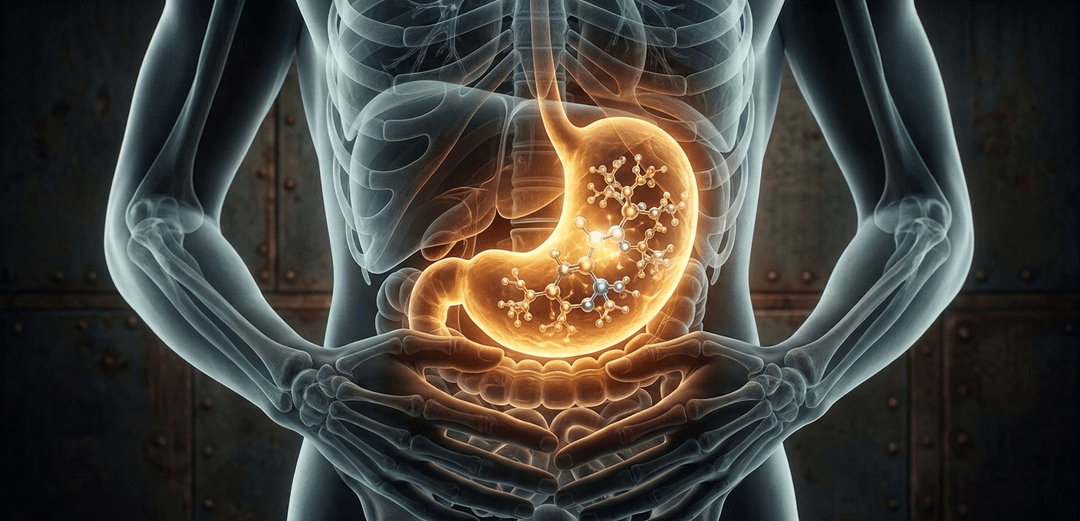
Human gastric juice (BPC = Body Protection Compound)
The Short Answer
BPC-157 is not FDA approved. It has never entered formal clinical trials in humans. No pharmaceutical company has ever filed an Investigational New Drug (IND) application for BPC-157 with the FDA. Whatever its FDA status, the BPC-157 PeRx provides is prescribed by a licensed provider and compounded in a US-based, FDA-regulated 503A pharmacy, the same regulated pathway many everyday prescriptions go through.
What BPC-157 does have is over 100 preclinical studies published across three decades, all originating from Predrag Sikiric's laboratory at the University of Zagreb. These studies demonstrate tissue-protective and regenerative effects across muscle, tendon, ligament, bone, gut, liver, and brain tissue in animal models. The consistency of these findings across multiple tissue types is why practitioners adopted BPC-157 for clinical use despite the absence of formal human trials.
Important Distinction
"No clinical trials" does not mean "no evidence." BPC-157 has one of the largest preclinical evidence bases of any peptide in therapeutic use. The gap is between preclinical research and formal human trials, not between zero evidence and FDA approval.
What the Research Shows
BPC-157 is a 15-amino-acid peptide fragment derived from a larger protein called Body Protection Compound, which is naturally present in human gastric juice. Sikiric's lab first characterized it in 1991 and has published continuously since then. The research spans a remarkably wide range of tissue types and injury models:
Tendon and ligament healing. Multiple studies show accelerated tendon-to-bone healing, increased collagen organization, and faster functional recovery in transected Achilles tendon models. BPC-157 upregulates growth factors (VEGF, FGF, EGF) at the injury site.
Gastrointestinal protection. BPC-157 reduces gastric ulcers, heals esophageal lesions, protects against NSAID-induced gut damage, and improves outcomes in inflammatory bowel disease models. Its stability in the gastric environment (it comes from gastric juice) makes it uniquely suited for GI applications.
Muscle repair. Studies demonstrate faster muscle healing after crush injuries, with better fiber organization and less fibrosis compared to controls.
Organ protection. Liver, pancreas, and brain tissue all show protective effects in various toxicity and injury models. BPC-157 modulates the nitric oxide system, which is a central regulator of inflammation and blood flow throughout the body.
Sikiric P et al. "Stable gastric pentadecapeptide BPC 157: novel therapy in gastrointestinal tract." Current Pharmaceutical Design, 2018. View study
Honest Assessment
All of this evidence is preclinical. Animal models do not always translate to humans. The lack of independent replication outside the Zagreb lab is a legitimate limitation. These caveats are real. They are also why BPC-157 is available as a compounded medication rather than an FDA-approved drug.
Why Has BPC-157 Never Gone Through Clinical Trials?
The short answer is economics, not safety. Running a drug through Phase 1-3 clinical trials and an FDA New Drug Application costs over $1 billion and takes 10 to 15 years. A pharmaceutical company only makes that investment when it can recoup the cost through patent-protected sales.
BPC-157 is a naturally occurring peptide fragment. You cannot patent a molecule that exists in human gastric juice. Without patent protection, any company that invested $1 billion in FDA approval would immediately face generic competition from compounding pharmacies. The return on investment is effectively zero.
This is not unique to BPC-157. Many naturally derived compounds with strong preclinical evidence never enter clinical trials for the same reason. The FDA approval process is designed for novel drug candidates that pharmaceutical companies can commercialize, not for naturally occurring peptides that anyone can compound.
How BPC-157 Is Regulated
BPC-157 is available as a compounded medication under Section 503A and 503B of the Federal Food, Drug, and Cosmetic Act. This means:
A licensed provider must prescribe it. You cannot legally obtain BPC-157 for therapeutic use without a prescription from a physician, nurse practitioner, or physician assistant.
A licensed pharmacy must prepare it. 503A pharmacies compound individual prescriptions under state board oversight. 503B outsourcing facilities are FDA-registered and inspected, with required batch testing for potency, sterility, and endotoxins.
It is not the same as "research peptides." Peptides sold online as "research chemicals" or "not for human use" are not compounded medications. They are not prescribed, not pharmacy-prepared, and not tested to pharmaceutical standards. The regulatory distinction matters for quality and safety.
FDA Context: What Approval Actually Means
FDA approval means one specific company proved one specific formulation works for one specific indication in controlled clinical trials. It does not mean all unapproved medications are unsafe. It does not mean approved medications are risk-free. Approximately 20% of all prescriptions in the United States are written for off-label uses of FDA-approved drugs.
For context, among growth hormone and recovery peptides, only Tesamorelin (Egrifta, approved 2010) has full FDA approval. CJC-1295, Ipamorelin, DSIP, TB-500, GHK-Cu, and most other peptides in clinical use are all compounded medications. BPC-157 is not an outlier in this regard. It is the norm for peptide therapy.
Sourcing and Quality: What to Look For
Because BPC-157 is compounded rather than commercially manufactured, quality varies by pharmacy. PeRx ships BPC-157 fully reconstituted and ready to use from licensed compounding pharmacies with potency testing, sterility testing, and endotoxin testing on every batch. Your vial arrives via FedEx Overnight in refrigerated packaging, ready for injection. Every batch is also third-party tested for purity and potency, and you can request those results for the vial you receive.
Is BPC-157 FDA Approved? Common Questions
Related Guides
Continue reading about peptides and protocols that pair well with this guide.
BPC-157 Peptide: Benefits, Dosage & Complete Guide
A peptide discovered in a Croatian lab in the early '90s is now one of the most studied healing compounds in regenerative medicine. Here's what the science actually says, where it came from, and what you should know before starting.
BPC-157 Side Effects: What’s Real and What’s Unknown
BPC-157 has never been through a controlled human safety trial, and any honest discussion of its side effects starts there. Here is what users actually report, what three decades of animal research does and does not show, and how prescription screening changes the risk picture.
MOTS-c Peptide: What It Is and How It Works
MOTS-c is the 16-amino-acid mitochondrial peptide your body releases during exercise. This guide covers the 2015 USC discovery, the AMPK mechanism, the metformin comparison, what the animal and analog evidence does and does not show, and how PeRx prescribes it. The dosage chart, syringe units and cycle math now live on their own page.
Ready to get started?
Pharmaceutical-grade BPC-157, prescribed by a licensed provider and shipped to your door. Fully reconstituted and ready to use.
Medical Disclaimer
The information provided on this website, including all articles, guides, and educational content, is for informational and educational purposes only and is not intended as medical advice, diagnosis, or treatment. Nothing on this site should be construed as a substitute for professional medical advice from a qualified healthcare provider.
The majority of peptides discussed on this site are not approved by the U.S. Food and Drug Administration (FDA) for the indications described. They are classified as bulk drug substances and are available only through a licensed prescribing provider and compounding pharmacy. All treatments require a valid prescription and provider oversight.
The majority of published research on peptide therapies has been conducted in preclinical (animal) models. While early human data is encouraging, comprehensive clinical trial data remains limited for most peptide compounds. Individual results may vary significantly based on health status, injury type, and other factors. No specific outcomes are guaranteed.
Certain peptides discussed on this site are classified as prohibited substances by the World Anti-Doping Agency (WADA) and are banned by major sports organizations including the NFL, NCAA, UFC, NBA, MLB, NHL, and PGA. If you are subject to anti-doping testing, consult your governing body before considering any peptide therapy.
Statements on this website have not been evaluated by the Food and Drug Administration. Products and therapies discussed are not intended to diagnose, treat, cure, or prevent any disease.
© 2026 Wellness MD Group PC DBA PeRx. All rights reserved.