Hair Loss on Ozempic & Wegovy: Why and What Helps
The FDA added hair loss to the Wegovy label in 2023 after post-market reports exceeded 3% of users. Here is why rapid weight loss triggers telogen effluvium, which nutritional fixes actually matter, and which peptides providers prescribe for patients whose shedding is significant.
In this article
Key Takeaways
- The FDA added hair loss to the Wegovy label in 2023 after post-market reports exceeded 3% of users. Ozempic users see the same pattern.
- The mechanism is telogen effluvium triggered by rapid weight loss and nutrient deficits, not a direct drug effect. Shedding peaks at month 4-6.
- Protein at 1 g per pound of goal bodyweight is the single most effective dietary fix. Most GLP-1 patients eat 40-60% less protein than they need.
- GHK-Cu is the first-line peptide for hair follicle signaling. Epitalon is added for patients over 45 to support follicle longevity.
- Hair almost always grows back within 6-12 months after weight stabilizes. If shedding continues beyond that window, see a provider.
Quick Facts
Incidence
3-5% of Wegovy users report hair loss (2023 FDA label update)
Onset
3-6 months after starting the GLP-1, peaks around month 4-6
Mechanism
Telogen effluvium from rapid weight loss, not the drug itself
Foundation
Protein at 1 g/lb goal bodyweight, iron, zinc, vitamin D
Primary Peptide
GHK-Cu: hair follicle signaling + collagen
Recovery Timeline
6-12 months after weight stabilizes, usually full
Is GLP-1 Hair Loss Actually Real?
Yes. In 2023 the FDA added hair loss to the Wegovy label after the post-marketing adverse event database accumulated enough reports to meet the threshold for label change. Clinical trial data showed 3 to 5% of Wegovy users self-reported significant hair thinning, which is higher than the placebo rate and meaningful enough to warrant disclosure. When you get a peptide through PeRx, it is prescribed by a licensed provider and compounded in a US-based, FDA-regulated 503A pharmacy, the same regulated pathway many everyday prescriptions go through.
Importantly, semaglutide itself is not damaging hair follicles. The same active ingredient at lower doses (Ozempic for diabetes) does not show a comparable hair loss signal, because those patients typically lose weight more slowly. What drives hair loss is not the drug. It is what the drug causes the body to do: lose weight rapidly, eat substantially less, and often under-consume protein and micronutrients.
Tirzepatide (Mounjaro, Zepbound) shows the same pattern. The SURMOUNT-1 trial reported hair loss as a side effect, with rates increasing at higher doses (which produce faster weight loss). This is consistent with the mechanism being about the rate of weight loss rather than the specific drug.
Wilding JPH et al., "Once-Weekly Semaglutide in Adults with Overweight or Obesity," N Engl J Med, 2021. STEP 1 trial; hair loss incidence reported in supplementary adverse event tables. View study
The Mechanism: Telogen Effluvium
Healthy hair follicles cycle through three phases: anagen (active growth, 2 to 7 years), catagen (brief transition, 2 to 3 weeks), and telogen (resting, 3 to 4 months). At any given moment, about 85 to 90% of follicles are in anagen, and a small steady fraction enter telogen.
Telogen effluvium is the condition where an unusually large fraction of follicles are pushed into telogen at the same time, all in response to a single physiological stressor. Surgery, childbirth, severe illness, sudden weight loss, and major nutritional changes are all recognized triggers.
Here is what makes telogen effluvium confusing for GLP-1 patients: the follicles enter telogen immediately at the time of the stressor, but they do not release the old hair for 3 to 4 months. So a patient starting semaglutide in January might not see increased shedding until April or May. By the time they notice it, they often cannot connect it to the drug. They blame shampoo changes, stress, age, anything except the thing that actually caused it four months earlier.
Three factors make GLP-1s particularly good at triggering this:
Rapid weight loss exceeds physiological tolerance
When weight loss exceeds roughly 1% of bodyweight per week, the body interprets it as a physiological crisis and shifts resources away from non-essential processes. Hair growth is non-essential. Follicles get downgraded.
Protein intake drops below the threshold for hair synthesis
Hair is 95% keratin, a structural protein. Producing a normal rate of hair growth requires roughly 0.8 to 1.0 g protein per kg bodyweight per day at a minimum. GLP-1 users frequently run 40 to 60% below this threshold without realizing it, because appetite suppression makes protein intake feel like a chore.
Micronutrient deficiencies accumulate
Iron, zinc, biotin, vitamin D, and vitamin B12 all play roles in hair growth. Under-eating overall makes subclinical deficiencies in any of these more likely. Iron deficiency in particular is a well-established amplifier of hair shedding in women on GLP-1s.
The Nutritional Foundation
Before peptides or topical products, the following nutritional interventions address the actual cause.
Protein: 1.0 gram per pound of goal bodyweight per day. Non-negotiable. Shakes and Greek yogurt are easiest because they deliver high protein in low volume, which matters when appetite is suppressed. Most patients need 140 to 180 grams daily depending on their size.
Iron check for menstruating women. Get ferritin measured. Below 30 ng/mL predicts worse hair loss. Supplement if low. Talk to your provider about dosing.
Zinc at 15-30 mg daily. Below-threshold zinc is surprisingly common in undereating patients and is a well-documented contributor to telogen effluvium.
Vitamin D to a 30-50 ng/mL serum level. Patients who already supplement 1,000 to 2,000 IU daily are usually fine. Get a level tested if you haven't.
Slow down weight loss if possible. Patients losing over 1.5% of bodyweight per week are higher-risk. Your provider may adjust titration to reduce the pace if shedding becomes significant.
Where Peptides Come In
For patients who have dialed in nutrition and still experience significant shedding, peptide support addresses the follicle-level signaling that nutrition alone cannot reach. The goal is not to overpower telogen effluvium. It is to shorten the recovery window and help follicles re-enter anagen faster once the weight-loss stressor has stabilized.
The peptides below all have dermatology research relevant to hair follicle biology, though none are FDA-approved specifically for hair loss.
The Peptide Options
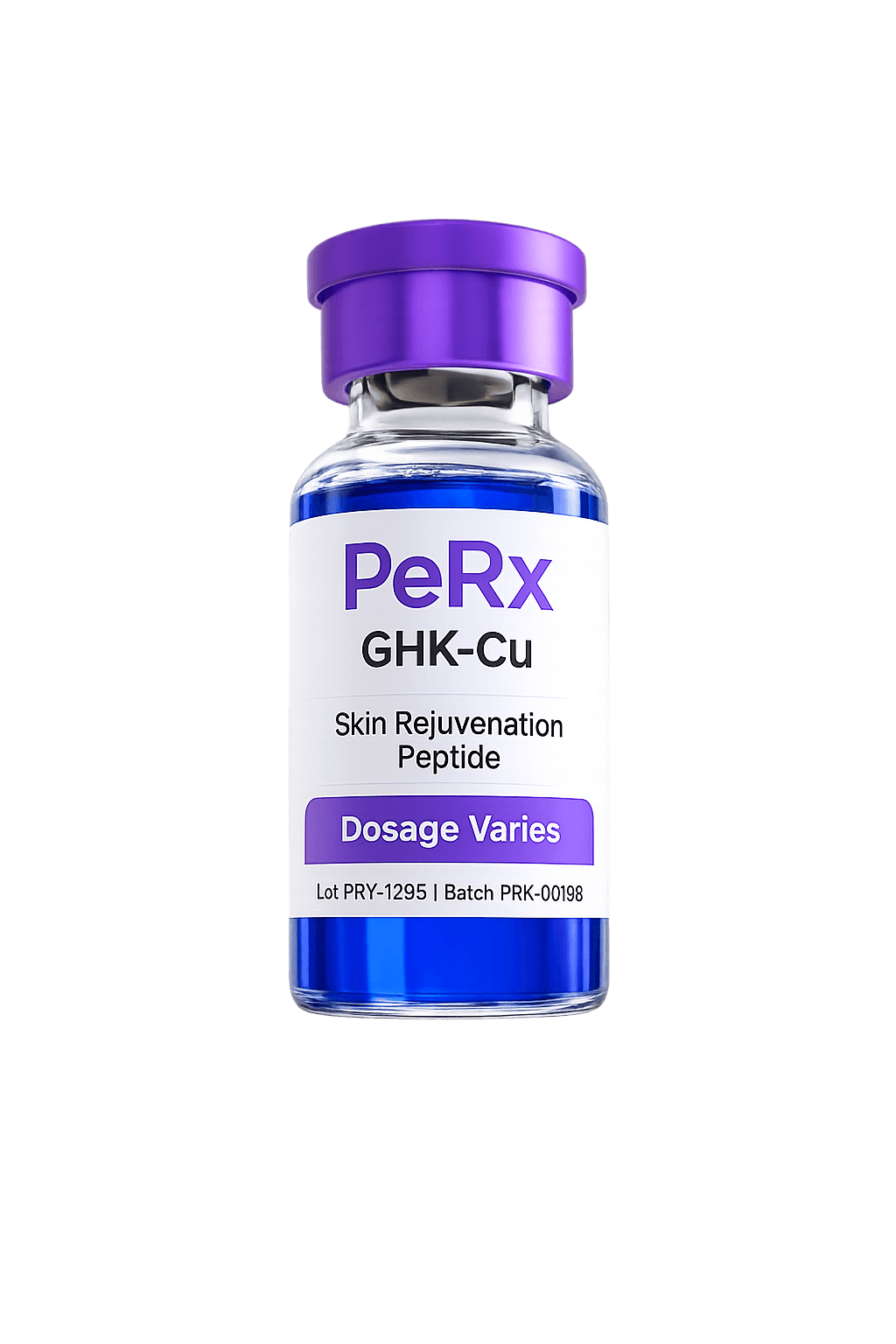
GHK-Cu
GHK-Cu is the most-studied peptide for dermatological applications, with 40+ years of research. Its relevance to hair specifically comes from two effects: direct stimulation of hair follicle dermal papilla cells, and broader support for the scalp's collagen and vascular environment.
In research settings, GHK-Cu has demonstrated the ability to prolong the anagen (growth) phase and increase follicle size. For GLP-1 patients in telogen effluvium, this means faster recovery once the underlying stressor resolves. GHK-Cu is typically the first-line peptide for hair concerns and covers the broader skin benefits patients often want simultaneously.
Pickart L et al., "The Human Tri-Peptide GHK and Tissue Remodeling," Journal of Biomaterials Science, 2008. View study
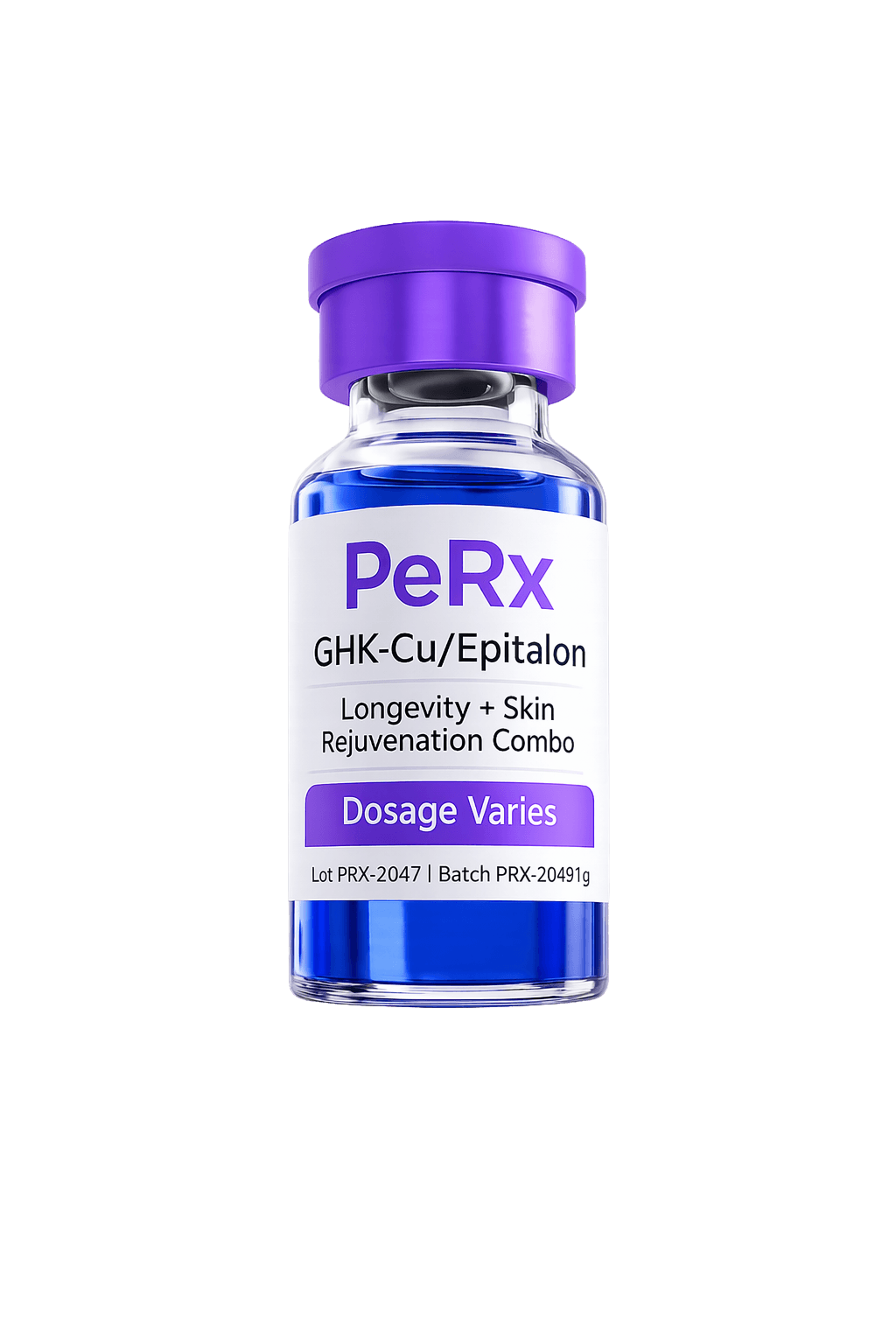
GHK-Cu / Epitalon
The GHK-Cu/Epitalon combination pairs hair-specific follicle support with broader cellular aging effects. Epitalon is a short peptide studied for its effects on telomerase activity and pineal function. For patients over 45 experiencing both GLP-1 hair shedding and age-related hair thinning, addressing both layers simultaneously tends to work better than GHK-Cu alone.
This combination is also a reasonable choice for patients who want a comprehensive anti-aging program alongside weight loss rather than addressing each concern in isolation.
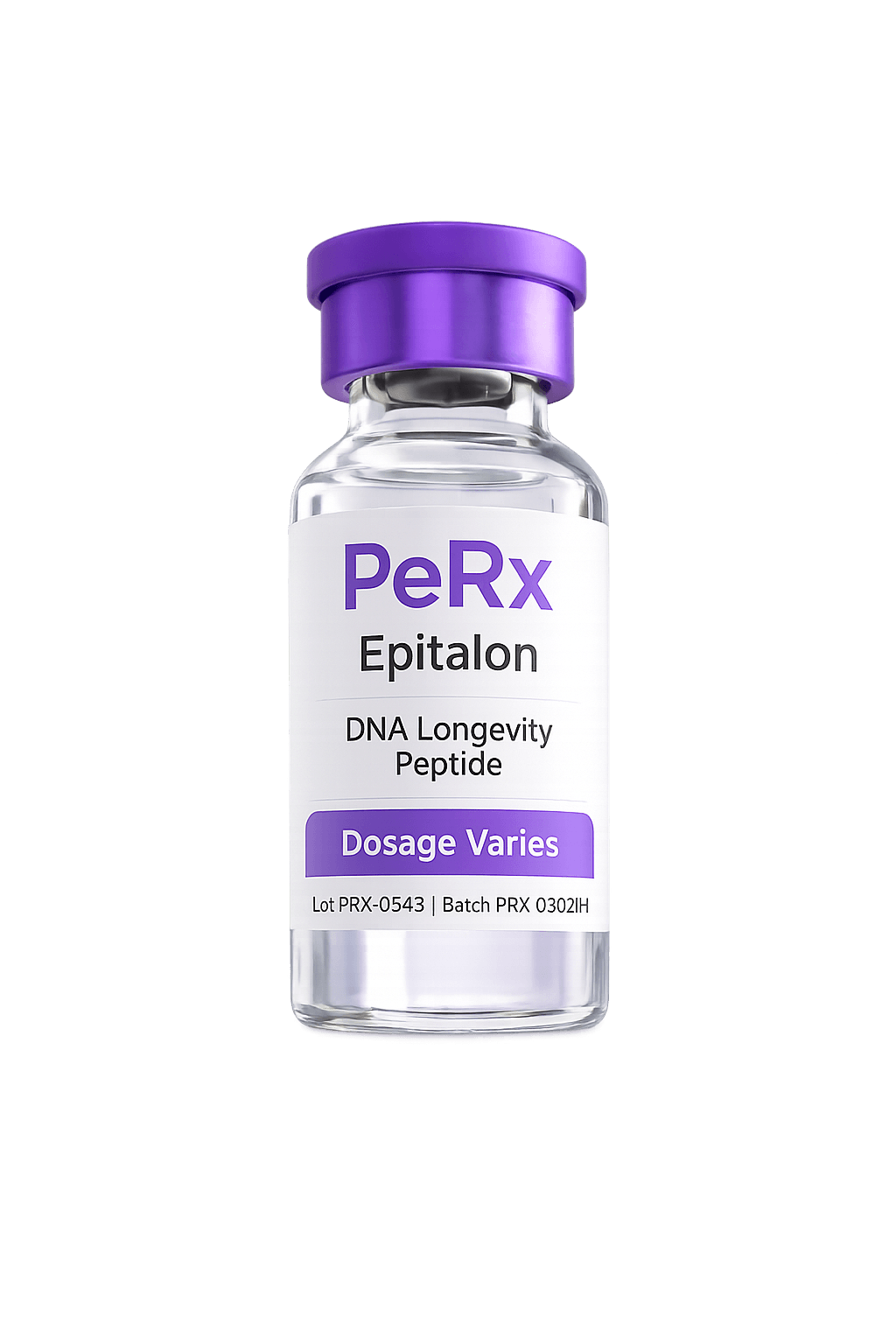
Epitalon
Epitalon is a tetrapeptide originally studied for its effects on the pineal gland and telomerase activity. Its relevance to hair is indirect. By supporting the cellular longevity and proliferation environment, Epitalon may extend the productive lifespan of follicles that are otherwise prone to miniaturization.
Epitalon is typically used as a monthly or quarterly protocol rather than daily, which some patients find more manageable. It is not a first-line choice for acute telogen effluvium but is reasonable for patients whose primary concern is slow age-related thinning that became noticeable during or after GLP-1 therapy.
Timing and What to Expect
Hair timelines are slow, and no intervention makes them materially faster. Set expectations accordingly:
Months 1 to 2 on the peptide: no visible change. The follicles that are already in telogen will continue to shed those hairs. This is frustrating but normal.
Months 2 to 4: shedding rate begins to decrease. New anagen follicles start producing short, fine new hairs that you can often see at the hairline as tiny regrowth.
Months 4 to 8: visible thickening. Hair feels denser when pulled through fingers. Shower drain clog noticeably smaller.
Months 8 to 12: closer to pre-GLP-1 baseline, provided weight has stabilized and nutrition is sustained.
The thing that most shortens this timeline is stable weight plus adequate protein. Peptides accelerate the recovery curve. They do not skip it. Every batch is third-party tested for purity, and each order ships fully reconstituted and ready to use, delivered overnight in refrigerated packaging.
Hair Loss on Ozempic & Wegovy: Common Questions
Related Guides
Continue reading about peptides and protocols that pair well with this guide.
Epitalon vs NAD+: Telomeres vs Cellular Energy
Two peptide-era approaches to aging that work at completely different layers. NAD+ restores a coenzyme your cells run on, and it has real human trial data behind it. Epitalon targets telomeres and the pineal gland, but its human evidence is early and comes almost entirely from one Russian group. Here is an honest comparison of the mechanisms, the evidence quality, and who each one suits.
Epitalon vs GHK-Cu: Longevity vs Tissue Repair
They get compared constantly, but they are not competing for the same job. Epitalon is a tetrapeptide studied for the cellular clock: telomeres, telomerase, and melatonin. GHK-Cu is a copper tripeptide that rebuilds visible tissue: skin, hair, and connective tissue. One works on how long your cells can keep dividing. The other works on what those cells actually build. Here is how they differ, when someone considers each, and why the two are often used together rather than either-or.
NAD+ vs Glutathione: Which One Do You Actually Need?
They get compared constantly, but they do almost opposite jobs. NAD+ is the cellular energy and repair coenzyme. Glutathione is the body’s master antioxidant, built for detox and cellular protection. One runs the machinery, the other protects it. Here is how to tell which one fits your goal, and when using both makes sense.
Ready to support hair recovery during your GLP-1 course?
Pharmaceutical-grade GHK-Cu and related peptides, prescribed by a licensed provider and shipped ready to use. Our provider will recommend a protocol based on your pattern and history.
Medical Disclaimer
The information provided on this website, including all articles, guides, and educational content, is for informational and educational purposes only and is not intended as medical advice, diagnosis, or treatment. Nothing on this site should be construed as a substitute for professional medical advice from a qualified healthcare provider.
The majority of peptides discussed on this site are not approved by the U.S. Food and Drug Administration (FDA) for the indications described. They are classified as bulk drug substances and are available only through a licensed prescribing provider and compounding pharmacy. All treatments require a valid prescription and provider oversight.
The majority of published research on peptide therapies has been conducted in preclinical (animal) models. While early human data is encouraging, comprehensive clinical trial data remains limited for most peptide compounds. Individual results may vary significantly based on health status, injury type, and other factors. No specific outcomes are guaranteed.
Certain peptides discussed on this site are classified as prohibited substances by the World Anti-Doping Agency (WADA) and are banned by major sports organizations including the NFL, NCAA, UFC, NBA, MLB, NHL, and PGA. If you are subject to anti-doping testing, consult your governing body before considering any peptide therapy.
Statements on this website have not been evaluated by the Food and Drug Administration. Products and therapies discussed are not intended to diagnose, treat, cure, or prevent any disease.
© 2026 Wellness MD Group PC DBA PeRx. All rights reserved.