Is Epitalon FDA Approved? 2026 Legal Status
No. Epitalon has never been tested in Western clinical trials. Its entire evidence base comes from four decades of research at one Russian institute by one scientist: Vladimir Khavinson. That research reported telomerase activation in cultured human cells, a result that has never been independently replicated. Here is why Epitalon never entered the FDA drug-approval pipeline, where it sits in the July 2026 compounding review, and what the Russian data actually shows.
In this article
Key Takeaways
- Epitalon is not FDA-approved. No IND has ever been filed and it has never entered a Western clinical trial.
- Epitalon is on the agenda of the FDA's July 23-24, 2026 compounding advisory meeting (PCAC). That is a compounding-access review, not drug approval, and it does not validate the telomerase research.
- US patients access Epitalon through licensed providers and 503A or 503B compounding pharmacies under federal pharmacy law.
- Its entire 40-year evidence base comes from Vladimir Khavinson at the St. Petersburg Institute of Bioregulation and Gerontology, with no independent Western replication.
- Khavinson reported telomerase activation and extended fibroblast lifespan in cultured human cells. The finding has never been independently replicated, and cell-culture results do not establish an effect in people.
- No Western pharmaceutical company has pursued approval because Epitalon is a four-amino-acid sequence with no patent protection and the research sits in non-English journals.
Epitalon FDA Status at a Glance
FDA Approved?
No. No Western clinical trials conducted.
Research Origin
St. Petersburg Institute of Bioregulation and Gerontology
Lead Researcher
Vladimir Khavinson (40+ years of peptide bioregulation research)
Key Finding
Telomerase activation in human somatic cells
Molecule
Tetrapeptide: Ala-Glu-Asp-Gly
Primary Target
Pineal gland (melatonin) + telomerase (cellular aging)
The Short Answer
Epitalon is not FDA-approved. It has never entered a Western clinical trial. No IND (Investigational New Drug) application has been filed with the FDA. Its entire evidence base originates from Russian research institutions, primarily the St. Petersburg Institute of Bioregulation and Gerontology, where Vladimir Khavinson has studied short bioregulatory peptides for over four decades. Whatever its FDA status, the Epitalon PeRx provides is prescribed by a licensed provider and compounded in a US-based, FDA-regulated 503A pharmacy, the same regulated pathway many everyday prescriptions go through.
What makes Epitalon worth discussing despite this limitation is the nature of the research findings. Khavinson's work includes the only published evidence of a synthetic peptide activating telomerase in human somatic cells, a finding with significant implications for cellular aging if it holds up. Whether you trust that data depends on how you weigh Russian institutional research that has not been independently replicated in Western labs.
The July 2026 FDA Review
There is a second FDA process worth understanding, because it is easy to confuse with drug approval. On July 23-24, 2026, the FDA's Pharmacy Compounding Advisory Committee (PCAC) is reviewing a group of compounded peptides and voting on whether each meets the criteria for pharmacy compounding. Epitalon is one of the peptides on that agenda, alongside BPC-157, TB-500, KPV, MOTS-C, DSIP, and Semax.
This is not the same as entering the drug-approval pipeline. The committee is not evaluating whether Epitalon works, and a favorable vote would not make it an FDA-approved drug or validate the Russian telomerase research. It would only bear on whether compounding pharmacies can prepare it under clearer federal rules. The vote is also advisory: the FDA decides afterward, and any change runs through formal rulemaking that typically takes more than a year.
So both things are true at once. Epitalon has never gone through FDA clinical trials, and it is at the same time up for a compounding-access review in July 2026. For the fuller picture of that meeting and what it does and does not mean, see Will the FDA Ban Peptides in 2026?.
U.S. Food and Drug Administration, "Docket FDA-2025-N-6895: Pharmacy Compounding Advisory Committee," Regulations.gov, 2026. View study
The Khavinson Research Program
Vladimir Khavinson is a gerontologist who has spent his career studying how short peptides (2-4 amino acids) regulate gene expression in specific tissues. His thesis is that these peptides act as bioregulators, small molecules that can cross cell membranes, bind to DNA in the promoter regions of specific genes, and modulate their expression. He has published over 800 papers and holds patents on dozens of short peptide sequences.
Epitalon (Ala-Glu-Asp-Gly) is the synthetic version of Epithalamin, a polypeptide extract from the pineal gland that Khavinson studied earlier in his career. His research showed that Epithalamin extended lifespan in animal models and restored melatonin production in aging animals. Epitalon is the tetrapeptide that he identified as the active fraction responsible for these effects.
In Russia, Khavinson's peptide research program has significant institutional support. He directs the St. Petersburg Institute of Bioregulation and Gerontology and has received Russian state awards for his work. Several of his peptides are registered for medical use in Russia. This institutional backing does not exist in the West, where his work is known in anti-aging circles but largely absent from mainstream pharmaceutical development.
The Telomerase Claim
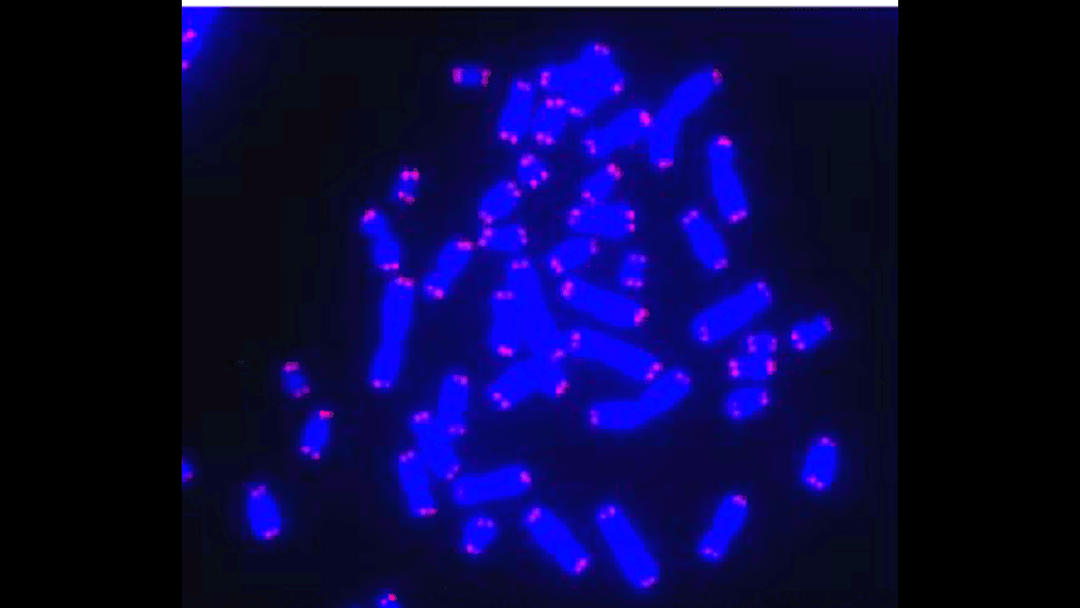
The most significant finding attributed to Epitalon is telomerase activation in human cells. In a study published in the Bulletin of Experimental Biology and Medicine, Khavinson reported that Epitalon activated the catalytic subunit of telomerase (hTERT) in human fetal lung fibroblast cultures. The treated cells exceeded the Hayflick limit (the maximum number of times a normal cell can divide) by 10 additional passages.
If this finding is accurate, it means Epitalon is the only known synthetic peptide capable of reactivating telomerase in normal (non-cancerous) human somatic cells. Telomerase normally goes silent in most adult cells, leading to progressive telomere shortening with each division, which is one of the primary mechanisms of cellular aging.
Additional animal studies showed Epitalon restored melatonin production in aging rats (whose pineal glands had deteriorated), normalized circadian rhythms, and increased lifespan. The pineal gland effects are attributed to Epitalon's tissue-specific gene regulation in pinealocytes.
Korkushko OV et al., "Normalizing effect of the pineal gland peptides on the daily melatonin rhythm in old monkeys and elderly people," Advances in Gerontology, 2007. View study
Goncharova ND et al., "Pineal peptides restore the age-related disturbances in hormonal functions of the pineal gland and the pancreas," Experimental Gerontology, 2005. View study
Khavinson VKh et al. "Peptide promotes overcoming of the division limit in human somatic cells." Bulletin of Experimental Biology and Medicine, 2004.
Honest Limitations
What You Should Know
Epitalon's evidence base has real limitations that should inform your expectations. Transparency about these is more useful than hype.
No independent Western replication. The telomerase finding has not been replicated in an independent Western laboratory. In science, a finding that has not been independently reproduced carries less weight than one that has been confirmed by multiple groups.
Single-institution research. Nearly all Epitalon data comes from Khavinson's institute. While 40 years of consistent findings from one group is meaningful, the absence of multi-center or multi-country research is a genuine gap.
No human clinical trials. The telomerase work was done in cell cultures. The lifespan and pineal studies were in animal models. No controlled human trial has tested Epitalon for anti-aging, sleep, or longevity endpoints.
Publication context. Much of the research was published in Russian journals or translated journals that receive less peer review scrutiny than top-tier Western journals. This does not mean the data is wrong, but it means the review process was different.
Why No FDA Approval
The barriers are both scientific and commercial. A tetrapeptide (four amino acids) is extremely difficult to patent meaningfully. The mechanism involves gene expression regulation through a pathway that the FDA has limited precedent for evaluating. The research originates outside the Western pharmaceutical ecosystem. And the cost of running US clinical trials ($1B+) for an unpatentable molecule with Russian-only supporting data is a non-starter commercially.
Epitalon exists in a category of its own: a peptide with fascinating and potentially significant research findings that sits entirely outside the Western regulatory framework. Patients who use it are making a judgment call about the quality of the Russian evidence base. Your PeRx provider can discuss this context with you. Every batch is third-party tested for purity, and Epitalon ships fully reconstituted and ready to use, delivered overnight in refrigerated packaging.
Is Epitalon FDA Approved? Common Questions
Related Guides
Continue reading about peptides and protocols that pair well with this guide.
Epitalon vs Pinealon: Pineal Peptides Compared
They sound like twins and share a lineage in the same Russian bioregulator research, but Epitalon and Pinealon were designed to do different jobs. Epitalon is a longevity-focused tetrapeptide studied for telomere maintenance and sleep. Pinealon is a short neuropeptide bioregulator studied for cognition and neuroprotection. Here is how they actually differ, what the evidence supports, and how to think about choosing.
Epitalon 2026: The Peptide That Outsmarts Cell Aging
Every cell in your body has a countdown timer. It's called a telomere, a protective cap that shortens with each division until the cell can no longer divide and dies. In the 1980s, a Russian military gerontologist extracted a peptide from the pineal gland that reactivated telomerase and made human cells surpass their programmed death clock by 10 additional divisions, while staying young and healthy. The peptide was four amino acids long. A Khavinson-group study of elderly patients reported lower mortality on a pineal-peptide regimen. In 2025, an independent lab confirmed the telomere mechanism. Here's everything you need to know about Epitalon.
Peptide Therapy in New Haven: 2026 Cost Guide
A plain guide to peptide therapy in New Haven: what it costs across local clinics, med spas, and telehealth, who tends to use it in a city built around Yale and its hospitals, and how pharmaceutical-grade peptides reach any Greater New Haven address without a clinic visit.
Ready to get started?
Pharmaceutical-grade Epitalon, prescribed by a licensed provider and shipped to your door. Fully reconstituted and ready to use.
Medical Disclaimer
The information provided on this website, including all articles, guides, and educational content, is for informational and educational purposes only and is not intended as medical advice, diagnosis, or treatment. Nothing on this site should be construed as a substitute for professional medical advice from a qualified healthcare provider.
The majority of peptides discussed on this site are not approved by the U.S. Food and Drug Administration (FDA) for the indications described. They are classified as bulk drug substances and are available only through a licensed prescribing provider and compounding pharmacy. All treatments require a valid prescription and provider oversight.
The majority of published research on peptide therapies has been conducted in preclinical (animal) models. While early human data is encouraging, comprehensive clinical trial data remains limited for most peptide compounds. Individual results may vary significantly based on health status, injury type, and other factors. No specific outcomes are guaranteed.
Certain peptides discussed on this site are classified as prohibited substances by the World Anti-Doping Agency (WADA) and are banned by major sports organizations including the NFL, NCAA, UFC, NBA, MLB, NHL, and PGA. If you are subject to anti-doping testing, consult your governing body before considering any peptide therapy.
Statements on this website have not been evaluated by the Food and Drug Administration. Products and therapies discussed are not intended to diagnose, treat, cure, or prevent any disease.
© 2026 Wellness MD Group PC DBA PeRx. All rights reserved.