Ozempic Face, Loose Skin, and What Actually Helps
Rapid weight loss on GLP-1s can change how your face and skin look in ways most patients don't expect. Here's what is actually happening underneath, why collagen and skin recovery lag behind fat loss, and which peptides providers use to support the repair process.
In this article
Key Takeaways
- Ozempic face is not a drug effect. It is the result of rapid subcutaneous fat loss outpacing the skin remodeling timeline (12-24 months after stabilization).
- GHK-Cu is the most-studied peptide for collagen synthesis and skin repair, with decades of dermatology research. It is a common first choice providers consider for loose skin.
- GHK-Cu is a copper-bound signaling tripeptide, fundamentally different from oral collagen supplements, which are just amino acid raw material once digested.
- Starting peptide and protein support early in the GLP-1 course produces better outcomes than trying to rescue skin after large volume has been lost.
- Patients losing 30-50 pounds over 12-18 months usually avoid surgery. Losses of 100+ pounds often benefit from surgical consultation after a year of stability.
Quick Facts
The Cause
Fat loss outpaces skin remodeling, not direct drug effect
Timeline
Skin remodels over 12-24 months after weight stabilizes
Primary Peptide
GHK-Cu (most-studied for collagen and skin)
Also Used
BPC-157 (tissue repair), GHK-Cu/Epitalon (combined anti-aging)
Foundation
Adequate protein, hydration, gradual weight loss
When to Start
Early in GLP-1 course for prevention, not after the fact
What Ozempic Face Actually Is
The term Ozempic face entered the medical vocabulary informally around 2022, when dermatologists began reporting a recognizable pattern in patients who had recently lost significant weight on semaglutide. Sunken cheeks, deeper nasolabial folds, hollows under the eyes, and a gaunt quality to the face overall. The face looked older than it had before the drug. When you get a peptide through PeRx, it is prescribed by a licensed provider and compounded in a US-based, FDA-regulated 503A pharmacy, the same regulated pathway many everyday prescriptions go through.
The name is misleading. The drug is not doing this to your face. Rapid weight loss is doing this to your face. The face stores a surprising amount of subcutaneous fat, particularly in the cheeks (the buccal fat pad and surrounding tissue) and the temples. That fat is part of what makes a face look young, full, and rested.
When that fat leaves quickly, two things happen. The underlying structure (cheekbones, jaw, brow) becomes more prominent. And the overlying skin, which had been supported by that volume, suddenly has less to drape over. The skin itself has not changed in elasticity. The thing it was stretched over got smaller.
This is the same phenomenon that happens after any rapid weight loss. Bariatric surgery patients deal with it. Competitive bodybuilders cutting for a show deal with it. Patients on strict caloric restriction deal with it. What's new is that GLP-1s are producing this outcome in a much larger population than before, which is why the term entered general use.
Why Skin Lags Behind Fat Loss
Fat can be mobilized and metabolized within hours. Skin operates on a completely different timeline.
Collagen turnover is slow
Type I collagen, the main structural protein in skin, turns over on a timeline of roughly 12 to 18 months. Some studies suggest full collagen replacement takes closer to 2 years. The skin you have today was largely laid down during the year or two before now. When the underlying fat volume shrinks, the skin cannot reorganize and rebuild at the speed of fat loss.
Collagen production declines with age
Collagen synthesis drops roughly 1% per year after age 25. By 50, collagen production is about 25 to 30% lower than at 25. Adults losing weight in their 40s, 50s, and beyond have slower baseline collagen regeneration than younger patients would. This is the primary reason Ozempic face is more visible in middle-aged patients than in 20-somethings losing the same amount of weight.
Caloric deficits suppress skin regeneration
The body in a caloric deficit prioritizes essential functions (cardiac, cerebral, immune, muscular) over non-essential processes like connective tissue remodeling. Skin maintenance happens on the leftover budget. GLP-1 users in a significant deficit for 6 to 12 months are running a long-duration budget cut on exactly the system that needs resources to catch up.
Protein deficiency hits skin hard
Collagen is a protein. Elastin is a protein. The fibroblasts that produce them need amino acids to work. Patients on GLP-1s who undereat protein are not just losing muscle. They're also failing to supply their skin-producing cells with the raw material they need to repair and remodel.
Shuster S et al., "The influence of age and sex on skin thickness, skin collagen and density," Br J Dermatol, 1975. Still the foundational reference on age-related collagen decline. View study
Nutrition and Hydration Foundation
Before any peptide conversation, the two most important interventions are dietary and cost nothing.
Protein intake of 1.0 to 1.2 grams per pound of goal bodyweight. Same target as muscle preservation, different reason. Your fibroblasts and skin cells need amino acids to produce collagen, elastin, and other matrix components. Dietary protein is the raw material supply chain. GLP-1 users frequently run 40 to 60% below this target without realizing it.
Hydration of 2.5 to 3 liters of water per day, plus electrolytes. Dehydrated skin visibly loses tone and fills in wrinkles less effectively. Many GLP-1 users reduce fluid intake along with food intake because the signal to drink is partially appetite-driven. Hydration has to become deliberate during this period.
Supporting supplements that have modest but real evidence: vitamin C (essential cofactor for collagen synthesis), zinc, and copper. Most patients eating a reasonable diet get enough of these, but a standard multivitamin is cheap insurance during a long deficit.
Peptides That Support Skin Repair
GHK-Cu
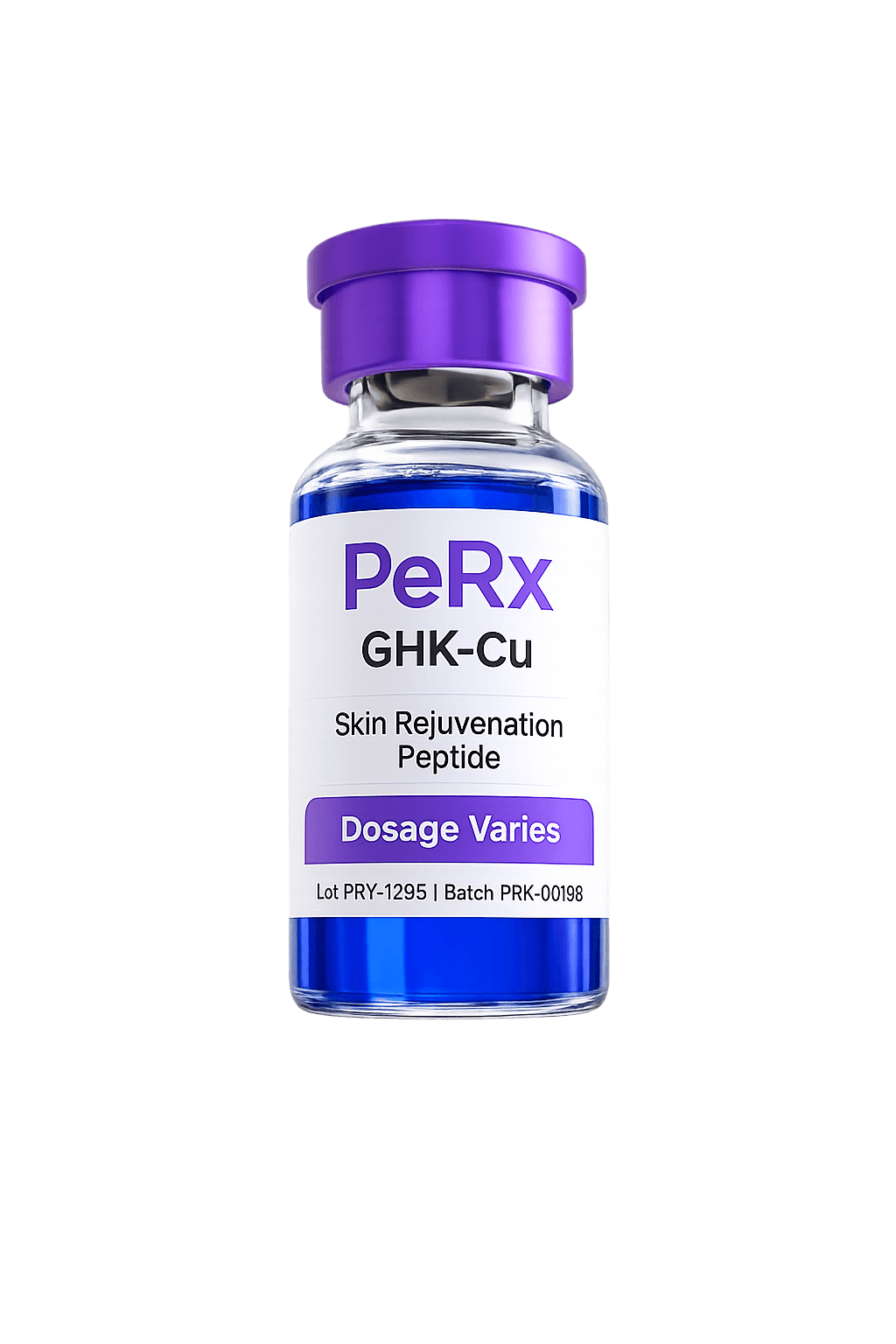
GHK-Cu is a copper-bound tripeptide (glycyl-histidyl-lysine plus copper) that occurs naturally in human plasma, declining with age. It is the most-studied peptide for skin applications specifically, with over 40 years of dermatology research. GHK-Cu upregulates collagen and elastin synthesis, increases glycosaminoglycan production (the hyaluronic acid family that holds water in skin), and supports blood vessel formation in repairing tissue.
For GLP-1 patients concerned about skin after weight loss, GHK-Cu is the most-studied option. Research on injectable and topical GHK-Cu consistently shows improvements in skin firmness, elasticity, and visible texture over 8 to 16 weeks of use.
Pickart L et al., "The Human Tri-Peptide GHK and Tissue Remodeling," Journal of Biomaterials Science, 2008. View study
BPC-157
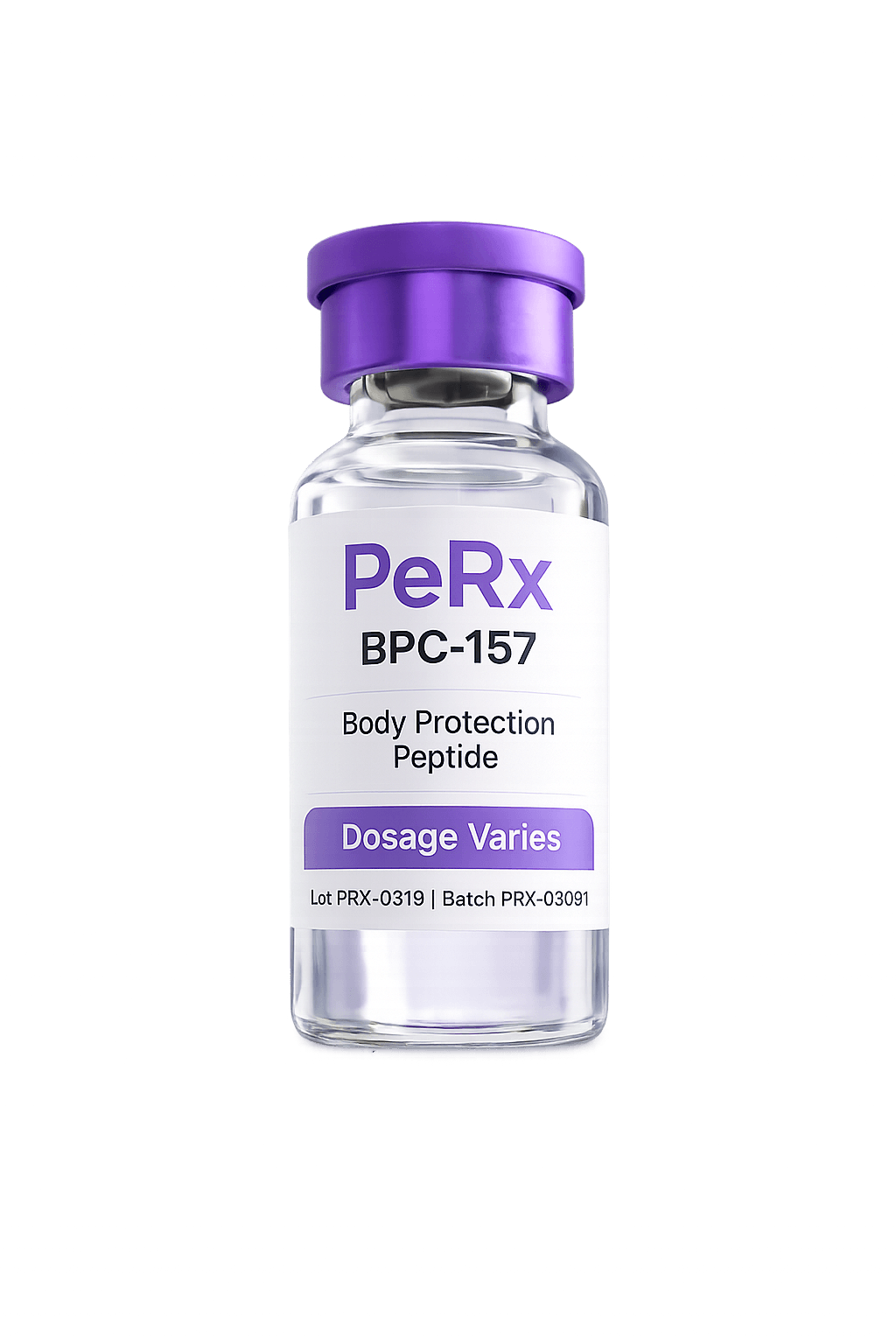
BPC-157 (Body Protection Compound) is a 15-amino-acid peptide most known for tendon, ligament, and gut repair. Its role in post-GLP-1 skin recovery is specific and useful: BPC-157 upregulates VEGF and promotes new blood vessel formation (angiogenesis) in regions of tissue remodeling. Skin that is being remodeled after fat loss needs blood supply to the dermis to deliver raw materials and remove waste.
BPC-157 is not a standalone skin peptide. It pairs well with GHK-Cu for patients where the goal is broader tissue recovery rather than skin cosmetics specifically.
GHK-Cu / Epitalon
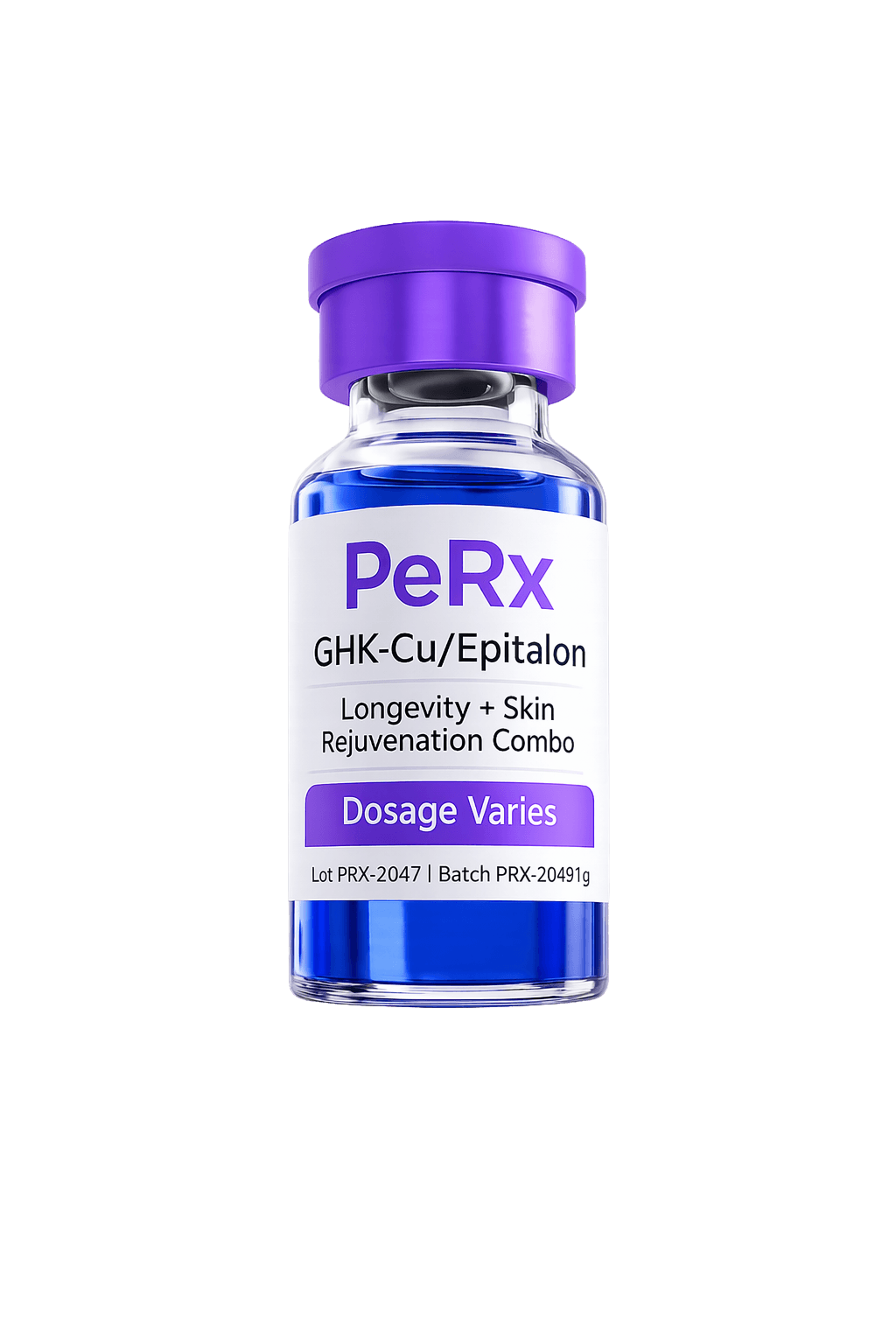
The GHK-Cu/Epitalon combination pairs the skin-specific collagen support of GHK-Cu with the cellular-aging effects of Epitalon. Epitalon is a short peptide that has been studied for its effects on telomerase activity and cellular senescence. Together they target both the visible tissue level (what your skin looks like) and the cellular level (how efficiently the cells producing new skin are working).
This combination is often recommended for patients over 45 who want a more comprehensive anti-aging program alongside their GLP-1 course, rather than addressing skin concerns in isolation.
Thymosin Alpha-1 (supporting role)
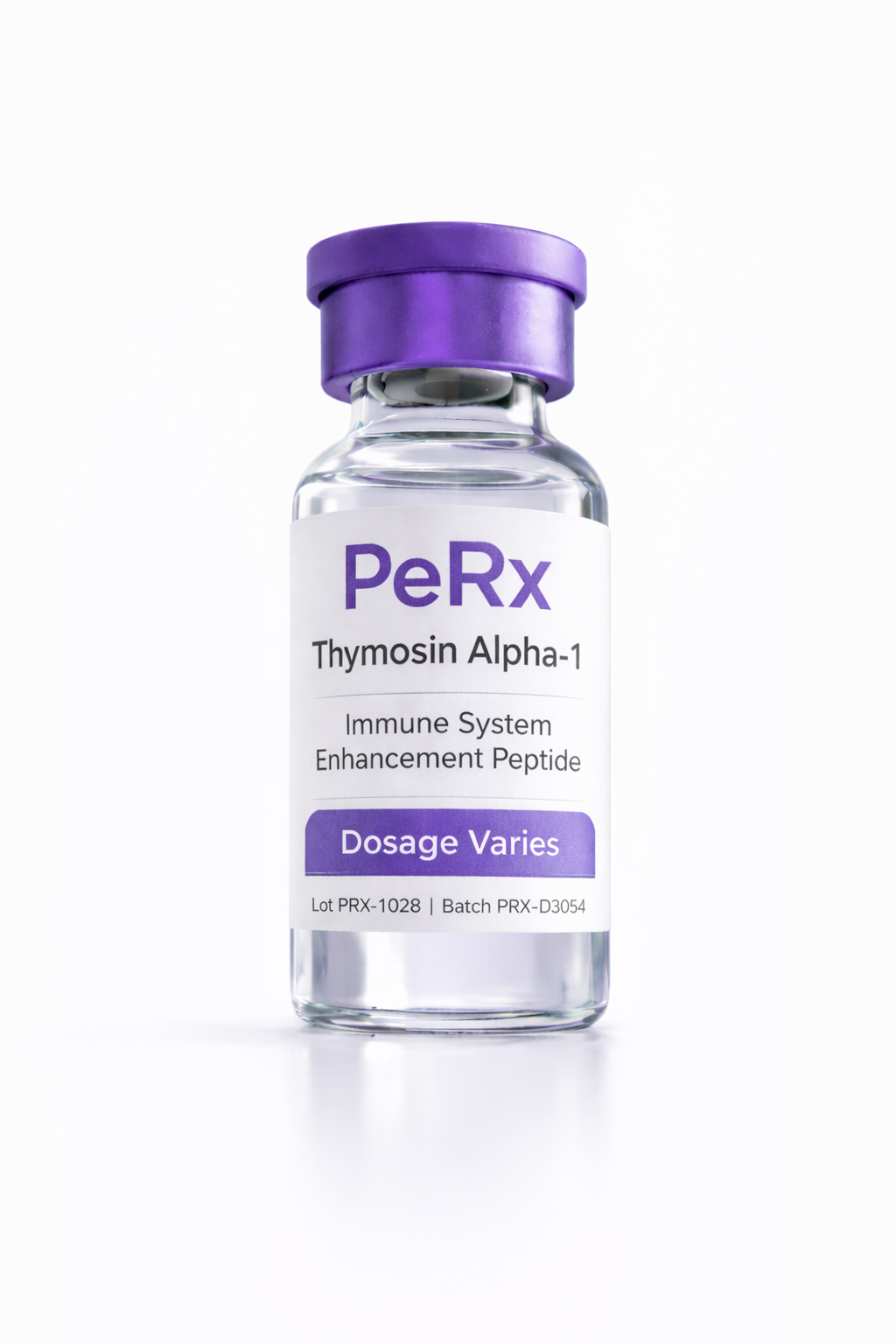
Thymosin Alpha-1 is primarily an immune-modulating peptide, not a skin peptide. It's included here because the skin is an immune organ, and patients with poorly controlled chronic inflammation heal and remodel less efficiently. For patients with existing inflammatory skin conditions (mild eczema, rosacea, chronic folliculitis) that worsen during weight loss, supporting immune balance can be a useful adjunct.
When to Start and How Long It Takes
The clearest finding in skin research: prevention is dramatically more effective than rescue. Patients who support collagen production during the weight loss phase end up with better outcomes than patients who wait until after the weight is off and try to repair visible damage.
Practical timing for most patients:
Weeks 1 to 4 on the GLP-1: Establish protein and hydration targets. Most patients skip this and regret it later.
Weeks 4 to 12: If skin is a significant concern, start GHK-Cu. Continue through the active weight loss phase and for at least 6 months after weight stabilizes.
Months 6 to 12 post-stabilization: Reassess. Some patients need extended support, others can step down to maintenance or discontinue as collagen turnover catches up with the new body.
The entire arc of visible skin recovery takes 12 to 24 months after weight stabilizes. Peptide support may help this along, but does not compress it into weeks. Patients expecting dramatic results in the first month are almost always disappointed. Patients committing to 6+ months of consistent use are usually satisfied.
Realistic Expectations
Peptide therapy is not a substitute for patience or for surgical intervention in cases where surgery is genuinely warranted. A patient who has lost 150 pounds quickly in their 60s is going to have excess skin that peptides alone cannot fully remodel. The honest picture:
For modest weight loss (20-40 pounds) at any age: Peptide support plus nutrition usually produces satisfactory outcomes without further intervention.
For moderate weight loss (40-80 pounds) in 30s and 40s: Good outcomes with peptide support and nutrition, provided weight loss is not too rapid (under 1-1.5% of bodyweight per week).
For large weight loss (80+ pounds) or older adults with significant loss: Peptide support helps, but surgical consultation after 12 months of weight stability is a reasonable option and should not be seen as a failure of the peptide protocol.
The right framing: peptides are support during a process your body is going to do anyway, not a guarantee of any specific cosmetic outcome. Every batch is third-party tested for purity, and each order ships fully reconstituted and ready to use, delivered overnight in refrigerated packaging.
Ozempic Face, Loose Skin, and What Actually Helps: Common Questions
Related Guides
Continue reading about peptides and protocols that pair well with this guide.
Best Peptides in LA: 2026 Aesthetic & Recovery Guide
A plain guide to peptide therapy in Los Angeles, where looking camera-ready drives most of the demand. What it costs across clinics, med spas, and telehealth, and how pharmaceutical-grade peptides reach any LA address without a clinic visit.
Is Sermorelin FDA Approved? Yes Until 2008
Sermorelin has a unique regulatory history. It was FDA-approved in 1997 as Geref Diagnostic for testing pituitary function, and its therapeutic form (Geref) was used for pediatric growth hormone deficiency. Then the manufacturer discontinued it in 2008. Today Sermorelin is only available as a compounded medication. Here is the full story.
Best Peptides in Troy: A Metro Detroit Guide
A plain guide to peptide therapy in Troy: what it costs across local clinics, med spas, and telehealth, and who tends to use it here. Plus how pharmaceutical-grade peptides reach any metro Detroit address without a clinic visit.
Start supporting your skin during your GLP-1 course.
Pharmaceutical-grade GHK-Cu and collagen-support peptides, prescribed by a licensed provider and shipped ready to use. Our provider will recommend a protocol based on where you are in your weight loss journey.
Medical Disclaimer
The information provided on this website, including all articles, guides, and educational content, is for informational and educational purposes only and is not intended as medical advice, diagnosis, or treatment. Nothing on this site should be construed as a substitute for professional medical advice from a qualified healthcare provider.
The majority of peptides discussed on this site are not approved by the U.S. Food and Drug Administration (FDA) for the indications described. They are classified as bulk drug substances and are available only through a licensed prescribing provider and compounding pharmacy. All treatments require a valid prescription and provider oversight.
The majority of published research on peptide therapies has been conducted in preclinical (animal) models. While early human data is encouraging, comprehensive clinical trial data remains limited for most peptide compounds. Individual results may vary significantly based on health status, injury type, and other factors. No specific outcomes are guaranteed.
Certain peptides discussed on this site are classified as prohibited substances by the World Anti-Doping Agency (WADA) and are banned by major sports organizations including the NFL, NCAA, UFC, NBA, MLB, NHL, and PGA. If you are subject to anti-doping testing, consult your governing body before considering any peptide therapy.
Statements on this website have not been evaluated by the Food and Drug Administration. Products and therapies discussed are not intended to diagnose, treat, cure, or prevent any disease.
© 2026 Wellness MD Group PC DBA PeRx. All rights reserved.