Peptide Therapy Guide
Best Peptides for Hair Loss (2026)
Updated May 9, 2026
Hair loss after 30 is driven by a combination of hormonal changes, reduced blood flow to hair follicles, and declining growth factor signaling. These peptides target the biological systems that support hair follicle health and growth cycling.
Hair follicles are among the most metabolically active structures in the body. Each follicle cycles through growth (anagen), regression (catagen), and rest (telogen) phases. As you age, the anagen phase shortens, follicles miniaturize, and fewer hairs reach full thickness. This process is driven by DHT sensitivity, reduced blood supply to the scalp, and declining growth factor production.
Conventional treatments (minoxidil, finasteride) target DHT or blood flow independently. Peptide therapy approaches hair loss from the growth factor and tissue remodeling side — promoting the biological signals that keep follicles in the growth phase and supporting the collagen and vascular infrastructure that hair depends on.
85M+
Americans experiencing hair loss
4,000+
genes modulated by GHK-Cu including hair-related pathways
40%
of GHK-Cu production lost by age 60
How Peptides Help With Hair Loss
Growth Factor Upregulation
GHK-Cu modulates over 4,000 genes involved in tissue remodeling, including genes that regulate hair follicle cycling. It promotes collagen synthesis around hair follicles and supports the dermal papilla cells that control hair growth. Published research shows GHK-Cu can enlarge miniaturized follicles and extend the anagen (growth) phase.
Scalp Blood Supply
BPC-157 promotes angiogenesis — the formation of new blood vessels. Hair follicles in thinning areas often have reduced blood supply, limiting the nutrients and oxygen available for hair production. Improved vascularization creates the conditions for healthier follicle function.
Growth Hormone Support
Growth hormone stimulates IGF-1 production, which directly influences hair follicle activity and cycling. GH decline after 30 parallels the timeline of age-related hair thinning. Restoring GH output with peptides like CJC-1295/Ipamorelin supports the hormonal environment that hair growth depends on.
Top Peptides for Hair Loss
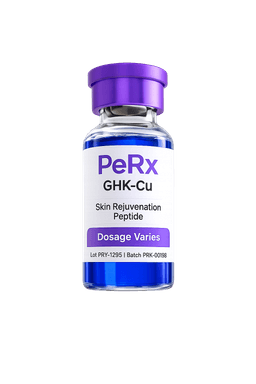
GHK-Cu
$229/moThe Skin Rejuvenation Peptide
GHK-Cu (Copper Peptide) is a naturally occurring tripeptide with remarkable regenerative properties. It stimulates collagen production, promotes wound healing, and has powerful anti-aging effects on skin tissue.
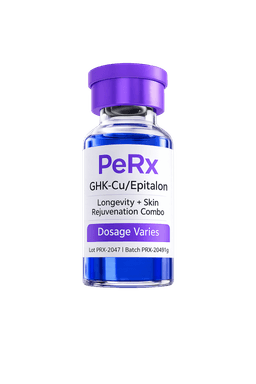
GHK-Cu/Epitalon
$299/moSkin + Cellular Renewal
GHK-Cu/Epitalon combines collagen-boosting skin rejuvenation with telomere-protecting cellular longevity in a single vial. GHK-Cu rebuilds skin structure while Epitalon addresses aging at the DNA level.
Quick Comparison
| Peptide | Best For | Administration | Price |
|---|---|---|---|
GHK-Cu#1 | Collagen, skin firmness, tissue renewal | Subcutaneous injection | $229/mo |
| Skin rejuvenation, collagen, telomere protection | Subcutaneous injection | $299/mo |
Frequently Asked Questions
What is the best peptide for hair loss?
Based on clinical research and mechanism of action, GHK-Cu is the top-ranked peptide for hair loss. The Skin Rejuvenation Peptide. Take our free health assessment and use the Virtual Cell to see which peptides match your biology.
How long do peptides take to work for hair loss?
Most patients notice initial improvements in hair loss within 2-4 weeks of consistent use, with more significant results over 8-12 weeks. Timelines vary based on the specific peptide, your health status, and protocol adherence.
Can I combine peptides for hair loss?
Yes. Many patients benefit from combining peptides that target hair loss through complementary mechanisms. PeRx offers pre-formulated combo products, and your provider can recommend the best combination for your goals.
Do I need a prescription for hair loss peptides?
Yes. All peptide therapies at PeRx require a valid prescription from a licensed healthcare provider. The prescription is included as part of the PeRx process — select your peptide, complete a health screening, and a provider will review and prescribe your personalized protocol.
Are hair loss peptides safe?
When prescribed by a licensed provider and sourced from an FDA-registered 503A compounding pharmacy, peptides for hair loss have a strong safety profile. Every PeRx patient undergoes a health screening before receiving a prescription.
Not sure which is right for you?
Take our free health assessment and use the Virtual Cell to discover which peptides match your biology.
Try the Virtual CellRelated Pages
Medical Disclaimer
The information provided on this page is for educational purposes only and is not intended as medical advice, diagnosis, or treatment. Peptide therapy requires a valid prescription from a licensed healthcare provider. Individual results may vary. No specific outcomes are guaranteed.
The peptides on this site are not FDA-approved. They are compounded by licensed pharmacies under provider supervision. Certain peptides are prohibited by WADA and major sports organizations. Statements on this page have not been evaluated by the FDA. These products are not intended to diagnose, treat, cure, or prevent any disease.