Peptides for Chefs: Feet, Wrists and Sleep
The feet at hour eleven of a Saturday double. The knife wrist that will not grip on Sunday prep. The close-then-early-prep cycle that steals sleep. How peptide therapy is used for the wear that comes with the line.
In this article
Key Takeaways
- The line does not wear a cook down evenly. It concentrates on a few places the job loads every shift: the feet and heels from hours on hard floors, the knife wrist from prep volume, the skin from constant minor burns, and sleep from the close-then-early-prep cycle. Each one has a name.
- BPC-157 is the core tool for the connective-tissue side, used for the foot pain (such as plantar fasciitis) and the wrist tendinopathy from knife work, with the BPC-157/TB-500 combo as the more aggressive option when more than one area is going at once.
- GHK-Cu supports skin and collagen remodeling for the everyday superficial burns of the line, while DSIP and Selank address the broken sleep and post-service tension that ride along with kitchen hours.
- The honest part: these are prescription-only, not FDA-approved for these uses, the human evidence is limited, and none of them is a painkiller, a sleeping pill, or a substitute for treating a serious burn or a real injury.
Quick Facts
Best for
Chefs and line cooks dealing with foot and heel pain, knife-work wrist strain, minor burns, and broken sleep
Core peptides
BPC-157, BPC-157/TB-500 combo, GHK-Cu, DSIP, Selank
Form
Subcutaneous injection; BPC-157 and the BPC-157/TB-500 combo also as oral capsules
Storage
Refrigerated 36-46°F, ready to use, no mixing
Prescription
Provider evaluation required
Drug test
Not detected on standard 5-panel or 10-panel workplace screens
The Feet at Hour Eleven
The scene
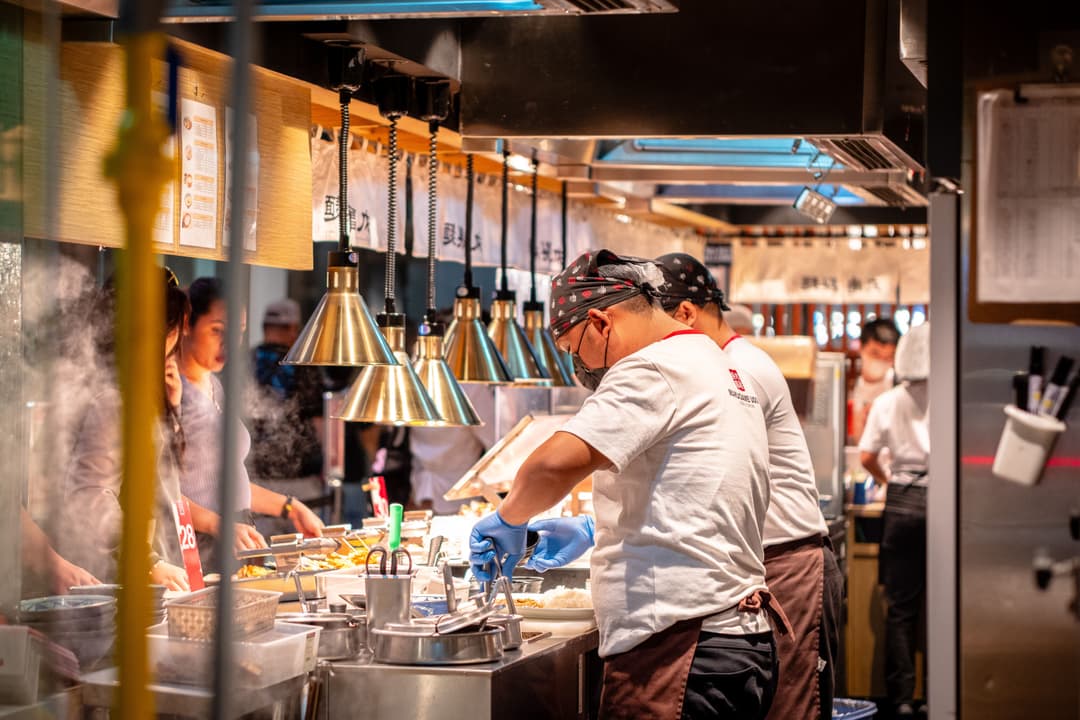
It is hour eleven of a Saturday double and the tickets have not stopped. Your feet stopped being feet a while ago. They are two hot bricks on a rubber mat over concrete, and the first step you take in the morning is going to land on a heel that feels like glass. Then Sunday prep comes, and the wrist that breaks down four cases of onions will not close around the knife the way it should. The line found the same spots it always finds.
Most cooks have a version of this. The heel that screams on the first step out of bed. The forearm and thumb-side wrist that ache after a heavy prep day. The forearm full of small burn scars. The fact that you close at one, prep at nine, and never quite catch up on sleep. The wear of the line does not show up as a vague soreness. It shows up as a specific structure, in a specific spot, that has taken the same load one shift too many. When you get a peptide through PeRx, it is prescribed by a licensed provider and compounded in a US-based, FDA-regulated 503A pharmacy, the same regulated pathway many everyday prescriptions go through.
Peptide therapy has become one of the ways some kitchen people manage that wear. The problem is that almost every guide about it online is written for athletes and lifters, not for someone who stands on a mat for fourteen hours and breaks down a hundred pounds of mise. This one is built for the station: what the line actually loads, where it lands, and the peptides used for that kind of repair. It is not about training harder. It is about keeping the feet, the wrist, and the sleep working over a long career on the line.
What the Station Demands
No peptide retailer has bothered to map this for cooks, so here it is. The injuries of kitchen work are predictable from the job, and naming the tissue is the first step to targeting it. The occupational data backs the pattern up: in a survey of kitchen workers, 90.6 percent reported a work-related musculoskeletal disorder in the past year, with the lower back, knees, and feet leading the list (Frequency and risk factors of musculoskeletal disorders among kitchen workers, 2023).
Abdelsalam A et al., "Frequency and risk factors of musculoskeletal disorders among kitchen workers," Journal of the Egyptian Public Health Association, 2023. View study
| What the station demands | What gives out first | The named problem |
|---|---|---|
| Ten-plus hours standing on hard floors | The arch and heel of the foot | Plantar fasciitis, heel and arch pain |
| High-volume knife work and prep | Thumb-side wrist and forearm | De Quervain tenosynovitis, wrist and forearm tendinopathy |
| Contact with hot pans, oil, and edges | Skin on the hands and forearms | Minor superficial burns and scarring |
| Closing late, prepping early | Sleep and recovery | Circadian disruption, fragmented sleep, post-service tension |
Ten-plus hours standing on hard floors
- What gives out first
- The arch and heel of the foot
- The named problem
- Plantar fasciitis, heel and arch pain
High-volume knife work and prep
- What gives out first
- Thumb-side wrist and forearm
- The named problem
- De Quervain tenosynovitis, wrist and forearm tendinopathy
Contact with hot pans, oil, and edges
- What gives out first
- Skin on the hands and forearms
- The named problem
- Minor superficial burns and scarring
Closing late, prepping early
- What gives out first
- Sleep and recovery
- The named problem
- Circadian disruption, fragmented sleep, post-service tension
The first two rows are connective-tissue problems, tendinopathy and fascial strain, not muscle tears. That is the category BPC-157 is used for, and it is why one peptide covers a big chunk of the cook injury map. The bottom two rows are different problems, skin and sleep, with their own tools.
Why Rest and Anti-Inflammatories Stall Out
Here is what separates a line injury from a pulled muscle at the gym. Muscle is highly vascular, it heals fast, and a strained muscle is usually back in weeks. The structures that nag for months are the ones with poor blood supply: tendons and the dense fascia of the foot. The plantar fascia and the thumb-side wrist tendons heal slowly precisely because so little blood reaches them, which is why rest, ice, and over-the-counter anti-inflammatories so often leave you in a holding pattern where the heel backs off on your day off and screams again by the next double.
This matters for peptide selection because the peptide most used here, BPC-157, has a mechanism that speaks to that problem: it promotes angiogenesis, the growth of new blood vessels into healing tissue. For tissue starved of blood flow to begin with, improving the blood supply is the lever the standard recovery toolkit does not pull.
The Feet: Plantar Fasciitis and BPC-157
The signature cook foot injury is plantar fasciitis: pain in the band of tissue running along the bottom of the foot from heel to toes, classically worst on the first steps in the morning. It is an occupational hazard of standing work. In construction workers with prolonged standing, plantar fasciitis ran around 29.5 percent, and a systematic review in Occupational Medicine found that each additional 10 percent of time spent standing on hard surfaces was associated with roughly a 30 percent increase in risk. A cook on a mat over concrete for a double is squarely in that exposure.
Waclawski ER et al., "Systematic review: plantar fasciitis and prolonged weight bearing," Occupational Medicine, 2015. View study
BPC-157 is a synthetic peptide based on a sequence found in human gastric juice, and it is the one most associated with tendon and soft-tissue recovery. The human research is still limited, but the preclinical body of work is large and consistent: across many animal models it accelerates the healing of tendon, ligament, and the kind of dense connective tissue the plantar fascia is made of, with the angiogenesis mechanism above as a central part of the story. For a cook, the appeal is that the same tool that targets the foot also targets the knife wrist, because both are the slow-healing connective-tissue kind. The endurance crowd runs into the same plantar fascia and Achilles problems from a different cause, and the mechanics are covered in peptides for endurance athletes.
Chang CH et al., "The promoting effect of pentadecapeptide BPC 157 on tendon healing involves tendon outgrowth, cell survival, and cell migration," Journal of Applied Physiology, 2011. View study
Two cautions that matter on the line
First, BPC-157 is not a painkiller. It does not numb a heel so you can stand on it for another fourteen hours, and using it to push through a flare is how plantar fasciitis becomes a months-long problem. Take load off the foot where you can, even with the right shoes and a fresh mat. Second, a specific, named injury responds better than "everything hurts." If the whole body is wrecked after every shift, that is a workload and recovery problem, and time off your feet will do more than a vial.
BPC-157 is available both as an oral capsule and as a subcutaneous injection. A provider prescribes the form and the protocol, and PeRx ships it ready to use so there is nothing to mix.
The Knife Wrist: Tendinopathy and the Combo
The other connective-tissue spot is the wrist. High-volume knife work, breaking down case after case, and gripping hot pans load the tendons on the thumb side of the wrist, and the common named problem is De Quervain tenosynovitis. It affects the tendons in the first compartment of the wrist, the abductor pollicis longus and extensor pollicis brevis, and it is aggravated by exactly the repetitive thumb movement and wrist deviation that a prep cook does all day. Like plantar fasciitis, it is a tendon problem, which is the category BPC-157 is used for.
For a wrist that has been stubborn, or when the feet and the wrist are both going at once, the BPC-157/TB-500 combo is the more aggressive option. TB-500 is a synthetic fragment related to thymosin beta-4, a protein involved in cell migration, actin regulation, and tissue repair. Its mechanism is complementary to BPC-157 rather than redundant, which is the rationale for combining them. Where BPC-157 leans on angiogenesis, TB-500 supports the cell-migration side of healing.
Single versus combo
The single peptide is the common starting point and handles most cook tendinopathies, including a typical knife-wrist flare. The combo tends to come up when more than one zone is involved at once, the heel and the wrist together, or when a single area has nagged for a couple of months and has not budged. Both are set by a provider, not self-dosed off an internet protocol. None of it replaces the basics: a neutral wrist when you chop, an ergonomic grip, and a brace when the wrist needs one.
The Burns and Skin: GHK-Cu
GHK-Cu is a copper-binding peptide best known for skin and cosmetic use, and its underlying job is collagen and connective-tissue remodeling. For a cook, the relevant angle is the forearm full of small burns and the splatter scars that come with the line. GHK-Cu is used in support of the skin healing and collagen remodeling those minor, superficial burns go through.
Superficial only
This is for the everyday minor, superficial burns of kitchen work, the kind that redden and heal on their own. It is not for a deep, blistering, weeping, or large burn. Those are real injuries that need proper medical care, including for infection risk, and no peptide is a substitute for treating a serious burn. If a burn blisters badly, covers a large area, or is on the face or hands in a way that affects function, treat it as a medical problem first.
GHK-Cu is a supporting player here rather than the headline, and the evidence for the skin and connective-tissue role, while it is the strongest part of the GHK-Cu story, is still early relative to a proper drug approval. Think of it as part of the longer-arc maintenance of skin that takes a lot of minor abuse, not a fix for an acute injury.
The Sleep the Schedule Steals: DSIP and Selank
A cook is not only a connective-tissue problem. The close-then-early-prep cycle is a textbook setup for circadian disruption: you are asked to be awake when the body wants to sleep and to sleep when it wants to be awake, on an inverted schedule that never settles. Shift-work research links that mismatch to fragmented sleep, insomnia symptoms, and a sleep debt that does not clear on a single day off. Two peptides come up for that side of it.
Boivin DB et al., "Disturbance of the Circadian System in Shift Work and Its Health Impact," Journal of Biological Rhythms, 2022. View study
DSIP, delta sleep-inducing peptide, is studied for its effect on sleep architecture and is used for the trouble falling and staying asleep that the schedule creates. Selank is an anxiolytic peptide used for the wound-up, still-running tension that keeps a cook from switching off in the hour after a hard service. Neither is the core of an injury protocol, and neither is a sleeping pill. The human evidence for both is limited, and a provider decides whether either belongs in the plan.
The honest limit
No peptide fixes a schedule that does not allow enough hours to sleep in the first place. DSIP and Selank are used for the quality and the wind-down, not to manufacture sleep you do not have time for. If the schedule itself is the problem, the schedule is the fix, and these sit on top of the basics: a dark room, consistent timing where you can manage it, and cutting the post-service phone scroll.
The Drug-Test Question, Answered Straight
Kitchen people ask this, usually because a larger group or hotel runs panels on new hires. The honest answer is reassuring, and it does not require any games.
The straight answer
Standard workplace drug screens, the 5-panel and 10-panel, look for recreational and controlled substances. They do not test for therapeutic peptides like BPC-157, TB-500, GHK-Cu, DSIP, or Selank, and these do not register as any of the substances those panels detect. Separately, BPC-157 is on the WADA Prohibited List, but that only matters if you compete in a drug-tested sport, not for a kitchen job.
What is true regardless: every peptide here is prescription-only in the US, none are FDA-approved for these uses, and the legal path runs through a licensed provider and a real pharmacy. A cook using a prescribed peptide for a bad heel has nothing to hide on a standard panel in the first place. If you want the ground-level explanation of how prescription peptide therapy works, start with what is peptide therapy. Every batch is third-party tested for purity, and each order ships fully reconstituted and ready to use, delivered overnight in refrigerated packaging.
Peptides for Chefs and Line Cooks: Common Questions
Related Guides
Continue reading about peptides and protocols that pair well with this guide.
Peptide Therapy San Francisco: BPC-157 & More (2026)
A plain guide to peptide therapy in San Francisco: what it costs across Bay Area clinics, concierge services, and telehealth, and who tends to use it here. Plus how pharmaceutical-grade peptides reach any Bay Area address without a clinic visit.
Peptide Therapy in Chicago: Cost and Telehealth
A plain guide to peptide therapy in Chicago: what it costs across local clinics, concierge services, and telehealth, and who tends to use it here. Plus how pharmaceutical-grade peptides reach any Chicago address without a clinic visit.
Peptides for Touring Musicians: Sleep on Tour
A different city every night, wired after the show, a bus bunk doing the work of a bed. How peptide therapy is used for the broken sleep, circadian drift, and daytime fatigue of tour life.
Ready to get started?
Pharmaceutical-grade peptides, physician-reviewed and delivered to your door ready to use. Peptide therapy in the US is prescription-only and requires evaluation by a licensed provider.
Medical Disclaimer
The information provided on this website, including all articles, guides, and educational content, is for informational and educational purposes only and is not intended as medical advice, diagnosis, or treatment. Nothing on this site should be construed as a substitute for professional medical advice from a qualified healthcare provider.
The majority of peptides discussed on this site are not approved by the U.S. Food and Drug Administration (FDA) for the indications described. They are classified as bulk drug substances and are available only through a licensed prescribing provider and compounding pharmacy. All treatments require a valid prescription and provider oversight.
The majority of published research on peptide therapies has been conducted in preclinical (animal) models. While early human data is encouraging, comprehensive clinical trial data remains limited for most peptide compounds. Individual results may vary significantly based on health status, injury type, and other factors. No specific outcomes are guaranteed.
Certain peptides discussed on this site are classified as prohibited substances by the World Anti-Doping Agency (WADA) and are banned by major sports organizations including the NFL, NCAA, UFC, NBA, MLB, NHL, and PGA. If you are subject to anti-doping testing, consult your governing body before considering any peptide therapy.
Statements on this website have not been evaluated by the Food and Drug Administration. Products and therapies discussed are not intended to diagnose, treat, cure, or prevent any disease.
© 2026 Wellness MD Group PC DBA PeRx. All rights reserved.