Peptides for Long-Haul Truckers: On-Road Recovery
How peptide therapy can support the body through interrupted sleep, hours of seated vibration, and the cognitive fade that builds late in a long run.
In this article
Key Takeaways
- Long-haul drivers face a specific wear pattern: lumbar and SI joint compression from nine-hour seated vibration, splintered 90-minute sleep windows, circadian misalignment, and cognitive fade in hour eleven.
- Four peptides commonly come up in this context: DSIP for sleep architecture, NAD+ for cellular energy, BPC-157 for chronic back and shoulder load, and the Pinealon/PE-22-28/Selank blend for cognition and circadian recovery.
- None of these peptides appear on standard DOT drug screens. They are prescription medications, disclosed to a medical examiner the same way any other prescription would be.
Forty-Eight Hours Out of Dallas
The scene
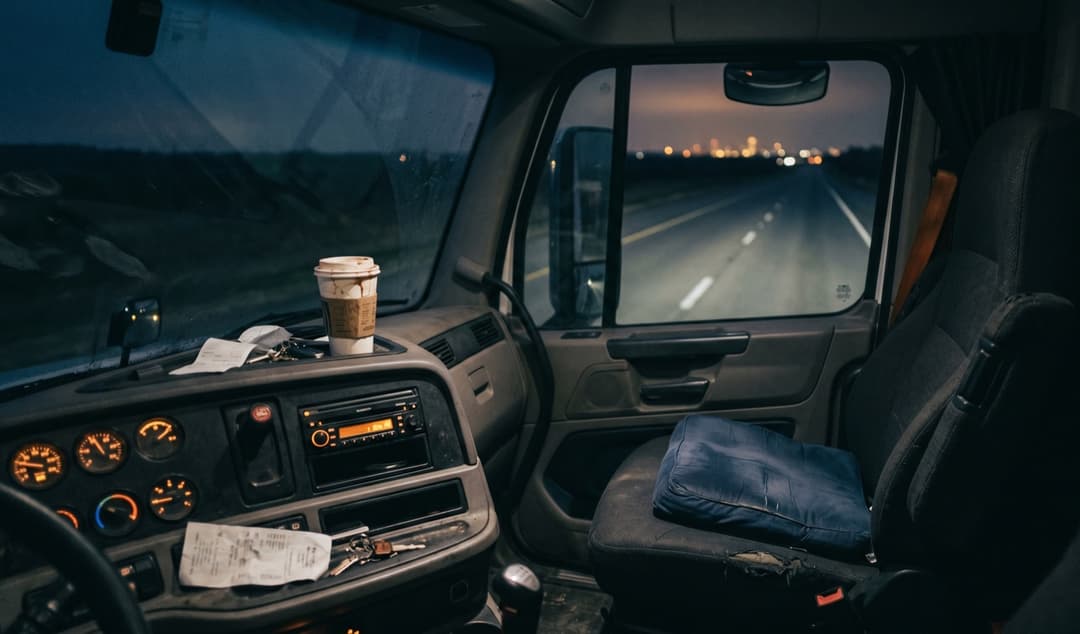
It is 3:14 a.m. somewhere east of Reno. The lumbar pillow you spent $89 on at the Petro flattened around hour 30. The truck-stop coffee from Cheyenne stopped doing anything six hours ago. You will sleep tonight in 90-minute pieces in the sleeper berth, get up before sunrise, and put another 600 miles down before you can shower.
Every long-haul driver knows the body math. The DOT hours-of-service rules let you drive 11 hours in a 14-hour window. You can stack those windows. The cabin food is what is at the pump. Your spine sits in the same compressed position for nine hours at a stretch, vibrating at frequencies that physiology textbooks call "whole-body vibration." Your circadian rhythm exists only as a faint memory of what it was before you started running coast-to-coast. When you get a peptide through PeRx, it is prescribed by a licensed provider and compounded in a US-based, FDA-regulated 503A pharmacy, the same regulated pathway many everyday prescriptions go through.
The standard advice, "exercise more, eat better, sleep eight hours," is written by people who have never run a load.
This guide is for drivers who want a different lever. Peptide therapy is not a stimulant, not a sleep aid, not a painkiller. It is a set of signaling molecules your body already uses, prescribed at therapeutic doses to help your tissues do what they would do if you had time to recover normally. Below is the protocol drivers actually run.
What Cabin Life Does to Your Body
The trucker body has a specific injury pattern. It is not the same as a runner's pattern, or a desk worker's pattern. Four things wear hardest.
1. Lumbar and SI joint compression. Nine hours seated, vibration loading, infrequent unloading. Lower-back injury is documented at elevated rates in long-haul driver cohorts, with the L4-L5 and L5-S1 segments most commonly affected. The SI joint stiffens, the deep glutes stop firing, and the hamstring tightness you feel at the truck stop is downstream of the joint, not the muscle.
Joseph L et al., "Prevalence of musculoskeletal pain among professional drivers: A systematic review," Journal of Occupational Health, 2020. (Low back and musculoskeletal pain is elevated across professional-driver cohorts.) View study
2. Splintered sleep architecture. OTR drivers average 4 to 5 hours of total sleep on a run, broken into 90-minute fragments. That fragmentation matters more than the total. Deep (slow-wave) sleep is when your body releases the largest pulse of growth hormone and runs most of its tissue repair. Fragment that into pieces and you cut the pulse off mid-cycle.
3. Circadian wreckage. Your light cues are wrong. Your meal cues are wrong. The melatonin signal that should rise three hours before bed is fighting truck-stop fluorescent light and a 4 a.m. dispatch text. Drivers on irregular schedules have measurably elevated risk for metabolic syndrome, type 2 diabetes, and cardiovascular events. The mechanism is circadian misalignment, not just tiredness.
Xie F et al., "Association between night shift work and the risk of type 2 diabetes mellitus: a cohort-based meta-analysis," BMC Endocrine Disorders, 2024. View study
4. Cognitive fade in hour 11. Reaction time degrades measurably across long driving stretches, an effect well-documented in shift-work and sleep-deprivation literature. This is normal physiology, not weakness. The brain has metabolic limits like any other organ.
Standard recovery advice fails here because it assumes you have a recovery window. Drivers do not. The peptide protocol is built for people who need to recover while still on the road.
The Protocol
Four peptides, each targeting one of the four wear patterns above. None of these are stimulants. None of them are on standard 5-panel or 10-panel urine screens. Always confirm with your employer's medical review officer before starting any new prescription.
DSIP, for the 90-minute sleeper-berth window
DSIP (Delta Sleep-Inducing Peptide) is one of the most-studied unapproved peptides in neuroscience, with research going back to its discovery in 1974. It does not knock you out. Research associates it with a shift toward slow-wave (deep) sleep rather than sedation, the idea being that the 90 minutes you get in the berth produces more usable repair than the same 90 minutes would on caffeine residue. The human evidence is older and thinner than the marketing suggests, so it is used off-label and prescription-only.
Schoenenberger GA & Monnier M, "Characterization of a delta-electroencephalogram-(sleep)-inducing peptide," Proceedings of the National Academy of Sciences, 1977; 74(3):1282-1286. (Original isolation and naming of DSIP for its delta-wave, slow-wave sleep activity.)
Drivers use DSIP about 30 minutes before the sleep window. It is not a hypnotic. You can still wake up and drive if you have to. What it does is bias the sleep architecture toward deep sleep instead of shallow REM-light fragmentation. It is the same mechanism other irregular-schedule workers rely on, from pilots and flight crew to touring musicians sleeping in a moving bus bunk.
NAD+, for cellular energy between runs
NAD+ (Nicotinamide Adenine Dinucleotide) is a coenzyme every cell in your body uses to convert food into ATP, the actual energy currency. Tissue NAD+ levels drop 50% or more by middle age, and shift work plus poor sleep accelerates the decline.
Massudi H et al., "Age-associated changes in oxidative stress and NAD+ metabolism in human tissue," PLoS ONE, 2012. (Documents the decline in tissue NAD+ levels with age.) View study
Injectable NAD+ bypasses the GI conversion limits that cap how much oral NMN or NR can actually raise your levels. Drivers typically run a maintenance dose 2-3 times a week, with a higher dose at the start of a long-haul stretch.
Anecdotally, NAD+ is the peptide drivers report most often as feeling a difference from. The 3 a.m. fog that used to require a Red Bull to push through becomes manageable on coffee alone.
BPC-157, for the lumbar, the neck, the right shoulder from steering
BPC-157 (Body Protective Compound 157) is the most-studied tissue repair peptide. The University of Zagreb has run more than 100 preclinical studies on it over 30 years, primarily on gut and soft-tissue healing. Mechanistically it appears to upregulate VEGF (the signal that grows new blood vessels into damaged tissue) and modulate fibroblast activity (the cells that lay down collagen during repair).
Brcic L et al., "Modulatory effect of gastric pentadecapeptide BPC 157 on angiogenesis in muscle and tendon healing," Journal of Physiology and Pharmacology, 2009. (Rodent model describing the angiogenesis mechanism.) View study
For truckers, BPC-157 is the peptide that maps onto the chronic wear pattern. The lumbar that flares up on day three. The right rotator cuff from a million miles of steering wheel. The neck from sleeping at an angle. It will not undo a herniation. It will, in the experience of drivers who use it, take the edge off the cumulative load enough that day five does not feel like day fifteen.
Pinealon/PE-22-28/Selank, for cognition and circadian rescue
These three peptides are typically prescribed as a pre-mixed blend in a single vial. Pinealon is a tripeptide studied for neuroprotection; despite the name, no study has measured an effect on melatonin. PE-22-28 blocks the TREK-1 potassium channel and appears to promote neurogenesis in the hippocampus in rodent studies. Selank is a tuftsin analog with GABA modulation, anxiolytic without sedation.
For drivers, the Pinealon/PE-22-28/Selank blend maps onto the cognition-and-circadian layer. Used in the morning of a long-driving day, it tends to keep mental sharpness more consistent through the afternoon fade. Used at night, the Selank component helps the brain power down even when the schedule is wrong.
What to Expect on the Timeline
Week 1
DSIP shows up first
Drivers notice the sleeper-berth sleep feels more restful, even if not longer. NAD+ takes 2-3 doses to start moving cellular energy noticeably.
Week 2-4
BPC-157 starts working on chronic load
Lower-back and shoulder load start to take the edge off. Not full resolution, but the day-five flare gets shorter.
Week 4-8
The cumulative pattern shifts
Compound effect of better sleep architecture + better cellular energy + active tissue repair starts to feel like running with a different baseline. Many drivers describe this window as the point where they decide whether to continue.
Week 8-12
Maintenance phase
A typical maintenance pattern is 4-5x weekly NAD+, daily DSIP on sleep windows, BPC-157 cycled (5 days on, 2 off), and the cognition blend used situationally.
Real-World Logistics
Refrigeration on the road. Most therapeutic peptides need to stay in the 36-46°F window. A small soft cooler with two reusable ice packs (the same gear that holds your lunch) holds that window for 24-48 hours. Swap ice packs at any truck stop with a freezer. For longer hauls, hard coolers hold the window for 3-4 days.
Injection in the cabin. All four peptides are subcutaneous injection (just under the skin, not into muscle). The typical site is the abdomen, two inches lateral of the navel. It is a fine 29-31 gauge insulin needle, comparable in feel to a finger-stick. Drivers do it before bed or first thing in the morning in 30 seconds.
DOT physical timing. Peptides are not on standard DOT urine screens. They are prescription medications, so disclose them to your medical examiner the same way you would disclose any other prescription. Many MEs are familiar with peptide therapy at this point.
Home base vs. on-road dosing. A common workflow is to run the higher-dose phase at home base (where refrigeration and timing are easy) and switch to maintenance dosing on the road. The exception is DSIP, which works best when used consistently on the actual sleep windows you have, including the bad ones.
Coordinating with a provider. Most peptide therapy in the US runs through telehealth providers, who can prescribe and arrange shipping to any US address, including a home base, a terminal, or general delivery at a truck stop with valid ID. The practical workflow is to time refills to the cycle so the cold chain stays continuous. Every batch is third-party tested for purity, and each order ships fully reconstituted and ready to use, delivered overnight in refrigerated packaging.
Quick Comparison
| Best for | Onset | Frequency | |
|---|---|---|---|
| DSIP | Sleeper-berth sleep quality | 1-2 nights | Nightly on sleep windows |
| NAD+ | Cellular energy between runs | 2-3 doses | 2-3x weekly |
| BPC-157 | Chronic back/neck/shoulder load | 2-4 weeks | Daily for 4-6 weeks, then cycle |
| Pinealon blend | Cognition + circadian recovery | 1-2 weeks | 3-5x weekly |
DSIP
- Best for
- Sleeper-berth sleep quality
- Onset
- 1-2 nights
- Frequency
- Nightly on sleep windows
NAD+
- Best for
- Cellular energy between runs
- Onset
- 2-3 doses
- Frequency
- 2-3x weekly
BPC-157
- Best for
- Chronic back/neck/shoulder load
- Onset
- 2-4 weeks
- Frequency
- Daily for 4-6 weeks, then cycle
Pinealon blend
- Best for
- Cognition + circadian recovery
- Onset
- 1-2 weeks
- Frequency
- 3-5x weekly
Learn more about peptide therapy
Peptide therapy in the US is prescription-only and requires evaluation by a licensed provider. Browse the individual peptides to read about what each one does, or start with the foundational primer.
Peptides for Long-Haul Truckers: Common Questions
Related Guides
Continue reading about peptides and protocols that pair well with this guide.
Peptides for Commercial Fishermen: Lower-Back Pain
For the people who lift for a living: deckhands, warehouse crews, movers, framers, and anyone whose lower back and shoulders take a beating every shift. How peptide therapy is used for the strain of heavy physical work.
How to Get Peptides Prescribed Online
There is a legitimate way to get peptides prescribed through telehealth, and there is a gray market that skips the medicine entirely. This guide walks the real path step by step: the online assessment, the licensed provider who reviews it, the US compounding pharmacy that prepares your peptide, and the box that arrives ready to use. It also shows you how to spot the sites you should walk away from.
Peptide Therapy in Mount Pleasant: A Lowcountry Guide
A plain guide to peptide therapy in Mount Pleasant for staying active as you age: what it costs across local clinics and med spas, who tends to use it here, and how pharmaceutical-grade peptides reach any Lowcountry address without a clinic visit.
Medical Disclaimer
The information provided on this website, including all articles, guides, and educational content, is for informational and educational purposes only and is not intended as medical advice, diagnosis, or treatment. Nothing on this site should be construed as a substitute for professional medical advice from a qualified healthcare provider.
The majority of peptides discussed on this site are not approved by the U.S. Food and Drug Administration (FDA) for the indications described. They are classified as bulk drug substances and are available only through a licensed prescribing provider and compounding pharmacy. All treatments require a valid prescription and provider oversight.
The majority of published research on peptide therapies has been conducted in preclinical (animal) models. While early human data is encouraging, comprehensive clinical trial data remains limited for most peptide compounds. Individual results may vary significantly based on health status, injury type, and other factors. No specific outcomes are guaranteed.
Certain peptides discussed on this site are classified as prohibited substances by the World Anti-Doping Agency (WADA) and are banned by major sports organizations including the NFL, NCAA, UFC, NBA, MLB, NHL, and PGA. If you are subject to anti-doping testing, consult your governing body before considering any peptide therapy.
Statements on this website have not been evaluated by the Food and Drug Administration. Products and therapies discussed are not intended to diagnose, treat, cure, or prevent any disease.
© 2026 Wellness MD Group PC DBA PeRx. All rights reserved.