Compounded Tirzepatide: The 2026 Rules, Explained
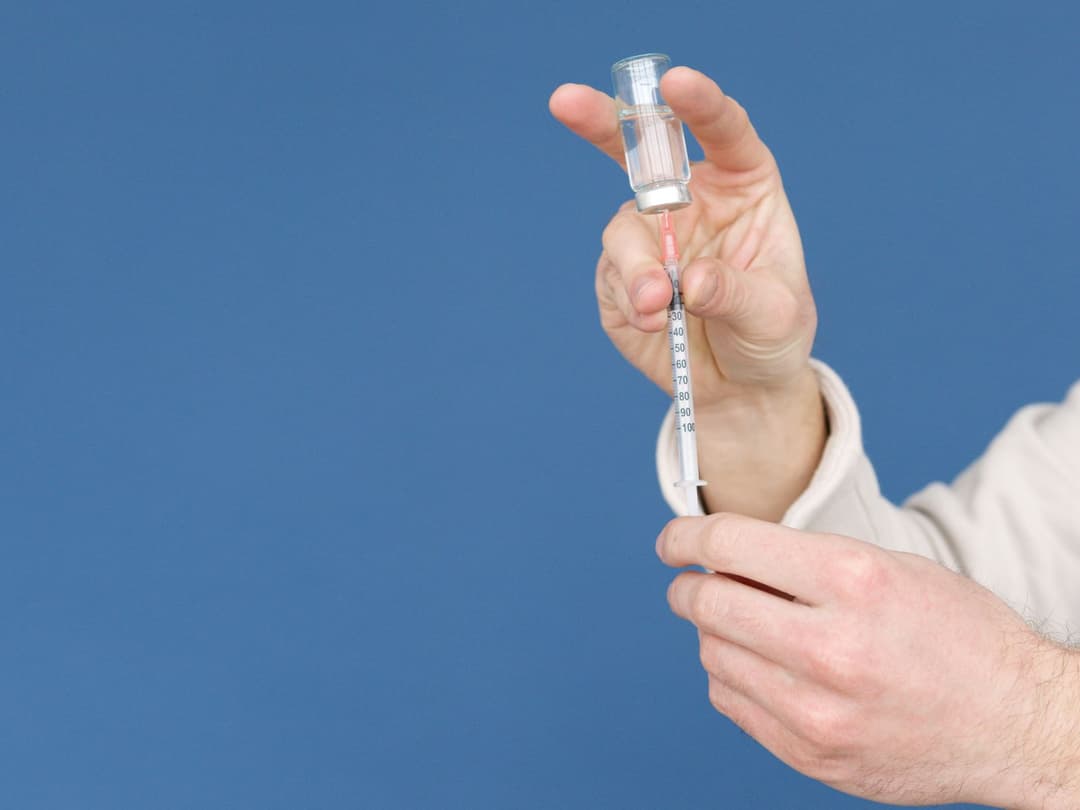
Compounded tirzepatide is the same active molecule as Mounjaro and Zepbound, drawn from a multi-dose vial a state-licensed pharmacy prepared for one named patient. Everything around the molecule is different: who checked it, what the law allows, what a court has said about how it is sold, and what the safety reports show. This page walks through all of it, dated.
In this article
Key Takeaways
- Compounded tirzepatide is prepared by a state-licensed 503A pharmacy for a named patient. It contains the same active ingredient as Mounjaro and Zepbound and has never been reviewed by the FDA for safety, effectiveness, or quality.
- The FDA declared the tirzepatide shortage resolved on October 2, 2024 and reaffirmed it on December 19, 2024. 503A pharmacies had until February 18, 2025 and 503B facilities until March 19, 2025 to stop making copies of the approved drugs.
- What remains lawful under 503A is patient-specific compounding where the prescriber documents a change that makes a significant difference for that patient. Adding vitamin B12 does not by itself satisfy that test.
- On April 30, 2026 the FDA proposed excluding tirzepatide from the 503B bulks list, and in April 2026 a federal court let Eli Lilly proceed with false-advertising claims against a telehealth seller that cited the brand trials for its vial.
- As of May 31, 2026 the FDA had received more than 730 adverse event reports tied to compounded tirzepatide, many involving dosing errors from multi-dose vials. PeRx prescribes compounded tirzepatide with B12 at $399 per month on a 28-day cycle, with a provider review before every refill.
Compounded Tirzepatide at a Glance
What it is
Tirzepatide prepared by a state-licensed 503A pharmacy for one named patient under a prescription
FDA status
Not approved or reviewed. The approved products are Mounjaro (2022) and Zepbound (2023)
Shortage status
Resolved October 2, 2024, reaffirmed December 19, 2024; grace periods ended February 18 and March 19, 2025
Legal basis today
Section 503A, per prescription, with a documented patient-specific difference. 503B route proposed for closure April 30, 2026
FDA adverse event reports
More than 730 for compounded tirzepatide as of May 31, 2026
PeRx product
Compounded tirzepatide with vitamin B12, $399 per month, 28-day cycle, strength set by your provider
Last reviewed
October 1, 2026
First the disclosure, since the rest of the page depends on it. PeRx prescribes compounded tirzepatide with vitamin B12, made by a US 503A compounding pharmacy against each patient's own prescription. It is not Mounjaro and it is not Zepbound; those are FDA-approved Eli Lilly products, and the clinical data behind them belongs to them. Nothing here borrows that data to describe the compounded product.
The semaglutide version of this question, including the basics of what compounding is, lives at what is compounded semaglutide. Tirzepatide has had the rougher year: its shortage ended first, the manufacturer sued first, and a court has now said more about how it may be sold.
What It Is, and What It Is Not
Tirzepatide is a single, patented 39-amino-acid peptide that activates both the GLP-1 and GIP receptors. A compounding pharmacy buys it as an active pharmaceutical ingredient from a supplier registered with the FDA, dissolves a measured amount into a sterile vial, usually with a second ingredient such as vitamin B12, and labels the vial for one named patient, working under its state board of pharmacy and USP General Chapter 797 for sterile preparations. That is the whole definition. Every other claim a seller attaches to the phrase is marketing.
Three things it is not. Not FDA approved: no compounded drug is, because approval attaches to a specific finished product that went through trials and inspection. Not a generic, which is an approved product shown to be bioequivalent to the brand; none exists for tirzepatide. And not a made-for-you medicine in any meaningful sense: most compounded tirzepatide comes in standard concentrations with a standard additive, and a federal court has treated the claim that such a vial is made for the individual patient as an assertion to be proven, not a description. PeRx does not make it.
Why the B12 is there
Vitamin B12 in the vial is a co-formulated ingredient: a patient who is also prescribed B12 gets it in the same weekly injection instead of a second one. No published controlled study shows it changes nausea, weight outcomes, or anything else about how tirzepatide behaves. It is a convenience, not an upgrade, and not a legal shield either.
Compounded Tirzepatide vs Zepbound and Mounjaro
Mounjaro was approved on May 13, 2022 for adults with type 2 diabetes. Zepbound, the same molecule under a second name, was approved on November 8, 2023 for chronic weight management. Both are once-weekly injections sold at six fixed strengths from 2.5 mg to 15 mg, in pens and, for Zepbound, in single-dose vials sold directly to self-pay patients. The compounded product shares the molecule and the route and differs in almost everything a regulator cares about.
| Mounjaro / Zepbound | Compounded tirzepatide (503A) | |
|---|---|---|
| FDA review of the finished product | Yes. Approved on manufacturer trials; lots made under CGMP | No. The pharmacy is licensed and regulated; the preparation itself is never reviewed |
| Made for | Anyone with a prescription; stock product | One named patient, per prescription |
| Dose format | Fixed-dose pen or single-dose vial; the dose is built in | Multi-dose vial; you draw the dose in units |
| Strengths | Six fixed weekly doses, 2.5 mg to 15 mg | Whatever concentration the prescription specifies |
| Additives | None | Commonly vitamin B12 in the same vial |
| Adverse event reporting to the FDA | Required of the manufacturer | Not required of a 503A pharmacy |
| Self-pay price | Zepbound vials via LillyDirect: $299 (2.5 mg), $399 (5 mg), $449 (7.5 mg and up) per month, as of December 2025 | PeRx: $399 per month at every strength |
FDA review of the finished product
- Mounjaro / Zepbound
- Yes. Approved on manufacturer trials; lots made under CGMP
- Compounded tirzepatide (503A)
- No. The pharmacy is licensed and regulated; the preparation itself is never reviewed
Made for
- Mounjaro / Zepbound
- Anyone with a prescription; stock product
- Compounded tirzepatide (503A)
- One named patient, per prescription
Dose format
- Mounjaro / Zepbound
- Fixed-dose pen or single-dose vial; the dose is built in
- Compounded tirzepatide (503A)
- Multi-dose vial; you draw the dose in units
Strengths
- Mounjaro / Zepbound
- Six fixed weekly doses, 2.5 mg to 15 mg
- Compounded tirzepatide (503A)
- Whatever concentration the prescription specifies
Additives
- Mounjaro / Zepbound
- None
- Compounded tirzepatide (503A)
- Commonly vitamin B12 in the same vial
Adverse event reporting to the FDA
- Mounjaro / Zepbound
- Required of the manufacturer
- Compounded tirzepatide (503A)
- Not required of a 503A pharmacy
Self-pay price
- Mounjaro / Zepbound
- Zepbound vials via LillyDirect: $299 (2.5 mg), $399 (5 mg), $449 (7.5 mg and up) per month, as of December 2025
- Compounded tirzepatide (503A)
- PeRx: $399 per month at every strength
Two rows carry the weight. Dose format is the safety difference: a pen measures for you, a vial asks you to measure, and the FDA adverse event file for compounded products is full of people who measured wrong. FDA review is the legal difference: nobody outside the pharmacy has verified that a given vial contains what its label says. And since Lilly cut its self-pay vial prices in December 2025, the cost gap has closed at the low steps; at 5 mg, PeRx and LillyDirect charge the same $399. Anyone choosing the compounded route on price alone should look at that table first.
U.S. Food & Drug Administration, Drugs@FDA: Mounjaro (tirzepatide), NDA 215866, approved May 13, 2022; Zepbound (tirzepatide), NDA 217806, approved November 8, 2023. Eli Lilly and Company. Approved strengths 2.5 mg to 15 mg per 0.5 mL. View study
Pharmaceutical Executive, December 1, 2025: "Lilly Reduces Price of Zepbound Single-Dose Vials for Self-Pay Patients." LillyDirect prices of $299 (2.5 mg), $399 (5 mg) and $449 (7.5 mg through 15 mg) per month. View study
The Shortage, Dated
Compounded tirzepatide exists at scale because of a shortage, and most arguments about whether it is still allowed come down to dates. Here they are, from primary sources.
May 13, 2022
Mounjaro approved
Tirzepatide is approved for adults with type 2 diabetes. Off-label demand for weight management begins almost at once.
Nov 8, 2023
Zepbound approved
The same molecule is approved under a second name for chronic weight management, putting the on-label and compounded uses in direct competition.
Dec 19, 2024
Resolution reaffirmed, with grace periods
The FDA reaches the same conclusion and gives 503A pharmacies until February 18, 2025 and 503B facilities until March 19, 2025. A Texas federal court declines to block the decision in March 2025.
Mar 3, 2026
FDA warns 30 telehealth companies
Warning letters over claims implying a compounded GLP-1 is the same as, or approved like, the brand.
Dec 15, 2022
Tirzepatide enters the FDA shortage list
While a drug is on the list, compounders may prepare versions otherwise barred as copies. The telehealth market grows on this allowance.
Oct 2, 2024
FDA declares the shortage resolved
The Outsourcing Facilities Association sues, and the FDA agrees to reconsider.
Apr 23, 2025
Lilly sues four telehealth companies
Suits against Mochi Health, Fella Health, Willow Health and Henry Meds over how compounded tirzepatide is marketed.
Apr 30, 2026
Proposal to close the 503B route
The FDA proposes excluding tirzepatide, semaglutide and liraglutide from the 503B bulks list, finding no clinical need. Comments closed June 29, 2026; no final determination as of October 1, 2026.
U.S. Food & Drug Administration, "FDA clarifies policies for compounders as national GLP-1 supply begins to stabilize." Tirzepatide shortage resolution of October 2, 2024, reaffirmed December 19, 2024; 503A and 503B grace periods; essentially-a-copy criteria. View study
U.S. Food & Drug Administration, press announcement, April 30, 2026: "FDA Proposes to Exclude Semaglutide, Tirzepatide, and Liraglutide on 503B Bulks List." Comment period through June 29, 2026. View study
U.S. Food & Drug Administration, press announcement, March 3, 2026: "FDA Warns 30 Telehealth Companies Against Illegal Marketing of Compounded GLP-1s." View study
The Essentially-a-Copy Test
Section 503A bars a pharmacy from compounding, regularly or in inordinate amounts, a drug that is essentially a copy of a commercially available product. The FDA defines that as the same active ingredient, the same route, and a strength within 10 percent of a marketed one, unless the prescriber determines and documents that the compounded version contains a change producing a significant difference for the individual patient. The agency has also said it does not intend, for now, to act against a compounder filling four or fewer such prescriptions in a calendar month, a carve-out for the occasional patient rather than a business.
For a tirzepatide vial, each piece lands the same way: same ingredient, same route, and usually a strength within 10 percent of an approved step. That leaves the documented difference as the only thing between a lawful prescription and a copy. The FDA used semaglutide plus vitamin B12 as its worked example of a combination it may still consider a copy absent a documented patient-specific reason, and nothing in that logic spares tirzepatide. The B12 does not make the vial legally distinct. The prescriber's documented determination does.
U.S. Food & Drug Administration, Guidance for Industry, January 2018: "Compounded Drug Products That Are Essentially Copies of a Commercially Available Drug Product Under Section 503A of the Federal Food, Drug, and Cosmetic Act." View study
One chemistry footnote belongs here, with its source attached. In 2026, scientists employed by Eli Lilly analyzed compounded tirzepatide and B12 products bought on the US market and reported a previously unidentified impurity from a reaction between tirzepatide and certain forms of B12. Its clinical effect is unknown, and the authors work for the maker of the approved product, which is a reason to read the paper carefully, not to ignore it. Ask a pharmacy which B12 form it uses and what testing it does on the finished vial.
Jordan B, Arbogast L, Clemens M, Huang L, et al. "A novel, widespread impurity in mass-compounded tirzepatide/B12 products: potential patient safety implications." Expert Opinion on Drug Safety, 2026. Authors affiliated with Eli Lilly and Company. PMID 42010938. View study
What Lilly Has Done About It
On April 23, 2025, Eli Lilly sued Mochi Health, Fella Health, Willow Health and Henry Meds in federal court. The complaints did not argue that compounding tirzepatide is illegal in itself. They argued the selling was deceptive: presenting mass-produced vials as made for the individual patient, implying they carried the safety record of the approved drugs, offering untested forms such as pills, and switching patients to additives and doses the brand is not approved at. In a separate National Advertising Division matter brought by Lilly, a compounding pharmacy permanently discontinued its challenged tirzepatide claims rather than defend them.
The cases have not moved in one direction. In August 2025 a federal court in Los Angeles dismissed the Willow Health case, reasoning that because the products require a prescription, Lilly could not show the marketing caused its lost sales. In April 2026 the San Francisco court in the Mochi Health case disagreed and let Lilly proceed; its order is the most specific judicial statement so far about what a seller of compounded tirzepatide may not say.
What the Mochi order found plausibly misleading
A blog post that called tirzepatide a safe medication approved by the FDA and cited the Lilly trial programs behind Mounjaro and Zepbound as proof, without saying those trials studied only the approved formulations. The court agreed that the FDA approves specific formulations, not an ingredient, and that borrowing the trial record for a compounded product could mislead a reasonable consumer. The claim that the drug was made for the individual patient went forward on the same basis; a conspiracy claim was dismissed. The ruling is on a motion to dismiss, so the allegations were found plausible, not proven. Those are the claims this page leaves out.
Eli Lilly and Company v. Mochi Health Corp., et al., No. 3:25-cv-03534-JSC (N.D. Cal.), Order re Motion to Dismiss the First Amended Complaint, Dkt. No. 126, filed April 20, 2026. Lanham Act and UCL claims proceed; conspiracy claim dismissed. View study
NPR, April 23, 2025: "Eli Lilly sues companies selling alternative versions of its weight loss drug." Suits against Mochi Health, Fella Health, Willow Health and Henry Meds. View study
BBB National Programs, National Advertising Division: "In NAD Challenge, Striker Pharmacy Discontinues Compounded Tirzepatide Claims." Challenge brought by Eli Lilly and Company. View study
What the Safety Record Shows
As of May 31, 2026, the FDA had received more than 730 adverse event reports tied to compounded tirzepatide, and 990 for compounded semaglutide. Many match the known side effects of the approved drugs: nausea, vomiting, diarrhea, abdominal pain, constipation. The failure specific to compounding is dosing. The FDA has documented hospitalizations from patients drawing the wrong volume, prescribers miscalculating a conversion, and doses given more often or escalated faster than the label allows, plus fraudulently labeled tirzepatide and, in one case, injection-site reactions tied to such a product.
U.S. Food & Drug Administration, "FDA's Concerns with Unapproved GLP-1 Drugs Used for Weight Loss." Adverse event totals as of May 31, 2026; dosing-error and fraudulent-labeling reports. View study
Independent analyses of the same reporting system point the same way, with the standing caveat that spontaneous reports show association, not cause. A Geisinger group found 707 compounded-product reports among 81,078 GLP-1 reports from 2018 to 2024; those carried higher odds of preparation errors, contamination, manufacturing problems and hospitalization than reports on the approved drugs, though lower odds of dosing errors in that dataset. A second analysis counted 3,348 accidental-overdose reports across the class and tied the rise to online and compounding access, and a 2026 study of poison center calls found exposures climbing after the weight-management approvals, with a meaningful share involving dosing mistakes.
McCall KL, Mastro Dwyer KA, Casey RT, Samana TN, et al. "Safety analysis of compounded GLP-1 receptor agonists: a pharmacovigilance study using the FDA adverse event reporting system." Expert Opinion on Drug Safety, 2026. PMID 40285721. View study
McIntyre RS, Kwan ATH. "Increased reporting of accidental overdose with glucagon-like peptide-1 receptor agonists: a population-based study." Expert Opinion on Drug Safety, 2026. PMID 39552465. View study
Miller J, Miller R, Varney SM, Han D. "National Poison Center Trends in GLP-1 Receptor Agonist Exposures Following FDA Approval for Weight Loss." Journal of Medical Toxicology, 2026. PMID 41634285. View study
One more study explains the undercount. In a nationwide primary-care database covering 2021 through 2024, only 8.2 percent of patients on semaglutide or tirzepatide had compounded use documented, against surveys suggesting roughly a quarter of users got the drugs from compounders. The authors read the gap as patients obtaining compounded GLP-1s outside coordinated care, where no clinician is positioned to notice a problem. That is the strongest argument for getting it, if at all, from a clinic where a licensed provider reviews you before every refill.
Hendrix N, Velasquez EE, Pham H, Bazemore A. "Documentation of Compounded GLP-1 Receptor Agonists in a Large Primary Care Dataset." Pharmacoepidemiology and Drug Safety, 2025. PMID 41024632. View study
The honest answer to "is it safe"
Compounded tirzepatide from a licensed 503A pharmacy carries the side effects of tirzepatide plus two risks the approved pen does not: measuring your own dose, and a preparation nobody outside the pharmacy has tested. Whether that trade is acceptable is a decision for you and a prescriber who has reviewed your history. Any page that says it is as safe as Zepbound is making a claim that has never been tested.
What PeRx Prescribes
PeRx compounded tirzepatide + B12
Product
Compounded tirzepatide with vitamin B12, one 2 mL multi-dose vial per cycle
Pharmacy
US 503A compounding pharmacy, state-licensed, prepared against your individual prescription
Route and dose
Subcutaneous injection once weekly, typically 50 units (0.5 mL) at a concentration your provider sets and raises gradually
Price
$399 per month, no insurance, the same at every strength
Cadence
One vial per 28 days, which is four weekly doses; renews automatically; cancel any time
Before each refill
A check-in reviewed by a licensed provider, who decides whether the next vial is the same strength or a step up
Ships as
Ready to use with no reconstitution needed, overnight in cold packaging, with syringes and swabs
The order of events is the point. You complete an intake; a licensed provider reviews it and either prescribes or declines; your card is saved at checkout and charged only on approval; the pharmacy compounds the vial against that prescription, and it arrives with your name, the pharmacy and the prescriber on the label. There is no strength to pick at checkout, because the strength is a clinical decision, not a menu.
Tirzepatide is one of two PeRx products sold as a subscription, and the reason is the drug. Dosing is stepped, rising over months as tolerated, and a clinician needs to see how the current cycle went before deciding what the next vial should be. You get an advance notice by email and text about three days before each renewal, cancelling is a single action in your account, and multi-month discounts never apply to a GLP-1 because no one should hold three months of a stepped medication at once. Staying at a low step for a long time is covered in GLP-1 maintenance dosing and microdosing.
Who is screened out: anyone with a personal or family history of medullary thyroid carcinoma or MEN 2; anyone pregnant, breastfeeding, or planning a pregnancy within six months; and anyone whose history of pancreatitis, gallbladder disease or gastroparesis the provider judges disqualifying. Insulin or sulfonylurea users are not excluded, but those doses may need adjustment. Severe abdominal pain, especially spreading to the back, is a reason to seek care now. PeRx does not offer an oral or under-the-tongue tirzepatide.
The honest limits
PeRx's tirzepatide is not FDA approved, and no trial has tested this preparation. The outcome data belongs to Mounjaro and Zepbound and is not borrowed here. The B12 is a co-formulated ingredient and nothing more. At the 5 mg step the approved vial now costs the same as ours, so price alone is not a reason to choose us. The 503A footing depends on a prescriber-documented, patient-specific reason, and the FDA could narrow it at any time, which would end our ability to offer it. If any of those is a dealbreaker, the approved products exist, and the right move is to ask a prescriber about them.
What to Expect, Step by Step
Intake to first injection usually runs a few days. If the provider declines, nothing is charged. If the answer is yes, the vial ships overnight in cold packaging with insulin syringes and alcohol swabs. Open the box the day it arrives: the cold pack should still be cold, the solution clear, and the label should carry your name, the pharmacy and its license state, the prescriber, the concentration in mg per mL with the B12 strength listed separately, and a beyond-use date. Refrigerate upright, away from light, and never freeze.
The units arithmetic is the one skill a vial requires and a pen does not. Your prescription states a weekly dose in milligrams, the label a concentration in milligrams per milliliter, and the syringe is marked in units, where 100 units equal 1 mL. The volume you draw delivers the prescribed milligrams at that concentration, and it changes if the concentration changes between cycles. Work it through before the first dose; where to inject semaglutide and tirzepatide has the conversion in full. Coming off Mounjaro or Zepbound, tell the provider the exact dose and date of your last pen; switching is managed by the prescriber, never in the same week as a pen dose.
Three side questions have their own pages: HSA and FSA peptide therapy, gray-market GLP-1s vs compounded on prescribed vials versus internet vials, and semaglutide vs tirzepatide on the two compounded options PeRx offers. For the GLP-1s against the rest of the catalog, read do peptides help you lose weight.
Common Questions
Related Guides
Continue reading about peptides and protocols that pair well with this guide.
Semaglutide vs Tirzepatide: Which One Fits You
PeRx prescribes two compounded GLP-1 medications, one at $249 a month and one at $399. This is the decision guide we wish existed: what each molecule does, how the approved brands differ on their FDA labels, what the head-to-head research on those brands actually shows, and the questions a prescriber weighs before picking one for a specific patient.
Where to Inject Semaglutide and Tirzepatide
Both are once-weekly subcutaneous injections, and the three standard sites are the same for each. The part that trips people up is not the site. It is that a compounded vial is not a prefilled pen, so you are drawing your own dose and reading it in syringe units. Here is the practical version.
Are Peptides Steroids? The Actual Differences
No, and the reasons are more specific than "they are different things." Peptides and anabolic steroids differ at the level of chemistry, receptor biology, federal drug scheduling, and side-effect profile. They overlap in exactly one place that matters: the anti-doping rulebook. This page covers all of it, including the growth hormone secretagogue question that causes most of the confusion.
Ready to get started?
Pharmaceutical-grade compounded tirzepatide, prescribed by a licensed provider and delivered to your door with everything you need.
Medical Disclaimer
The information provided on this website, including all articles, guides, and educational content, is for informational and educational purposes only and is not intended as medical advice, diagnosis, or treatment. Nothing on this site should be construed as a substitute for professional medical advice from a qualified healthcare provider.
The majority of peptides discussed on this site are not approved by the U.S. Food and Drug Administration (FDA) for the indications described. They are classified as bulk drug substances and are available only through a licensed prescribing provider and compounding pharmacy. All treatments require a valid prescription and provider oversight.
The majority of published research on peptide therapies has been conducted in preclinical (animal) models. While early human data is encouraging, comprehensive clinical trial data remains limited for most peptide compounds. Individual results may vary significantly based on health status, injury type, and other factors. No specific outcomes are guaranteed.
Certain peptides discussed on this site are classified as prohibited substances by the World Anti-Doping Agency (WADA) and are banned by major sports organizations including the NFL, NCAA, UFC, NBA, MLB, NHL, and PGA. If you are subject to anti-doping testing, consult your governing body before considering any peptide therapy.
Statements on this website have not been evaluated by the Food and Drug Administration. Products and therapies discussed are not intended to diagnose, treat, cure, or prevent any disease.
© 2026 Wellness MD Group PC DBA PeRx. All rights reserved.