Peptides for Recovery
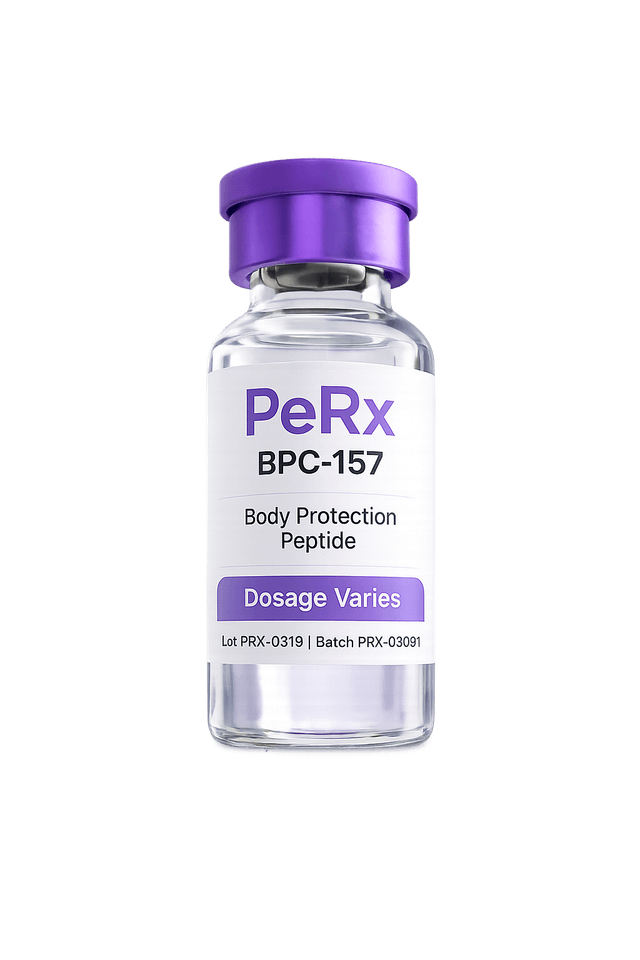
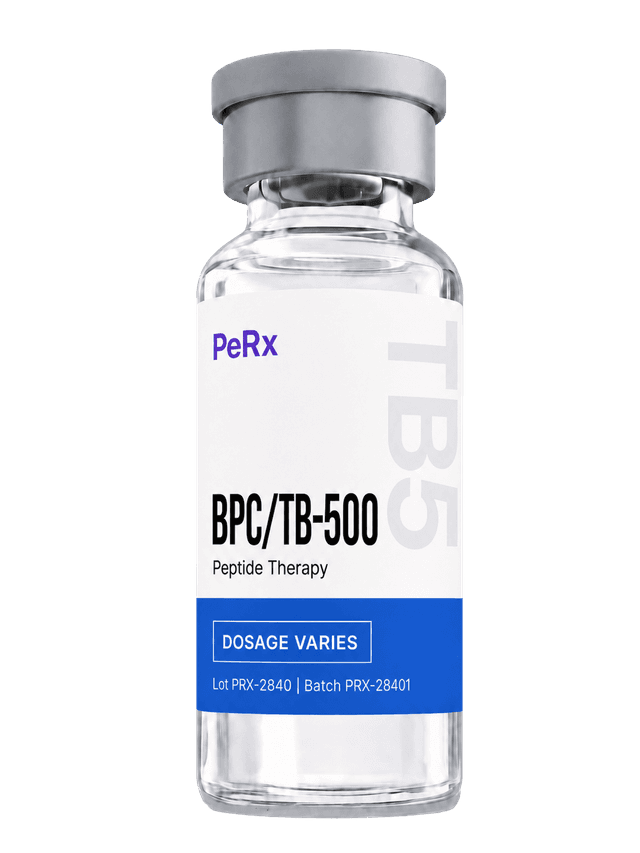
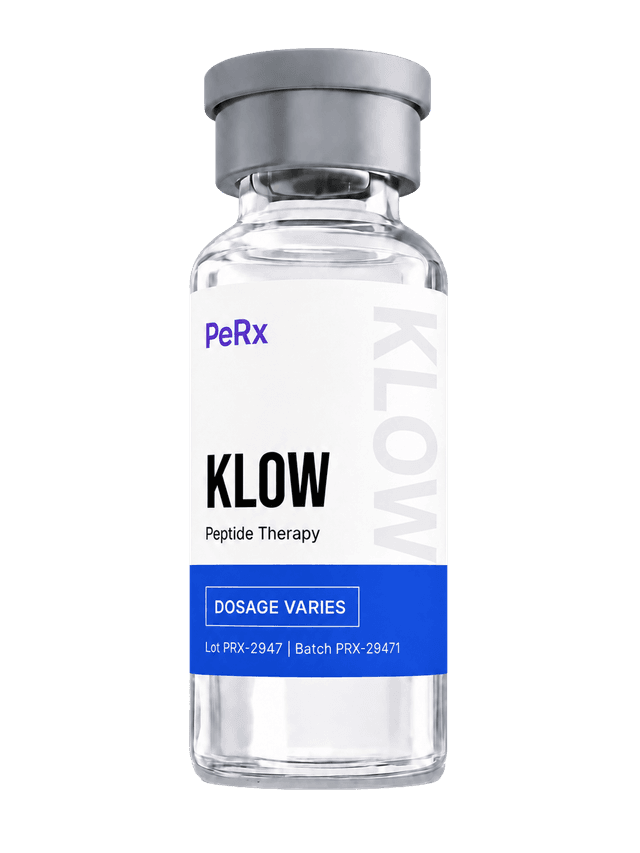
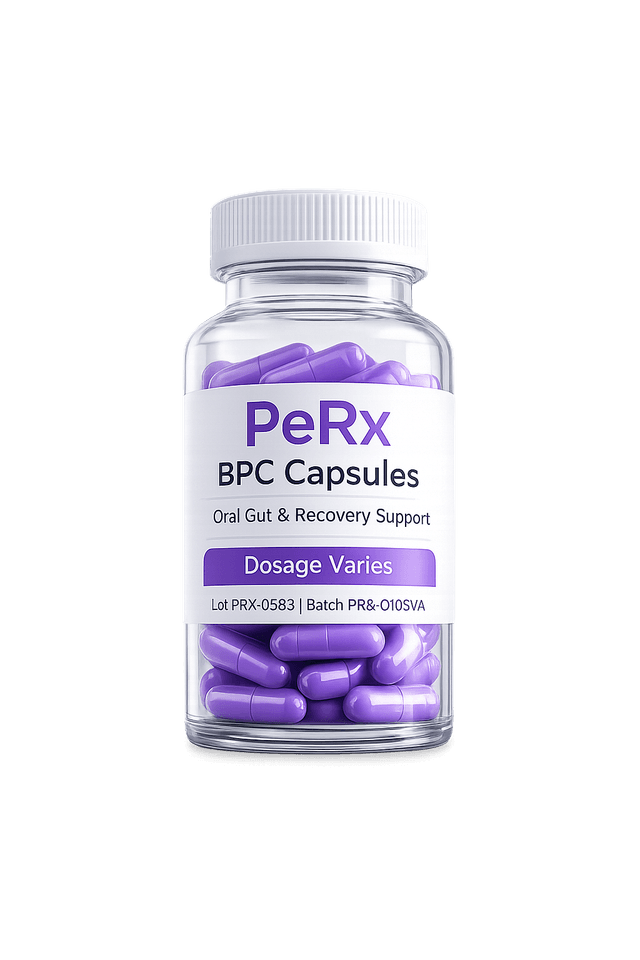
Peptides for recovery are short signaling molecules studied for how they support the body's own repair work in tendons, ligaments, muscle and the gut. PeRx prescribes them through licensed US providers as compounded medications, shipped ready to use to all 50 states. The five options here are built on BPC-157 and TB-500 and come in two formats, three injectables and two oral capsules. Each is a prescription, written only after a provider reviews your assessment.

Recovery Peptides Available at PeRx
Showing 5 peptides in Recovery
Not sure which peptide is right for you?
Take our 60-second assessment. A licensed US provider reviews and recommends a protocol if appropriate.
How These Peptides Support Tissue Repair
Soft-tissue repair runs in overlapping stages: blood supply returns to the damaged area, repair cells move in, and new collagen is laid down and remodeled. The tissue repair peptides here are studied for supporting those stages, not for masking pain.
BPC-157, a 15-amino-acid peptide first isolated from human gastric juice, works mainly locally. Its best-characterized effect is angiogenesis, the growth of new blood vessels through VEGF signaling. That matters because tendons and ligaments have a naturally poor blood supply, which is a large part of why they recover slowly.
TB-500, a synthetic version of thymosin beta-4, acts more broadly: it reorganizes actin, the internal scaffolding cells use to move, supporting cell migration toward the repair site. KLOW adds two more mechanisms, GHK-Cu for collagen synthesis and KPV for inflammatory signaling, so one vial covers more of the process.
Injectable vs. Oral Capsules: Choosing Your Recovery Format
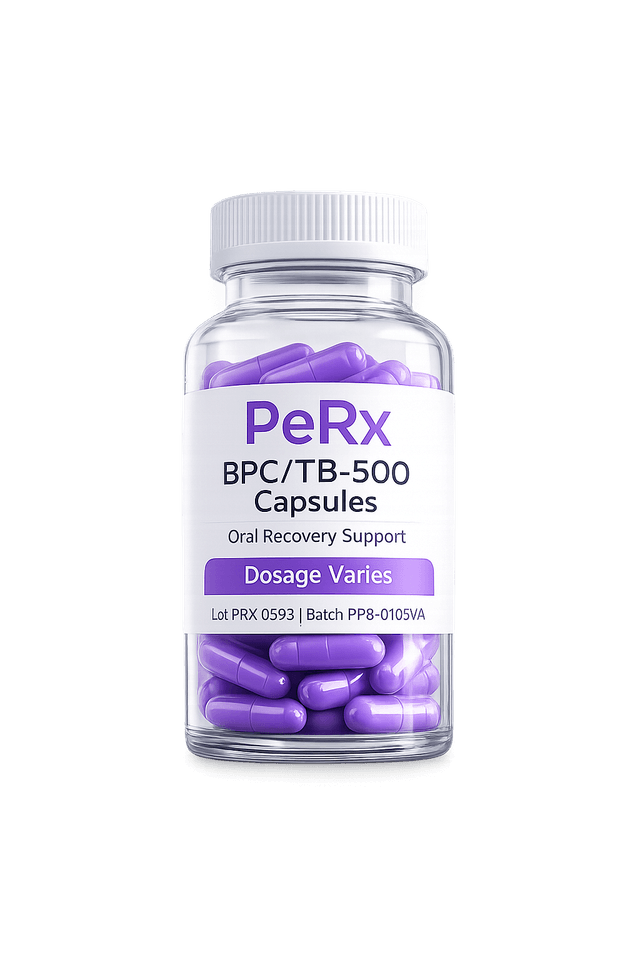
The five options split by format. Three are injectable (BPC-157, BPC/TB-500 and KLOW), each shipped as a ready-to-use vial for a small under-the-skin injection. Two are oral, BPC Capsules and BPC/TB-500 Capsules, with no needles, mixing or refrigeration.
The formats are not interchangeable. An injection delivers most of the dose into circulation, which is why it is the standard route for tendon, ligament and other soft-tissue goals. A capsule loses much of the dose to digestion, but BPC-157 is unusually stable in stomach acid, and for gut-focused recovery, direct contact with the digestive lining is the point.
The practical rule: capsules for gut-focused goals or a firm no-needles preference, injections for everything else. If you are not sure which peptide for recovery fits, a provider makes that call from your assessment.
BPC-157, TB-500, and KLOW: Matching the Stack to Your Injury
Among the injectables, the real difference is how wide each one casts the net.
BPC-157 alone fits a single, localized problem: one tendon, one ligament, one stubborn site. For people looking into peptides for tendon repair, it is usually the starting point, because its research centers on local repair where the damage is.
BPC/TB-500 pairs that local signal with TB-500's whole-body reach. It fits recovery that is not confined to one spot: several sore areas at once, heavy training blocks or a generally slow rebound.
KLOW is the broadest stack, adding GHK-Cu and KPV to the same pair for support across more pathways in one vial. A provider matches the stack to your history and goal.
What the Evidence Actually Shows
Promising, but early. Nearly all BPC-157 research comes from cell and animal models, and it has never entered formal FDA clinical trials. TB-500's parent molecule, thymosin beta-4, reached Phase 2 human trials for wound healing and cardiac repair before development paused. Human data on tendon and muscle recovery is still limited, and results vary.
The regulatory picture moved in July 2026, when the FDA's compounding advisory committee voted to recommend BPC-157, TB-500 and KPV, one of KLOW's four peptides, for the Section 503A bulks list; GHK-Cu is slated for a later meeting. That was an advisory vote, not an approval, and the FDA's final decision is still pending. Our approach is evidence-based: we prescribe peptides for recovery with that context stated plainly.
Safety, Contraindications & Who Should Consider Recovery Peptide Therapy
The right candidate is an adult with a training or soft-tissue recovery goal who wants clinical oversight. A new injury with severe pain, numbness or loss of function needs an in-person exam first; these peptides do not replace imaging, physical therapy or surgery.
Pregnancy and breastfeeding are hard stops. Active cancer rules out the TB-500 products and KLOW and needs a provider conversation before BPC-157, since both BPC-157 and TB-500 support blood vessel growth. KLOW's copper peptide also rules it out with Wilson's disease or copper sensitivity. Side effects are usually mild: injection-site redness, or brief stomach upset with capsules.
Every option is a compounded medication that requires a prescription.
Starting Recovery Peptide Therapy at PeRx
Starting peptides for recovery at PeRx takes three steps and no office visit.
First, complete the assessment. Pick your peptide and format and save a card; you are not charged yet.
Second, a licensed US provider reviews your file. If they approve, they write the prescription, and only then is your card charged.
Third, it ships ready to use: a vial with syringes and alcohol swabs, or a bottle of capsules.
Take the 60-second assessment, or talk to us first.
Compare Recovery Peptides at PeRx
The five tissue repair peptides at PeRx differ in mechanism, reach and format, and the table below shows where each one fits.
| Product | Mechanism | Best for |
|---|---|---|
| BPC-157 | Angiogenesis, local tissue repair | Tendon, ligament and gut support |
| BPC/TB-500 | Local repair + cell migration/broad regeneration | Combined local and systemic recovery |
| KLOW | Four-peptide combined repair stack | Broadest multi-pathway recovery support |
| BPC Capsules | Oral BPC-157 | Gut-focused recovery, oral preference |
| BPC/TB-500 Capsules | Oral BPC-157 + TB-500 | Combined recovery, oral preference |
Frequently Asked Questions
What are the best peptides for recovery?
BPC-157 suits one localized problem; BPC/TB-500 or KLOW suit broader recovery. A provider matches peptides for recovery to your goal and history.
Do peptides help with joint pain?
They are not pain medications. BPC-157 and TB-500 are studied, mostly in animals, for supporting tendon and ligament repair. Results vary.
How does the BPC-157 and TB-500 stack work?
BPC-157 supports new blood vessel growth where tissue is damaged, and TB-500 helps repair cells migrate there. Together they cover complementary stages of repair.
Do recovery peptides require a prescription?
Yes. All five are compounded prescription medications. A licensed US provider reviews your assessment first, and you are only charged if approved.
Are oral peptide capsules as effective as injections?
They are not interchangeable. Injections deliver more of the dose into circulation, which suits tendon and ligament goals; capsules suit gut-focused recovery.