Peptides for Muscle Growth
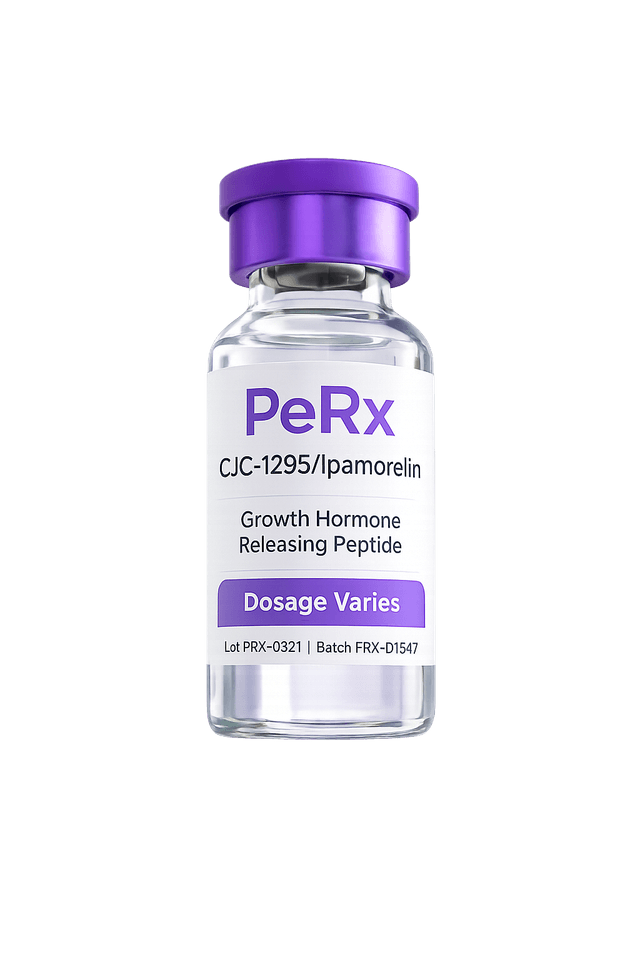
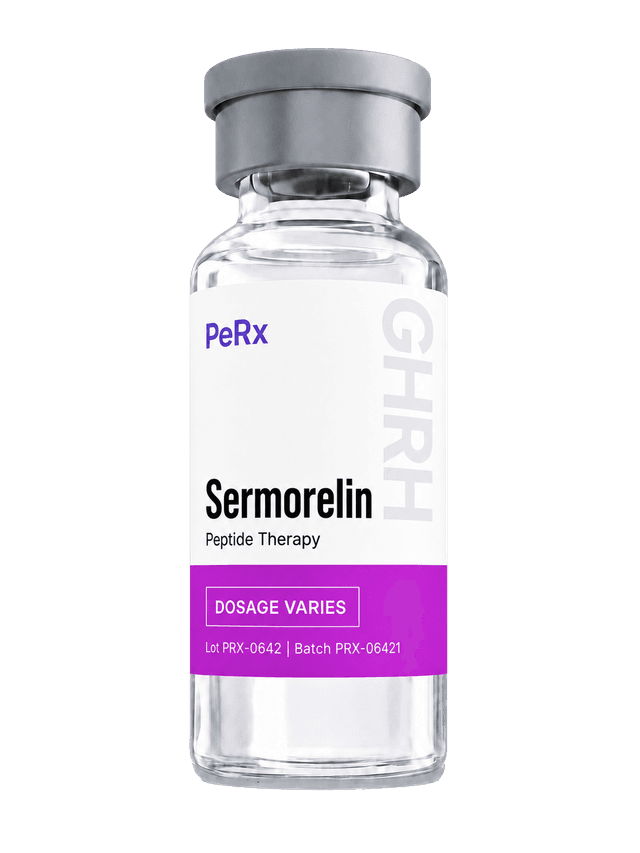
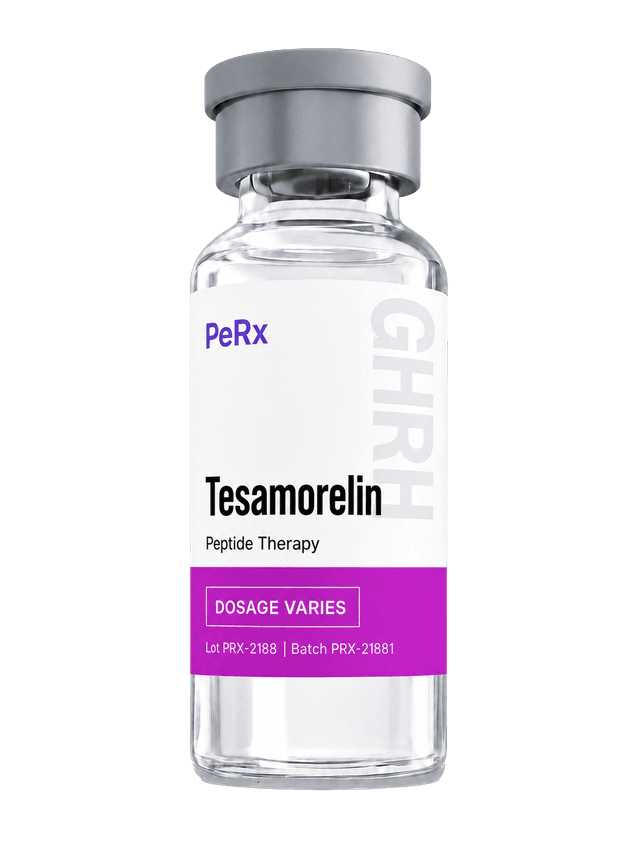
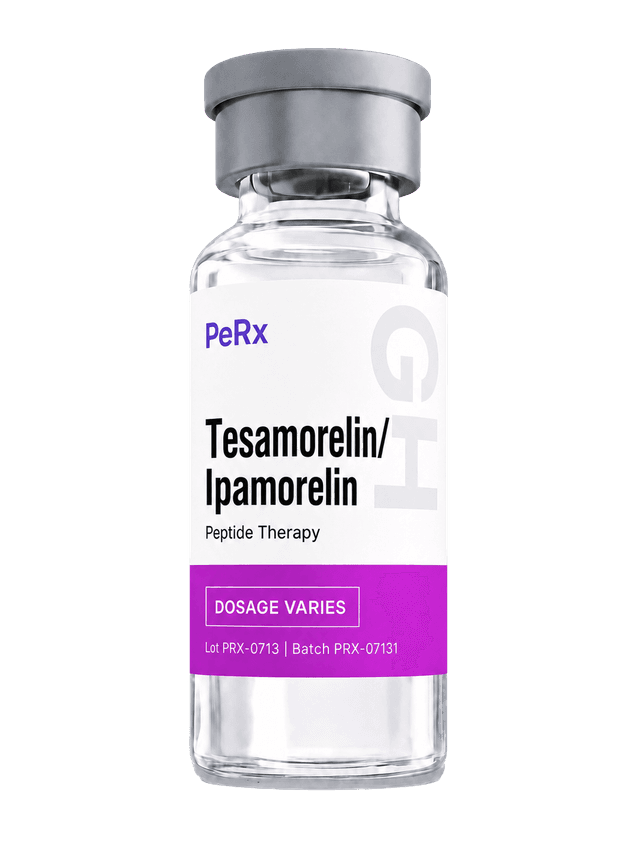
Peptides for muscle growth work with your body’s own growth hormone system rather than replacing it. PeRx prescribes them through licensed US providers as compounded medications, shipped ready to use to all 50 states. The four options here are GH secretagogues: CJC-1295/Ipamorelin and Tesamorelin/Ipamorelin pair two signals in one vial, while Sermorelin and Tesamorelin work as single agents. None is a steroid and none is synthetic HGH. Each is a prescription: you complete an assessment, a provider reviews your training goals and health history, and nothing ships until they approve it.

Muscle Growth Peptides Available at PeRx
Showing 4 peptides in Muscle Growth
Not sure which peptide is right for you?
Take our 60-second assessment. A licensed US provider reviews and recommends a protocol if appropriate.
How Peptides Support Muscle Growth and Recovery
Muscle is built in the hours after training, not during it, and growth hormone is one of the signals that runs the rebuild. It rises in pulses, the largest of them in deep sleep, prompting the liver to produce IGF-1, which supports protein synthesis and the repair of the tissue you stressed in the gym. Output declines steadily from the thirties onward, and slower recovery between hard sessions is often how that decline actually feels.
A GH secretagogue prompts the pituitary to release more of your own growth hormone in its natural pulses. That is what separates peptides for muscle growth from synthetic HGH: nothing external is added, and the body’s feedback loops stay in charge of the ceiling. The mechanism is covered in depth on our growth hormone peptides page; what matters here is the outcome side.
Patients use these for lean mass support, recovery between training days and body composition, and sleep quality is often the first thing they notice, since the pulses ride on it. The honest framing: they may support the growth and recovery signals training depends on. They do not replace the training, the protein or the sleep.
Injectable, Legal, and Where to Buy Safely
Type peptides for muscle growth into a search bar and much of what comes back is gray market: vendors selling vials labeled research-grade, not for human use. That label is not a formality. It means no prescription, no pharmacy oversight, no verified sterility or dosing, and purity testing done by whoever is selling it, if at all. Sites that let you buy peptides for muscle growth anonymously are exactly the ones where nobody is accountable for what is in the vial.
Legal peptides for muscle growth exist, and the legal route runs through a prescription. In the US these compounds are prescription medications: a licensed provider evaluates you, writes the prescription, and a state-licensed compounding pharmacy prepares the vial. Compounded medications require a valid prescription and are not FDA-approved products, but the pharmacy operates under regulatory oversight and testing standards a research-chemical site never sees.
That is the model here. The injectable peptides for muscle growth at PeRx ship from a licensed US pharmacy, ready to use, only after a provider approves your case. Same molecules people try to buy anonymously, with the parts that protect you put back in: a provider-set dose, sterile preparation and a clinician accountable for the protocol.
Peptide Supplements vs. Provider-Prescribed Peptide Therapy
The supplement aisle has its own version of this category: capsules and powders marketed as peptide supplements for muscle growth, sold next to the protein and creatine. Chemically, some contain real peptides. Practically, most face a problem the marketing skips: peptides are chains of amino acids, and the digestive system’s job is breaking those chains apart. Much of an oral dose is digested like food before it reaches anything it could signal.
Regulation is the second gap. Supplements are not reviewed for effectiveness before sale, doses are whatever the label says, and independent testing of the category routinely finds products that do not match their labels. Few of these products have studies behind them at all.
Provider-prescribed peptides for muscle growth differ on both counts. They are compounded by a licensed pharmacy to a specified dose and given subcutaneously, the route these molecules were actually studied at, and a clinician chooses the compound and dose against your history rather than a marketing page. If a capsule from a supplement store were equivalent, the prescription route would not exist.
Who Should Consider Muscle-Growth Peptide Therapy
The typical candidate is an adult who trains consistently and has noticed the recovery math change: sessions that once took a day to shrug off now take three, progress is slower, sleep is lighter. A peptide for muscle growth is worth discussing when those signals stack up, because they often track declining growth hormone output rather than declining effort.
Screening matters more here than in most categories. An active or recent cancer history is a contraindication, since growth pathways are exactly what these compounds stimulate. Pregnancy and breastfeeding are hard stops. Diabetes or insulin resistance warrants a conversation, because growth hormone affects blood sugar. And competitive athletes should know that GH secretagogues are prohibited in most tested sport, including under WADA rules; if you compete under anti-doping policies, this therapy is not for you.
Every option on this page is a compounded medication that requires a valid prescription. Eligibility is a provider’s call, made from your assessment rather than at checkout, and no outcome is guaranteed.
Starting Muscle-Growth Peptide Therapy at PeRx
Starting peptides for muscle growth at PeRx takes three steps and no office visit.
First, take the 60-second assessment. It covers your training, goals, health history and the screening questions above. Choose your peptide and save a card; you are not charged yet.
Second, a licensed US provider reviews your file. If they approve, they write the prescription and set your dose and cycle, and only then is your card charged. If they do not approve, you are not charged at all.
Third, the pharmacy ships one vial, ready to use, with syringes, alcohol swabs and instructions. Most protocols dose in the evening to ride the natural overnight growth hormone pulse, and a refill goes back through a provider rather than renewing on its own.
If you are weighing a single agent against a stack, take the assessment and let the provider decide, or talk to us first.
Compare Muscle Growth Peptides at PeRx
The four peptides for muscle growth at PeRx differ mainly in which signals they combine, and the table shows where each one fits.
| Product | Mechanism | Best for |
|---|---|---|
| CJC-1295/Ipamorelin | Dual GHRH + GHRP secretagogue combo | Lean mass, strength training support, recovery |
| Sermorelin | GHRH analog (single agent) | Foundational recovery support, established option |
| Tesamorelin | GHRH analog | Body composition, visceral fat reduction |
| Tesamorelin/Ipamorelin | Dual GHRH + GHRP combo | Visceral fat reduction with lean muscle support |
Frequently Asked Questions
What are the best peptides for muscle growth?
There is no single best option; it depends on the goal. CJC-1295/Ipamorelin is the most requested peptide for muscle growth support because it pairs two complementary signals in one vial. Sermorelin suits a conservative start, and the Tesamorelin options target body composition. A provider matches the choice to your case.
Do peptides actually build muscle, or just support recovery?
Support is the honest word. GH secretagogues raise your own growth hormone pulses, which may support protein synthesis, recovery and lean mass over months of consistent training. They do not add muscle on their own, and results vary from person to person.
Are peptides for muscle growth legal?
It depends on the route. Legal peptides for muscle growth are prescription medications dispensed by licensed pharmacies after a provider evaluation. Research-grade vials sold online with no prescription are not legal for human use, and athletes should note GH secretagogues are prohibited in tested sport.
Do muscle-growth peptides require a prescription?
Yes. In the US these are compounded prescription medications, and compounded medications require a valid prescription. At PeRx a licensed provider reviews your assessment and writes it before anything ships, and your card is only charged if you are approved.
How long until I see results from muscle-growth peptide therapy?
Sleep quality often shifts first, within weeks. Recovery between sessions tends to follow over the first one to two months, and body composition changes ride a three-to-six-month timeline. The curve is gradual because your own hormone pulses, not an external dose, are doing the work.