Peptides for Sleep
Peptides for sleep work on the structure of your sleep rather than sedating you into it. PeRx prescribes them through licensed US providers as compounded medications, shipped ready to use to all 50 states. The three options here approach the night differently: DSIP targets deep-sleep architecture, the Pinealon/PE-22-28/Selank blend works on the circadian and stress side, and CJC-1295/Ipamorelin supports the hormone pulse that rides deep sleep. Each is a prescription, written only after a provider reviews your assessment.

Sleep Peptides Available at PeRx
Showing 3 peptides in Sleep
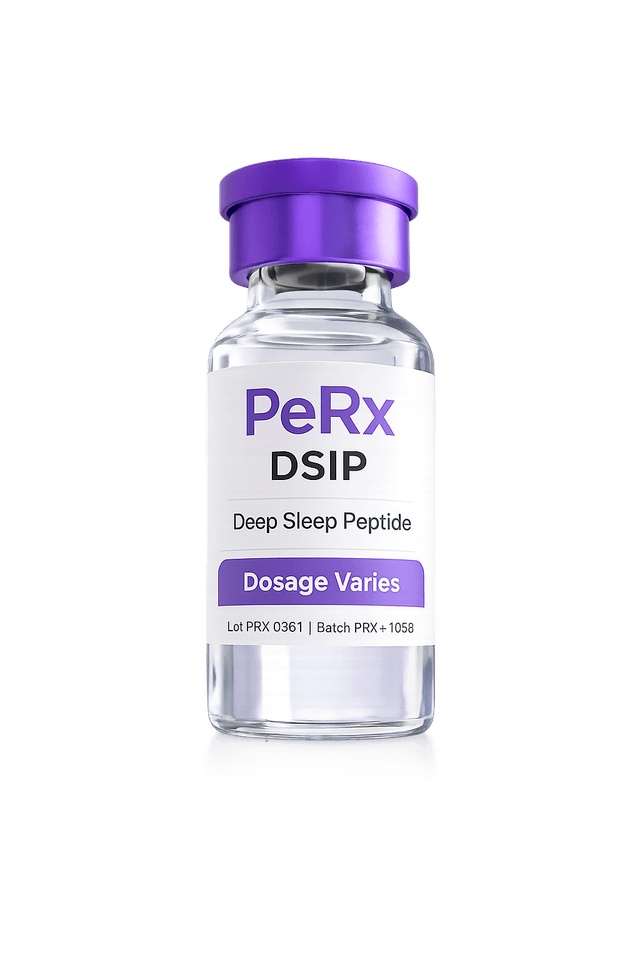
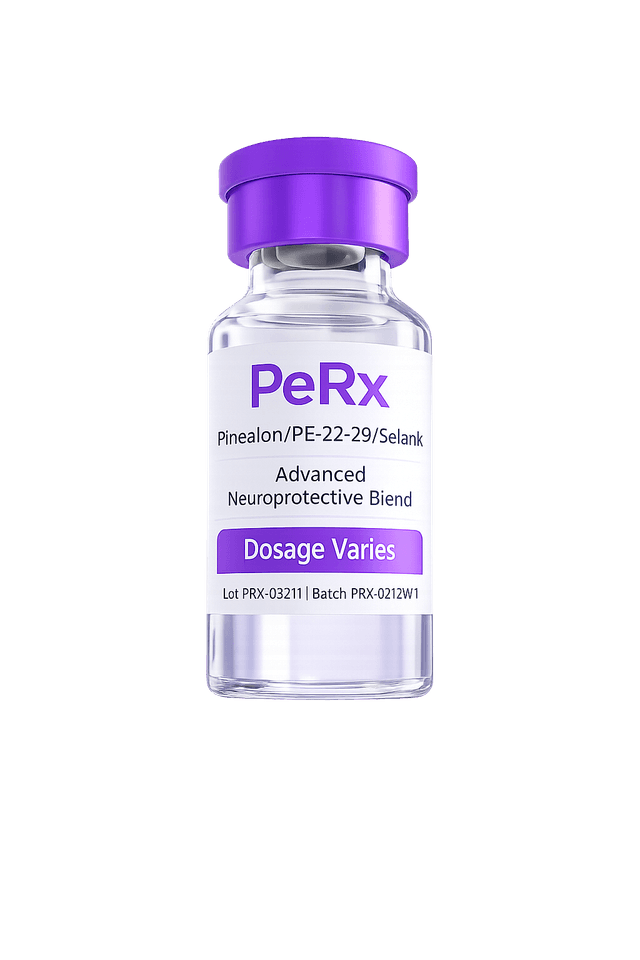
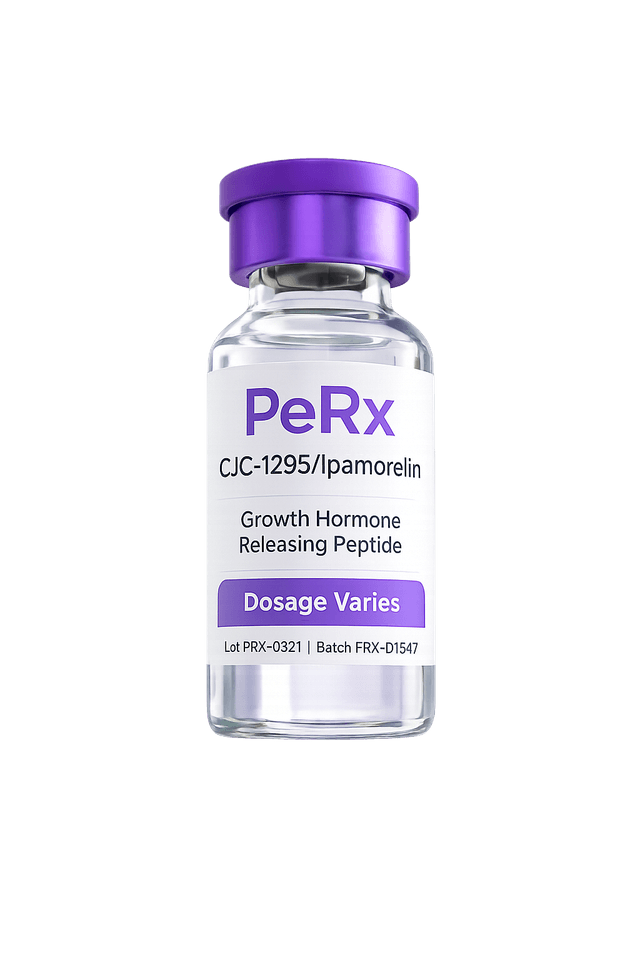
Not sure which peptide is right for you?
Take our 60-second assessment. A licensed US provider reviews and recommends a protocol if appropriate.
How Sleep Peptides Support Deep, Restorative Sleep
Sleep is not one state. The night cycles between lighter stages, REM, and the deep stages where physical restoration happens, and it is that deep fraction that shrinks with age and stress. Sleep peptides are aimed at that structure, which makes them a different tool from anything that simply knocks you out.
DSIP, the Delta Sleep-Inducing Peptide, is the clearest example. It is a nine-amino-acid neuropeptide discovered in 1974, when Swiss researchers found that blood from sleeping rabbits could put awake rabbits into deep sleep, and it is named for the delta-wave stages it promotes. It does not sedate. Small studies suggest it supports the transition into slow-wave sleep and blunts stress-driven cortisol, so the sleep you get runs deeper, and it does not act on the GABA receptors responsible for the tolerance and rebound seen with conventional sleep drugs.
The other two products here reach sleep through different doors, circadian rhythm regulation on one side and the hormonal pulse of deep sleep on the other, which is what the next section sorts out.
Three Different Approaches to Sleep in One Category
This category holds three mechanisms on purpose, and two of the three live natively in other categories.
DSIP is the direct option, the only peptide here built specifically for sleep architecture. If the complaint is waking unrefreshed no matter how long you sleep, this is the mechanism aimed at it.
Pinealon/PE-22-28/Selank is cross-listed from our nootropic category. It is a neuroprotective blend: Pinealon works on circadian regulation through the pineal axis, PE-22-28 on neuronal resilience, and Selank on the calming neurotransmitter systems that quiet a racing mind. People whose sleep problem is really a stress problem tend to land here.
CJC-1295/Ipamorelin is cross-listed from growth hormone, and its place on a sleep page is simple: growth hormone release happens predominantly during deep sleep, and better sleep and stronger pulses reinforce each other. Patients on it frequently report sleep quality improving first, within weeks.
Three peptides for better sleep, three different doors into the same night. A provider matches the door to the complaint.
What the Research Actually Shows
Honesty about the evidence matters more in this category than most. DSIP has been studied for five decades, with more than 500 published papers, and still has no completed US clinical trial. The human data that exists is small and mixed: the effects on sleep architecture and stress hormones look real but preliminary, several proposed benefits were never firmly established, and researchers still have not found the gene that produces it. No peptide for sleep on this page has FDA approval, and we will not tell you otherwise.
The regulatory picture is live, too. DSIP, also called Emideltide, was removed from the FDA’s restrictive Section 503A Category 2 list in April 2026, and in July 2026 the agency’s compounding advisory committee voted narrowly, 6 to 7, against recommending it for the bulks list. That is an advisory vote, not a final decision and not a ban. Our full breakdown of the July votes covers what it does and does not change.
Safety, Contraindications & Working With a Provider
A sleep peptide is a compounded medication that requires a valid prescription, and eligibility is a provider’s call. PeRx prescribes to adults 21 and older after a health assessment, and the screening matters here because sleep complaints are sometimes symptoms of something else: untreated sleep apnea, thyroid issues, or medication effects a peptide will not fix.
Some histories change the answer. Pregnancy and breastfeeding are hard stops. The CJC-1295/Ipamorelin option carries the growth-hormone-axis screening questions, including an active or recent cancer history and diabetes. If you take sedatives, benzodiazepines or other sleep medications, tell the provider; the honest answer on interactions is that the published record is thin, which is a reason for oversight rather than experimentation.
Injection-site redness is the common side effect. Expectations belong here too: these may support deeper, more consistent sleep. Results vary, and nothing on this page cures insomnia.
Starting Sleep Peptide Therapy at PeRx
Starting peptides for sleep at PeRx takes three steps and no office visit.
First, take the 60-second assessment. It covers your sleep pattern, health history and the screening questions above. Choose your peptide and save a card; you are not charged yet.
Second, a licensed US provider reviews your file. If they approve, they write the prescription and set your dose and timing, and only then is your card charged. If they do not approve, you are not charged at all.
Third, the pharmacy ships one vial, ready to use, with syringes, alcohol swabs and instructions. DSIP protocols typically dose shortly before bed, and a provider sets the exact timing.
Not sure which of the three fits your nights? Take the assessment and let a provider decide, or talk to us first.
Compare Sleep Peptides at PeRx
The three sleep peptides at PeRx differ in how directly they act on the night itself, and the table shows where each one fits.
| Product | Mechanism | Best for |
|---|---|---|
| DSIP | Delta-wave (slow-wave) sleep promotion; stress-response modulation | Sleep architecture, sleep disturbances |
| Pinealon/PE-22-28/Selank | Neuroprotective and circadian-regulating blend | Cognitive support alongside sleep quality |
| CJC-1295/Ipamorelin | Dual GHRH + GHRP secretagogue combo | GH release that occurs predominantly during deep sleep |
Frequently Asked Questions
What are peptides for sleep, and how do they work?
They are prescription compounds that work on sleep structure rather than sedation. Peptides for sleep like DSIP promote the deep slow-wave stages, while the others support the circadian and hormonal systems around them.
Is DSIP legal in 2026?
DSIP occupies a regulatory gray zone: it was removed from the FDA’s restrictive Category 2 list in April 2026, and a July 2026 advisory vote against it was not a ban. Licensed providers can still prescribe it as a compounded medication.
How is DSIP different from melatonin or sleep medications?
Melatonin times your sleep; sedatives force it. DSIP works on depth, promoting the deepest sleep stages, and does not act on the receptor pathways behind the tolerance and grogginess of conventional sleep drugs.
Do sleep peptides require a prescription?
Yes. Every option on this page is a compounded prescription medication in the United States. At PeRx a licensed provider reviews your assessment and writes the prescription before anything ships, and you are only charged if approved.
How long until I notice a difference in sleep quality?
Sleep is usually the fastest domain to respond. Many patients report changes within the first two to four weeks, with effects building over a full cycle. Results vary, and a provider adjusts timing and dose.