Peptides for Anti-Aging
PeRx prescribes anti-aging peptides through licensed US providers, compounded at state-licensed 503A pharmacies and shipped ready to use to all 50 states. The four options here work on different parts of aging: GHK-Cu on collagen and skin repair, Epitalon on telomeres and circadian rhythm, NAD+ on cellular energy, and the GHK-Cu/Epitalon blend on both at once. Anti-aging peptides at PeRx are prescription medications, not supplements. You complete an assessment, a provider reviews your history, and a vial ships only after they approve it.

Anti-Aging Peptides Available at PeRx
Showing 4 peptides in Anti-Aging
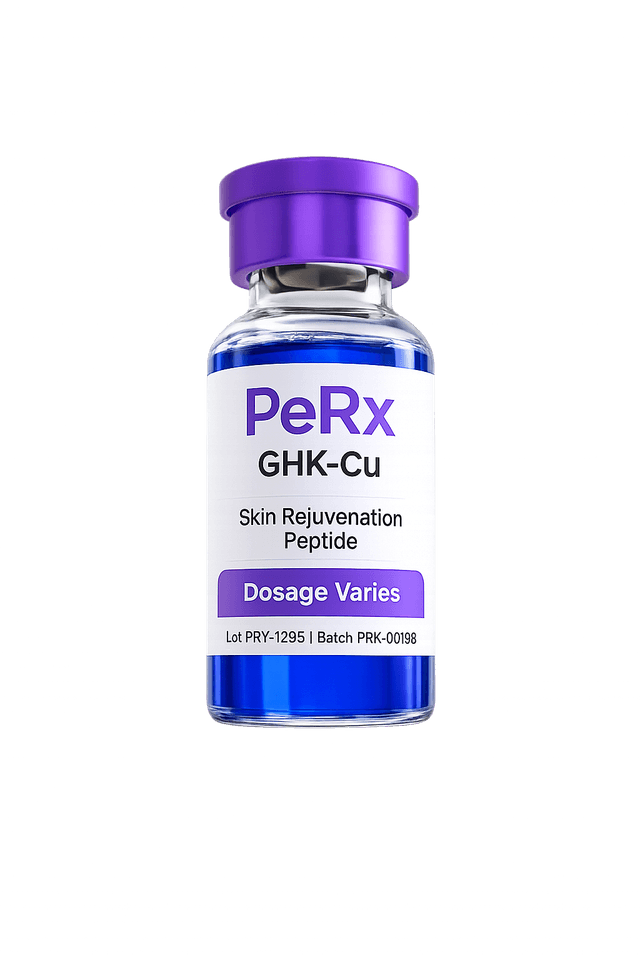
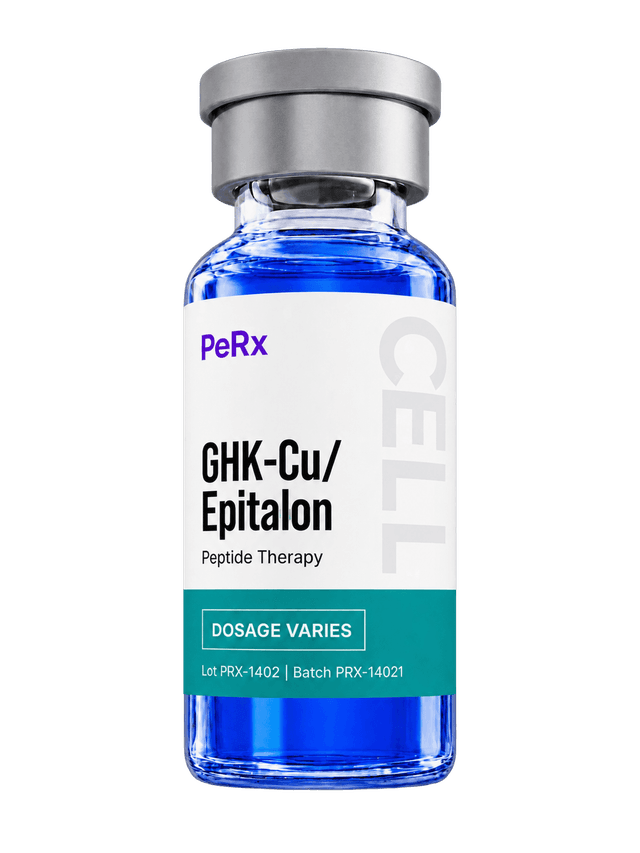
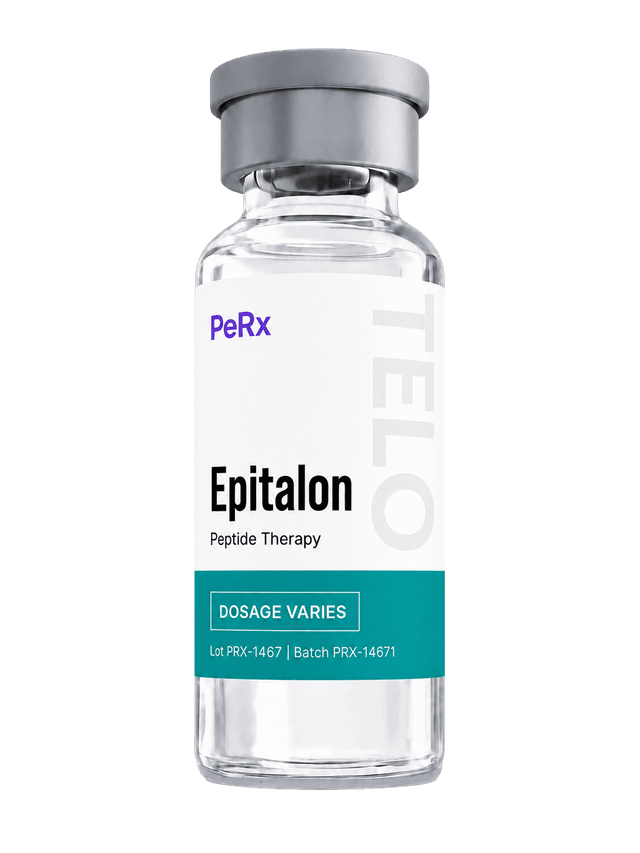
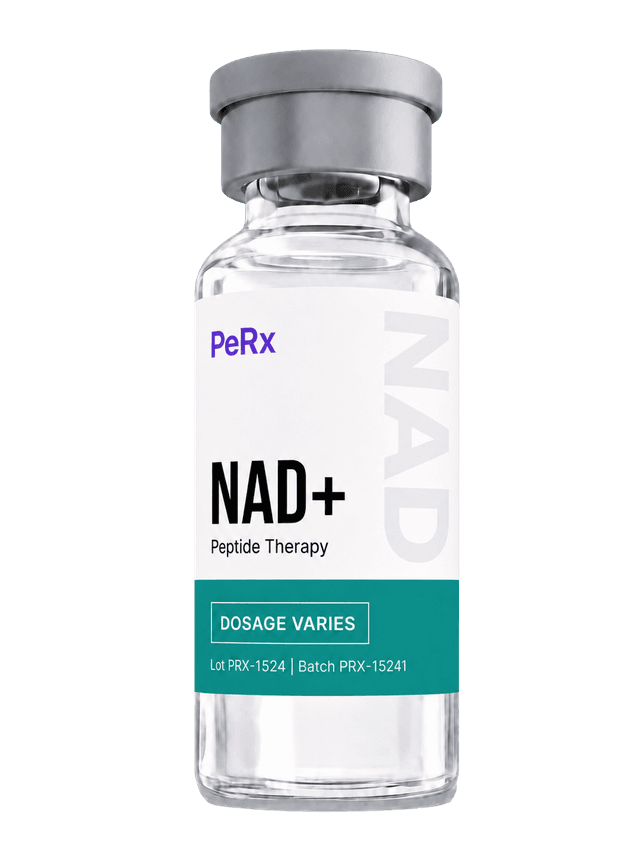
Not sure which peptide is right for you?
Take our 60-second assessment. A licensed US provider reviews and recommends a protocol if appropriate.
How Anti-Aging Peptides Work
Aging is not one process, and anti-aging peptides do not act on one target. Three mechanisms cover what the four peptides on this page are actually doing.
The first is structural. GHK-Cu is a copper-bound tripeptide your body already makes, and plasma levels fall roughly 60 percent between age 25 and age 60. It signals fibroblasts to restart collagen synthesis and skin remodeling, the same repair program that runs after a wound. Most of the human evidence for it is topical or in cultured tissue rather than injected.
The second is cellular timekeeping. Epitalon is a synthetic four-amino-acid peptide modeled on a pineal extract, studied for telomere maintenance and for melatonin rhythm. The animal work goes back decades. Human telomere data is thin and still exploratory, which is the honest way to describe it.
The third is energy. NAD+ is a coenzyme that mitochondrial function depends on, and it fuels the sirtuin and PARP enzymes that handle DNA repair. Levels drop with age. Restoring them raises cellular energy markers in research models; whether that changes how a person ages is the question the field is still working on.
Injectable vs Topical: Choosing Your Anti-Aging Peptide
Search for an anti-aging peptide serum and you will find hundreds of them. Copper peptides have been in skincare since the 1990s, and a topical anti-aging peptide serum is how most people meet this category. Serums have a real limit though: they treat the skin they touch, and how much peptide crosses the outer barrier depends on the formulation, the concentration and the size of the molecule.
PeRx does not sell a serum. The four anti-aging peptides here are compounded as subcutaneous injections and prescribed by a licensed provider after a review of your health history. A subcutaneous dose reaches circulation instead of sitting on the surface, which is why the route is prescription-only and supervised. It also means the dose, the cycle length and when to stop are clinical decisions rather than how much you decide to apply.
Compounded peptides are not FDA-approved, and compounded medications require a valid prescription. That is true of the injectable route regardless of which one a provider chooses.
Longevity, Skin & Energy: Matching the Peptide to Your Goal
People come to peptides for anti-aging with different complaints, and the four anti-aging peptides on this page sort cleanly by which complaint you have.
If it is what you see in the mirror, fine lines, laxity, texture, slow healing, GHK-Cu is the one built for that. It is the most-studied peptide in skin biology, with more than forty years of dermatology research behind it. GHK-Cu vs Retinol covers how it compares to the ingredient most people already use.
If it is more abstract, wanting to age slower rather than fix something visible, Epitalon is the longevity option. Its targets are telomere maintenance and circadian regulation, and its evidence base is earlier than GHK-Cu’s.
If it is fatigue, the kind sleep does not fix, NAD+ works on the energy side rather than the structural one.
If it is two of those at once, GHK-Cu/Epitalon puts the skin and cellular tracks in one vial. Providers choose among peptides for anti-aging based on that goal, your history and what you have already tried.
Is Anti-Aging Peptide Therapy Right for You?
An anti-aging peptide is a prescription medication, and eligibility is decided by a provider rather than at checkout. PeRx prescribes to adults 21 and older who complete the health assessment. The people it generally suits are healthy adults noticing age-related changes in skin, energy or recovery who want clinical oversight instead of something bought unregulated online.
Some histories change the answer. An active or recent cancer history is a reason to wait, because these pathways act on cell growth and repair. Pregnancy and breastfeeding are hard stops. Epitalon warrants thyroid monitoring. GHK-Cu is not appropriate for anyone with a copper metabolism disorder such as Wilson’s disease. Any injectable is worth a conversation if you take blood thinners. Injection site redness is the common side effect and it usually settles on its own.
Compounded medications require a valid prescription, and compounded peptides are not FDA-approved for anti-aging use. An anti-aging peptide may support the processes described above. Results vary, and nothing on this page reverses aging.
Getting Started with PeRx's Anti-Aging Peptides
Starting anti-aging peptides at PeRx takes three steps and no office visit.
First, take the 60-second assessment. It covers your goals, your health history and the screening questions above. Then choose your peptide and save a card. You are not charged at that point.
Second, a licensed US provider reviews your file. If they approve, they write the prescription and set your dose and cycle, and only then is your card charged. If they do not approve, you are not charged at all.
Third, the pharmacy ships one vial, ready to use, with syringes, alcohol swabs and instructions. Nothing ships before a prescription is approved, and a refill goes back through a provider rather than renewing on its own.
If you are not sure which one fits, take the assessment and let a provider make the call. If you would rather ask first, talk to us.
Compare Anti-Aging Peptides by Mechanism
The four anti-aging peptides at PeRx map to different mechanisms, and the table below is the fastest way to see which one lines up with your goal. Mechanism is what a provider reasons from; the right-hand column is what patients usually describe when they ask.
| Product | Mechanism | Best for |
|---|---|---|
| GHK-Cu | Copper peptide; collagen and skin repair | Visible skin aging, wound healing |
| GHK-Cu/Epitalon | Combined skin and cellular renewal | Skin and longevity goals together |
| Epitalon | Telomere and pineal regulation | Cellular longevity, circadian rhythm |
| NAD+ | Cellular energy coenzyme | Mitochondrial energy, fatigue, cellular repair |
Frequently Asked Questions
What are the best anti-aging peptides?
There is no single best one, because the anti-aging peptides at PeRx address different problems. GHK-Cu is the most-studied for skin. Epitalon targets cellular longevity. NAD+ addresses energy. A provider matches the peptide to your goal and history rather than ranking them.
Which peptide is best for longevity?
Epitalon is the longevity-focused option, studied for telomere maintenance and melatonin rhythm. NAD+ is the other longevity-adjacent choice and works on cellular energy instead. Human evidence for both is early, so providers frame them as may-support rather than proven.
Do anti-aging peptides require a prescription?
Yes. Every peptide on this page is a compounded prescription medication in the United States. Compounded medications require a valid prescription, and at PeRx a licensed provider writes it after reviewing your assessment, before any charge is made.
What's the difference between GHK-Cu serum and injectable GHK-Cu?
An anti-aging peptide serum is a cosmetic applied to the skin, and how much reaches living tissue depends on the formulation. Injectable GHK-Cu is a compounded prescription medication given subcutaneously, dosed and supervised by a licensed provider.
Can NAD+ help with cellular aging and energy?
NAD+ fuels mitochondrial energy production and the sirtuin and PARP enzymes involved in DNA repair, and levels fall with age. Restoring it raises those markers in research models. Whether that slows human aging is still being studied.