The Longevity Peptide Stack: Honest Epitalon Read
An honest read on the longevity peptide stack that Don't Die biohackers and Project Blueprint enthusiasts have adopted. Khavinson's 40-year Epitalon research record, Bryan Johnson's verifiable protocol disclosure, the GHK-Cu and NAD+ pairing, and the telomerase question every careful reader should ask before starting.
In this article
Key Takeaways
- The longevity peptide stack most often described in serious biohacker and Project Blueprint adjacent contexts pairs Epitalon (Khavinson tetrapeptide, telomerase activation in vitro), GHK-Cu (copper tripeptide, collagen and barrier function), and NAD+ (coenzyme for sirtuin activity and cellular energy). PeRx sells the GHK-Cu/Epitalon combo as a single pre-mixed product.
- Bryan Johnson publicly disclosed on X in May 2024 that he runs an Epitalon (Epithalon) and Thymulin protocol, intramuscular, five consecutive days every six months at 10mg each. Epitalon is NOT part of the consumer Project Blueprint stack. The X post is the only verifiable primary source for his personal use.
- The Khavinson research base on Epitalon spans 40 years and covers telomerase activation in human cell lines, rodent lifespan extension, and cohort-level human aging data. It has not been replicated by independent Western research groups at the scale that would settle the lifespan-extension question. The honest framing is "mechanism-supported and Russian-cohort-supported, but not Western-trial-confirmed."
- Telomerase activation is a hallmark of roughly 90% of cancers. No documented increase in cancer incidence exists in the Epitalon literature, but the studies are not large enough to rule it out. Anyone with personal or strong family cancer history should not use Epitalon without oncologist clearance.
St. Petersburg, 1985
The scene
In a St. Petersburg laboratory in 1985, a Soviet gerontologist named Vladimir Khavinson injected old mice with a four-amino-acid peptide derived from the pineal gland. Forty years later, his Epitalon protocol is the centerpiece of every serious longevity stack on the internet, and almost completely unknown to Western medicine.
The Khavinson research record on Epitalon is one of the strangest stories in modern aging biology: extensive (200+ published studies), consistent (the same mechanism appears across cell lines, rodent models, and human cohorts), and almost entirely Russian. The molecule itself is just four amino acids (Ala-Glu-Asp-Gly). The protocol is simple enough that biohackers from Bryan Johnson to anonymous Reddit accounts have adopted it. And the body of evidence sits awkwardly outside the Western clinical-trial system that would normally either validate or kill it. When you get a peptide through PeRx, it is prescribed by a licensed provider and compounded in a US-based, FDA-regulated 503A pharmacy, the same regulated pathway many everyday prescriptions go through.
The Stack Biohackers Actually Run
Most longevity peptide content treats the topic as a generic "anti-aging peptides" listicle: mention everything, recommend nothing specific, never address the actual debates. This guide is the opposite. It walks through the specific stack that serious biohackers (the ones running blood tests, tracking biological-age markers, and updating protocols quarterly) have settled on, why they chose each component, what the evidence actually says about each one, and where the honest disagreements live.
The core stack is three peptides: Epitalon, GHK-Cu, and NAD+. PeRx ships the first two as a pre-mixed GHK-Cu/Epitalon combo in a single vial. Whether to add a growth-hormone-axis peptide like CJC-1295/Ipamorelin is the most-debated question in longevity stack construction, and we address it directly in its own section below.
This guide is written for the adult reader who has already done some reading (read Peter Attia's Outlive, listened to Andrew Huberman on peptides, watched the Bryan Johnson Don't Die documentary) and wants the honest read on what to actually do with the information. The compliance framing throughout: peptides may support specific cellular mechanisms studied in the longevity literature. No peptide has been demonstrated to extend human lifespan in a large prospective trial. The leap from "supports mechanism X" to "extends human lifespan" is the leap the marketing does and the evidence does not.
What the Don't Die Protocol Actually Is
Don't Die is the name of Bryan Johnson's longevity-focused lifestyle framework, popularized through his Netflix documentary and his Project Blueprint protocol. The Project Blueprint protocol itself is a public document covering diet (a specific 2,250-calorie vegan-leaning plan), exercise (~45 minutes daily across cardio, resistance, and HIIT), sleep (8.5 hours target with strict pre-bed routine), and a supplement and medication regimen that runs to roughly 100 daily pills plus various clinical interventions.
Important distinction for SEO confusion: Project Blueprint as sold to consumers (the powders, supplements, and software at blueprint.bryanjohnson.co) does NOT include injectable peptides. The consumer Blueprint stack is supplements and oral compounds. The peptide protocols Bryan Johnson runs for himself are separate from what he sells.
This matters because most of what circulates online as "Bryan Johnson's peptide stack" is either invented, extrapolated, or a misreading of the Blueprint consumer protocol. The one verifiable peptide protocol he has publicly disclosed is the next section.
Bryan Johnson's Verifiable Disclosure
In May 2024, Bryan Johnson posted on X that he was running an Epithalon (the European spelling of Epitalon) and Thymulin protocol. The disclosed protocol: five consecutive days of intramuscular injection, every six months, 10mg per day of each peptide. That X post is the only verifiable primary source for his personal peptide use as of the writing of this guide.
Thymulin is a thymic peptide that supports immune cell maturation. Epitalon is the four-amino-acid pineal peptide that the rest of this guide is largely about. Bryan Johnson's specific protocol (5 days IM, every 6 months) is one of several variants you will encounter in the longevity literature. The more commonly cited Khavinson protocol is 10-20 day cycles, 2-3 cycles per year. Most PeRx-prescribed Epitalon protocols use subcutaneous injection rather than intramuscular, on the grounds that SubQ is more convenient and the bioavailability difference is not clinically meaningful for a peptide of this molecular weight.
The honest framing for any reader who has seen "Bryan Johnson takes Epitalon" headlines: yes, by his own disclosure he does, and that disclosure is the only verifiable evidence. He has not disclosed any other peptide protocols beyond the Epithalon/Thymulin pairing. Anyone selling you "the rest of his stack" is extrapolating beyond the public record.
Khavinson's 40-Year Research Base
Vladimir Khavinson is a Russian gerontologist who founded the St. Petersburg Institute of Bioregulation and Gerontology. His research on bioregulatory peptides spans roughly forty years and includes Epitalon (Ala-Glu-Asp-Gly, the four-amino-acid tetrapeptide derived from the pineal gland) along with several related compounds. The research record includes:
- Telomerase activation in human somatic cell lines (the in vitro evidence base, replicated within his own lab and a small number of collaborators) - Lifespan extension in rodent models (mice and rats, mortality reduction across multiple studies) - Cohort-level survival improvements in human aging studies (typically retired Soviet/Russian military and industrial worker populations, multi-year follow-up) - Pineal function support and circadian regulation (Epitalon is derived from the pineal gland, and the research suggests reciprocal interaction)
Khavinson VKh et al., "Epithalon peptide induces telomerase activity and telomere elongation in human somatic cells," Bulletin of Experimental Biology and Medicine, 2003. In vitro human cell study. View study
The strength of the Khavinson record is its consistency over four decades. The weakness is its almost-complete absence from the Western clinical-trial system. Western pharmaceutical companies have not pursued Epitalon approval because the molecule is a simple four-amino-acid sequence with no patent protection, and the research sits primarily in Russian-language journals. The result: a body of evidence that is mechanistically suggestive and survival-suggestive but not Western-trial-confirmed at the scale that would normally settle the question.
For a deeper read on the FDA-status implications, see our guide on whether Epitalon is FDA approved. The short version: no FDA approval, legally accessed in the US through 503A compounding pharmacies, evidence base is Khavinson-led, no Western replication at scale.
Epitalon: Dosage and Cycling
The standard Epitalon protocol most often cited in the Khavinson literature is 5-10 mg per day for 10-20 days, repeated 2-3 cycles per year. Most variants follow the same pattern: short course, large gap, repeated annually. Continuous daily dosing is not part of any serious protocol because the receptor biology suggests sensitivity may decline without breaks and because the long-term safety of continuous exposure has not been characterized.
Practical use through a PeRx-prescribed protocol: subcutaneous injection (typically abdomen), at the dose and cadence the prescribing provider sets based on patient profile. A common starting cadence for adults new to Epitalon is a single 10-day cycle at 5-10mg per day, then re-evaluation 3 months later. Patients who tolerate the first cycle well and want to continue typically run 2-3 cycles per year thereafter.
Side effects in the existing literature are uncommon and minor (transient injection-site redness, occasional mild flushing). The more important safety considerations are the longer-arc theoretical questions (the cancer/telomerase question covered below), not acute tolerability.
The GHK-Cu / Epitalon Combo
GHK-Cu (Glycyl-L-Histidyl-L-Lysine Copper) is a copper tripeptide with 40 years of dermatology research on collagen synthesis, skin barrier function, and gene expression modulation. The mechanism is well-characterized (it modulates over 4,000 human genes including a broad set of skin-repair and barrier-function pathways). The pairing with Epitalon is the most-recommended combination in serious longevity stacks because the two peptides act on different layers of the aging process: GHK-Cu at the skin barrier and collagen synthesis pathways, Epitalon at the telomerase and pineal axis.
Pickart L, Margolina A, "GHK peptide as a natural modulator of multiple cellular pathways in skin regeneration," BioMed Research International, 2015. View study
PeRx ships the GHK-Cu/Epitalon combo as a single pre-mixed vial for this exact reason. Operationally, it is easier to run one injection than two, and the dosing schedules align well (both peptides do well on cycled rather than continuous dosing).
For longevity-focused patients, the combo is the most-used GHK-Cu format. For pure skin-and-barrier work without the longevity layer, standalone GHK-Cu is the simpler protocol. The two are not substitutes; the combo is the longevity-focused version of the GHK-Cu protocol.
NAD+ in a Longevity Stack
NAD+ is the coenzyme that sirtuins (the longevity-associated enzyme family popularized by David Sinclair's lab) require to function. Tissue NAD+ levels drop roughly 50% by middle age, which is one of the most-cited cellular markers of aging biology. The Sinclair-and-collaborators research has driven a multi-billion-dollar market in NAD+ precursor supplements (NMN, NR), most of which face significant bioavailability challenges with oral dosing.
Massudi H et al., "Age-associated changes in oxidative stress and NAD+ metabolism in human tissue," PLoS One, 2012. View study
Injectable NAD+ bypasses the GI conversion limits that cap how much oral NMN or NR can actually raise tissue NAD+. For longevity stack construction, the role is the cellular-energy and DNA-repair layer underneath the telomere work (Epitalon) and the barrier work (GHK-Cu). Sirtuin activity, mitochondrial function, and DNA repair all depend on adequate NAD+ availability, and these are the cellular processes that most directly map onto biological-age trajectories.
Practical use: subcutaneous injection, 2-3x weekly at maintenance dose. Unlike Epitalon (cycled), NAD+ is more typically run continuously at maintenance with higher pulses around heavy training or recovery windows. For more on how NAD+ compares to its often-confused cousin Glutathione, see our NAD+ vs Glutathione comparison.
Should CJC-1295/Ipamorelin Be in a Longevity Stack?
This is the most-debated question in longevity peptide stack construction, and the honest answer is: it depends on your prior assumptions about the role of growth hormone in aging biology.
The case FOR including CJC-1295/Ipamorelin: GH and IGF-1 decline with age. The GH-axis supports lean mass retention, sleep depth, tissue repair, and the overnight regenerative work that the body does best during slow-wave sleep. If aging is partly the loss of regenerative capacity, supporting the GH pulse that drives that regeneration is a defensible move.
The case AGAINST: some of the most-cited longevity research (Laron syndrome populations, calorie restriction studies, IGF-1 deficient animal models) suggests that LOWER lifetime GH and IGF-1 exposure correlates with longer life and reduced cancer incidence. The Laron population has near-zero IGF-1 due to a growth hormone receptor mutation and has documented near-zero cancer incidence. If lower GH is part of the longevity equation, then deliberately elevating GH through CJC-1295/Ipamorelin runs the wrong direction.
Guevara-Aguirre J et al., "Growth hormone receptor deficiency is associated with a major reduction in pro-aging signaling, cancer, and diabetes in humans," Science Translational Medicine, 2011. View study
The honest synthesis: short-term elevation of GH for specific recovery purposes (post-training, post-injury, post-GLP-1 muscle loss) is well-supported. Continuous lifelong elevation of GH for longevity purposes is on less-firm ground and arguably runs counter to some of the strongest mechanism-of-longevity evidence. Most serious longevity stack builders include CJC-1295/Ipamorelin during specific windows (training phases, post-injury recovery, body composition cycles) but not as a continuous lifelong layer.
The Telomerase and Cancer Question
Read this section before starting
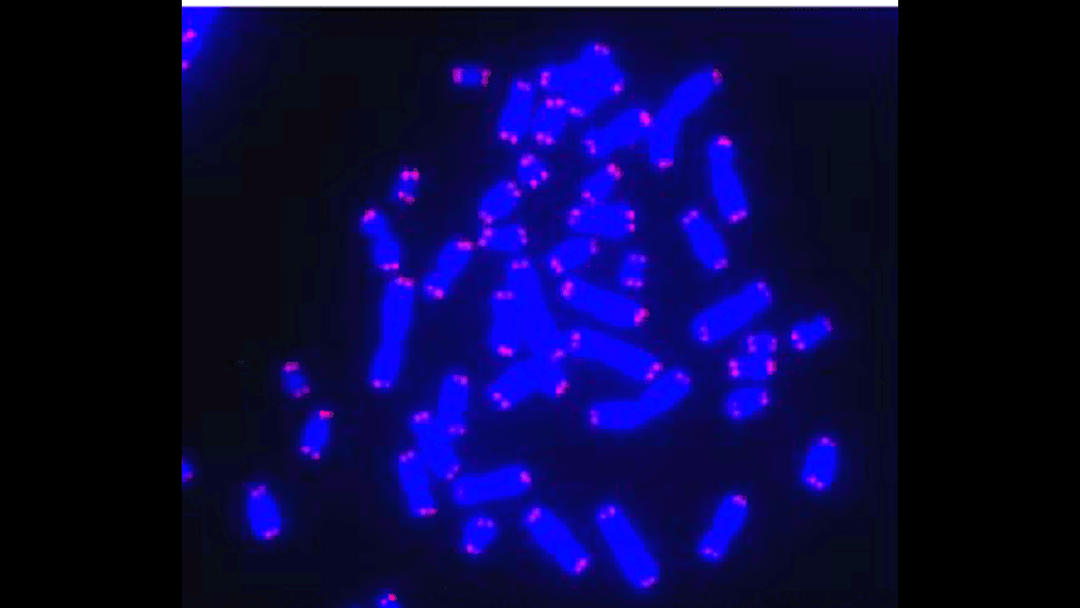
Telomerase activation is a hallmark of roughly 90% of human cancers. Cancer cells maintain telomere length through telomerase reactivation, which is what allows them to divide indefinitely. The theoretical concern with any telomerase-activating intervention, including Epitalon, is whether it could provide that survival advantage to incipient malignant cells.
The honest read on the Epitalon-and-cancer question, separated into what the evidence shows and what it does not:
What the evidence shows: No documented increase in cancer incidence in the Khavinson Epitalon literature. The Russian cohort studies that followed Epitalon-treated populations for multi-year periods did not report cancer signals. Mechanistically, Epitalon's telomerase activation appears to be modest (in vitro) rather than the dramatic constitutive activation seen in cancer cells. The peptide is cycled (typically 10-20 day exposure per cycle, 2-3 cycles per year) rather than continuously dosed, which limits cumulative exposure.
What the evidence does NOT show: Large prospective trials specifically designed to detect cancer signal have not been conducted. The Russian cohort studies were not designed as cancer-incidence trials and sample sizes were not large enough to definitively rule out a small effect. Long-term (10+ year) safety data in Epitalon-treated populations is limited. The mechanism concern (telomerase activation) is biologically real even if not yet detected in cohort outcomes.
Who should NOT use Epitalon: Anyone with personal cancer history, active cancer, strong family cancer history, or known genetic cancer predisposition syndromes. Anyone with active untreated chronic infections that depend on cellular proliferation for clearance. Anyone whose prescribing physician or oncologist has flagged a concern. The peptide is not appropriate for these populations, and the cycled-not-continuous dosing pattern that defines responsible Epitalon protocols does not change that.
The honest framing: for an adult with no cancer history, no family cancer concerns, and routine annual physicals (which would catch most early cancers regardless of intervention), the theoretical telomerase concern is part of the cost/benefit equation but is not a categorical block. For an adult with cancer history or family concerns, the calculus shifts substantially and the peptide should not be used without oncologist clearance. This is the conversation to have with the prescribing provider before the first injection.
What Biohackers Run vs. What the Evidence Supports
A final honest read, separating what serious biohackers actually run from what the published evidence supports:
What biohackers actually run: the Epitalon + GHK-Cu + NAD+ core stack, often with cycled CJC/Ipamorelin during specific training or recovery windows. Blood test tracking 2-4 times per year (CBC, comprehensive metabolic panel, hormone panel, hsCRP, IGF-1, lipid panel). Biological age testing via TruDiagnostic, GlycanAge, or similar epigenetic clock services. Protocol updates quarterly based on the test results. Reading the Khavinson literature directly when curious, with translation tools, rather than relying on US-side summaries.
What the evidence supports: Epitalon has documented telomerase activation in human cell lines and rodent lifespan extension; the human longevity claim is mechanism-supported but not large-trial-confirmed. GHK-Cu has the strongest evidence base of the three (40 years of dermatology research, well-characterized mechanism). NAD+ injection bypasses oral bioavailability limits and supports sirtuin and DNA-repair pathways; whether this translates to measurable longevity outcomes in humans is not yet demonstrated in large prospective trials. CJC-1295/Ipamorelin supports lean mass and sleep depth; whether continuous lifelong use serves longevity is actively debated and probably not.
The gap between "what biohackers run" and "what the evidence supports" is real and should not be papered over. Most serious biohackers are running these protocols as personal experiments, with the understanding that they are betting on mechanism-of-action evidence ahead of large-trial confirmation. That is a reasonable adult bet for some patients to make. It is not a bet PeRx or any responsible provider can recommend as a settled-science intervention.
Peter Attia's Outlive does not center peptides as the core longevity intervention; his framework prioritizes exercise (especially Zone 2 and VO2 max work), nutrition, sleep, and selective pharmaceuticals (statins, rapamycin, GLP-1s in appropriate populations). Peptides appear in his broader recovery and performance conversations but not as the load-bearing longevity move. Andrew Huberman has discussed peptides on his podcast across various contexts but has not endorsed Epitalon specifically. The "Bryan Johnson takes Epitalon, therefore I should" reasoning is a single-data-point argument, not a recommendation. Each order ships fully reconstituted and ready to use, delivered overnight in refrigerated packaging, with nothing to mix on your end.
The Longevity Peptide Stack: Common Questions
Related Guides
Continue reading about peptides and protocols that pair well with this guide.
Epitalon vs Pinealon: Pineal Peptides Compared
They sound like twins and share a lineage in the same Russian bioregulator research, but Epitalon and Pinealon were designed to do different jobs. Epitalon is a longevity-focused tetrapeptide studied for telomere maintenance and sleep. Pinealon is a short neuropeptide bioregulator studied for cognition and neuroprotection. Here is how they actually differ, what the evidence supports, and how to think about choosing.
Is Epitalon FDA Approved? 2026 Legal Status
No. Epitalon has never been tested in Western clinical trials. Its entire evidence base comes from four decades of research at one Russian institute by one scientist: Vladimir Khavinson. That research reported telomerase activation in cultured human cells, a result that has never been independently replicated. Here is why Epitalon never entered the FDA drug-approval pipeline, where it sits in the July 2026 compounding review, and what the Russian data actually shows.
Las Vegas Peptide Therapy: 2026 Guide
A plain guide to peptide therapy in Las Vegas: what it costs across local clinics, med spas, and telehealth, who tends to use it in a city that never closes, and how pharmaceutical-grade peptides reach any Nevada address without a clinic visit.
Learn more about peptide therapy
Peptide therapy in the US is prescription-only and requires evaluation by a licensed provider. The peptides discussed here are not FDA-approved and require honest conversation about the evidence base and the open questions before starting.
Medical Disclaimer
The information provided on this website, including all articles, guides, and educational content, is for informational and educational purposes only and is not intended as medical advice, diagnosis, or treatment. Nothing on this site should be construed as a substitute for professional medical advice from a qualified healthcare provider.
The majority of peptides discussed on this site are not approved by the U.S. Food and Drug Administration (FDA) for the indications described. They are classified as bulk drug substances and are available only through a licensed prescribing provider and compounding pharmacy. All treatments require a valid prescription and provider oversight.
The majority of published research on peptide therapies has been conducted in preclinical (animal) models. While early human data is encouraging, comprehensive clinical trial data remains limited for most peptide compounds. Individual results may vary significantly based on health status, injury type, and other factors. No specific outcomes are guaranteed.
Certain peptides discussed on this site are classified as prohibited substances by the World Anti-Doping Agency (WADA) and are banned by major sports organizations including the NFL, NCAA, UFC, NBA, MLB, NHL, and PGA. If you are subject to anti-doping testing, consult your governing body before considering any peptide therapy.
Statements on this website have not been evaluated by the Food and Drug Administration. Products and therapies discussed are not intended to diagnose, treat, cure, or prevent any disease.
© 2026 Wellness MD Group PC DBA PeRx. All rights reserved.