Peptides for Equestrian Riders: Back and SI Joint
The low back that locks after an hour at a desk, behind the wheel, or in the saddle. The sacroiliac joint that catches when you stand. How peptide therapy is used for chronic lower-back and SI-joint wear, in riders, drivers, desk workers, and athletes alike.
In this article
Key Takeaways
- Riding does not load the body evenly. It concentrates on the lower back and pelvis: the lumbar spine absorbs repeated shock through the seat, and the sacroiliac joints take asymmetric strain as the rider follows the horse. Sitting trot and dressage work are the hardest on both.
- Lower back pain is among the most commonly reported complaints in riders, and in seated, desk-bound, and repetitive-loading work more broadly. BPC-157 is the core tool here for the soft-tissue side of that wear, with the BPC-157/TB-500 combo as the more aggressive option for stubborn cases or fall trauma.
- TB-500 is famous in horse racing for equine tendon recovery. This guide is about the human rider, not the horse. Sermorelin and NAD+ address the slower recovery and end-of-day fatigue that ride along with age and a physical sport.
- The honest part: these are prescription-only, not FDA-approved for injury recovery, and not a painkiller. They are also on the WADA list, so competitive riders under the FEI must steer clear and check their federation rules. This guide is for amateur and masters riders.
Quick Facts
Best for
Amateur, recreational, and masters riders with lower-back, SI-joint, or fall-related soft-tissue wear
Core peptides
BPC-157, BPC-157/TB-500 combo, Sermorelin, NAD+
Form
Subcutaneous injection (BPC-157 and the combo also come as oral capsules)
Storage
Refrigerated 36-46°F, ships ready to use
Prescription
Provider evaluation required, prescription-only in the US
Competition testing
BPC-157 and TB-500 are on the WADA Prohibited List. Tested FEI riders must not use them.
The Low Back After an Hour of Sitting Trot
The scene
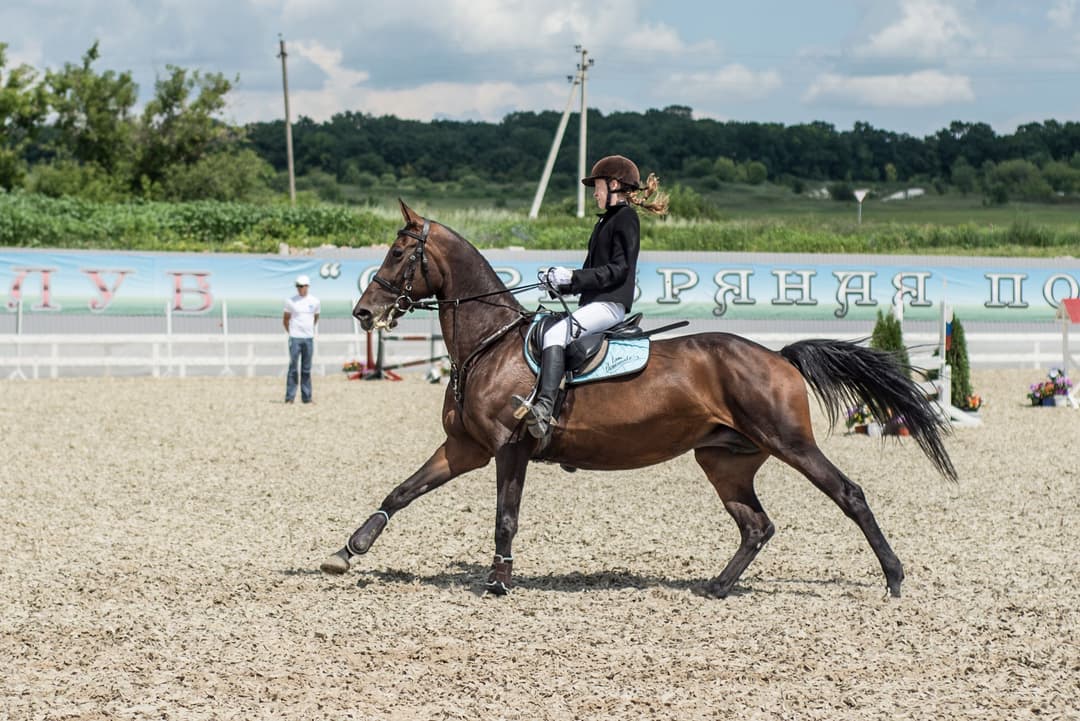
You have been sitting the trot for the better part of a school, absorbing every stride through your seat and trying to keep your shoulders quiet over a working horse. By the time you walk on a long rein the low back has gone from tired to a dull, deep ache that sits right across the belt line. Then you swing down, your foot hits the ground, and the sacroiliac joint on one side catches with a sharp pinch that you have to walk off before you can lead the horse in. It is not a one-bad-ride thing anymore. It is the sport, settling into the same two spots it always finds.
Most riders have a version of this. The low back that never fully resets between lessons. The SI joint that locks dismounting after a long session. The hip and pelvis that feel uneven in the saddle because one side has been quietly taking more load for years. The wear of riding does not show up as general soreness. It shows up as a specific structure, in a specific spot, that has taken the same repeated shock one too many times. When you get a peptide through PeRx, it is prescribed by a licensed provider and compounded in a US-based, FDA-regulated 503A pharmacy, the same regulated pathway many everyday prescriptions go through.
A rider is just a vivid version of a much larger group. Anyone who loads the lumbar spine and sacroiliac joint the same way for years ends up in the same place: the desk worker hunched eight hours a day, the long-haul driver pinned in one seated position, the runner or lifter whose low back never fully resets, the parent hauling kids and car seats. The structure that gives out is the same, and so is the slow-healing connective tissue behind it. Peptide therapy has become one of the ways some people manage that wear, and most guides about it are written for gym lifters rather than for chronic lower-back and SI-joint pain specifically. This one is built around the structures that actually nag: what loads them, where they give out, and the peptides used for that connective-tissue repair. The rider is the running example because riding concentrates the load so cleanly, but the same logic applies whether you got here from a saddle, a desk chair, or a long drive.
About the Rider, Not the Horse
Read this part first
If you searched TB-500 and equestrian sport, you probably landed on pages about horses. TB-500 has been marketed in equine sports medicine for years, used in racehorses for tendon and ligament rehab, which is why so many racing authorities have banned it. This guide is not about treating your horse. It is about the human athlete in the saddle. Never use a product formulated and dosed for an animal on yourself, and do not assume an equine protocol carries over to a person. Everything below is about the rider.
With that line drawn, here is the reframe. The same peptide families that the veterinary world reaches for to repair a horse's soft tissue are being used, in human-appropriate prescription form, for the rider's own soft tissue. The injuries are different because the bodies are different. A horse breaks down at the superficial flexor tendon. A rider breaks down at the lumbar spine and the sacroiliac joint, because those are the structures that take the load when a human sits a moving horse.
Where the Discipline Actually Lands
No peptide retailer has bothered to map this for riders, so here it is. The injuries of the sport are predictable from the way a rider sits and moves, and naming the structure is the first step to targeting it. The sports-medicine literature backs the pattern up. A 2024 systematic review of 14 studies and 4,527 riders found lower back pain prevalence running from about 28 percent to 88 percent depending on how it was measured, higher than the general and general-athlete populations, which makes the low back the headline structure for this sport.
| What riding demands | What gives out | The named problem |
|---|---|---|
| Vertical shock through the seat, sitting trot | Lumbar spine | Chronic lower back pain, lumbar disc and facet irritation, repeated-shock loading |
| Following the horse with an asymmetric pelvis | Sacroiliac joint and pelvis | SI-joint dysfunction, one-sided low-back and deep-hip pain |
| Falls, getting stepped on, bad dismounts | Soft tissue anywhere | Acute ligament, tendon, and muscle injury from falls |
| Decades in the saddle, into your 50s and beyond | Whole-body recovery | Slower healing and recovery with age, the masters-rider problem |
Vertical shock through the seat, sitting trot
- What gives out
- Lumbar spine
- The named problem
- Chronic lower back pain, lumbar disc and facet irritation, repeated-shock loading
Following the horse with an asymmetric pelvis
- What gives out
- Sacroiliac joint and pelvis
- The named problem
- SI-joint dysfunction, one-sided low-back and deep-hip pain
Falls, getting stepped on, bad dismounts
- What gives out
- Soft tissue anywhere
- The named problem
- Acute ligament, tendon, and muscle injury from falls
Decades in the saddle, into your 50s and beyond
- What gives out
- Whole-body recovery
- The named problem
- Slower healing and recovery with age, the masters-rider problem
A note of honesty on that first row. Riders report a great deal of lower back pain, but the structural picture is not as clean as you would expect. One MRI study of 58 elite riders found 88 percent reported a history of back pain versus 33 percent of non-riding controls, yet it did not find conclusive evidence that disc degeneration was the cause. Dressage riders showed a higher rate of abnormal disc signal, but it did not reach statistical significance. The practical read is that a lot of rider back pain is soft-tissue and connective-tissue strain rather than a clear structural lesion, and that is the category peptides are used for. It is also why imaging that comes back clean does not mean nothing is wrong.
Why Rest and Anti-Inflammatories Stall Out
Here is what separates riding wear from a muscle you pulled hauling hay. Muscle is highly vascular, it heals fast, and a strained muscle is usually back in a couple of weeks. The structures that actually nag for months are the ones with poor blood supply: the ligaments around the sacroiliac joint, the dense connective tissue of the lumbar spine, the tendons that take repeated shock. They heal slowly precisely because so little blood reaches them, which is why rest, ice, and over-the-counter anti-inflammatories so often leave you in a holding pattern where the back eases on a rest week and returns the first time you sit the trot again.
This matters for peptide selection because the peptide most used here, BPC-157, has a mechanism that speaks directly to that problem. In preclinical models it promotes angiogenesis, the growth of new blood vessels into healing tissue. For tissue that is short on blood flow to begin with, improving the blood supply is the lever the standard recovery toolkit does not pull.
The Core Tool: BPC-157
BPC-157 is a synthetic peptide based on a sequence found in human gastric juice, and it is the one most associated with tendon and soft-tissue recovery. The human research is still limited, and that is worth saying plainly. The preclinical body of work, though, is large and consistent: across many animal models it accelerates the healing of tendon, ligament, and muscle, with the angiogenesis mechanism above as a central part of the story.
Vasireddi N, et al. "Emerging Use of BPC-157 in Orthopaedic Sports Medicine: A Systematic Review." 2025. View study
For riders, the appeal is that one tool targets the two main problem zones, because both the lumbar soft tissue and the SI-joint ligaments are the slow-healing connective-tissue kind. The usual pattern is a focused daily block while easing the load on the worst area, which for a rider often means dialing back sitting trot and long schooling sessions for a stretch. That last part matters more than the vial.
Two cautions that matter in the saddle
First, BPC-157 is not a painkiller. It does not numb a low back so you can keep sitting the trot through it, and using it to push through a real injury is how a strain becomes something worse. Ease the load while it heals. Second, a specific, named injury responds better than "everything aches." If the whole body is wrecked after every ride, that is a workload, fitness, and saddle-fit problem, and time, conditioning, and a saddle check will do more than a peptide.
BPC-157 is available both as an oral capsule and as a subcutaneous injection. A PeRx provider will prescribe an optimal protocol, and PeRx ships it ready to use so there is nothing to mix.
When It Is Worse or After a Fall: The BPC-157/TB-500 Combo
For stubborn cases, multiple sites at once, or the soft-tissue side of a hard fall, the BPC-157/TB-500 combo is the more aggressive option. TB-500 is a synthetic fragment related to thymosin beta-4, a protein involved in cell migration, actin regulation, and tissue repair. This is the same molecule the equine world uses on horses, and on the human side its mechanism is complementary to BPC-157 rather than redundant, which is the rationale for combining them. Where BPC-157 leans on angiogenesis, TB-500 supports the cell-migration side of healing. The reasoning behind pairing them is laid out in why we pair BPC-157 and TB-500.
Single versus combo
The single peptide is the common starting point and handles most rider strains. The combo tends to come up when more than one structure is involved at once, after a fall that bruised soft tissue in several places, or when a single area like an SI joint has nagged for a couple of months and has not budged. The gray-market world markets a "Wolverine stack" with aggressive self-dosing. The legitimate version is a prescribed, pharmacy-sourced combination set by a provider, not an internet protocol and not the bottle in the tack-room first-aid kit.
The Slower Side: Sermorelin and NAD+
Riding is a sport people do for decades, and the masters rider has a different problem than the injury itself: recovery slows down with age. Two peptides come up for that slower side of it, and neither is the core of an injury protocol.
Sermorelin prompts the body to produce more of its own growth hormone, which is tied to tissue repair, sleep quality, and the overnight recovery that gets shorter and lighter as people age. It is used as a recovery and aging-related support rather than a fix for an acute strain. NAD+ is used for cellular energy and the kind of end-of-day fatigue that builds across a heavy week of riding and barn work, when the recovery window between rides is too short. A provider decides whether either belongs in the plan alongside the soft-tissue work.
If you are new to all of this, the plain-English starting point is what peptide therapy is before any single peptide.
The Anti-Doping Question, Answered Straight
This is the part a rider has to take seriously, and it is the opposite of the answer a gym lifter gets. Competitive equestrian sport is drug-tested, and the rules are not on your side here.
The straight answer for competitive riders
The FEI tests human athletes, and BPC-157 sits on the WADA Prohibited List under category S0, non-approved substances, prohibited at all times. Because it has no approved medical use, there is no Therapeutic Use Exemption pathway for it. TB-500 is prohibited too. Riders have been sanctioned over both. If you compete under the FEI or any tested federation, treat these as off-limits, and confirm the current anti-doping rules with your own federation before you consider anything. This is not a way to gain an edge in the ring, and nothing here should be read that way.
This guide is written for amateur, recreational, and masters riders who are not in a tested division. For them the relevant facts are the medical ones: every peptide here is prescription-only in the US, none are FDA-approved for injury recovery, and the legal path runs through a licensed provider and a real pharmacy. If you ride for fun and your own longevity in the sport, the doping list is a rule to know about, not a barrier you are crossing. If you compete, it is a hard stop. Every batch is third-party tested for purity, and each order ships fully reconstituted and ready to use, delivered overnight in refrigerated packaging.
Peptides for Equestrian Riders: Common Questions
Related Guides
Continue reading about peptides and protocols that pair well with this guide.
Peptides for Commercial Fishermen: Lower-Back Pain
For the people who lift for a living: deckhands, warehouse crews, movers, framers, and anyone whose lower back and shoulders take a beating every shift. How peptide therapy is used for the strain of heavy physical work.
Is Sermorelin FDA Approved? Yes Until 2008
Sermorelin has a unique regulatory history. It was FDA-approved in 1997 as Geref Diagnostic for testing pituitary function, and its therapeutic form (Geref) was used for pediatric growth hormone deficiency. Then the manufacturer discontinued it in 2008. Today Sermorelin is only available as a compounded medication. Here is the full story.
GHK-Cu vs Retinol for Skin: An Honest Guide
Retinol and copper peptides get pitched as rivals on skincare TikTok, but they do not do the same job. Retinol speeds up how fast your skin sheds and rebuilds, which works well and comes with irritation. GHK-Cu is a signal peptide that tells skin to make collagen with far less drama. Here is the honest, mechanism-first comparison, including the part most beauty blogs miss: the difference between a copper peptide serum and a prescription injection.
Ready to get started?
Pharmaceutical-grade peptides, delivered to your door with everything you need. Peptide therapy in the US is prescription-only and requires evaluation by a licensed provider. Competitive riders under the FEI should confirm anti-doping rules with their federation first.
Medical Disclaimer
The information provided on this website, including all articles, guides, and educational content, is for informational and educational purposes only and is not intended as medical advice, diagnosis, or treatment. Nothing on this site should be construed as a substitute for professional medical advice from a qualified healthcare provider.
The majority of peptides discussed on this site are not approved by the U.S. Food and Drug Administration (FDA) for the indications described. They are classified as bulk drug substances and are available only through a licensed prescribing provider and compounding pharmacy. All treatments require a valid prescription and provider oversight.
The majority of published research on peptide therapies has been conducted in preclinical (animal) models. While early human data is encouraging, comprehensive clinical trial data remains limited for most peptide compounds. Individual results may vary significantly based on health status, injury type, and other factors. No specific outcomes are guaranteed.
Certain peptides discussed on this site are classified as prohibited substances by the World Anti-Doping Agency (WADA) and are banned by major sports organizations including the NFL, NCAA, UFC, NBA, MLB, NHL, and PGA. If you are subject to anti-doping testing, consult your governing body before considering any peptide therapy.
Statements on this website have not been evaluated by the Food and Drug Administration. Products and therapies discussed are not intended to diagnose, treat, cure, or prevent any disease.
© 2026 Wellness MD Group PC DBA PeRx. All rights reserved.