Traveling With Peptides: TSA, Flying & Cold-Chain
Yes, you can fly with peptides. They are prescription injectable medications, which means they get the same TSA accommodations as insulin or any other refrigerated drug. The trick is packing them so they stay cold and clearing the checkpoint without a fuss. Here is the complete, practical walkthrough.
In this article
Key Takeaways
- Yes, you can fly with peptides. They are prescription injectable medications and qualify for the TSA medically necessary liquids exemption, so they are not bound by the 3.4 oz carry-on limit.
- Always carry peptides on. Never check them. Cargo holds are unpressurized for temperature and your bag can be lost, which breaks the cold chain.
- Keep the vials at 36 to 46F with a small ice pack or gel pack in an insulated pouch. Ice packs for medically necessary medication are also allowed through the checkpoint.
- Keep the pharmacy prescription label on the vial. Because PeRx ships prescription-labeled, physician-prescribed peptides, you can show exactly what the medication is and who prescribed it, which most gray-market vials cannot.
- Declare your medication and syringes to the TSA officer before screening. Injectable medication makes the accompanying syringes and needles allowed in carry-on.
- For international trips, rules vary by country. Check the destination country and any layover country rules before you fly, since some restrict what medications can enter.
Traveling With Peptides: Quick Facts
Can you fly with them?
Yes, as prescription injectable medication
Carry-on or checked?
Carry-on only, never checked
Temperature
Keep at 36-46F with an ice pack
TSA liquid limit
Exempt as medically necessary medication
At the checkpoint
Declare medication and syringes to the officer
Documentation
Keep the pharmacy prescription label on the vial
Can You Fly With Peptides?
Yes. This is the single most common travel question we get, and the answer is straightforward. Prescription peptides are injectable medications, and injectable medications fly all the time. Diabetics fly with insulin every day, and the accommodations for a prescribed peptide are the same. As of July 2026, the Transportation Security Administration treats medically necessary liquid medication as exempt from the standard 3.4 ounce carry-on limit, so your vials and the ice pack that keeps them cold are both allowed through the checkpoint. When you get a peptide through PeRx, it is prescribed by a licensed provider and compounded in a US-based, FDA-regulated 503A pharmacy, the same regulated pathway many everyday prescriptions go through.
The two things that make a trip go smoothly are packing for temperature and clearing security cleanly. Neither is complicated. The rest of this guide walks through exactly how to do both, plus the extra considerations for syringes and for crossing a border.
The short answer
Pack peptides in your carry-on with a small ice pack, keep the pharmacy label on the vial, and tell the TSA officer you are carrying medication before screening. That is the whole procedure.
Why Prescription-Labeled Vials Matter
This is where the source of your peptides changes the experience. PeRx peptides are prescribed by a licensed provider and shipped from a pharmacy with a proper prescription label: your name, the medication, and who prescribed it. That label is not just paperwork. It is the thing that turns an unmarked vial of liquid into an obviously legitimate prescription medication when someone at a checkpoint asks what it is.
Gray-market peptides bought online typically arrive as an unlabeled vial with no prescription and no chain of custody. There is no clean answer to give a screening officer, no name on the container, and nothing tying the liquid to a licensed provider. Carrying a prescription-labeled vial you can point to, alongside a copy of your order on your phone, is a materially different situation. It is the difference between "this is my prescription medication, here is the label" and having no explanation at all.
Keep the label on
Resist the urge to decant peptides into a travel container. The pharmacy-labeled vial is your best documentation. Keep it in its original packaging and keep a screenshot of your PeRx order handy.
The TSA Rules, Plainly
TSA policy for injectable medication is more accommodating than most travelers realize. Here is what actually applies to peptides, as of July 2026.
Medically necessary liquids are exempt from the 3.4 ounce rule. The 3-1-1 liquids rule that governs your shampoo does not apply to prescription medication. You can bring your peptide vials in reasonable quantities for your trip. You do not have to squeeze them into a quart bag.
You must declare the medication. Before your bag goes through the X-ray, tell the officer you are carrying medically necessary liquids and injectable medication. This lets them screen it separately. Skipping this step is the most common cause of a slow, confusing bag check.
Ice packs and gel packs are allowed. Freezer packs used to keep medication cold are permitted through the checkpoint, and they are allowed even if they have partially or fully melted, as long as you declare them with the medication. They will be screened along with the vials.
A prescription is not required by TSA, but labeling helps. TSA does not force you to show a prescription to bring medication through security. That said, keeping the pharmacy label on the vial makes screening faster and covers you where states or airlines expect labeled medication. Carry proof even though the checkpoint itself does not demand it.
Screening is a visual and swab check, not a lab test. An officer may open the pouch, look at the vials, or swab the outside of the container for residue. They are not analyzing the medication. A clearly labeled vial usually means a glance and a wave-through.
Keeping Peptides Cold on the Road
Peptides should be stored refrigerated at 36 to 46F (2 to 8C). The goal of travel packing is to keep them in that range from your fridge at home to the fridge at your destination, with only brief, tolerable time at room temperature in between. Our how to store peptides guide covers the full storage picture; this section is the travel-specific version.
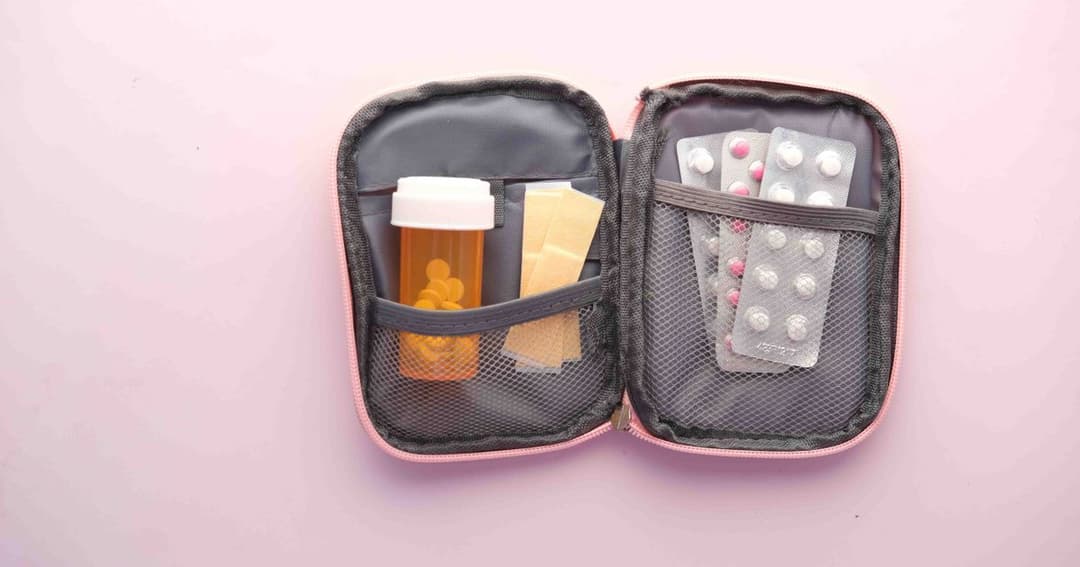
Start with an insulated pouch and a gel pack. A small padded medication travel case with one frozen gel pack holds temperature for several hours, which covers the overwhelming majority of domestic flights and layovers. Put the gel pack next to, not directly frozen against, the vials, and do not let the vials touch the coldest surface long enough to freeze. Freezing damages peptides, so a slightly cool pouch is better than an ice-cold one.
A short room-temperature window is fine. Ready-to-use peptides tolerate brief excursions out of refrigeration during transit. A few hours moving from home to plane to hotel will not meaningfully affect them. What you want to avoid is prolonged heat: a hot car, a sunny windowsill, or a beach bag in direct sun. Keep the pouch out of the sun and out of the trunk.
Refrigerate on arrival. As soon as you reach your hotel or destination, move the vials into a refrigerator. Nearly every hotel room has a mini-fridge, and if yours does not, the front desk can almost always store medication in a staff fridge, or provide one on request for medical needs. Ask when you check in.
For long or remote trips, upgrade the cooling. If you are traveling somewhere without reliable refrigeration, or for many days, a portable USB or battery-powered medication cooler holds a steady 36 to 46F without needing to refreeze gel packs. It is the most reliable option for extended cold chain away from a fridge.
Never freeze
Freezing is worse than a few warm hours. Keep gel packs from pressing directly against the vials, and never pack peptides in dry ice or a freezer. If a vial has frozen, do not use it and contact your provider.
Syringes, Needles, and Sharps
All PeRx peptides are administered by subcutaneous injection, so most trips mean traveling with syringes too. TSA allows unused syringes and needles in carry-on bags when they accompany the injectable medication they are used for. Keep them in the same pouch as your peptides so the connection is obvious, and declare them along with the medication at the checkpoint.
Pack a little more than you think you need, since travel days get disrupted. For used needles, bring a small travel sharps container or a hard-sided case, and never leave loose sharps rolling around your bag. Do not recap a used needle by hand. If you run out of sharps disposal, most pharmacies and many hotels can point you to safe disposal.
Domestic vs International Travel
Domestic travel within the United States is simple: the TSA rules above are all you need. Carry it on, keep it cold, keep it labeled, declare it. There is no additional layer for a flight from one state to another.
International travel is where you need to do homework before you go. Every country sets its own rules for bringing prescription medication across its border, and some are considerably stricter than the United States. A medication that is routine here can be restricted or require advance paperwork elsewhere. This is not something to improvise at customs.
| Consideration | Domestic (US) | International |
|---|---|---|
| TSA carry-on rules | Apply as described above | Apply on the US-departure side |
| Prescription label | Keep it on the vial | Keep it on, plus carry a prescription copy |
| Border / customs rules | None between states | Set by the destination, check before you fly |
| Cold chain | Ice pack for the flight | Plan for longer transit and layovers |
TSA carry-on rules
- Domestic (US)
- Apply as described above
- International
- Apply on the US-departure side
Prescription label
- Domestic (US)
- Keep it on the vial
- International
- Keep it on, plus carry a prescription copy
Border / customs rules
- Domestic (US)
- None between states
- International
- Set by the destination, check before you fly
Cold chain
- Domestic (US)
- Ice pack for the flight
- International
- Plan for longer transit and layovers
Before an international trip, check the medication import rules for your destination country and for any country you connect through, keep the peptides in their labeled pharmacy packaging, and carry a copy of your prescription. If anything is unclear, the destination country embassy or consulate is the authoritative source, and it is worth contacting them well before you travel. This guide covers general logistics and is not legal advice for any specific country, so verify the destination rules rather than assuming they match the United States.
The Travel Checklist
Everything above condenses into a short packing list. Run through it the night before you leave. Every batch is third-party tested for purity, and each order ships fully reconstituted and ready to use, delivered overnight in refrigerated packaging.
| Pack | Why it matters |
|---|---|
| Peptide vials in a labeled pharmacy package | Your medication, clearly identifiable at the checkpoint |
| Insulated pouch with a frozen gel pack | Holds 36 to 46F for the flight; ice packs are TSA-allowed |
| Enough syringes, plus a few spare | Allowed in carry-on when they accompany the medication |
| A small sharps container or hard case | Safe transport and disposal of used needles |
| A screenshot of your PeRx order or prescription | Instant proof if a state, airline, or country asks |
| Everything in your carry-on, nothing checked | Keeps the cold chain intact and the medication with you |
Peptide vials in a labeled pharmacy package
- Why it matters
- Your medication, clearly identifiable at the checkpoint
Insulated pouch with a frozen gel pack
- Why it matters
- Holds 36 to 46F for the flight; ice packs are TSA-allowed
Enough syringes, plus a few spare
- Why it matters
- Allowed in carry-on when they accompany the medication
A small sharps container or hard case
- Why it matters
- Safe transport and disposal of used needles
A screenshot of your PeRx order or prescription
- Why it matters
- Instant proof if a state, airline, or country asks
Everything in your carry-on, nothing checked
- Why it matters
- Keeps the cold chain intact and the medication with you
One more habit
Confirm your destination has a fridge before you leave, and refrigerate the vials the moment you arrive. The trip out and the trip home are the only times peptides should be away from refrigeration.
Traveling With Peptides: Common Questions
Related Guides
Continue reading about peptides and protocols that pair well with this guide.
Ozempic & Wegovy Injection Site Irritation: Fix
Painful lumps, bruising, redness, and lingering soreness are among the most common complaints from GLP-1 patients. Here is why injection sites react the way they do, how to minimize it with technique, and which peptides providers prescribe for patients with persistent nodules or slow healing.
Peptide Therapy Seattle: Pacific Northwest Guide
A plain guide to peptide therapy in Seattle: what it costs across local clinics, med spas, and telehealth, and who tends to use it here. Plus how pharmaceutical-grade peptides reach any Washington address without a clinic visit.
Peptides for Padel: Elbow, Shoulder and Wrist
The outside of the elbow that flares on every backhand. The shoulder that catches on the overhead. How peptide therapy is used for the tendon wear of the fastest-growing sport in the world.
Peptides that travel like real medicine
PeRx peptides are prescribed by a licensed provider and shipped from a pharmacy fully reconstituted, ready to use, and clearly labeled, so packing for a trip is simple and the checkpoint is a non-event. Browse the catalog, or take the 5-minute assessment to find the right peptide for your goals.
Medical Disclaimer
The information provided on this website, including all articles, guides, and educational content, is for informational and educational purposes only and is not intended as medical advice, diagnosis, or treatment. Nothing on this site should be construed as a substitute for professional medical advice from a qualified healthcare provider.
The majority of peptides discussed on this site are not approved by the U.S. Food and Drug Administration (FDA) for the indications described. They are classified as bulk drug substances and are available only through a licensed prescribing provider and compounding pharmacy. All treatments require a valid prescription and provider oversight.
The majority of published research on peptide therapies has been conducted in preclinical (animal) models. While early human data is encouraging, comprehensive clinical trial data remains limited for most peptide compounds. Individual results may vary significantly based on health status, injury type, and other factors. No specific outcomes are guaranteed.
Certain peptides discussed on this site are classified as prohibited substances by the World Anti-Doping Agency (WADA) and are banned by major sports organizations including the NFL, NCAA, UFC, NBA, MLB, NHL, and PGA. If you are subject to anti-doping testing, consult your governing body before considering any peptide therapy.
Statements on this website have not been evaluated by the Food and Drug Administration. Products and therapies discussed are not intended to diagnose, treat, cure, or prevent any disease.
© 2026 Wellness MD Group PC DBA PeRx. All rights reserved.