Where to Inject Sermorelin: Sites, Timing
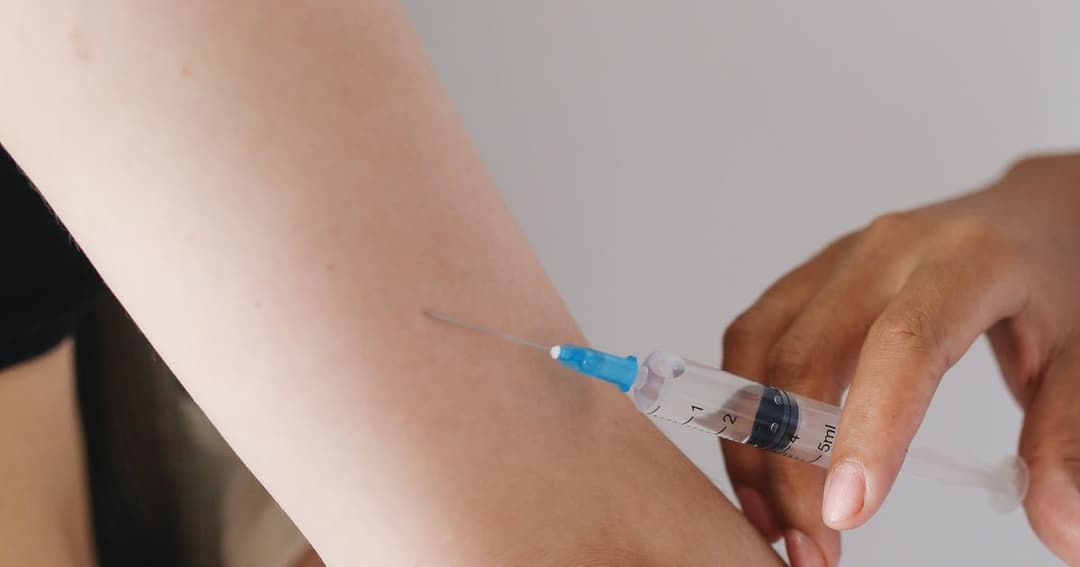
Sermorelin is a subcutaneous injection, usually taken once at bedtime. The four standard sites all work, but the timing detail is what makes sermorelin different from a daytime peptide. Here is the practical guide patients ask for after their first vial arrives, as of July 2026.
In this article
Key Takeaways
- Sermorelin is a subcutaneous injection, not intramuscular. The needle enters the fat layer just beneath the skin at a 45 to 90 degree angle.
- Four standard sites: abdomen (at least 2 inches from the navel), front or outer thigh, upper outer glute, and back of the deltoid. Abdomen is the most common.
- Timing is the detail that sets sermorelin apart. It is usually dosed once at bedtime on an empty stomach, so the signal lines up with the natural nighttime growth hormone pulse.
- Rotate at least one inch from the previous injection point every time, and rotate body regions every few injections to prevent fat-tissue nodules and irritation.
- Typical protocols use a small volume, often under 0.1 mL, drawn in a 29-31 gauge insulin syringe, 5 to 6 nights per week. Always follow the dose your provider prescribes.
Sermorelin Injection Quick Facts
Route
Subcutaneous (under the skin, not into muscle)
Standard Sites
Abdomen, thigh, upper glute, back of deltoid
Most Common Site
Abdomen (consistent absorption, easy to see)
Needle
29-31 gauge insulin syringe, 1/2 inch length
Best Time
Once at bedtime, on an empty stomach
Frequency
Typically 5-6 nights per week per provider protocol
If you already have sermorelin in the refrigerator, everything below applies to any vial. If you are looking for a prescribed source, PeRx ships Sermorelin from $229, prescribed by a licensed provider, compounded by a US 503A pharmacy, third-party tested, and delivered fully reconstituted with insulin syringes included, so the only thing left to learn is the technique on this page.
Sermorelin Is a Subcutaneous Injection
Where to inject sermorelin: the abdomen, thigh, upper outer glute, or back of the arm, once at bedtime on an empty stomach. Sermorelin is a subcutaneous (subQ) injection, the same general technique as any other PeRx peptide. The needle enters the fat layer beneath the skin, not muscle. If peptides are new to you altogether, what peptide therapy is covers the fundamentals first. If you have never done a subQ injection, our full guide to injecting peptides walks through the technique step by step. This guide focuses on what is specific to sermorelin: where to put it, when to inject it, and why the timing choice matters more here than it does for most peptides. Because PeRx ships Sermorelin fully reconstituted and ready to use, there is no mixing or measuring before any of this; you draw the prescribed dose straight from the vial.
For the background on what sermorelin is and how it works, the full sermorelin guide covers the growth-hormone-releasing hormone mechanism, expected timeline, and who it suits. This page assumes you already have a vial in hand and a prescription in front of you.
Where to Inject Sermorelin: The Four Standard Sites
There are four anatomical regions that all subQ peptide injections, including sermorelin, can use. Each has slightly different absorption characteristics and ergonomics.
1. Abdomen. The area between the lower rib cage and the hip bones, avoiding a roughly two-inch radius around the navel. This is the default site for most patients. Fat coverage is generally consistent, the area is easy to see, and absorption is reliable. Because sermorelin is a bedtime dose, the abdomen is also the easiest site to reach while sitting on the edge of the bed. Use the soft tissue on either side of the belly button rather than directly above or below it.
2. Front or outer thigh. The middle portion of the thigh, on the front (anterior) or outer (lateral) side. The fat layer is usually adequate here and the angle is comfortable for self-injection while seated. Avoid the inner thigh, which is more vascular, and stay away from the immediate area around the knee or hip.
3. Upper outer glute. The upper outer quadrant of the buttock, the same area used for many vaccinations. It is harder to reach for self-injection without a mirror or a partner, but absorption is excellent and the fat coverage tends to be deepest here. Some patients rotate this site in once or twice a week to give the abdomen a rest.
4. Back of the deltoid. The fat pad on the back of the upper arm, just behind the deltoid muscle. Fat coverage varies significantly between patients. If you can pinch a half-inch or more of skin and fat at this site, it works. If the skin pulls tight against muscle, choose a different region.
Which Site Is Best for Sermorelin?
There is no evidence that injecting sermorelin in one region produces a different systemic effect than another. Sermorelin signals the pituitary gland, and once the peptide enters circulation through subcutaneous fat it reaches that target the same way regardless of which site you used. Site choice is about comfort, consistency, and tissue health, not potency.
The abdomen is the practical default. Fat coverage is consistent, the angle is easy for a self-injection, the site is easy to see and rotate within, and it is the most convenient spot to reach at bedtime. Most patients use the abdomen for the majority of injections and rotate to the thigh or glute periodically to spread the wear.
Practical Default
Use the abdomen as your primary bedtime site. Rotate to thigh or glute every few injections. Skip the deltoid unless you have clear fat coverage there.
Why Bedtime Timing Matters
This is the one place where sermorelin technique differs meaningfully from a daytime peptide. Sermorelin is a growth-hormone-releasing hormone analog: it prompts your own pituitary to release growth hormone rather than delivering the hormone directly. Your body naturally releases most of its growth hormone in pulses during the first hours of deep, slow-wave sleep. A bedtime dose is timed to reinforce that nighttime pulse rather than fight against it.
Van Cauter E, Plat L. "Physiology of growth hormone secretion during sleep." Journal of Pediatrics, 1996 (review of the link between slow-wave sleep and growth hormone release). View study
The standard approach is a single injection roughly 20 to 30 minutes before you plan to fall asleep. Sermorelin is a short-acting peptide, so injecting close to sleep onset lines the signal up with the early-night pulse. Injecting it in the middle of the day works against the natural rhythm and is not the usual protocol.
Inject on an empty stomach. A large meal or a high-sugar snack right before the dose can blunt the growth hormone response, so most providers advise waiting two to three hours after your last meal before injecting. A glass of water is fine. This is the same reasoning behind fasted dosing for other growth-hormone-releasing peptides.
Follow Your Prescription
Your provider prescribes the exact dose, timing, and weekly schedule that fit your plan. Typical sermorelin protocols run 5 to 6 nights per week, but the number on your label is the one that matters, not a generic protocol from a forum.
Rotation Schedule
Repeated injection in the same spot causes minor fat-tissue trauma that accumulates over weeks. The result is small firm nodules, occasional bruising, or thickened tissue that absorbs the next injection less predictably. Rotation prevents this and keeps absorption consistent. Because sermorelin is dosed most nights of the week, rotation habits matter even more than they do for a peptide taken only a few times a week.
The rule most providers teach is to move at least one inch (a finger-width) from your last injection point every time. Within a single body region, you can subdivide into a grid. The abdomen has roughly eight usable spots if you split it into quadrants on each side of the navel. Cycle through them in order, then move to the next region.
A simple weekly pattern for a bedtime peptide: Sunday through Tuesday on the right abdomen, Wednesday through Friday on the left abdomen, then a thigh night to close the week. Mark the previous spot with a fingernail indent if you cannot remember where you last injected. After a couple of weeks of rotating through the abdomen, give it a rest and lean on the thighs and glutes for a stretch.
Sermorelin-Specific Technique Notes
The general subQ technique (warming the vial, pinching, slow injection, post-injection pressure) is the same for sermorelin as for any other PeRx peptide and is covered in our guide to injecting peptides. A few details are worth flagging specifically for sermorelin.
The dose volume is very small, so precision matters. Many sermorelin protocols call for well under 0.1 mL per injection, a tiny fraction of an insulin syringe. Drawing accurately at that volume is the difference between getting the prescribed dose and getting half of it. Read the syringe markings, do not estimate by eye, and clear any air bubble before you inject.
Build the injection into your wind-down routine. Because it is a nightly bedtime dose, the biggest real-world failure point is simply forgetting or being too tired. Keep the vial and syringes with your nighttime essentials, and tie the injection to an existing habit like brushing your teeth so it becomes automatic.
Let a refrigerated vial warm for a moment. Cold solution injected straight from the fridge is the most common cause of a brief sting. Holding the drawn syringe in your hand for a minute or two takes the chill off and makes the injection more comfortable, which matters when you are doing it most nights.
Common Pitfalls
Injecting after a late meal. A heavy dinner or a sugary snack right before the dose can blunt the response. Give it a couple of hours if you can.
Injecting through clothing. Even thin fabric is a contamination risk. Lift the shirt or waistband and inject into clean skin.
Using the same exact spot every night. Nightly dosing makes this the fastest way to build a palpable lump. Rotate every single time.
Injecting into a tattoo, scar, mole, or visible vein. Avoid these sites entirely. Pick clean skin a few inches away.
Reusing the needle. Insulin syringes are single use. Reusing dulls the needle, which makes injection more painful and increases tissue trauma. PeRx ships ample syringes with each order.
If you are weighing side effects before starting, the peptide side effects guide covers what is common, what is rare, and what deserves a call to your provider. For the full picture on how sermorelin works and what to expect over the first few months, the sermorelin guide is the place to start. Every vial is compounded in a US-based, FDA-regulated 503A pharmacy and third-party tested for purity, and it arrives overnight in refrigerated packaging.
Sermorelin Injection Questions
Related Guides
Continue reading about peptides and protocols that pair well with this guide.
Is Sermorelin FDA Approved? Yes Until 2008
Sermorelin has a unique regulatory history. It was FDA-approved in 1997 as Geref Diagnostic for testing pituitary function, and its therapeutic form (Geref) was used for pediatric growth hormone deficiency. Then the manufacturer discontinued it in 2008. Today Sermorelin is only available as a compounded medication. Here is the full story.
How Long Does Sermorelin Take to Work?
Sermorelin does not flip a switch. It works gradually by prompting your own pituitary to release more growth hormone, so the changes arrive in a predictable order rather than all at once. Sleep tends to shift first, then energy and recovery, then the slower body-composition and skin changes over several months. This guide lays out that arc honestly, explains what speeds it up or slows it down, and covers when to check back in with your provider.
BPC-157 vs TB-500: What Is the Difference?
Both are recovery peptides. Both are popular. But they work through completely different biological mechanisms. BPC-157 sends the repair signals. TB-500 moves the construction crew into position. Understanding the difference tells you which one you actually need, and whether combining them is worth it.
Ready to get started?
Pharmaceutical-grade sermorelin, prescribed by a licensed provider and shipped to your door fully reconstituted and ready to use.
Medical Disclaimer
The information provided on this website, including all articles, guides, and educational content, is for informational and educational purposes only and is not intended as medical advice, diagnosis, or treatment. Nothing on this site should be construed as a substitute for professional medical advice from a qualified healthcare provider.
The majority of peptides discussed on this site are not approved by the U.S. Food and Drug Administration (FDA) for the indications described. They are classified as bulk drug substances and are available only through a licensed prescribing provider and compounding pharmacy. All treatments require a valid prescription and provider oversight.
The majority of published research on peptide therapies has been conducted in preclinical (animal) models. While early human data is encouraging, comprehensive clinical trial data remains limited for most peptide compounds. Individual results may vary significantly based on health status, injury type, and other factors. No specific outcomes are guaranteed.
Certain peptides discussed on this site are classified as prohibited substances by the World Anti-Doping Agency (WADA) and are banned by major sports organizations including the NFL, NCAA, UFC, NBA, MLB, NHL, and PGA. If you are subject to anti-doping testing, consult your governing body before considering any peptide therapy.
Statements on this website have not been evaluated by the Food and Drug Administration. Products and therapies discussed are not intended to diagnose, treat, cure, or prevent any disease.
© 2026 Wellness MD Group PC DBA PeRx. All rights reserved.