Peptide Therapy on Huntington’s North Shore
A plain guide to peptide therapy in Huntington for staying active as you age: what it costs across North Shore clinics, med spas, and telehealth, who tends to use it here, and how pharmaceutical-grade peptides reach any Suffolk County address without a clinic visit.

In this article
Key Takeaways
- North Shore peptide programs typically run $300 to $700 per peptide per month plus a $150 to $400 consult, and most med spas never post a price.
- PeRx telehealth starts at $199 per month, all-inclusive: the medication, a New York-licensed provider review, and refrigerated shipping to any Huntington address.
- PeRx can prescribe to adults 21 and older anywhere in New York, and every vial arrives ready to use with no reconstitution needed.
- Lab work depends on the peptide, but most require none to start, and HSA/FSA cards frequently work with a valid prescription.
Quick Facts
Service area
The entire Town of Huntington (Cold Spring Harbor, Northport, Lloyd Harbor, Centerport, Halesite, Greenlawn, Melville, Dix Hills, Commack, East Northport, Huntington Station) and all of Suffolk County
Visit required
No; New York-licensed telehealth
Starting price
$199/month, all-inclusive
Labs to start
Depends on the peptide; most require none
Shipping
Refrigerated, ready-to-use vials
Prescriber
New York-licensed physician or NP
Pharmacy
FDA-regulated compounding pharmacy
The Short Version for North Shore Patients
Huntington peptide therapy, condensed
Huntington skews older and stays active, and that shapes what peptide therapy looks like here. A lot of patients are in their 50s, 60s, and 70s who have lived on the North Shore for decades and want to keep sailing, playing tennis and golf, and walking the village rather than wind those things down. In person, you can find peptides at the hormone, longevity, and integrative-medicine clinics around the North Shore, usually $300 to $700 per peptide each month once consult and lab fees are counted. The telehealth route skips the office entirely. PeRx ships pharmaceutical-grade peptides from FDA-regulated compounding pharmacies to any Suffolk County address, starting at $199 a month with a New York-licensed provider review included.
Peptides are short chains of amino acids your body already uses to signal tissue repair, growth-hormone release, and recovery. Therapeutic versions are pharmacy-compounded copies of those signals, prescribed against a specific goal and taken as a small subcutaneous injection at home. The research base is deep and public; a PubMed search on BPC-157 alone returns decades of work, and our what peptide therapy is primer walks through the mechanism in full.
Teichman SL et al., "Prolonged stimulation of growth hormone (GH) and insulin-like growth factor I secretion by CJC-1295, a long-acting analog of GH-releasing hormone, in healthy adults," Journal of Clinical Endocrinology and Metabolism, 2006 (clinical study in healthy adults). View study
Staying Active on the North Shore
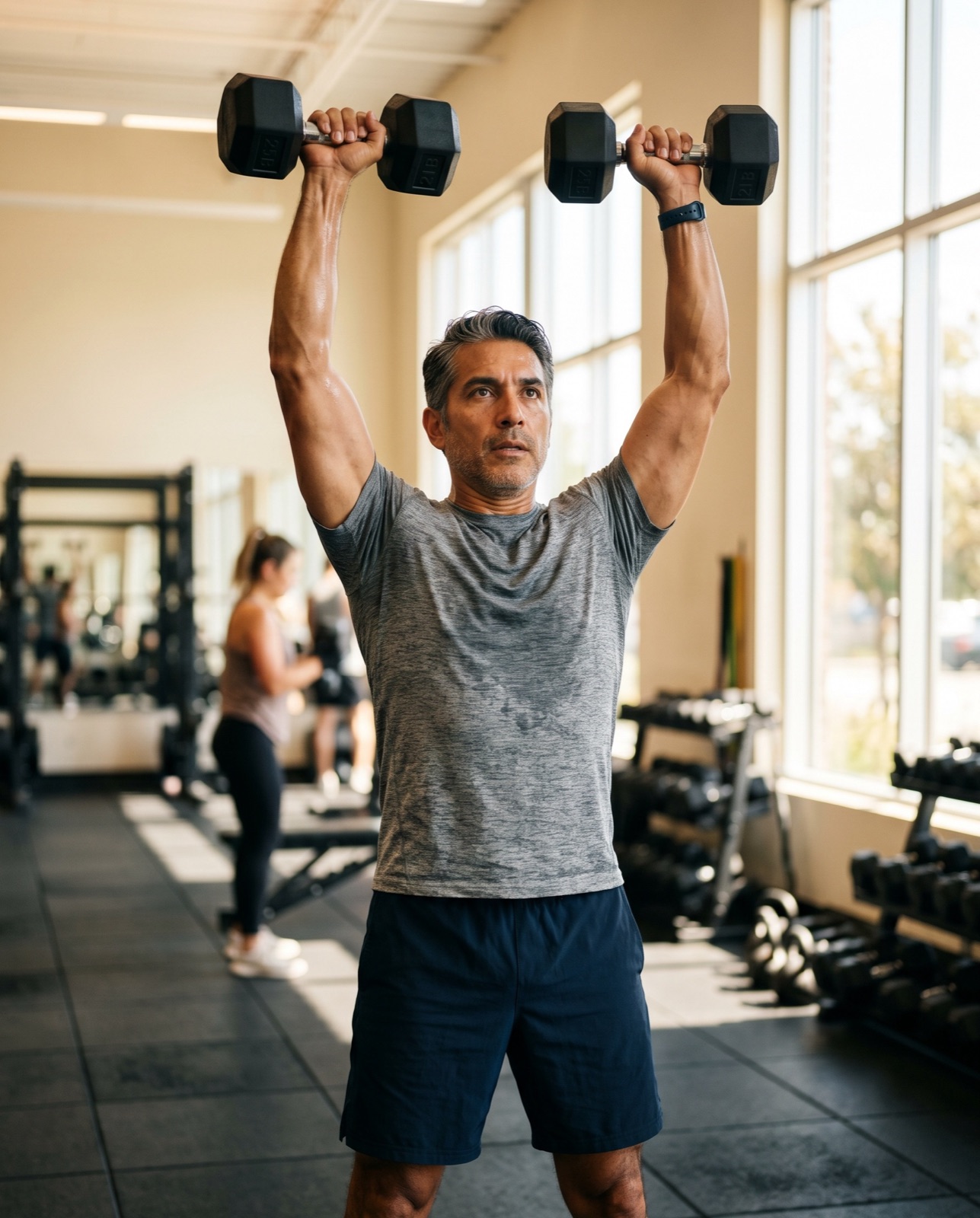
Huntington is one of the older-established towns on Long Island, full of people who bought in years ago and are aging in place rather than moving away. That character sets the intake pattern. The largest group we see is active adults over 55 who are not trying to slow down. They sail out of the harbor, keep a standing tennis or golf game, walk the village on weekends, and want peptide therapy to protect durability: joints and tendons that hold up to the volume, energy that lasts through the afternoon, and sleep that actually restores.
A few kinds of patients make up most of that intake, and plenty of people are a mix of more than one. Active retirees and semi-retirees are the core of it. Recovery leads the conversation, usually the shoulder that aches after a day on the water, the lower back that tightens on a longer walk, or the elbow and knee complaints that come with keeping a tennis or golf schedule into your 60s. BPC-157 is the common starting point. A second group is deliberate about aging well and often runs a small stack after talking it through with a primary-care or integrative provider, with NAD+ for energy alongside GHK-Cu for skin and CJC-1295/Ipamorelin for sleep.
The third group works in medicine and research, which is unusually well represented here. Huntington Hospital and the broader Northwell system employ a large local workforce, and Cold Spring Harbor Laboratory sits inside the town, so a meaningful share of our intake arrives already knowing what a half-life is and wanting to know exactly where the vial came from before trying anything. They most often land on Sermorelin and CJC-1295/Ipamorelin once those questions are answered, and their Thymosin Alpha-1 requests climb every winter.
The Huntington pattern
More than in most cities we serve, patients here start with staying-active goals (BPC-157 for joints, NAD+ for energy) and add CJC-1295/Ipamorelin and Sermorelin as the conversation turns toward sleep and the natural decline in growth hormone that comes with age.
Peptides After 60: What Changes
Age changes the body in ways that shape which peptide makes sense and how it is dosed. Growth-hormone output falls off gradually after your 30s, which is part of why sleep gets lighter, recovery slows, and muscle is harder to hold. Tendons and joints take longer to settle after the same set of tennis or the same afternoon on the water. Energy across a full day stops being automatic. None of that is a disease, and no peptide turns back the clock. The aim is narrower and more useful: supporting the systems that keep you moving well.
Three families of peptides come up most for this audience. Growth-hormone secretagogues like Sermorelin and CJC-1295/Ipamorelin prompt your own pituitary to release growth hormone in natural pulses rather than adding outside HGH, which is why providers often favor them for older patients who want gentler support for sleep, recovery, and lean mass. BPC-157 supports the tissue-repair signaling that aging tendons, ligaments, and joints lean on, which is why it is the most-requested peptide among the sailing, tennis, and golf crowd here. NAD+ supports cellular energy production, and many older patients try it first when the goal is simply having more in the tank to stay active.
Pickart L et al., "GHK Peptide as a Natural Modulator of Multiple Cellular Pathways in Skin Regeneration," BioMed Research International, 2015 (laboratory and gene-expression review). View study
Dosing tends to be gentler with age, and that is by design. Providers commonly start older patients low and titrate up slowly, watching how sleep, energy, and recovery respond over the first few weeks rather than pushing a large dose out of the gate. A good provider also reviews your current medications and history before prescribing, since older adults are more likely to be managing other conditions, and phases protocols one peptide at a time so it stays clear what is actually helping. The result should feel like a steady, well-matched routine, not an aggressive intervention.
The Peptides Huntington Orders
Ranked roughly by Huntington request volume, and the ranking itself tells you about the town: recovery-heavy and longevity-heavy, driven by an older, active, health-literate population. Prices below are the monthly all-in cost, covering the medication, the New York-licensed provider review, and refrigerated shipping.
| Peptide | Best for | Monthly | Why Huntington patients pick it |
|---|---|---|---|
| BPC-157 | Recovery, tendon and joint support | $229 | The most-requested peptide here. Older sailors, tennis and golf players, and weekend walkers reach for it to keep shoulders, backs, and knees holding up to a full week of activity. It is also the usual starting point for gut-lining support. |
| CJC-1295/Ipamorelin | Sleep, body composition, recovery | $299 | Supports your own growth-hormone release without exogenous HGH. Deeper, more restful sleep is the effect older patients report most consistently, with body-composition changes following over 8 to 12 weeks. |
| NAD+ | Energy, mitochondrial support, longevity | $229 | A common pick for energy and longevity goals. A subcutaneous protocol at home does the same job as the NAD+ drips sold locally, for a fraction of the per-session price. |
| Sermorelin | Gentler growth-hormone support | $229 | A conservative on-ramp to growth-hormone-axis support with a shorter half-life, which suits first-time patients in their 50s and 60s who want to start cautiously before trying anything stronger. |
| GHK-Cu | Skin, hair, collagen | $229 | A copper peptide that supports collagen, elastin, and follicle signaling, and a steady request among longtime residents who want to maintain skin without a standing med-spa appointment. |
| Thymosin Alpha-1 | Immune support | $229 | Our only thymosin protocol. Requests climb every winter, particularly among the area’s large hospital and healthcare workforce. |
BPC-157
- Best for
- Recovery, tendon and joint support
- Monthly
- $229
- Why Huntington patients pick it
- The most-requested peptide here. Older sailors, tennis and golf players, and weekend walkers reach for it to keep shoulders, backs, and knees holding up to a full week of activity. It is also the usual starting point for gut-lining support.
CJC-1295/Ipamorelin
- Best for
- Sleep, body composition, recovery
- Monthly
- $299
- Why Huntington patients pick it
- Supports your own growth-hormone release without exogenous HGH. Deeper, more restful sleep is the effect older patients report most consistently, with body-composition changes following over 8 to 12 weeks.
NAD+
- Best for
- Energy, mitochondrial support, longevity
- Monthly
- $229
- Why Huntington patients pick it
- A common pick for energy and longevity goals. A subcutaneous protocol at home does the same job as the NAD+ drips sold locally, for a fraction of the per-session price.
Sermorelin
- Best for
- Gentler growth-hormone support
- Monthly
- $229
- Why Huntington patients pick it
- A conservative on-ramp to growth-hormone-axis support with a shorter half-life, which suits first-time patients in their 50s and 60s who want to start cautiously before trying anything stronger.
GHK-Cu
- Best for
- Skin, hair, collagen
- Monthly
- $229
- Why Huntington patients pick it
- A copper peptide that supports collagen, elastin, and follicle signaling, and a steady request among longtime residents who want to maintain skin without a standing med-spa appointment.
Thymosin Alpha-1
- Best for
- Immune support
- Monthly
- $229
- Why Huntington patients pick it
- Our only thymosin protocol. Requests climb every winter, particularly among the area’s large hospital and healthcare workforce.
Deep dives on each: BPC-157, CJC-1295/Ipamorelin, NAD+, Sermorelin, GHK-Cu, and Thymosin Alpha-1. Glutathione, at $199 per month, is our lowest-priced protocol, and the full catalog lists everything PeRx ships.
Match It to Your Goal
The assessment matches on goals, history, and lifestyle, but the mapping New York-licensed providers reach for most often looks like this.
| Your goal | First-line peptide | Why |
|---|---|---|
| Recover faster from sailing, tennis, or golf | BPC-157 | Tissue-repair signaling on tendon, ligament, and gut. The most-asked peptide among older, active North Shore patients on year-round schedules. |
| Sleep deeper | CJC-1295/Ipamorelin | Supports your natural overnight growth-hormone release, and deeper slow-wave sleep is the effect patients report most consistently. |
| Energy and longevity | NAD+ | A mitochondrial cofactor taken as a subcutaneous injection at home, for a fraction of what per-session IV drips cost. |
| Gentler growth-hormone support | Sermorelin | A shorter-acting, more conservative option that suits older patients starting cautiously. |
| Skin and hair | GHK-Cu | Copper-peptide complex supporting collagen, elastin, and follicle signaling year-round. |
| Winter immune support | Thymosin Alpha-1 | Our only thymosin protocol, most requested through the colder months, especially among healthcare workers. |
| Body composition | CJC-1295/Ipamorelin or Tesamorelin | They share the GH-axis mechanism, and tesamorelin leans stronger for belly-fat goals. |
Recover faster from sailing, tennis, or golf
- First-line peptide
- BPC-157
- Why
- Tissue-repair signaling on tendon, ligament, and gut. The most-asked peptide among older, active North Shore patients on year-round schedules.
Sleep deeper
- First-line peptide
- CJC-1295/Ipamorelin
- Why
- Supports your natural overnight growth-hormone release, and deeper slow-wave sleep is the effect patients report most consistently.
Energy and longevity
- First-line peptide
- NAD+
- Why
- A mitochondrial cofactor taken as a subcutaneous injection at home, for a fraction of what per-session IV drips cost.
Gentler growth-hormone support
- First-line peptide
- Sermorelin
- Why
- A shorter-acting, more conservative option that suits older patients starting cautiously.
Skin and hair
- First-line peptide
- GHK-Cu
- Why
- Copper-peptide complex supporting collagen, elastin, and follicle signaling year-round.
Winter immune support
- First-line peptide
- Thymosin Alpha-1
- Why
- Our only thymosin protocol, most requested through the colder months, especially among healthcare workers.
Body composition
- First-line peptide
- CJC-1295/Ipamorelin or Tesamorelin
- Why
- They share the GH-axis mechanism, and tesamorelin leans stronger for belly-fat goals.
Five minutes to a matched protocol
Your provider calibrates the exact peptide, dose, and protocol to your profile. The fastest way to find your fit is the PeRx health assessment, which takes about 5 minutes. A New York-licensed provider reviews every intake before any prescription is written.
Starting Peptide Therapy by Telehealth in New York
New York makes this simple to start. A New York-licensed physician or nurse practitioner can evaluate a new patient online and write the prescription, so you can begin without driving to a clinic or sitting in a waiting room. PeRx prescribes to adults 21 and older anywhere in the state.
The PeRx process for Huntington patients
Step 1
Complete the 5-minute health assessment: goals, medical history, current medications, sleep, and activity level. Recent labs from a physical help if you have them, but nothing is required.
Step 2
A New York-licensed provider reviews your intake and either prescribes a matched protocol or recommends a different starting point.
Step 3
An FDA-regulated compounding pharmacy ships your peptide refrigerated, in insulated cold-pack packaging, to your Huntington address.
Step 4
You give yourself a small injection just under the skin at home. The technique is the same one people use for insulin, and it settles into an established daily routine within a dose or two.
Step 5
Your provider stays available for questions along the way, and a monthly check-in keeps the protocol matched to how you are responding.
Ready to use on arrival
Every PeRx vial arrives ready to use. There is nothing to mix and nothing to measure out. You bring the box inside, keep it refrigerated at 36 to 46°F, and dose on your own schedule. The cold pack is built for the full transit window, including a January cold snap, and holds temperature to your door.
Buy the pharmacy, not the vial
Two vials can look identical in an online listing and be completely different products. One is compounded in an FDA-regulated pharmacy under federal sterility and potency standards. The other is filled by a research-chemical seller with no real oversight and is often labeled "not for human use." PeRx sources exclusively from FDA-regulated compounding pharmacies under a New York-licensed prescriber's order. Use the same test with anyone else you are considering: ask them to name the compounding pharmacy and show its licensing. A legitimate provider answers in one email.
Your North Shore Options: Clinic, Drip Bar, or Telehealth
Around Huntington and the North Shore, older adults have three practical ways to get peptides, and the deciding factor is usually how much driving and waiting you want to keep in your week. The first is an in-person clinic: the hormone, longevity, and integrative-medicine practices that run a full program with labs and consults. The second is a med spa or IV lounge, where you pay by the session for NAD+ or recovery drips. The third is telehealth, where a New York-licensed provider reviews your intake online and the pharmacy ships to your door. If you are further west, in the boroughs or Westchester, our New York City peptide therapy guide covers that denser market. Here is how the three compare.
| Model | Monthly cost | Initial fees | Best for |
|---|---|---|---|
| In-clinic hormone / longevity program | $300–$700 per peptide | $150–$400 consult, labs often $100–$250 | Patients who want in-person care, a hormone-axis work-up, or a longer integrative-medicine relationship |
| Med spa / IV lounge | $300–$800 per visit | Usually none; pay per session | One-off NAD+ infusions or recovery drips, not an ongoing prescribed protocol |
| Telehealth (PeRx) | From $199 / month | $0; no consult fee, and most peptides need no labs | Patients who want a prescribed, pharmacy-compounded protocol at the lowest all-in price |
In-clinic hormone / longevity program
- Monthly cost
- $300–$700 per peptide
- Initial fees
- $150–$400 consult, labs often $100–$250
- Best for
- Patients who want in-person care, a hormone-axis work-up, or a longer integrative-medicine relationship
Med spa / IV lounge
- Monthly cost
- $300–$800 per visit
- Initial fees
- Usually none; pay per session
- Best for
- One-off NAD+ infusions or recovery drips, not an ongoing prescribed protocol
Telehealth (PeRx)
- Monthly cost
- From $199 / month
- Initial fees
- $0; no consult fee, and most peptides need no labs
- Best for
- Patients who want a prescribed, pharmacy-compounded protocol at the lowest all-in price
Where we deliver on the North Shore
Refrigerated shipping reaches every zip code in the Town of Huntington, including Cold Spring Harbor, Lloyd Harbor, Northport, Centerport, Halesite, Greenlawn, East Northport, Commack, Dix Hills, Melville, West Hills, South Huntington, and Huntington Station, plus the rest of Suffolk and Nassau. A New York-licensed provider can prescribe to any New York address, so you are covered whether you are in the village or well outside it.
The spread is really about what you pay for besides the drug. A clinic funds a lease, a front desk, and provider hours, and a drip lounge charges per session. Worth it when the in-office experience matters to you. When it does not, and you just want the prescribed, pharmacy-compounded peptide, telehealth cuts the building out of the price.
What Peptide Therapy Costs in Huntington
Annualize the three channels and the spread stops being abstract. These figures assume one peptide at a time, which is how most older patients should start regardless of channel.
| Tier | Initial fees | Monthly cost | Annual cost (1 peptide) |
|---|---|---|---|
| In-clinic hormone / longevity program | $150–$400 consult + labs $100–$250 | $300–$700 | $3,850–$9,050 |
| Med spa / IV lounge (monthly NAD+) | None; per session | $300–$800 | $3,600–$9,600 |
| New York telehealth (PeRx) | $0; most peptides need no labs | From $199 | From $2,388 |
In-clinic hormone / longevity program
- Initial fees
- $150–$400 consult + labs $100–$250
- Monthly cost
- $300–$700
- Annual cost (1 peptide)
- $3,850–$9,050
Med spa / IV lounge (monthly NAD+)
- Initial fees
- None; per session
- Monthly cost
- $300–$800
- Annual cost (1 peptide)
- $3,600–$9,600
New York telehealth (PeRx)
- Initial fees
- $0; most peptides need no labs
- Monthly cost
- From $199
- Annual cost (1 peptide)
- From $2,388
Neither Medicare nor commercial insurance pays for compounded peptides, in any of the three channels, since they fall outside the standard drug formularies, so plan on paying out of pocket whichever channel you choose. The one lever that regularly helps is pre-tax money: HSA and FSA cards often go through for a compounded prescription when a valid script backs them, so it is worth a call to your plan administrator before you build it into your budget.
Peptide Therapy on Huntington’s North Shore: Common Questions
Related Guides
Continue reading about peptides and protocols that pair well with this guide.
Is Sermorelin FDA Approved? Yes Until 2008
Sermorelin has a unique regulatory history. It was FDA-approved in 1997 as Geref Diagnostic for testing pituitary function, and its therapeutic form (Geref) was used for pediatric growth hormone deficiency. Then the manufacturer discontinued it in 2008. Today Sermorelin is only available as a compounded medication. Here is the full story.
Epitalon vs Pinealon: Pineal Peptides Compared
They sound like twins and share a lineage in the same Russian bioregulator research, but Epitalon and Pinealon were designed to do different jobs. Epitalon is a longevity-focused tetrapeptide studied for telomere maintenance and sleep. Pinealon is a short neuropeptide bioregulator studied for cognition and neuroprotection. Here is how they actually differ, what the evidence supports, and how to think about choosing.
Sermorelin vs Semaglutide: Different Jobs
These two get compared constantly, usually by people trying to sell one of them. They are not competitors. A GLP-1 receptor agonist changes how hungry you are. Sermorelin nudges your pituitary to release more of your own growth hormone. Only one of them is a weight loss medication, and it is not sermorelin.
Ready to get started?
Pharmaceutical-grade peptides, prescribed by a New York-licensed provider and shipped refrigerated to any address in the Town of Huntington and across Suffolk County, ready to use. Take the 5-minute health assessment to find the right peptide for your goals.
Medical Disclaimer
The information provided on this website, including all articles, guides, and educational content, is for informational and educational purposes only and is not intended as medical advice, diagnosis, or treatment. Nothing on this site should be construed as a substitute for professional medical advice from a qualified healthcare provider.
The majority of peptides discussed on this site are not approved by the U.S. Food and Drug Administration (FDA) for the indications described. They are classified as bulk drug substances and are available only through a licensed prescribing provider and compounding pharmacy. All treatments require a valid prescription and provider oversight.
The majority of published research on peptide therapies has been conducted in preclinical (animal) models. While early human data is encouraging, comprehensive clinical trial data remains limited for most peptide compounds. Individual results may vary significantly based on health status, injury type, and other factors. No specific outcomes are guaranteed.
Certain peptides discussed on this site are classified as prohibited substances by the World Anti-Doping Agency (WADA) and are banned by major sports organizations including the NFL, NCAA, UFC, NBA, MLB, NHL, and PGA. If you are subject to anti-doping testing, consult your governing body before considering any peptide therapy.
Statements on this website have not been evaluated by the Food and Drug Administration. Products and therapies discussed are not intended to diagnose, treat, cure, or prevent any disease.
© 2026 Wellness MD Group PC DBA PeRx. All rights reserved.