Peptides for Competitive Shooters
Precision shooting sports (USPSA, PRS, bullseye, trap) ask for steady hands, calm focus under match pressure, and stamina across a long day on the range, plus the wrist and shoulder wear that recoil leaves behind. How the Semax/Selank blend, NAD+, DSIP, and BPC-157 are used as a wellness and resilience approach for club, recreational, and masters shooters.
In this article
Key Takeaways
- The precision-shooting problem is not one thing. It is four: a calm hold under match pressure, focus that lasts across a long day on the range, the sleep that nerves tend to destroy the night before, and the wrist and shoulder wear that recoil grinds in over a season.
- Four peptides map to those four problems: the Semax/Selank blend for calm focus and stress resilience, NAD+ for sustained mental energy, DSIP for pre-match sleep, and BPC-157 for recoil-related soft-tissue wear. All are single pre-mixed subcutaneous vials.
- None of these is a steady-hands drug. Selank works on the stress response, which may steady a hold indirectly by taking the adrenaline edge off, but that is a nervous-system effect, not a mechanical one. Honesty matters here more than in most persona guides.
- Shooting bans beta-blockers both in and out of competition because they calm the shooter, so tested athletes are scrutinized for anything in that lane. BPC-157 is on the WADA list under S0, and the others are ambiguous. This guide is for club, recreational, and masters shooters, not tested competitors.
- All four are prescription-only, none is FDA-approved for these uses, and the human evidence is earlier than for established drugs. The honest pitch is resilience and recovery support, not a guaranteed score.
Quick Facts
Best for
Club, recreational, and masters shooters in USPSA, PRS, bullseye, trap, and similar disciplines
Goal
Calm focus under pressure, all-day stamina, pre-match sleep, recoil recovery
Peptides in scope
Semax/Selank blend, NAD+, DSIP, BPC-157
Administration
Subcutaneous injection, single pre-mixed vials
Storage
Refrigerated 36-46°F, ships fully reconstituted and ready to use
Competition testing
Shooting bans beta-blockers in and out of competition; BPC-157 is on the WADA list under S0. Tested shooters must not use these.
The Last Stage, Match Nerves Rising
The scene
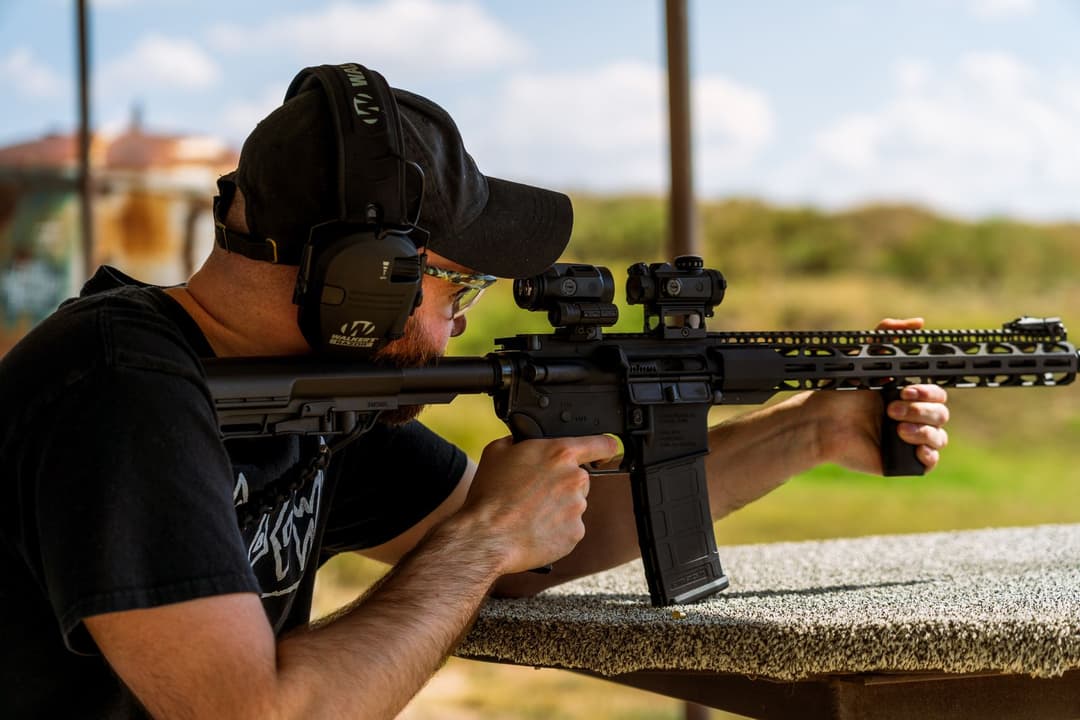
You are one stage from a match win, and your body knows it before your mind does. The heart rate climbs, the front sight starts to develop a faint tremor it did not have on stage one, and the calm you held for four hours of a PRS day is fraying right when the score matters most. Somewhere else on the calendar, a bullseye pistol shooter is standing at the line trying to break a clean shot while a small, involuntary wobble writes itself across the ten-ring. Both of you slept badly the night before, both had too much coffee to fight it, and both know the match was never really about the gun.
Precision shooting is a stillness sport. The equipment is capable of far more than the person holding it, so the contest comes down to who can stay calm, keep a clean hold, and repeat a good process for hours without their own physiology getting in the way. That is a different demand than power sports place on the body, and it is closer to what a surgeon, an archer, or a trading desk under earnings pressure faces: sustained composure under load, where the enemy is your own stress response. Peptide therapy has become one of the ways some people approach that kind of resilience. When you get a peptide through PeRx, it is prescribed by a licensed provider and compounded in a US-based, FDA-regulated 503A pharmacy, the same regulated pathway many everyday prescriptions go through.
This guide is written as a wellness and resilience approach, not a performance-enhancement pitch, and that distinction is not throat-clearing. Shooting is one of the few sports that bans substances specifically because they steady the hand, so the honest framing here matters more than usual. Everything below is aimed at the club shooter, the weekend USPSA competitor, and the masters-age precision rifle shooter who wants to feel steadier, sleep before a match, and recover from a season of recoil, not at anyone chasing an edge in a tested division.
Four Problems, Not One
Most articles about shooting under pressure treat the whole thing as a single mental-game problem to be solved with breathing and visualization. That undersells it. What actually degrades a shooter over a match day is four separate physiological problems stacked on top of each other, and they have different causes and different fixes.
The first is the acute stress response: adrenaline, an elevated heart rate, and the fine tremor and narrowed attention that come with them right when the pressure peaks. The second is cognitive stamina, the slow erosion of focus across a long day, so that your calls and your process on the last stage are worse than on the first. The third is sleep, or the lack of it, because match nerves and an early alarm conspire to leave you under-slept on the day you can least afford it. The fourth is the slow, physical wear of recoil on the wrist, elbow, and shoulder that accumulates across thousands of rounds. A useful approach treats these as four targets, not one vibe to fix.
Why Breathing Drills Only Go So Far
None of this is an argument against mental training. Breathing protocols, a solid pre-shot routine, dry-fire, and working with a shooting-sports psychologist are the foundation, and no peptide replaces them. The parasympathetic breath that drops your heart rate before a stage is real and it works. But there is a ceiling to what a technique can do against an under-slept nervous system running on three cups of coffee, and that ceiling is where the physiology starts to matter.
The other thing the standard advice glosses over is that the obvious pharmacological fix is off the table. For decades, the drugs that most reliably steady a shooter were beta-blockers, which slow the heart and damp the hand tremor. That is exactly why they are banned in this sport, and it is worth understanding why before reaching for anything: the fix that works best is prohibited precisely because it works. The peptides in this guide are not beta-blockers and do not act like them. They are aimed at the underlying resilience (a calmer baseline stress response, better sleep, steadier day-long energy, healthier tissue) rather than a mechanical grip on the trigger finger.
Read this before anything else
If you compete in a tested division, this section is the most important one in the guide. Shooting bans beta-blockers both in and out of competition because they calm the shooter and steady the hands. That means anti-doping bodies watch this exact category closely. BPC-157 is on the WADA Prohibited List, and the status of the others is not clearly safe. The full anti-doping picture is below, but the short version is: tested shooters should not use these, and should confirm every substance with their federation. This guide is for shooters who are not tested.
The Four Peptides in Scope
Four peptides map onto the four problems. All are prescription-only in the US, all are subcutaneous injections from single pre-mixed vials, and none is FDA-approved for any use described here. The framing below is plausible mechanism and reported effect, not proven outcome.
Semax/Selank blend
Calm focus and stress resilience
NAD+
Stamina across a long day
DSIP
Pre-match sleep
BPC-157
Recoil wear on wrist and shoulder
Calm Focus: The Semax/Selank Blend
The piece most relevant to match-day nerves is the Semax/Selank blend, and specifically its Selank half. Selank is an anxiolytic peptide developed from a natural immune-regulating fragment, studied for reducing anxiety without the sedation, cognitive dulling, or dependence that come with benzodiazepines. In a Russian clinical study of patients with generalized anxiety disorder and neurasthenia, its anxiolytic effect was reported as comparable to the benzodiazepine medazepam, but with an added anti-asthenic and mildly stimulating quality rather than sedation.
Zozulia AA, et al. "Efficacy and possible mechanisms of action of a new peptide anxiolytic selank in the therapy of generalized anxiety disorders and neurasthenia." Zhurnal Nevrologii i Psikhiatrii imeni S.S. Korsakova, 2008 (Russian-published clinical study, n=62). Anxiolytic effect reported comparable to medazepam. View study
For a shooter, that "calm without sedation" profile is the whole appeal. A visible tremor on the sights is often adrenaline made physical, and a racing heart and a narrowed, anxious attention are the enemy of a clean hold. To the extent that Selank lowers that stress response, the payoff is an indirect steadying and a wider, calmer field of attention, not a drug that grips your hand still. That is an honest distinction worth keeping: this is composure support, and it belongs in the same conversation as peptides for anxiety rather than in the beta-blocker lane the sport prohibits.
Volkova A, et al. "Selank Administration Affects the Expression of Some Genes Involved in GABAergic Neurotransmission." Frontiers in Pharmacology, 2016. (Preclinical; Selank altered expression of GABA-related genes in rat brain.) View study
The Semax half of the blend adds the focus-forward side, studied in animal models for its effect on BDNF, a protein tied to attention and neural signaling. The pairing is deliberate: Semax brings the sharpness, Selank keeps it from tipping into wired. For the broader picture of how these cognitive peptides are thought to work, the nootropic peptides for brain health guide covers the mechanisms in more depth.
Agapova TIu, et al. "Effect of semax on the temporary dynamics of brain-derived neurotrophic factor and nerve growth factor gene expression in the rat hippocampus and frontal cortex." Molecular Genetics, Microbiology and Virology, 2008. (Rodent model of Semax and BDNF; Russian-published.) View study
Stamina Across the Day: NAD+
NAD+ addresses the second problem: the slow fade. A two-day PRS match or a full club match is a marathon of concentration, and the focus you bring to the last stage is rarely the focus you had on the first. NAD+ is a coenzyme central to cellular energy production and DNA repair, and its levels decline with age and physiological stress. As a subcutaneous protocol it is used for the cumulative, day-long energy floor underneath sustained cognitive work, not for a same-day boost.
Verdin E. "NAD+ in aging, metabolism, and neurodegeneration." Science, 2015. (Review of NAD+ in cellular energy metabolism and its decline with age.) View study
Here is the honest part, and it is worth stating plainly. When nicotinamide riboside, an NAD+ precursor, was tested in a randomized, placebo-controlled trial in older adults, it did raise blood NAD+ levels and was well tolerated, but it did not produce a clear improvement in cognitive performance over the trial. The takeaway is not that NAD+ is useless; it is that the human evidence for a direct cognitive or focus benefit is thin, and anyone promising a sharper mind from an NAD+ vial is ahead of the data. It is best understood as recovery and energy-metabolism support for the grind of a season, the same role it plays in the trader focus stack, not a nootropic in its own right.
Orr ME, et al. "A randomized placebo-controlled trial of nicotinamide riboside in older adults with mild cognitive impairment." GeroScience, 2024. Nicotinamide riboside raised blood NAD+ but did not significantly improve cognition. View study
Pre-Match Sleep: DSIP
The night before a match you care about is often the worst sleep of the month. Nerves, an early alarm, a strange hotel bed, and the mental replay of stages all conspire to leave you under-slept on the day it hurts most, and no amount of match-morning coffee truly buys the rested nervous system back. DSIP, delta sleep-inducing peptide, is the piece aimed at that problem. It is a naturally occurring neuropeptide studied for promoting deep, delta-wave sleep and for helping normalize the cortisol rhythm behind stress-driven insomnia.
Schneider-Helmert D, Schoenenberger GA. "The influence of synthetic DSIP (delta-sleep-inducing-peptide) on disturbed human sleep." Experientia, 1981. Small human study reporting longer, higher-quality sleep in chronic insomniacs without daytime sedation. View study
DSIP reads in the literature as sleep-modulating rather than sedating, with a stronger effect when sleep is actually disturbed and little effect in people already sleeping fine. That is close to the profile a shooter wants: help on the anxious night before a big match, not a nightly knockout that leaves you groggy at the line. The human trials are small and their results are mixed, and one short-term crossover study in insomniacs found the improvement too small to be clinically meaningful, so this is a plausible profile rather than a proven one. It is taken as an evening subcutaneous injection, not as a standing every-night habit, and a provider decides whether it fits.
Monti JM, Debellis J, Alterwain P, et al. "Study of delta sleep-inducing peptide efficacy in improving sleep on short-term administration to chronic insomniacs." International Journal of Clinical Pharmacology Research, 1987; 7(2):105-110. Double-blind crossover in insomniacs: total sleep and stage 2 increased, but the authors concluded the improvement was of little clinical significance. View study
Recoil Wear: BPC-157
The fourth problem is the physical one. Recoil is a repeated shock that a body absorbs through the wrist, elbow, and shoulder, and a heavy training and match schedule adds up to tens of thousands of rounds a year. Magnum revolver and precision-rifle shooters feel it most, but even a steady diet of pistol work wears on a wrist over time. The structures that nag (the tendons and ligaments around those joints) heal slowly because they are poorly supplied with blood.
BPC-157 is the peptide most associated with soft-tissue recovery. The human research is still limited, which is worth saying plainly, but the preclinical body of work is large and consistent: across many animal models it accelerates the healing of tendon, ligament, and muscle, in part by promoting angiogenesis, the growth of new blood vessels into injured tissue. For a joint that is short on blood flow to begin with, improving the supply is a lever that rest and ibuprofen do not pull. It is used off-label for this, is prescription-only, and is not a painkiller, so it is not a way to shoot through a real injury.
BPC-157 is not a green light to push through pain
A specific, named strain (a nagging wrist tendon, an aching shoulder from a season of recoil) responds better than "everything is sore." BPC-157 does not numb pain, and using it to keep loading an injured joint is how a strain becomes something worse. Ease the volume while tissue heals. If a wrist or shoulder is genuinely injured, get it looked at rather than assuming it is just soft-tissue wear a vial will handle.
What to Expect, Week by Week
Days 1-7
The acute layers show up first
The Semax/Selank blend is where most people notice something early: a calmer, less jittery baseline and cleaner focus within the first hour or two of dosing. DSIP, used on a rough night, tends to register quickly too. NAD+ and BPC-157 are quiet at this stage. Do not judge the full approach on week one, and do not test a new peptide for the first time on match morning.
Weeks 2-4
The baseline starts to move
The cumulative pieces begin to register: steadier day-long energy from NAD+, and, if a wrist or shoulder was the reason you started, the first signs of BPC-157 easing a nagging joint over roughly 4 to 6 weeks of consistent use. The composure effect from the Selank side, if it is going to show up for you, becomes more of a reliable baseline than a first-dose novelty.
Weeks 4-8
The honest evaluation
By this window you can judge the approach against your old coffee-and-nerves routine. The real test is not "did I win" but "am I as composed on the last stage as the first, did I sleep before the match, and is the wrist calmer." If the answer is no, the protocol or the peptide mix may need revisiting with your provider.
Fitting It Around a Match Season
The logistics are simple. All four are subcutaneous injections from single pre-mixed vials, the same shallow insulin-needle technique used across peptide therapy, taking about thirty seconds. PeRx ships them fully reconstituted and ready to use, stored refrigerated at 36 to 46 degrees Fahrenheit, so there is nothing to mix in a hotel room the night before a match.
On timing: the Semax/Selank blend fits the day, ahead of a training block or the mental grind of a match. DSIP is an evening injection when sleep is the target, not a daily habit. NAD+ goes at a consistent time per the provider protocol and is a background support, not something to chase for a same-day effect. BPC-157 runs as a focused block while you ease the load on a worn joint. For shooters who travel to matches, the vials are prescription medications in labeled packaging and hold their temperature window for 24 to 48 hours in a soft cooler with frozen gel packs, which covers most drives and flights to a match.
The Anti-Doping Question, Answered Straight
This is the part a competitive shooter has to take seriously, and the answer is stricter than in most sports. Shooting is one of a small set of disciplines where the anti-doping rules single out substances that steady the athlete, so the scrutiny lands squarely on the category this guide sits near.
The straight answer for tested shooters
Under the WADA Prohibited List, beta-blockers are banned in shooting both in and out of competition, because they slow the heart and reduce hand tremor. BPC-157 sits on the list under category S0, non-approved substances, prohibited at all times, with no Therapeutic Use Exemption pathway. The status of Selank, NAD+, and DSIP is not clearly permitted under the S0 catch-all for substances with no approved human medical use, which is reason enough for a tested athlete not to assume they are safe. If you compete under a WADA-code federation (ISSF, USA Shooting, IPSC and its national regions including USPSA, or their equivalents), treat all of these as off-limits and confirm the current rules with your federation before considering anything. Nothing here is a way to gain an edge in a tested division.
This guide is written for club, recreational, and masters shooters who are not in a tested division. For them, the relevant facts are the medical ones: every peptide here is prescription-only in the US, none is FDA-approved for these uses, and the legal path runs through a licensed provider and a real pharmacy. If you shoot for the love of the sport and your own longevity in it, the doping list is a rule to understand rather than a line you are crossing. If you compete under testing, it is a hard stop.
What Shooters Ask Before Starting
Related Guides
Continue reading about peptides and protocols that pair well with this guide.
Where to Inject Semax/Selank: Sites, Rotation, Timing
PeRx sells Selank as part of the Semax/Selank blend, a single vial given as a subcutaneous injection. Standalone intranasal Semax is a different product. This guide covers where to place the blend, how to rotate sites, and why morning timing matters, as of July 2026.
Selank Peptide: What It Is, What It Does & Benefits
Your immune system already makes a molecule that calms anxiety. Soviet scientists found it in the 1970s, reverse-engineered it, and created two peptides: one that quiets anxiety without sedation, and another that sharpens cognition through BDNF. Both have been prescription medications in Russia since 2009. Combined in a single injectable blend, Selank and Semax cover both sides of the equation: calm and sharp at the same time.
Peptide Dosage Chart: Doses for Every PeRx Peptide
Every peptide PeRx prescribes, in one dosing reference: route, typical dose, and frequency, with a link to the detailed chart for each. Plus the syringe math that turns milligrams into units, and the reason charts from different pharmacies never quite agree.
Ready to get started?
Pharmaceutical-grade peptides, delivered to your door with everything you need. Peptide therapy in the US is prescription-only and requires evaluation by a licensed provider. Tested shooters under a WADA-code federation should confirm anti-doping rules before considering anything.
Medical Disclaimer
The information provided on this website, including all articles, guides, and educational content, is for informational and educational purposes only and is not intended as medical advice, diagnosis, or treatment. Nothing on this site should be construed as a substitute for professional medical advice from a qualified healthcare provider.
The majority of peptides discussed on this site are not approved by the U.S. Food and Drug Administration (FDA) for the indications described. They are classified as bulk drug substances and are available only through a licensed prescribing provider and compounding pharmacy. All treatments require a valid prescription and provider oversight.
The majority of published research on peptide therapies has been conducted in preclinical (animal) models. While early human data is encouraging, comprehensive clinical trial data remains limited for most peptide compounds. Individual results may vary significantly based on health status, injury type, and other factors. No specific outcomes are guaranteed.
Certain peptides discussed on this site are classified as prohibited substances by the World Anti-Doping Agency (WADA) and are banned by major sports organizations including the NFL, NCAA, UFC, NBA, MLB, NHL, and PGA. If you are subject to anti-doping testing, consult your governing body before considering any peptide therapy.
Statements on this website have not been evaluated by the Food and Drug Administration. Products and therapies discussed are not intended to diagnose, treat, cure, or prevent any disease.
© 2026 Wellness MD Group PC DBA PeRx. All rights reserved.