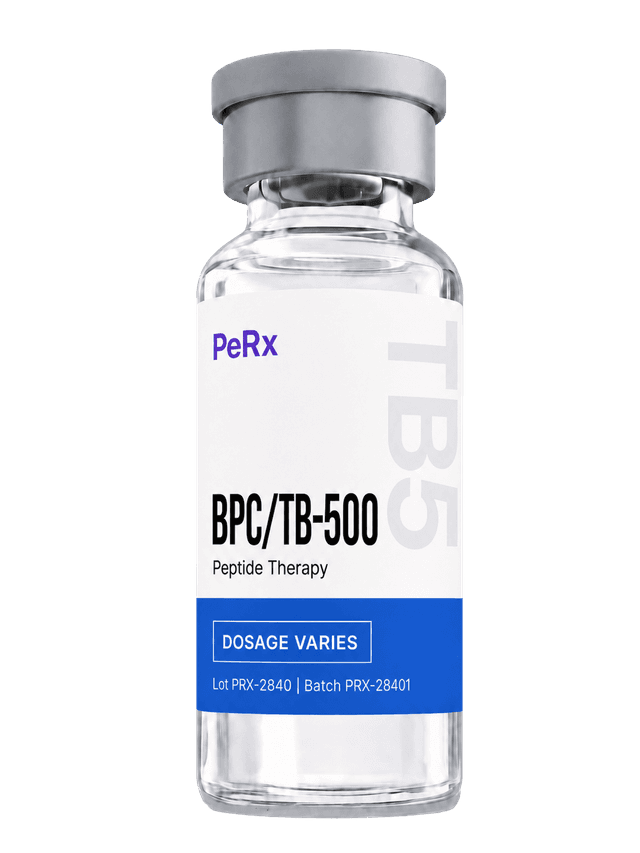
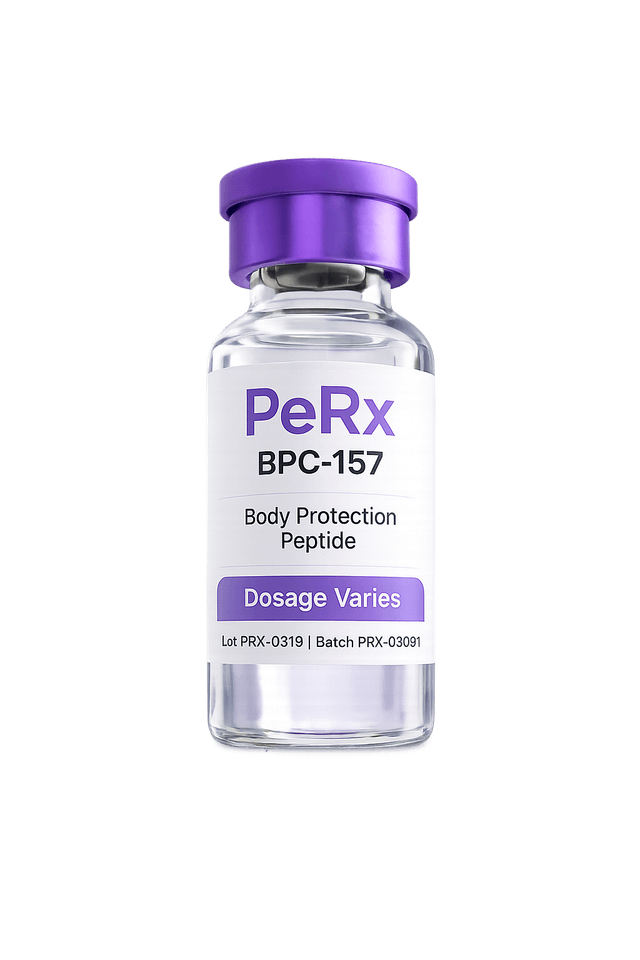
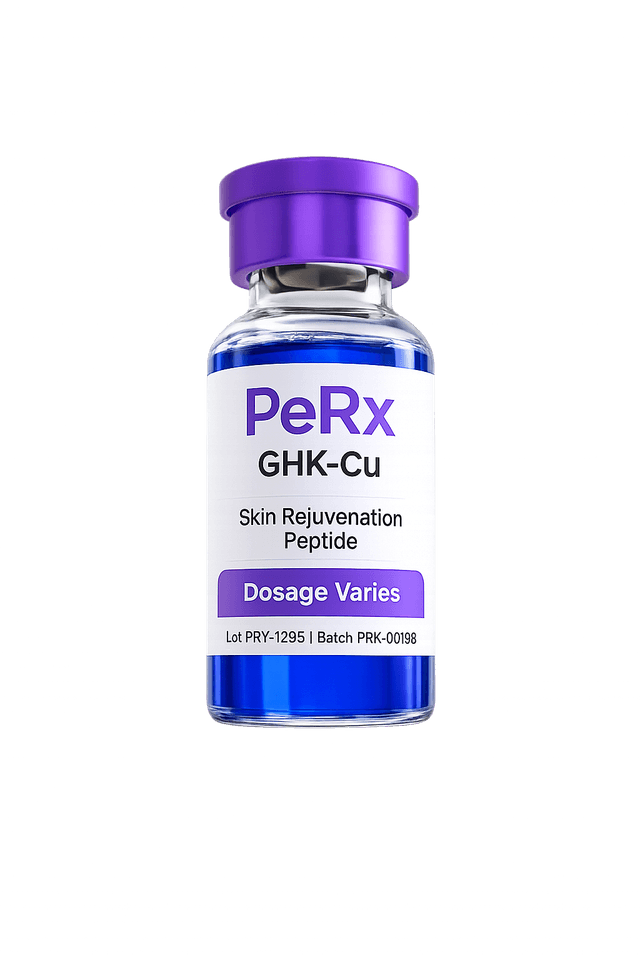
Every stage of repair, one injection
Local rebuilding (BPC-157), systemic recovery (TB-500), connective tissue and skin (GHK-Cu), and inflammation (KPV). Most stacks cover one or two of those. KLOW covers all four in a single subcutaneous shot.
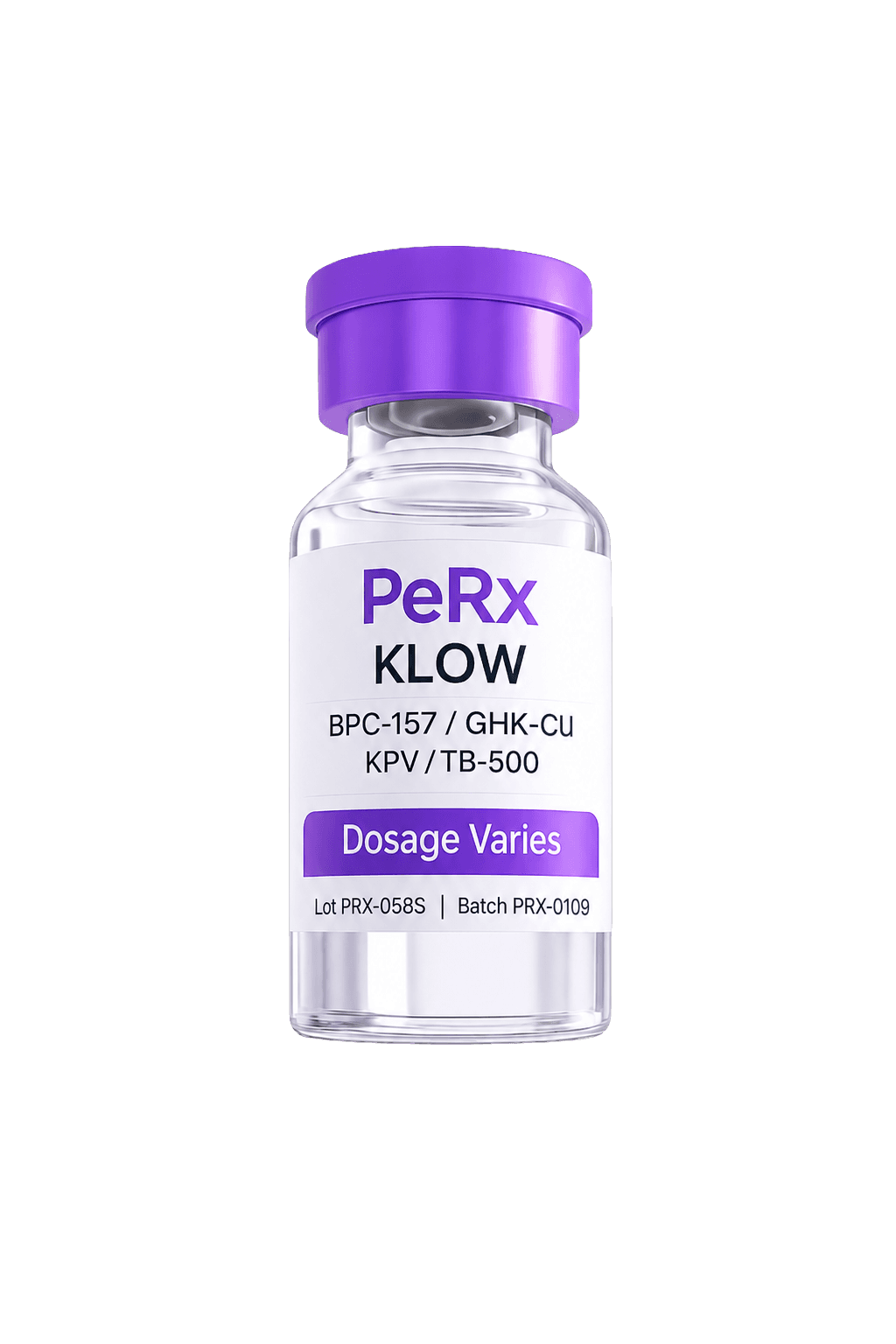
The Four-Peptide Repair Stack
Recovery
Four repair peptides in one vial: targeted healing, systemic recovery, skin renewal, and inflammation support.
About
KLOW is a four-peptide blend named for its components: KPV, GHK-Cu, and the BPC-157/TB-500 pair that anchors most recovery protocols. It is the step up from the GLOW stack (GHK-Cu, BPC-157, TB-500), adding KPV as a fourth peptide aimed squarely at the inflammatory side of recovery.
The logic behind the combination is that repair is not one process. BPC-157 works locally, building new blood vessels and driving collagen where the tissue is actually damaged. TB-500 works systemically, supporting cell migration and whole-body recovery so the rest of you is not working against the injury. GHK-Cu, a copper-binding tripeptide, signals for collagen and elastin production and is the most-studied of the four in skin and connective-tissue remodeling. KPV, a three-amino-acid fragment of alpha-MSH, contributes to inflammatory regulation. Because KPV is only the tail fragment of alpha-MSH, it carries the anti-inflammatory activity without the pigmentation effects associated with the full molecule.
Run together, the four cover the arc of recovery rather than a single stage of it: the damage itself, the systemic environment around it, the connective tissue rebuilding, and the inflammation running through all of it. It is the protocol people ask about when they are managing several things at once, recovering from surgery, or have already run BPC/TB-500 and want more.
PeRx ships KLOW fully reconstituted from a state-licensed 503A pharmacy. No mixing. Insulin syringes, alcohol swabs, and a step-by-step injection guide arrive in the box, and dosing follows your provider’s protocol.
What’s in the vial
Each one covers a different part of the process. Here is what each is doing and why it’s in the blend.
Local repair
3 mg/mL
A 15-amino-acid peptide originally isolated from gastric juice. It works at the injury site, promoting new blood-vessel growth and collagen production where the tissue is actually damaged.
Skin & connective tissue
10 mg/mL
A copper-binding tripeptide and the highest-concentration component of the blend. It signals for collagen and elastin synthesis, extending the protocol into skin and the connective tissue around the injury.
Inflammation
3 mg/mL
A three-amino-acid fragment (lysine-proline-valine) of alpha-MSH. It acts on inflammatory signaling pathways, and because it is only the tail fragment it carries none of the pigmentation activity of the full molecule.
Systemic recovery
3 mg/mL
A 43-amino-acid peptide (Thymosin Beta-4) that works body-wide rather than at one site. It upregulates actin for cell migration, so the rest of the body supports the repair instead of working against it.
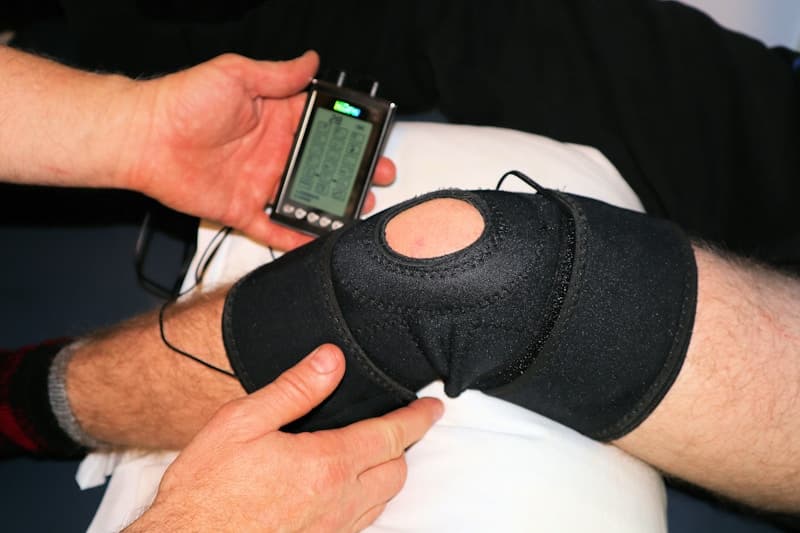
Four repair peptides at once. BPC-157 at the injury, TB-500 body-wide, GHK-Cu in the connective tissue, KPV on inflammation.
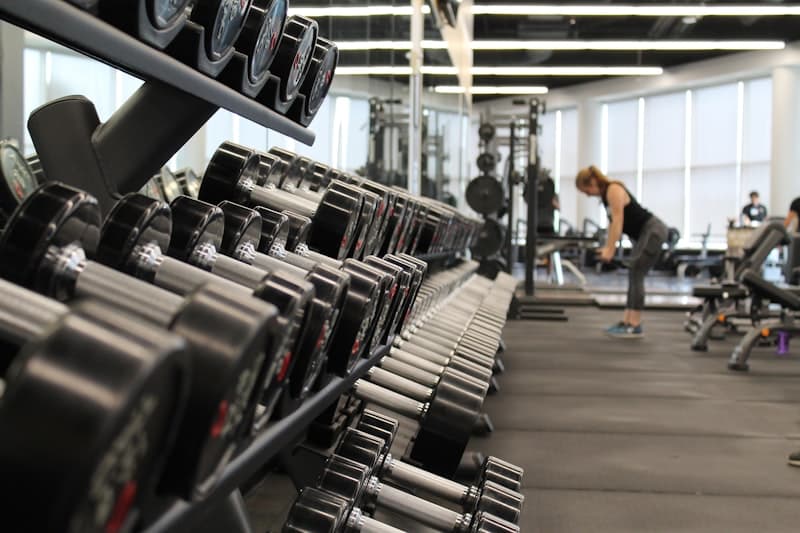
Built for people managing more than one thing at a time, not a single isolated injury.

Mobility and range of motion, supported by both systemic recovery and connective-tissue remodeling.

The GHK-Cu component adds collagen and elastin signaling, so skin and connective tissue are part of the protocol.

BPC-157 and KPV both act on the gut lining, so digestive comfort often improves alongside recovery.
Why people explore KLOW
Local rebuilding (BPC-157), systemic recovery (TB-500), connective tissue and skin (GHK-Cu), and inflammation (KPV). Most stacks cover one or two of those. KLOW covers all four in a single subcutaneous shot.
TB-500 and KPV reduce inflammation through different mechanisms. That redundancy is the main reason people step up to KLOW from BPC/TB-500 or GLOW when inflammation is the limiting factor in their recovery.
GLOW is GHK-Cu, BPC-157, and TB-500. KLOW is those three plus KPV, pre-compounded at set concentrations so the ratio is consistent and you are not stacking three or four separate vials.
BPC-157 alone has 100+ published studies with no organ toxicity observed.
What it helps with
Ideal for
Those recovering from injury or surgery who want the fullest repair protocol · Athletes managing multiple nagging injuries at once · Anyone who wants recovery and skin/connective-tissue support in one vial · People who found a single peptide alone was not enough

The science
BPC-157 drives angiogenesis and growth-factor recruitment at the injury site. TB-500 upregulates actin to support cell migration and whole-body recovery. GHK-Cu signals for collagen and elastin synthesis and supports connective tissue and skin remodeling. KPV, a tripeptide fragment of alpha-MSH, acts on inflammatory signaling pathways without the pigmentation activity of the parent molecule. The four cover complementary stages of the repair process.
KLOW is given as a subcutaneous injection on a provider-determined schedule, typically five days a week with scheduled time off.
BPC-157 promotes angiogenesis and growth-factor recruitment at the injury site. TB-500 upregulates actin for cell migration and supports systemic recovery. GHK-Cu signals for collagen and elastin synthesis in skin and connective tissue. KPV acts on inflammatory signaling pathways as a fragment of alpha-MSH.
Most people notice inflammation, stiffness, and swelling ease first, often alongside digestive comfort (weeks 1–2), then real mobility and faster recovery between sessions (weeks 2–4), then structural improvement with skin and connective-tissue changes becoming visible (weeks 4–8), and a return to full activity from week 8 onward.
What the research shows
100+
Published studies on BPC-157, no organ toxicity observed
14 days
To measurable tendon repair with BPC-157 (animal study)
50+ years
GHK-Cu studied in wound healing and skin repair
2 pathways
Independent anti-inflammatory mechanisms (TB-500 and KPV)
Our medication is delivered from a state-licensed pharmacy in our network, right to your door when you need it.
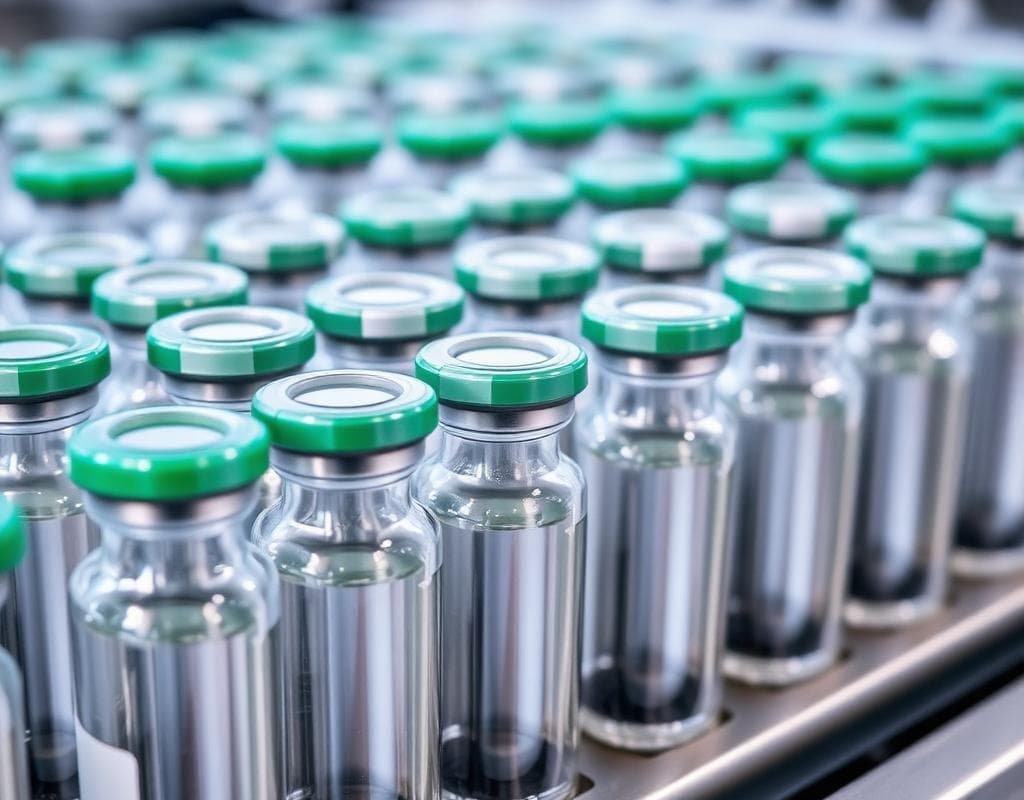
Our pharmacies perform third-party testing through FDA and DEA registered labs to run quality control checks for every compounded lot. They test four key characteristics associated with quality and safety.
Performed on every batch to confirm the active ingredient is present at the labeled concentration. Your vial contains exactly what it should.
Tests for the presence of bacteria, fungi, and other microorganisms. Every batch is tested and must meet the requirements of USP 797.1.
Screens for bacterial endotoxins that can cause fever or adverse reactions. Every batch is tested and must not exceed the threshold limits defined in USP 85.
Assesses the acid/base balance to ensure minimal irritation upon injection and confirm the solution is within the correct range for subcutaneous administration.
What to expect
Week 1–2
What you may notice: Pain, stiffness, and swelling start to ease. Digestive comfort often improves. Sleep can improve as systemic inflammation comes down.
What’s happening: KPV and TB-500 are working on inflammation through separate pathways while BPC-157 begins building new blood vessels at the injury site.
Week 2–4
What you may notice: Mobility improves noticeably. Recovery between training sessions is faster. Range of motion opens up.
What’s happening: All four peptides are active at once. Collagen production is ramping up at the injury and GHK-Cu is signaling in the surrounding connective tissue.
Week 4–8
What you may notice: Injured areas feel stable rather than just less painful. Skin quality and tone often improve as a visible side effect of the GHK-Cu component.
What’s happening: Repaired tissue is maturing. GHK-Cu’s collagen and elastin signaling shows up in both connective tissue and skin.
Week 8–12+
What you may notice: Return to full activity. Treated areas frequently feel stronger than before. Most people finish their protocol or move to a maintenance schedule.
What’s happening: The repair process is complete or close to it, and the injury site is no longer the weak link.
Comparison
KLOW adds GHK-Cu and KPV to the standard recovery pair. Here is what that changes.
| KLOW | BPC/TB-500 | |
|---|---|---|
| Peptides included | BPC-157, GHK-Cu, KPV, TB-500 | BPC-157, TB-500 |
| Best for | Multiple issues at once, inflammation-driven recovery, skin and connective tissue | Straightforward injury recovery and tissue repair |
| Inflammation support | Two pathways (TB-500 and KPV) | One pathway (TB-500) |
| Skin and connective tissue | Yes, GHK-Cu signals for collagen and elastin | Indirect, through general tissue repair |
| Screening | Adds copper, infection, and autoimmune questions | Blood-thinner and clotting questions |
What’s included
From the moment you finish your assessment to your first dose, every step is handled by licensed providers and U.S. pharmacies.
New to self-injection? See the step-by-step guideFAQ
Patient reviews
Old scar tissue and stubborn tightness have started to ease after just a few weeks, almost like my body finally has the right signals. My skin also looks like glass and I've been getting tons of compliments.
I've struggled with hyperpigmentation all my life. After starting klow my skin looks noticeably smoother and more even, while joint recovery after training has sped up. Inflammation that used to linger is gone, and I feel more athletic overall.
KLOW has given me faster recovery, less lingering inflammation, and a clear improvement in skin quality and overall resilience. I also love that I only have to take one injection a day. If I had to pick KLOW is definitely my go-to stack.
This is not medical advice. Every patient's experience differs and not everyone qualifies for peptide therapy. All reviews are from verified PeRx patients and are published as submitted. Peptide therapy requires a valid prescription from a licensed provider.
Your safety, first
All prescriptions are issued by a licensed US provider after reviewing your intake.
Side effects, contraindications, and what to discuss with your provider before starting.
Read safety informationSupporting research
A selection of peer-reviewed work on KLOW. Browse the full literature on PubMed and Google Scholar for ongoing research.
BPC-157 accelerates tendon healing
Chang CH et al. J Appl Physiol. 2011;110(3):774–780.TB-500 (Thymosin Beta-4) promotes tissue repair (review)
Goldstein AL et al. Ann N Y Acad Sci. 2012;1270:1–8.GHK-Cu in skin regeneration and remodeling (review)
Pickart L, Margolina A. Int J Mol Sci. 2018;19(7):1987.KPV, the anti-inflammatory fragment of alpha-MSH
Dalmasso G et al. Gastroenterology. 2008;134(1):166–178.The statements on this page have not been evaluated by the Food and Drug Administration. This product is not intended to diagnose, treat, cure, or prevent any disease. The FDA does not review or approve compounded medications for safety or effectiveness. Off-label use must be prescribed and supervised by a licensed provider.
You may also be interested in
Keep exploring
Last updated April 2026
Medical disclaimer
The information provided on this page is for educational purposes only and is not intended as medical advice, diagnosis, or treatment. Peptide therapy requires a valid prescription from a licensed healthcare provider. Individual results may vary. No specific outcomes are guaranteed.
The peptides on this site are not FDA-approved. They are compounded by licensed pharmacies under provider supervision. Certain peptides are prohibited by WADA and major sports organizations. Statements on this page have not been evaluated by the FDA. These products are not intended to diagnose, treat, cure, or prevent any disease.
Take our 2-minute assessment. A licensed US provider reviews and, if appropriate, prescribes a protocol shipped to your door.
Create a free account to view pricing
Supply Duration