Peptides for Injury Recovery
Peptides for injury recovery are prescribed for a specific problem: a torn tendon, a sprained ligament, a muscle strain that is slow to come back. PeRx prescribes them through licensed US providers as compounded medications, shipped ready to use to all 50 states. The four options here are built on BPC-157 and TB-500. Each is a prescription, written only after a provider reviews your assessment and your injury.
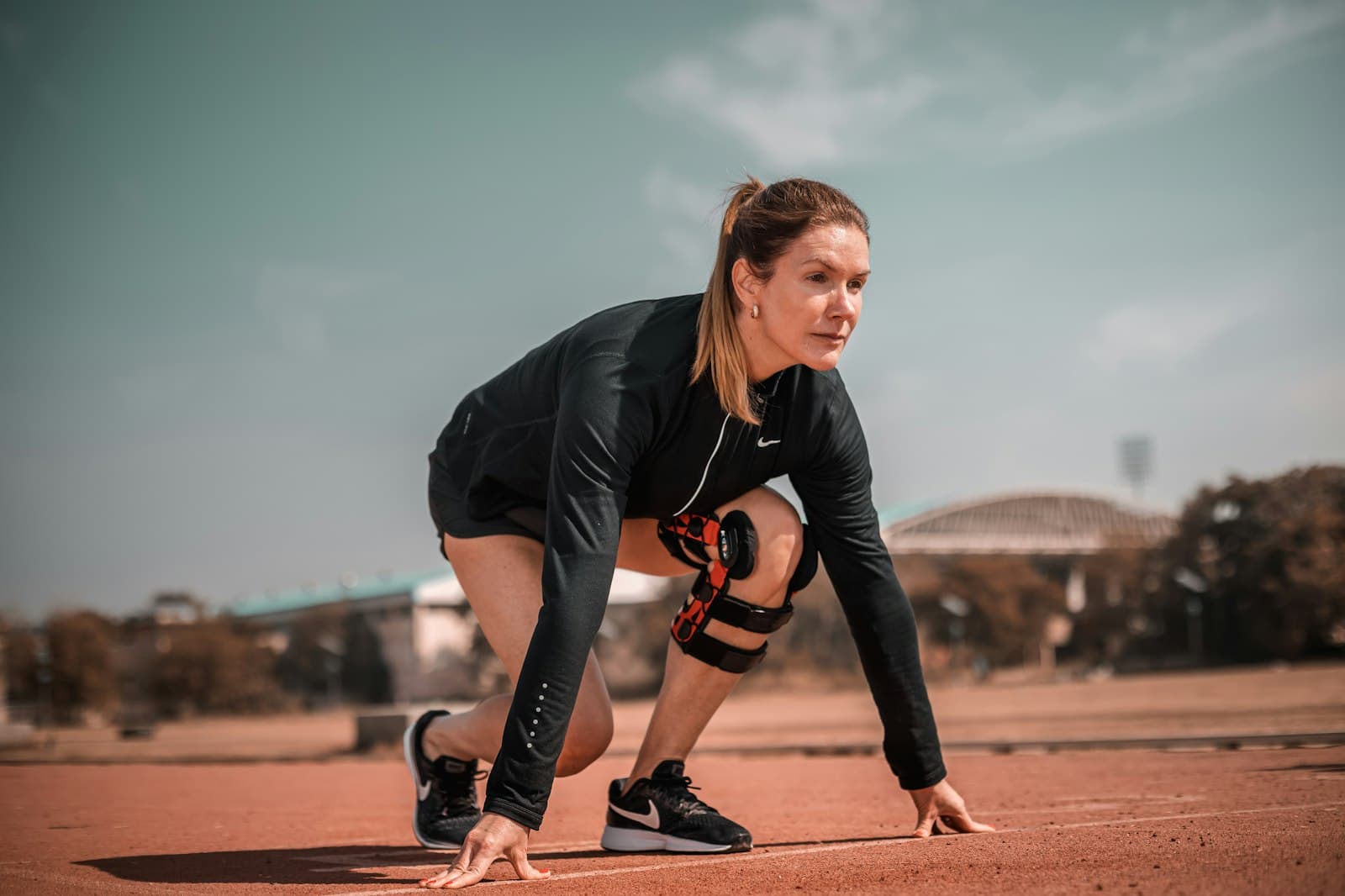
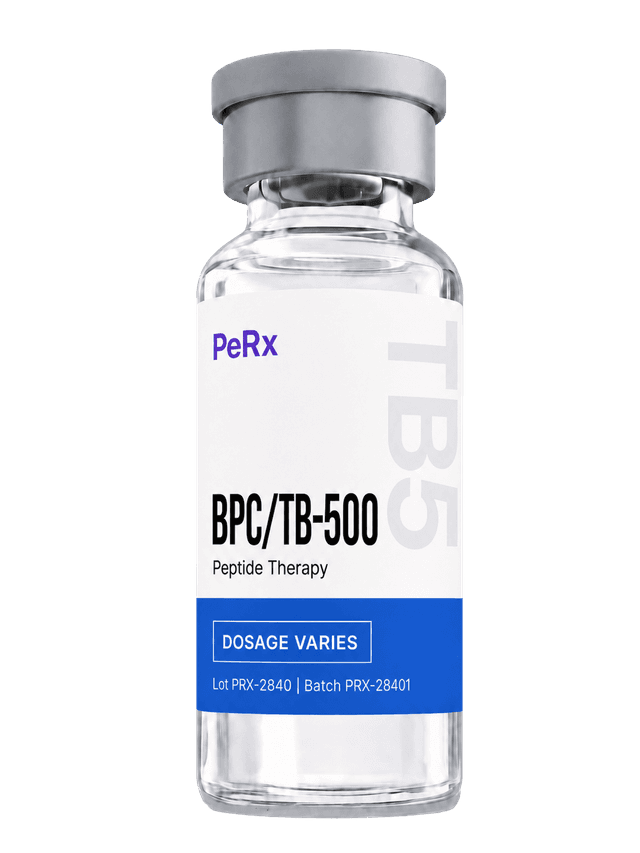
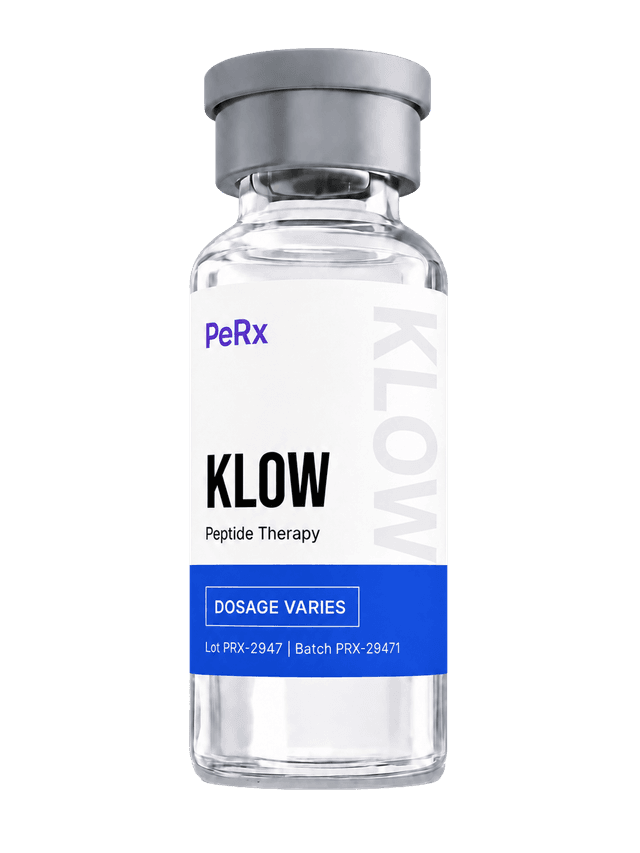
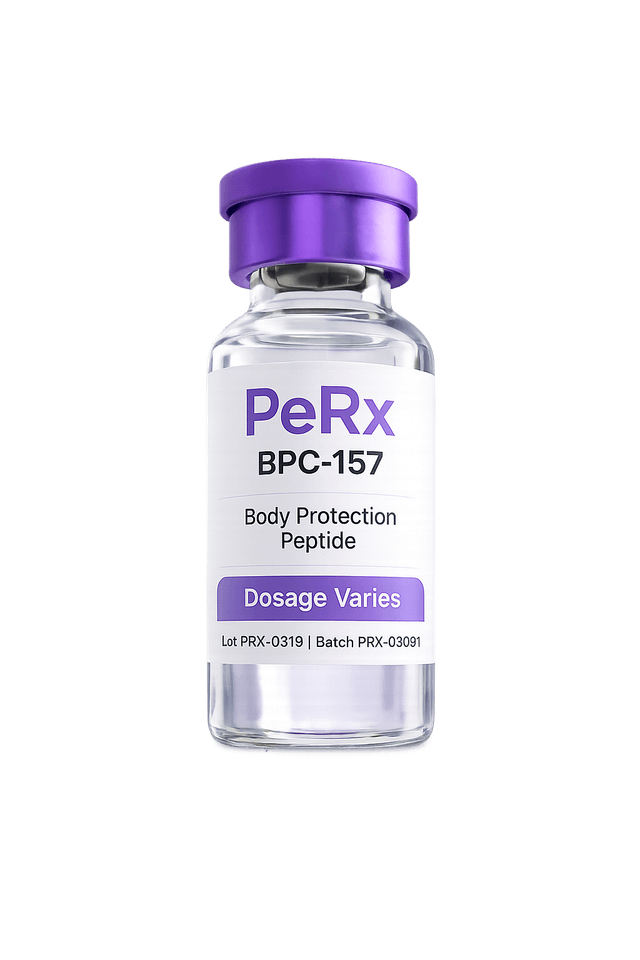
Injury Recovery Peptides Available at PeRx
Showing 4 peptides in Injury Recovery
Not sure which peptide is right for you?
Take our 60-second assessment. A licensed US provider reviews and recommends a protocol if appropriate.
How These Peptides Support Acute Injury Healing
An acute injury is a different problem from everyday training soreness. A tendon tear or ligament sprain has to rebuild structure, and both tissues start at a disadvantage: their blood supply is poor, which is a large part of why they recover slowly and why rehabilitation runs to months rather than weeks.
The tissue repair peptides here are studied for the early stages of that rebuild. BPC-157 is best known for angiogenesis, the growth of new blood vessels into damaged tissue, and for fibroblast recruitment, drawing in the cells that lay down new collagen. TB-500, a synthetic version of thymosin beta-4, acts on actin, the scaffolding cells use to move, which supports cell migration toward the injury.
None of this replaces a diagnosis, loading work or physical therapy. The research question is whether these signals may support the repair your rehab is already driving, and results vary.
What the Human Evidence Actually Shows
The honest answer is: not much yet. A 2025 systematic review screened 544 papers on BPC-157 and found 36 that met its criteria; 35 of them were preclinical, meaning cells and animals. The human evidence is a small number of uncontrolled studies from a limited set of sources, such as a knee-pain case series with no comparison group. That kind of study cannot separate a drug effect from natural recovery or placebo.
TB-500's parent molecule, thymosin beta-4, went further and reached Phase 2 human trials, but for wound and cardiac repair, not sports injuries. No peptide in this category has a completed Phase 2 or Phase 3 trial for tendon, ligament or muscle injury.
That does not make the mechanism fiction. The animal data is consistent across decades and tissue types, which is why researchers keep studying it. But an evidence-based view of peptide therapy for injury recovery is that it is plausible and unproven in people, and we prescribe it with that stated plainly.
If You Compete in Tested Sport, Read This First
If you compete in any sport with drug testing, this section matters more than anything else on the page. BPC-157 has been named on the World Anti-Doping Agency (WADA) Prohibited List since January 1, 2022, as a non-approved substance. TB-500 is prohibited as a growth factor and has been named on the list since 2018. Both are banned at all times, in and out of competition, and no medical exemption is available for BPC-157.
This is not only an Olympic problem. The rules reach amateur, masters and university competition under WADA-based programs, and bodies like the NCAA keep their own banned lists. In 2024 a Canadian university volleyball player received a four-year ban for using this exact pair, without ever failing a drug test.
A violation can cost you multiple seasons. If you are subject to testing, do not use these products, and tell your provider about your sport.
BPC-157, BPC/TB-500, and KLOW: Matching the Stack to Your Injury
All three injectables share BPC-157; the difference is how wide each one casts the net.
BPC-157 alone fits one localized injury: a single tendon, a single ligament. For people researching peptides for tendon repair it is the usual starting point, because its research centers on local repair at the damaged site.
[BPC/TB-500](/peptides/bpc-tb500) adds TB-500's whole-body reach. It fits injuries with more than one site involved, or recovery after a surgical repair where the surrounding tissue matters too.
[KLOW](/peptides/klow) is the broadest stack, adding GHK-Cu and KPV to the same pair for collagen and inflammatory signaling.
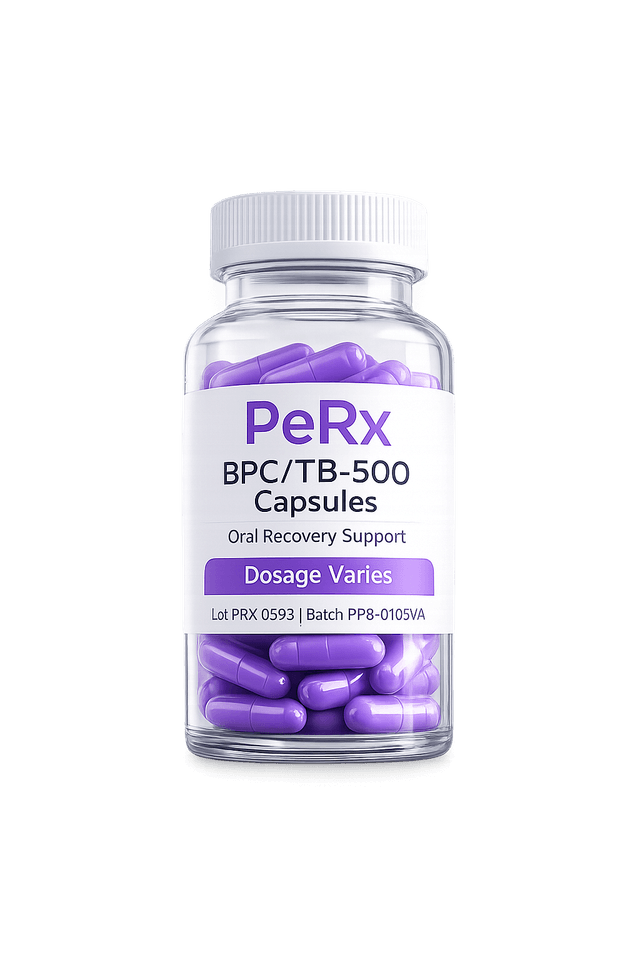
Prefer capsules to injections? The format question, including BPC/TB-500 Capsules, is covered on our Recovery page. A provider matches the stack to your diagnosis.
Safety, Contraindications & Who Should Consider This Therapy
The right candidate is an adult with a diagnosed soft-tissue injury who wants clinical oversight alongside rehab, not instead of it. A fresh injury with severe pain, numbness, instability or loss of function needs an in-person exam and often imaging first; these peptides do not replace physical therapy or surgery.
Pregnancy and breastfeeding are hard stops. Active cancer rules out the TB-500 products and KLOW and needs a provider conversation before BPC-157, since both peptides support blood vessel growth. KLOW's copper peptide also rules it out with Wilson's disease or copper sensitivity. Side effects are usually mild, mostly injection-site redness.
None of these is FDA-approved, and compounded medications require a valid prescription.
Starting Injury Recovery Peptide Therapy at PeRx
Starting peptides for injury recovery at PeRx takes three steps and no office visit.
First, take the 60-second assessment. Describe the injury, your history and your sport. Choose your peptide and save a card; you are not charged yet.
Second, a licensed US provider reviews your file. If they approve, they write the prescription and set the dose, and only then is your card charged.
Third, it ships ready to use, with syringes, alcohol swabs and instructions.
Take the 60-second assessment, or talk to us first.
Compare Injury Recovery Peptides at PeRx
The four tissue repair peptides on this page share a core and differ in reach, and the table shows where each one fits a specific injury.
| Product | Mechanism | Best for |
|---|---|---|
| BPC-157 | Angiogenesis, local tissue repair | Tendon, ligament, localized injury |
| BPC/TB-500 | Local repair + cell migration/broad regeneration | Combined local and systemic injury recovery |
| KLOW | Four-peptide combined repair stack | Broadest multi-pathway injury support |
| BPC/TB-500 Capsules | Oral BPC-157 + TB-500 | Combined recovery, oral preference |
Frequently Asked Questions
What are the best peptides for a tendon or ligament injury?
For a single tendon or ligament injury, BPC-157 is the usual starting point because its research centers on local repair. BPC/TB-500 or KLOW suit injuries with wider involvement. A provider matches peptides for injury recovery to your diagnosis, and results vary.
How strong is the human evidence for BPC-157 and TB-500?
Limited. Almost all BPC-157 research is in animals, and the human data is a handful of small, uncontrolled studies. TB-500's parent molecule reached Phase 2 trials for wounds and heart repair, not sports injuries. No completed Phase 2 or 3 trial covers tendon, ligament or muscle injury.
Are BPC-157 and TB-500 banned for athletes?
Yes. BPC-157 has been on the WADA Prohibited List since January 2022, and TB-500 is prohibited as a growth factor, named since 2018. Both are banned at all times, in and out of competition, at every level of tested sport. A violation can mean a multi-year ban.
Do injury recovery peptides require a prescription?
Yes. Every option here is a compounded medication, and compounded medications require a valid prescription. At PeRx a licensed US provider reviews your assessment and injury history before anything ships, and your card is only charged if you are approved.
How is this different from the general Recovery category?
Same peptides, different question. The Recovery page covers ongoing training recovery and the injectable-versus-capsule choice. This page is for a specific acute injury: what the human evidence shows, how to match a stack to the injury, and the anti-doping rules athletes must know.