Back to all peptides
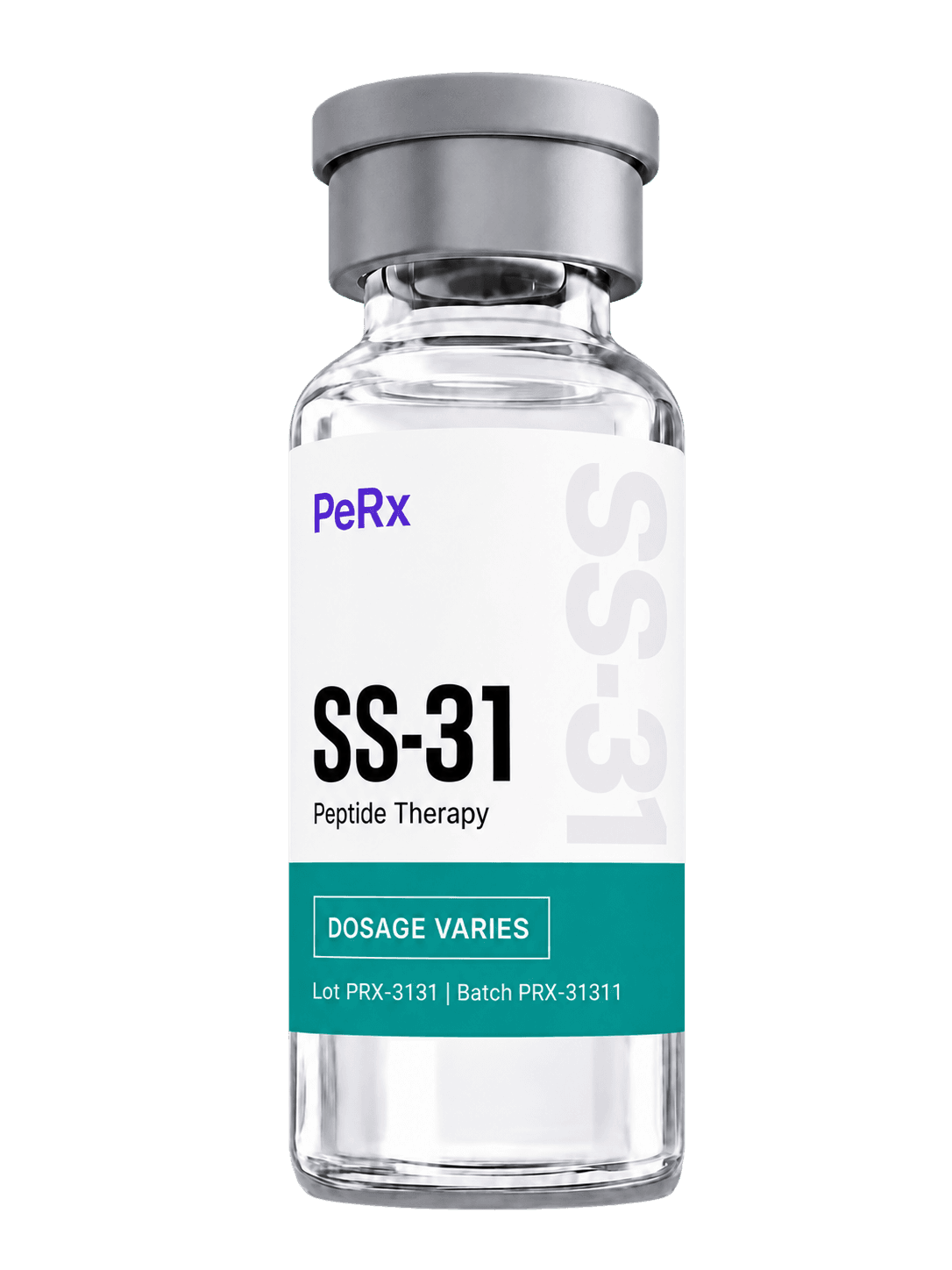
Coming soonSS-31 peptide vial

SS-31 Injection

The Mitochondrial Membrane Peptide

Anti-Aging

A cardiolipin-binding peptide studied for mitochondrial efficiency and cellular energy.

  • Binds cardiolipin to support inner mitochondrial membrane structure
  • Studied for electron transport chain efficiency and ATP output
  • Reduced mitochondrial oxidative stress in preclinical models
  • Restored age-related energetic decline in aged-mouse skeletal muscle
  • Works on existing mitochondria rather than requiring new ones
Dosage2mg/mL, 5mL vial
AdministrationSubcutaneous injection, once daily Mon–Fri
Compounded in the U.S.A.

SS-31 is coming soon. It isn't available to order yet — check back shortly.

About

What is SS-31?

SS-31 came out of a search for compounds that could get inside mitochondria. Most molecules cannot: the inner membrane is the most selective barrier in the cell. SS-31 is a short, four-amino-acid peptide with an alternating pattern of aromatic and positively charged residues that lets it cross cell membranes and concentrate in the inner mitochondrial membrane, roughly a thousand-fold over the surrounding fluid, without depending on the membrane’s electrical gradient.

Once there, it binds cardiolipin, a lipid found almost nowhere else in the cell. Cardiolipin anchors the electron transport chain complexes together and holds cytochrome c in place. When cardiolipin is oxidized or disorganized, which happens with age and metabolic stress, electrons leak, reactive oxygen species rise, and ATP output falls. In preclinical work, SS-31 bound to cardiolipin stabilized cristae structure, improved electron flow, and reduced that leak. In aged mice a single dose improved muscle energetics within an hour, and eight weeks of treatment improved endurance without changing how many mitochondria the muscle had. The gain was in efficiency, not quantity.

The same molecule, under the name elamipretide, received FDA accelerated approval in 2025 for Barth syndrome, a rare inherited cardiolipin disorder, at a dose far higher than anything used in wellness protocols. PeRx prescribes SS-31 as a compounded preparation from a state-licensed 503A pharmacy, fully reconstituted, with insulin syringes and a step-by-step guide in the box. It is a once-daily subcutaneous injection on weekdays, run in 12-week cycles with a 4-week break between them.

Why people explore SS-31

A clearer path forward.

Works where energy is actually made

Most energy-support compounds act upstream or supply a substrate. SS-31 binds the inner mitochondrial membrane itself, stabilizing the structure the electron transport chain sits on.

In aged-mouse muscle, a single dose restored ATP production and the coupling of oxidative phosphorylation within one hour (Aging Cell, 2013).

Efficiency, not more mitochondria

Eight weeks of SS-31 in aged mice improved mitochondrial function and treadmill endurance while mitochondrial protein levels stayed flat or fell. The existing machinery ran better.

Less electron leak

Oxidized cardiolipin lets electrons escape the transport chain as reactive oxygen species. SS-31 protected cardiolipin and lowered mitochondrial hydrogen peroxide emission in preclinical models, a different mechanism from taking an antioxidant.

What it helps with

Designed for these concerns.

  • Binds cardiolipin to support inner mitochondrial membrane structure
  • Studied for electron transport chain efficiency and ATP output
  • Reduced mitochondrial oxidative stress in preclinical models
  • Restored age-related energetic decline in aged-mouse skeletal muscle
  • Works on existing mitochondria rather than requiring new ones
  • 12 weeks on, 4 weeks off, in step with your 3-month check-in

Ideal for

Adults noticing a decline in stamina and day-to-day energy · Those interested in mitochondrial and longevity-focused protocols · Patients already using NAD+ or MOTS-c who want a membrane-level complement · Active adults whose recovery between sessions has slowed

SS-31 lifestyle

The science

How SS-31 works.

SS-31 is a cell-permeable tetrapeptide whose alternating aromatic and cationic residues let it accumulate in the inner mitochondrial membrane independent of membrane potential. There it binds cardiolipin, stabilizing cristae structure and electron transport chain supercomplexes, which in preclinical models improved ATP production and reduced electron leak and reactive oxygen species. In aged animals it restored mitochondrial energetics without changing mitochondrial protein content: it works on the efficiency of existing mitochondria rather than building new ones.

01

Signal

SS-31 is given as a once-daily subcutaneous injection, Monday through Friday, for 12 weeks, followed by a 4-week break before the next cycle.

02

Cellular response

The peptide crosses into cells and concentrates in the inner mitochondrial membrane, where it binds cardiolipin. That stabilizes cristae structure and the electron transport chain, improving how efficiently mitochondria turn fuel into ATP and reducing electron leak.

03

Outcome

Human outcome data outside rare mitochondrial disease are limited, so what you notice will vary. Preclinical work points to changes in muscle energetics and endurance over weeks. Your provider sets the dose and checks in on tolerability, particularly skin reactions, which can appear late.

Subcutaneous injection, once daily Mon–FriCompounded in the U.S.A. at a 503A pharmacyProvider-prescribed

What the research shows

Backed by published science.

1 hr

Time to restored ATP production in aged-mouse muscle after one dose (Aging Cell, 2013)

8 wks

Treatment that reversed age-related redox stress in aged mice (Free Radic Biol Med, 2019)

Cardiolipin

The inner-membrane lipid SS-31 binds

2025

Year elamipretide earned FDA accelerated approval for Barth syndrome

  • A single dose restored ATP production and energy state in aged-mouse muscle within one hour (Aging Cell, 2013)
  • Eight weeks of treatment reversed age-related redox stress and improved treadmill endurance in aged mice (Free Radic Biol Med, 2019)
  • Protected mitochondrial cristae and sped ATP recovery after ischemia in a kidney model (J Am Soc Nephrol, 2013)
  • Elamipretide earned FDA accelerated approval in 2025 for Barth syndrome, a rare mitochondrial disorder (as Forzinity)

Lab tested medications
for quality & potency

Our medication is delivered from a state-licensed pharmacy in our network, right to your door when you need it.

Third-party quality control testing
Compounded in U.S. pharmacies
Pharmaceutical vials on a sterile filling line

Lab tested for quality & potency

Our pharmacies perform third-party testing through FDA and DEA registered labs to run quality control checks for every compounded lot. They test four key characteristics associated with quality and safety.

Potency Test

Passed

Performed on every batch to confirm the active ingredient is present at the labeled concentration. Your vial contains exactly what it should.

Sterility Test

Passed

Tests for the presence of bacteria, fungi, and other microorganisms. Every batch is tested and must meet the requirements of USP 797.1.

Endotoxin Test

Passed

Screens for bacterial endotoxins that can cause fever or adverse reactions. Every batch is tested and must not exceed the threshold limits defined in USP 85.

pH Test

Passed

Assesses the acid/base balance to ensure minimal irritation upon injection and confirm the solution is within the correct range for subcutaneous administration.

What to expect

Your SS-31 timeline.

  1. 01

    Week 1–2

    Settling in

    What you may notice: Injection-site redness, itching, or a firm spot is common and usually fades within days. Most people notice little else yet.

    What’s happening: SS-31 reaches steady exposure quickly. In animal models, membrane-level changes in mitochondrial energetics begin within hours of dosing.

  2. 02

    Week 2–4

    Routine established

    What you may notice: Site rotation becomes habit. If a change in day-to-day stamina is going to show up, some people begin to report it here. Many notice nothing yet, which is not a sign it is not working.

    What’s happening: Preclinical data describe improved coupling of oxidative phosphorylation and lower reactive oxygen species emission with repeated dosing.

  3. 03

    Week 4–8

    Endurance window

    What you may notice: The 8-week mark is where aged-animal studies measured endurance gains. This is a sensible point to check in with your provider on how you feel and on any skin changes.

    What’s happening: Eight weeks of SS-31 in aged mice reversed age-related redox stress and improved treadmill endurance without raising mitochondrial content.

  4. 04

    Week 8–12

    Finishing the cycle

    What you may notice: The cycle ends at week 12, followed by a 4-week break. Around day 90 is also when delayed skin reactions and eosinophil changes tend to show in the clinical data, so the check-in before your next cycle asks about rashes, and your provider may order a blood count.

    What’s happening: Long-term human data come from Barth syndrome trials at much higher doses; your provider reviews tolerability at the 3-month check-in before approving each new cycle.

Comparison

SS-31 vs. NAD+

Both target cellular energy. They work at different layers.

SS-31NAD+
Best forMitochondrial efficiency, stamina, longevity-focused protocolsReplenishing the NAD+ pool: energy, DNA repair, cognitive clarity
How it worksBinds cardiolipin in the inner membrane; stabilizes the electron transport chainSupplies the coenzyme the electron transport chain and sirtuins consume
ScopeStructural: the membrane the machinery sits onSubstrate: the molecule the machinery uses
ScheduleDaily Mon–Fri injection, 12 weeks on / 4 weeks offInjection on a provider-set schedule
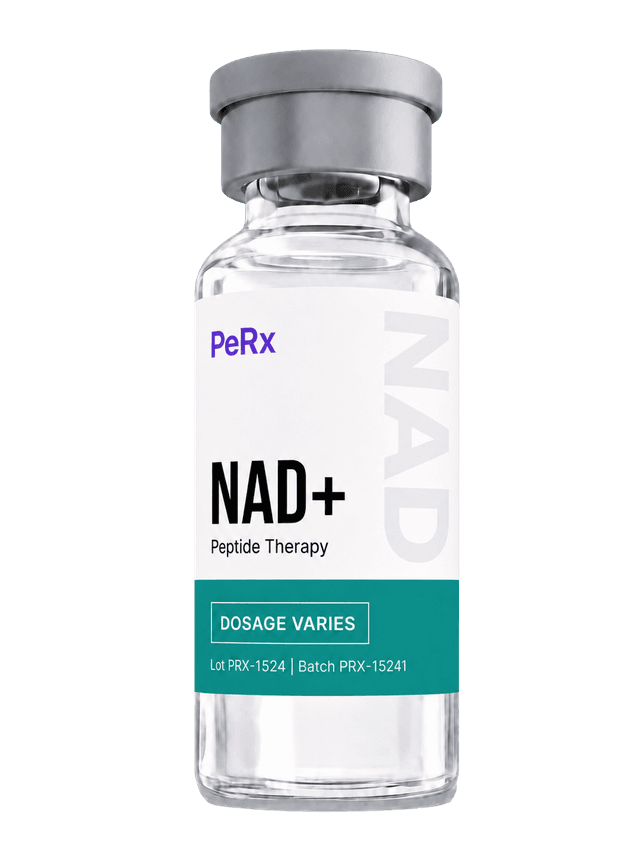
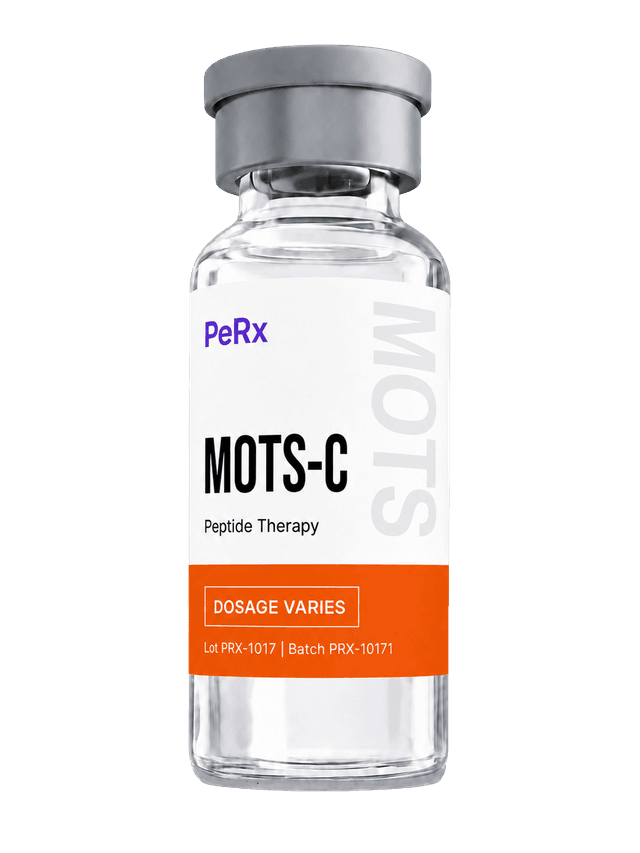
Can combine?Yes, commonly paired with NAD+ or MOTS-cYes, pairs well with SS-31

FAQ

Common questions about SS-31.

Patient reviews

What patients are saying.

No reviews yet. Be the first verified patient to share your experience.

This is not medical advice. Every patient's experience differs and not everyone qualifies for peptide therapy. All reviews are from verified PeRx patients and are published as submitted. Peptide therapy requires a valid prescription from a licensed provider.

Your safety, first

Important safety information.

  • Injection-site redness, itching, and firmness are very common and usually fade
  • Delayed skin reactions (rash, hives, eczema-like patches) can appear weeks to months in. Report any reaction away from the injection site
  • Serious allergic reactions have been reported. Stop and seek care for swelling or breathing difficulty
  • Eosinophil counts can rise on courses longer than 30 days; your provider may order labs
  • Dose is reduced in severe kidney impairment; not used on dialysis
  • Requires licensed provider supervision

All prescriptions are issued by a licensed US provider after reviewing your intake.

Side effects, contraindications, and what to discuss with your provider before starting.

Read safety information

Supporting research

Selected studies.

A selection of peer-reviewed work on SS-31. Browse the full literature on PubMed and Google Scholar for ongoing research.

  1. First-in-class cardiolipin-protective compound to restore mitochondrial bioenergetics

    Szeto HH. Br J Pharmacol. 2014;171(8):2029–2050.
  2. SS-31 re-energizes ischemic mitochondria by interacting with cardiolipin

    Birk AV et al. J Am Soc Nephrol. 2013;24(8):1250–1261.
  3. Single dose rapidly improves mitochondrial energetics in aged mice

    Siegel MP et al. Aging Cell. 2013;12(5):763–771.
  4. Eight-week SS-31 reverses age-related redox stress and improves exercise tolerance

    Campbell MD et al. Free Radic Biol Med. 2019;134:268–281.
  5. Long-term elamipretide in Barth syndrome: 168-week open-label extension

    Thompson WR et al. Genet Med. 2024;26(7):101138.

The statements on this page have not been evaluated by the Food and Drug Administration. This product is not intended to diagnose, treat, cure, or prevent any disease. The FDA does not review or approve compounded medications for safety or effectiveness. Off-label use must be prescribed and supervised by a licensed provider.

Keep exploring

Learn more about SS-31

Last updated April 2026

Medical disclaimer

The information provided on this page is for educational purposes only and is not intended as medical advice, diagnosis, or treatment. Peptide therapy requires a valid prescription from a licensed healthcare provider. Individual results may vary. No specific outcomes are guaranteed.

The peptides on this site are not FDA-approved. They are compounded by licensed pharmacies under provider supervision. Certain peptides are prohibited by WADA and major sports organizations. Statements on this page have not been evaluated by the FDA. These products are not intended to diagnose, treat, cure, or prevent any disease.

Ready to start with SS-31?

Take our 2-minute assessment. A licensed US provider reviews and, if appropriate, prescribes a protocol shipped to your door.