Bend Peptide Therapy: Central Oregon Costs
A plain guide to peptide therapy in Bend: what it costs across local sports-medicine clinics, med spas, and telehealth, and who tends to use it here. Plus how pharmaceutical-grade peptides reach any Central Oregon address without a clinic visit.

In this article
Key Takeaways
- Bend sports-medicine and wellness clinics typically run $300 to $700 per peptide per month after $150 to $400 in consult fees, and IV lounges charge roughly $350 to $800 per NAD+ session.
- PeRx telehealth starts at $199 per month, all-inclusive: the medication, an Oregon-licensed provider review, and overnight refrigerated shipping across Central Oregon.
- PeRx can prescribe to adults 21 and older anywhere in Oregon, and every vial arrives ready to use with no reconstitution needed.
- Lab work depends on the peptide, but most require no labs to start, and HSA/FSA cards frequently work with a valid prescription.
Quick Facts
Service area
All Bend, Redmond, Sisters, Sunriver, La Pine, and Central Oregon zip codes
Visit required
No; Oregon-licensed telehealth
Starting price
$199/month, all-inclusive
Labs to start
Depends on the peptide; most require none
Shipping
Overnight, refrigerated, ready-to-use vials
Prescriber
Oregon-licensed physician or NP
Pharmacy
FDA-regulated compounding pharmacy
The Short Version for Bend Patients
Bend peptide therapy, condensed
Bend is a high-desert outdoor town where a lot of people ski, ride, climb, and run year-round, and that active habit shapes what peptide therapy looks like here. In person, you can find it at sports-medicine and wellness clinics, med spas, and IV drip bars around town. Those tend to run $300 to $700 per peptide each month once consult fees are added, with NAD+ drips billed roughly $350 to $800 a session. The telehealth route skips the office. PeRx ships pharmaceutical-grade peptides from FDA-regulated compounding pharmacies to any Central Oregon address, starting at $199 a month with an Oregon-licensed provider review included.
Peptides are short chains of amino acids your body already uses to signal repair, growth-hormone release, and recovery, and therapeutic versions are pharmacy-compounded copies of those signals, prescribed against a specific goal and taken as a small subcutaneous injection at home. The research base is deep and public; a PubMed search on BPC-157 alone returns decades of work, and our what peptide therapy is primer walks through the mechanism in full.
Who Plays Hard Here, and What It Costs the Body
The peptides people ask about in Bend lean toward recovery and training, which fits a town built around the mountains and the river. BPC-157 is the most common request, usually for the tendon and joint problems that come with mountain biking, skiing, and trail running. CJC-1295/Ipamorelin comes up for sleep and recovery, both from athletes and from people juggling a demanding training week with real work. NAD+ and Sermorelin tend to come up around energy and longevity, Semax and Selank around focus and stress, and GHK-Cu around skin and hair.
Bend sits at about 3,600 feet on the dry side of the Cascades, with Mount Bachelor, the Deschutes River, and the Three Sisters Wilderness all within a short drive, plus more than 300 days of sun a year. That combination pulls in a very active population, and a few kinds of patients make up most of our intake here. Plenty of people are a mix of more than one.
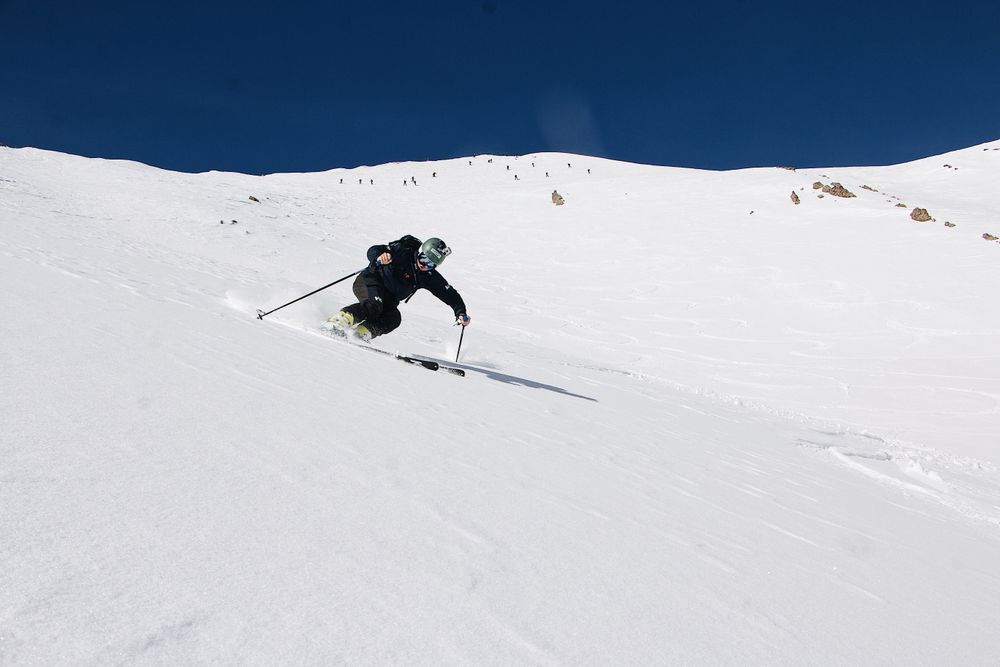
Mountain and endurance athletes. The Phil’s Trail complex sits minutes from downtown, Mount Bachelor runs a lift-served bike park in summer and a long ski season in winter, and Smith Rock draws climbers from all over. That kind of year-round load produces overuse and impact injuries: the knee that flares late in ski season, the shoulder or wrist banged up on a mountain-bike crash, the fingers and elbows that ache after a weekend on the rock, the Achilles that never quite settles between trail races. This group usually comes to us for recovery, and BPC-157 is the common starting point, sometimes with CJC-1295/Ipamorelin added when the real bottleneck is recovering between hard days.
Chang CH et al., "The promoting effect of pentadecapeptide BPC 157 on tendon healing involves tendon outgrowth, cell survival, and cell migration," Journal of Applied Physiology, 2011. View study
Active transplants and remote professionals. A lot of Bend moved here for the outdoors, works remotely or in the outdoor-industry economy, and trains hard on either side of the workday. This tends to be a health-literate group that reads the research and asks where a product actually comes from before trying it. They most often land on Sermorelin and CJC-1295/Ipamorelin once those sourcing questions are answered, usually for sleep, recovery, and longer-term energy.
Sun-and-altitude patients. The high-desert setting is its own factor. More than 300 days of sun a year adds up on skin, and the thin, dry air at elevation leaves some people flat on energy, especially newcomers still adjusting. This group tends to come to us for GHK-Cu around skin and collagen and for NAD+ around energy. Many patients here are also simply cost-conscious, and telehealth appeals to them because it skips the clinic fees.
The Bend pattern
More than in most cities we serve, Bend patients tend to start with recovery and training goals (BPC-157, CJC-1295/Ipamorelin) and add NAD+ and Sermorelin later, once the conversation turns toward steady energy and longevity across the seasons.
What Bend patients ask us most
The most common questions we get from Bend are about recovery, and they usually come from active people with one specific injury in mind. A typical one sounds like: I ride Phil’s a few days a week and ski all winter, and the same knee has bothered me for two seasons, so what actually helps it heal faster? Most of those conversations point to BPC-157, because the honest answer is usually better tissue-repair support plus a smarter training week, rather than another brace and another month off the bike.

The second common theme is sleep, tied to how much people ask of their bodies here. Riders, skiers, and runners stacking big training weeks describe waking up unrecovered no matter how early they turn in. CJC-1295/Ipamorelin is the usual answer, dosed around the schedule someone actually keeps rather than an ideal one, with the goal of deeper, more restorative sleep during heavy blocks.
The third is about sourcing, and people ask it directly here. Bend is a town full of people who research gear before they buy it, and they bring the same scrutiny to what they inject. Our answer is the one we lead with: PeRx compounds only through FDA-regulated pharmacies under an Oregon-licensed prescriber’s order, and we will name the pharmacy and show the licensing if you ask.
The Peptides Bend Reaches For
Ranked roughly by Bend request volume, and the ranking itself tells you about the town. Every PeRx protocol starts at $199 per month, covering the medication, the Oregon-licensed provider review, and overnight shipping.
| Peptide | Best for | Why Bend patients pick it |
|---|---|---|
| BPC-157 | Recovery, joint pain, gut healing | Bend is full of active people who push their bodies hard, so recovery is the most common reason patients reach out. BPC-157 targets the nagging tendon and joint injuries that keep riders, skiers, and runners sidelined, and helps them get back to training sooner. It is also the usual starting point for gut-lining support. |
| CJC-1295/Ipamorelin | Sleep, recovery, body composition | Supports your own growth-hormone release without taking HGH directly. Athletes stacking big training weeks tend to struggle with sleep, and deeper, more restful sleep is the effect people report most consistently. Changes in body composition usually follow over 8 to 12 weeks. |
| NAD+ | Energy, mitochondrial support, longevity | The usual pick for energy and longevity, and a frequent ask from newcomers still adjusting to the altitude. It does the same job as the NAD+ drips sold around Bend, but a subcutaneous protocol at home costs a fraction of the per-session price. |
| Sermorelin | Gentler growth-hormone support | A gentler, more conservative way into growth-hormone support, with softer signaling that is easy to evaluate over a few months. It is popular with first-time patients in their 40s and 50s who want to start cautiously before trying anything stronger. |
| GHK-Cu | Skin, hair, collagen | A copper peptide that supports collagen, elastin, and hair follicles. Demand is steady year-round in a place with more than 300 days of sun, with a noticeable bump in fall after a long, bright summer. |
| Semax/Selank | Focus, calm, cognitive performance | A focus-and-calm pairing in one vial. People reach for it during stretches that demand sustained concentration, like a heavy work sprint, when they want sharper focus without leaning on more caffeine. |
BPC-157
- Best for
- Recovery, joint pain, gut healing
- Why Bend patients pick it
- Bend is full of active people who push their bodies hard, so recovery is the most common reason patients reach out. BPC-157 targets the nagging tendon and joint injuries that keep riders, skiers, and runners sidelined, and helps them get back to training sooner. It is also the usual starting point for gut-lining support.
CJC-1295/Ipamorelin
- Best for
- Sleep, recovery, body composition
- Why Bend patients pick it
- Supports your own growth-hormone release without taking HGH directly. Athletes stacking big training weeks tend to struggle with sleep, and deeper, more restful sleep is the effect people report most consistently. Changes in body composition usually follow over 8 to 12 weeks.
NAD+
- Best for
- Energy, mitochondrial support, longevity
- Why Bend patients pick it
- The usual pick for energy and longevity, and a frequent ask from newcomers still adjusting to the altitude. It does the same job as the NAD+ drips sold around Bend, but a subcutaneous protocol at home costs a fraction of the per-session price.
Sermorelin
- Best for
- Gentler growth-hormone support
- Why Bend patients pick it
- A gentler, more conservative way into growth-hormone support, with softer signaling that is easy to evaluate over a few months. It is popular with first-time patients in their 40s and 50s who want to start cautiously before trying anything stronger.
GHK-Cu
- Best for
- Skin, hair, collagen
- Why Bend patients pick it
- A copper peptide that supports collagen, elastin, and hair follicles. Demand is steady year-round in a place with more than 300 days of sun, with a noticeable bump in fall after a long, bright summer.
Semax/Selank
- Best for
- Focus, calm, cognitive performance
- Why Bend patients pick it
- A focus-and-calm pairing in one vial. People reach for it during stretches that demand sustained concentration, like a heavy work sprint, when they want sharper focus without leaning on more caffeine.
Deep dives on each: BPC-157, CJC-1295/Ipamorelin, NAD+, Sermorelin, GHK-Cu, and Semax/Selank. For riders and runners chasing soft-tissue recovery, the BPC-157/TB-500 combo is worth a look, and the full catalog lists everything PeRx ships.
Match It to Your Goal
The assessment matches on goals, history, and lifestyle, but the mapping Oregon-licensed providers reach for most often looks like this.
| Your goal | First-line peptide | Why |
|---|---|---|
| Recover faster from training or injury | BPC-157 | Its tissue-repair signaling is strongest in tendon, ligament, and gut, which makes it the go-to for the training and overuse injuries that are common here. It is our most-requested peptide in Bend. |
| Sleep deeper | CJC-1295/Ipamorelin | Supports your natural overnight growth-hormone release, and deeper slow-wave sleep is the effect people report most consistently, especially during heavy training blocks. |
| Energy and longevity | NAD+ | A mitochondrial cofactor dosed as a subcutaneous shot at home, a fraction of the per-session IV bill charged around town. |
| Body composition | CJC-1295/Ipamorelin or Tesamorelin | Each acts on the GH axis, though tesamorelin is the more focused option for deep abdominal fat. |
| Focus and cognitive performance | Semax/Selank | Combines focus and calm in one vial, which suits stretches of demanding, sustained concentration. |
| Skin and hair | GHK-Cu | Copper peptide aimed at collagen, elastin, and follicle signaling, and a common pick after a sun-heavy summer. |
| Sexual health | PT-141 | A central-arousal approach, distinct from the vascular route the familiar pills rely on. |
Recover faster from training or injury
- First-line peptide
- BPC-157
- Why
- Its tissue-repair signaling is strongest in tendon, ligament, and gut, which makes it the go-to for the training and overuse injuries that are common here. It is our most-requested peptide in Bend.
Sleep deeper
- First-line peptide
- CJC-1295/Ipamorelin
- Why
- Supports your natural overnight growth-hormone release, and deeper slow-wave sleep is the effect people report most consistently, especially during heavy training blocks.
Energy and longevity
- First-line peptide
- NAD+
- Why
- A mitochondrial cofactor dosed as a subcutaneous shot at home, a fraction of the per-session IV bill charged around town.
Body composition
- First-line peptide
- CJC-1295/Ipamorelin or Tesamorelin
- Why
- Each acts on the GH axis, though tesamorelin is the more focused option for deep abdominal fat.
Focus and cognitive performance
- First-line peptide
- Semax/Selank
- Why
- Combines focus and calm in one vial, which suits stretches of demanding, sustained concentration.
Skin and hair
- First-line peptide
- GHK-Cu
- Why
- Copper peptide aimed at collagen, elastin, and follicle signaling, and a common pick after a sun-heavy summer.
Sexual health
- First-line peptide
- PT-141
- Why
- A central-arousal approach, distinct from the vascular route the familiar pills rely on.
Five minutes to a matched protocol
Skip the guesswork: the PeRx health assessment takes about 5 minutes and matches your goals and history to a specific peptide. An Oregon-licensed provider reviews every intake before anything is prescribed.
Your Bend Options: Clinic, Drip Bar, or Telehealth
Around Bend you have three practical routes to peptides. The first is an in-person clinic: the sports-medicine, hormone, and functional-medicine practices that run a full program with consults and, often, labs. The second is a med spa or IV drip bar, where you pay by the session for NAD+ or recovery infusions, either at a storefront or from a mobile service that comes to your house or vacation rental. The third is telehealth, where a licensed provider reviews your intake online and the pharmacy ships to your door. The three differ mostly on price, convenience, and how much in-person attention you want. If you are over the mountains in the Willamette Valley instead, our guide to peptide therapy in Portland covers that market. Here is how the three compare.
| Model | Monthly cost | Initial fees | Best for |
|---|---|---|---|
| In-clinic sports-medicine / wellness program | $300–$700 per peptide | $150–$400 consult, labs often $100–$250 | Patients who want an in-person program, on-site labs, or a full hormone work-up alongside peptides |
| IV drip bar / mobile service | $350–$800 per visit | Usually none; pay per session | One-off NAD+ infusions or event recovery, not an ongoing prescribed protocol |
| Telehealth (PeRx) | From $199 / month | $0; no consult fee, and most peptides need no labs | Patients who want a prescribed, pharmacy-compounded protocol at the lowest all-in price |
In-clinic sports-medicine / wellness program
- Monthly cost
- $300–$700 per peptide
- Initial fees
- $150–$400 consult, labs often $100–$250
- Best for
- Patients who want an in-person program, on-site labs, or a full hormone work-up alongside peptides
IV drip bar / mobile service
- Monthly cost
- $350–$800 per visit
- Initial fees
- Usually none; pay per session
- Best for
- One-off NAD+ infusions or event recovery, not an ongoing prescribed protocol
Telehealth (PeRx)
- Monthly cost
- From $199 / month
- Initial fees
- $0; no consult fee, and most peptides need no labs
- Best for
- Patients who want a prescribed, pharmacy-compounded protocol at the lowest all-in price
Where we deliver in Central Oregon
Overnight shipping reaches all of Bend and the surrounding communities, including Redmond, Sisters, Sunriver, Tumalo, La Pine, Prineville, and Madras. An Oregon-licensed provider can prescribe to any address in the state, so you are covered whether you live in town, out in the county, or up at a place near the mountain.
Most of the difference is overhead, not medicine. In-clinic programs pay for space, staff, and consults, and drip bars sell each infusion separately. Those layers earn their cost when you value the in-person visit. When you only need the peptide itself, prescribed and compounded through the same FDA-regulated channel, telehealth removes them and you pay for the drug.
What Peptide Therapy Costs in Bend
Look at the three channels over a full year and the difference stops being abstract. All figures assume a single peptide at a time, which is the right way to start in any channel.
| Tier | Initial fees | Monthly cost | Annual cost (1 peptide) |
|---|---|---|---|
| In-clinic sports-medicine / wellness program | $150–$400 consult + labs $100–$250 | $300–$700 | $3,850–$9,050 |
| IV drip bar / mobile (monthly NAD+) | None; per session | $350–$800 | $4,200–$9,600 |
| Oregon telehealth (PeRx) | $0; most peptides need no labs | From $199 | From $2,388 |
In-clinic sports-medicine / wellness program
- Initial fees
- $150–$400 consult + labs $100–$250
- Monthly cost
- $300–$700
- Annual cost (1 peptide)
- $3,850–$9,050
IV drip bar / mobile (monthly NAD+)
- Initial fees
- None; per session
- Monthly cost
- $350–$800
- Annual cost (1 peptide)
- $4,200–$9,600
Oregon telehealth (PeRx)
- Initial fees
- $0; most peptides need no labs
- Monthly cost
- From $199
- Annual cost (1 peptide)
- From $2,388
Insurance almost never picks up peptide therapy, whichever channel you choose. These are compounded prescriptions, so they sit outside standard formularies, and you should plan on paying out of pocket. The one thing that regularly helps is pre-tax money: HSA and FSA cards often go through for compounded prescriptions when a valid prescription backs them, so it is worth a quick call to your plan administrator before you build it into your budget. For a fuller breakdown of how peptide pricing works across services and vials, see our peptide therapy cost guide.
Starting Peptide Therapy by Telehealth in Oregon
Oregon makes this simple to start. A licensed physician or nurse practitioner can evaluate a new patient online and write the prescription, so you can begin without driving across town or sitting in a waiting room. PeRx prescribes to adults 21 and older anywhere in the state, with vials that arrive ready to use with no reconstitution needed.
The PeRx process for Bend patients
Step 1
Complete the 5-minute health assessment: goals, medical history, current medications, sleep, and training load. Recent labs from a physical help if you have them, but nothing is required.
Step 2
An Oregon-licensed provider reviews your intake and either prescribes a matched protocol or suggests a different starting point.
Step 3
An FDA-regulated compounding pharmacy ships your peptide overnight, refrigerated, in insulated cold-pack packaging.
Step 4
You give yourself a small shot just under the skin at home. It uses the same basic technique as an insulin injection, and nearly everyone finds it routine after the first couple of doses.
Step 5
Your provider stays available if questions come up, and a monthly check-in keeps the protocol matched to how you are responding.
Ready to use on arrival
Every PeRx vial arrives ready to use, with no reconstitution needed. There is nothing to mix and nothing to measure out. You bring the box inside, keep it refrigerated at 36 to 46°F, and dose on your own schedule, which is easy to fit around an early ride, a powder morning, or a full workday. The people who find dosing stressful are almost always the ones coming off DIY research-chemical setups they never fully trusted.
Buy the pharmacy, not the vial
Two vials can look identical in an online listing and be completely different products. One is compounded in an FDA-regulated pharmacy under federal sterility and potency standards. The other is filled by a research-chemical seller with no real oversight, no matter how polished the website looks. PeRx sources exclusively from FDA-regulated compounding pharmacies under an Oregon-licensed prescriber's order. Use the same test with anyone else you are considering: ask them to name the compounding pharmacy and show its licensing. A legitimate provider answers in one email.
Timing a Protocol Around Your Season
Bend runs on two clocks: the ski season and the dirt season. If you have an event or a peak block on the calendar, start the protocol during your training build, not the week of the race. Most peptides need time before you feel anything. BPC-157 usually takes 2 to 8 weeks to settle a cranky tendon, and CJC-1295/Ipamorelin takes 2 to 4 weeks before sleep deepens, so a vial that shows up the week Mount Bachelor opens or the week of the Pole Pedal Paddle is already too late to help that day.
The practical move is to count backward. If Mount Bachelor tends to open around late November and you want knees that recover between ski days, a September start gives the protocol a real runway. If your season is the trail and mountain-bike calendar that opens once the dirt dries out in spring, begin the recovery protocol over late winter so tendons have time before the mileage climbs. Either way, start in the base or build phase, hold it steady through the season, and let the results compound instead of trying to force them in the taper.
Bend Peptide Therapy: Common Questions
Related Guides
Continue reading about peptides and protocols that pair well with this guide.
Is Sermorelin FDA Approved? Yes Until 2008
Sermorelin has a unique regulatory history. It was FDA-approved in 1997 as Geref Diagnostic for testing pituitary function, and its therapeutic form (Geref) was used for pediatric growth hormone deficiency. Then the manufacturer discontinued it in 2008. Today Sermorelin is only available as a compounded medication. Here is the full story.
Peptides for Perimenopause: Sleep, Joints, Libido
Perimenopause rarely arrives as one problem. It shows up as broken sleep, new joint aches, and a drop in desire, often all at once. This guide maps the symptom cluster to the peptides that target each piece, and explains where peptides fit alongside hormone therapy rather than replacing it.
Semax vs Selank: Which One Do You Actually Need?
Every page ranking for this question tells you to pick one: Semax for focus, Selank for calm. The split is useful and softer than the marketing admits. Here is what the single human head-to-head found, where the two run on the same machinery, where the FDA record splits them, and why a prescribing clinic puts both in one vial instead of making you choose.
Ready to get started?
Pharmaceutical-grade peptides, prescribed by an Oregon-licensed provider and shipped overnight to any Bend or Central Oregon address, ready to use. Take the 5-minute health assessment to find the right peptide for your goals.
Medical Disclaimer
The information provided on this website, including all articles, guides, and educational content, is for informational and educational purposes only and is not intended as medical advice, diagnosis, or treatment. Nothing on this site should be construed as a substitute for professional medical advice from a qualified healthcare provider.
The majority of peptides discussed on this site are not approved by the U.S. Food and Drug Administration (FDA) for the indications described. They are classified as bulk drug substances and are available only through a licensed prescribing provider and compounding pharmacy. All treatments require a valid prescription and provider oversight.
The majority of published research on peptide therapies has been conducted in preclinical (animal) models. While early human data is encouraging, comprehensive clinical trial data remains limited for most peptide compounds. Individual results may vary significantly based on health status, injury type, and other factors. No specific outcomes are guaranteed.
Certain peptides discussed on this site are classified as prohibited substances by the World Anti-Doping Agency (WADA) and are banned by major sports organizations including the NFL, NCAA, UFC, NBA, MLB, NHL, and PGA. If you are subject to anti-doping testing, consult your governing body before considering any peptide therapy.
Statements on this website have not been evaluated by the Food and Drug Administration. Products and therapies discussed are not intended to diagnose, treat, cure, or prevent any disease.
© 2026 Wellness MD Group PC DBA PeRx. All rights reserved.