BPC-157 Side Effects: What’s Real and What’s Unknown
BPC-157 has never been through a controlled human safety trial, and any honest discussion of its side effects starts there. Here is what users actually report, what three decades of animal research does and does not show, and how prescription screening changes the risk picture.

In this article
Key Takeaways
- BPC-157 has no controlled human safety database. As of August 2026, no randomized trial has measured its side-effect rates, so what is "known" comes from animal studies, two small human pilot studies, and user reports.
- The most commonly reported side effects are injection-site reactions: brief redness, soreness, or a small bruise. Occasional reports of mild nausea, dizziness, or fatigue exist but are anecdotal and unquantified.
- The cancer question is theoretical, not documented. BPC-157 promotes new blood-vessel growth, which is useful for repair but is also how tumors feed themselves. No human evidence shows it causes or accelerates cancer, and no evidence proves it cannot. Providers screen for active malignancy for exactly this reason.
- Capsules and injections trade side-effect profiles. Capsules eliminate injection-site reactions entirely; injections bypass the gut. Neither route has documented systemic toxicity in published human reports.
- The persistence rule matters more than any single symptom: a side effect that lasts beyond two to three weeks, or gets stronger with continued use, deserves a call to your provider rather than more waiting.
BPC-157 Side Effects at a Glance
Human safety trials
None completed as of August 2026
Most reported
Injection-site redness, soreness, bruising
Occasional reports
Mild nausea, dizziness, fatigue (anecdotal)
Serious events in literature
None documented in published human studies
Cancer link
Theoretical concern only; no human evidence either way
Key safeguard
Provider screening for malignancy and health history
BPC-157 Side Effects: What Users Actually Report
Most side-effect articles open with an incidence table pulled from clinical trials. BPC-157 does not have one, because the controlled human trials were never run. That is not a technicality to skim past. It is the single most important fact about BPC-157 safety, and it cuts both ways: there is no documented pattern of harm, and there is also no dataset large enough to rule one out. What exists instead is a mix of animal research, two small human pilot studies, and thousands of informal user reports. Here is what that mix actually contains.
| Reported effect | How often | Evidence quality |
|---|---|---|
| Injection-site redness or soreness | Most common report | Expected with any subcutaneous injection |
| Bruising at the site | Common | Technique-related, fades within days |
| Mild nausea | Occasional | Anecdotal user reports only |
| Dizziness or lightheadedness | Occasional | Anecdotal user reports only |
| Fatigue or headache | Infrequent | Anecdotal, often confounded by other factors |
| Serious adverse events | None documented | No published human reports as of August 2026 |
Injection-site redness or soreness
- How often
- Most common report
- Evidence quality
- Expected with any subcutaneous injection
Bruising at the site
- How often
- Common
- Evidence quality
- Technique-related, fades within days
Mild nausea
- How often
- Occasional
- Evidence quality
- Anecdotal user reports only
Dizziness or lightheadedness
- How often
- Occasional
- Evidence quality
- Anecdotal user reports only
Fatigue or headache
- How often
- Infrequent
- Evidence quality
- Anecdotal, often confounded by other factors
Serious adverse events
- How often
- None documented
- Evidence quality
- No published human reports as of August 2026
Two caveats keep that table honest. First, anecdotal reports undercount: people who feel fine rarely post about it, and people who stop using a peptide quietly do not file a report anywhere. Second, they also overcount: a gray-market vial with an impurity problem can produce symptoms the peptide itself never would, and the report still gets filed under "BPC-157 side effects." A pharmacy-compounded, third-party-tested product removes that second variable, which is one reason the sourcing question and the safety question are really the same question. For the broader picture of what is normal across peptides as a class, our peptide side effects guide covers common versus rare reactions and the mechanisms behind them.
What the Animal Studies Show About BPC-157 Safety
The animal literature on BPC-157 spans three decades and more than a hundred publications, almost all in rats, mice, and rabbits. A 2025 systematic review in HSS Journal screened 544 papers and found that of the 36 studies meeting its criteria, 35 were preclinical. Across that body of work, researchers have not reported dose-limiting toxicity, and BPC-157 has been given to animals at doses far above anything used in human protocols without documented lethal effects.
Vasireddi N, Hahamyan H, et al., "Emerging Use of BPC-157 in Orthopaedic Sports Medicine: A Systematic Review," HSS Journal, 2025. View study
Now the honest limitation: those were efficacy studies, not formal toxicology programs. An FDA approval pathway requires dedicated carcinogenicity studies, reproductive toxicity studies, and long-term exposure data. None of that has been generated for BPC-157, which is part of why it remains unapproved, a status covered in detail in is BPC-157 FDA approved. "No toxicity was reported" in studies designed to measure healing is weaker evidence than "no toxicity was found" in studies designed to hunt for it.
The human data that does exist is small but worth naming precisely. A 2021 case series followed patients who received intra-articular BPC-157 injections for knee pain and did not report significant adverse effects. A 2025 pilot study of intravenous BPC-157 in humans found no adverse changes across cardiac, hepatic, renal, thyroid, or glucose biomarkers. Both are encouraging. Neither is a controlled trial, and together they cover a few dozen people over short windows. That is the entire published human safety record, and treating it as more than a starting point would be overselling it.
Lee E, Padgett B, "Intra-Articular Injection of BPC 157 for Multiple Types of Knee Pain," Altern Ther Health Med, 2021. Lee E, Burgess K, "Safety of Intravenous Infusion of BPC157 in Humans: A Pilot Study," Altern Ther Health Med, 2025. View study
The BPC-157 Cancer Question, Honestly
This is the search that brings the most worried readers here, so it deserves a precise answer rather than a reassuring one. The concern comes from how BPC-157 works, not from any observed outcome. Part of its repair activity runs through angiogenesis, the growth of new blood vessels, and research has tied this to activation and upregulation of a receptor called VEGFR2. New blood vessels are exactly what a healing tendon needs. They are also exactly what a growing tumor needs, since tumors past a certain size must recruit their own blood supply to keep expanding. An entire class of cancer drugs works by blocking the same VEGF pathway that BPC-157 appears to nudge in the other direction.
Hsieh MJ, Liu HT, Wang CN, et al., "Therapeutic potential of pro-angiogenic BPC157 is associated with VEGFR2 activation and up-regulation," J Mol Med (Berl), 2017. View study
Here is what the evidence actually says. No human case of BPC-157 causing or accelerating a cancer has been documented in the published literature. No animal study has shown it inducing tumors. At the same time, no long-term carcinogenicity study has ever been run, so there is no evidence proving it safe on this axis either. The theoretical risk is also specific: the concern is not that BPC-157 mutates healthy cells into cancerous ones, a claim nothing in its mechanism supports. The concern is that if an undetected or active malignancy already exists, a pro-angiogenic compound could in theory help feed it.
That specificity is why the prescription model matters here more than anywhere else. A licensed provider reviews your health history before BPC-157 is prescribed, and active or recent malignancy is precisely the kind of flag that review exists to catch. Someone ordering a gray-market vial answers those questions to no one. The screening step does not make the unknown known, but it directly addresses the one cancer scenario the mechanism actually points to, and that is a meaningful difference, not a marketing line.
BPC-157 Injection Site Reactions
The most common BPC-157 side effect has little to do with the peptide and everything to do with the needle. Subcutaneous injections use a small insulin-style needle just under the skin, and any substance delivered that way, including plain saline, can produce a brief red mark, a small welt, mild soreness, or the occasional bruise where a tiny capillary was nicked. Most site reactions fade within an hour; a bruise can take a few days. This is the ordinary cost of the route, not a warning sign.
Technique shrinks it further. Rotate injection sites rather than reusing the same spot, inject into clean, intact skin, and never inject into an area that is already irritated. Our where to inject BPC-157 guide walks through site selection and technique step by step. Dosing errors are the other classic source of avoidable reactions, and PeRx removes the main one at the source: every BPC-157 vial ships fully reconstituted and ready to use, so there is no mixing step to get wrong.
Normal vs. not normal at the injection site
Normal: a pea-sized welt, mild redness, or an itch that fades within about an hour, and the occasional small bruise.
Not normal: redness that spreads or gets warmer over 24 to 48 hours, swelling that grows instead of shrinking, pus, or fever. Those are signs of possible infection at the site and warrant prompt medical attention, not observation.
BPC-157 Capsules vs Injection: Side-Effect Differences
BPC-157 is unusual among peptides in that an oral route is viable at all. It was originally derived from a protective protein in human gastric juice, and it is exceptionally stable in stomach acid, which is why BPC capsules exist as a real option rather than a gimmick. The route changes the side-effect profile in predictable ways.
| Factor | Injection | Capsules |
|---|---|---|
| Injection-site reactions | Most common side effect | None, no needle involved |
| GI-related reports | Occasional nausea reports | First-pass gut exposure; occasional mild GI reports |
| Dosing precision | Exact, provider-set units | Fixed per capsule |
| Documented systemic toxicity | None published | None published |
Injection-site reactions
- Injection
- Most common side effect
- Capsules
- None, no needle involved
GI-related reports
- Injection
- Occasional nausea reports
- Capsules
- First-pass gut exposure; occasional mild GI reports
Dosing precision
- Injection
- Exact, provider-set units
- Capsules
- Fixed per capsule
Documented systemic toxicity
- Injection
- None published
- Capsules
- None published
For gut-focused use, the capsule route delivers BPC-157 directly to the tissue in question, and users who choose capsules to avoid needles eliminate injection-site reactions entirely. The trade-offs run through absorption rather than safety: how much of an oral dose reaches systemic circulation is a genuinely contested question, which our oral vs injectable BPC-157 bioavailability guide examines in detail. On the side-effect ledger specifically, neither route has a documented pattern of systemic harm in published human reports.
BPC-157 Drug Interactions: What Is Known
The honest summary is that formal interaction studies do not exist. No published human research has tested BPC-157 alongside common medications, so there is no interaction database of the kind that exists for approved drugs. What the animal literature offers instead are mechanistic touchpoints worth disclosing. BPC-157 interacts with the nitric-oxide system in animal models, a pathway that also matters to blood-pressure medications. Its angiogenic activity is the reason oncology medications and any cancer history belong at the top of the disclosure list. And because it is studied for effects on gut tissue, it is reasonable to mention any GI medications you take.
None of those touchpoints is a documented interaction. They are the places a careful clinician looks first when the data is thin. The practical rule is simple: list every medication and supplement during your intake review, and let your provider weigh them. Thin data is an argument for more disclosure, not less.
Who Should Not Take BPC-157
Because the human safety record is thin, the exclusion logic runs on mechanism and on the absence of data rather than on documented harms. These are the situations where a prescribing provider will typically decline or want a much longer conversation first.
Common Screening Flags for BPC-157
Active or recent cancer
The angiogenesis mechanism is the specific concern. Active malignancy, current cancer treatment, or a recent history generally means BPC-157 is off the table without oncologist involvement.
Pregnancy or breastfeeding
No reproductive safety data exists in humans. The absence of data is itself the reason to abstain.
Tested competitive athletes
WADA prohibits BPC-157 under its S0 category, and most major sports organizations follow. It is detectable in urine for days after a dose.
Under 18
No pediatric data of any kind. Not prescribed.
Unwilling to disclose history
The screening review is the main safeguard this compound has. Skipping it, through a gray-market source or an incomplete intake, removes the safety layer that matters most.
The final call always belongs to the licensed provider reviewing your specific history, and a flag on this list is a reason for that conversation, not a substitute for it. If you are weighing whether BPC-157 fits your situation at all, the complete BPC-157 guide covers the research, the use cases, and the realistic expectations in full.
BPC-157
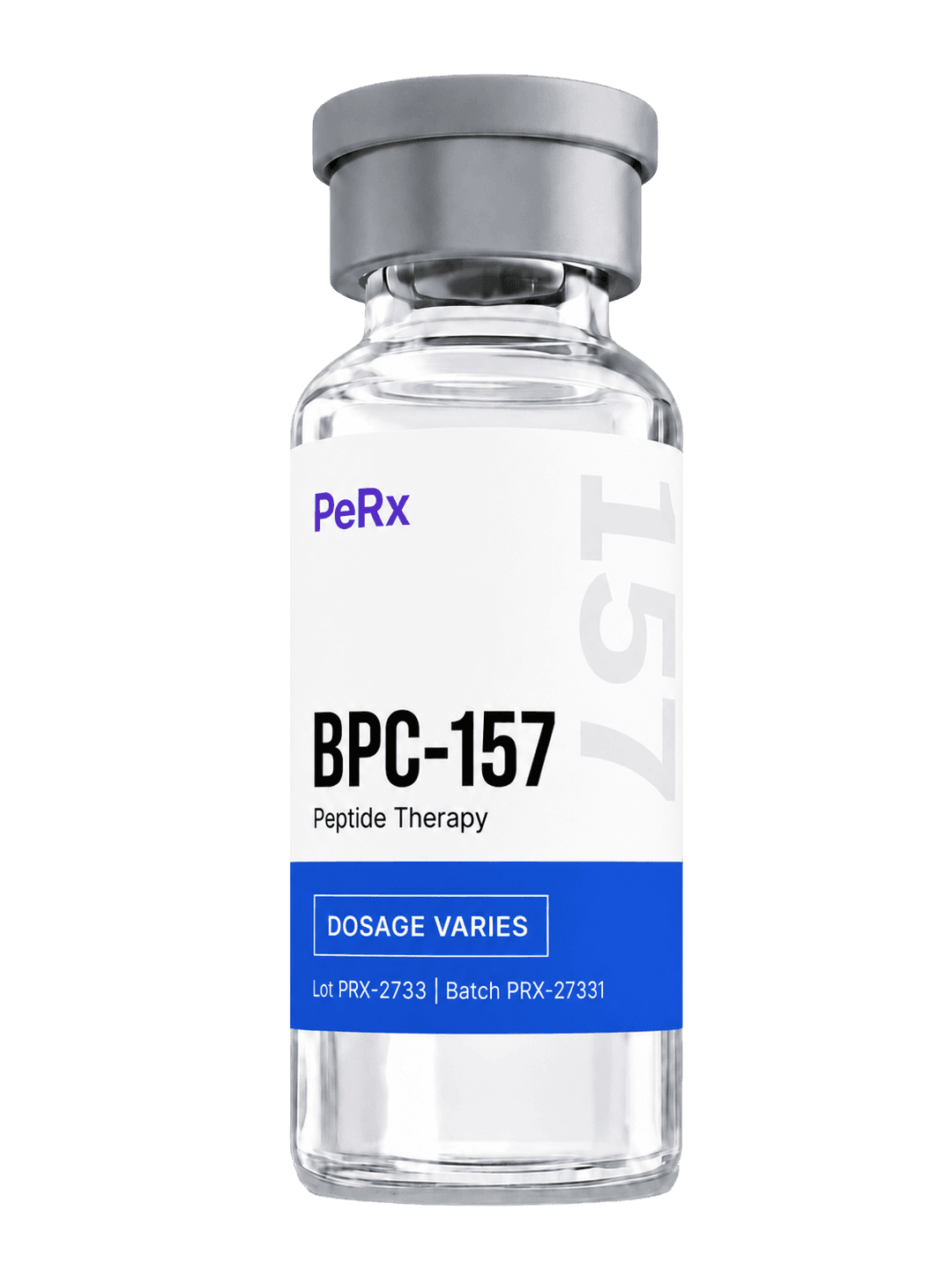
Every side-effect consideration on this page assumes you know what is actually in the vial. PeRx BPC-157 is prescribed by a licensed provider after a health screening that checks the exclusions above, compounded at a US-based 503A pharmacy, and third-party tested for purity and sterility. It ships fully reconstituted and ready to use.
That screening step is the practical difference between a prescription and a gray-market vial: an active-malignancy history, a pregnancy, or a medication conflict gets caught before anything ships. From $229 per month, insulin syringes included.
How Long Do BPC-157 Side Effects Last?
For the effects people actually report, the timelines are short. Injection-site redness and soreness typically fade within an hour, and almost always within a day. A bruise follows the ordinary bruise schedule of a few days to a week. The anecdotal reports of nausea or lightheadedness cluster around the first few doses and tend to resolve as the body adjusts, usually within the first week or two of a protocol.
The more useful frame is the persistence rule. A symptom that lasts more than two to three weeks, or that intensifies with continued use instead of fading, is not an adjustment effect and deserves a provider conversation. That rule matters double for BPC-157 because the thin human record means an unusual, persistent symptom cannot be checked against a trial database; your provider is the check. It also helps to know the expected benefit timeline so a real signal is not misread: how long BPC-157 takes to work lays out the typical week-by-week course, and most protocols run 4 to 12 weeks rather than indefinitely, which itself limits cumulative exposure to the unknowns.
When to Contact Your Provider
Contact your provider promptly if you notice
Signs of infection at an injection site: spreading redness, increasing warmth or swelling after 24 to 48 hours, pus, or fever.
Persistent GI changes, unusual fatigue, or any symptom that lasts beyond two to three weeks or worsens with continued use.
Any new lump, skin change, or change in an existing mole during a protocol. Almost certainly unrelated, but with a pro-angiogenic compound it should be evaluated rather than watched.
Signs of an allergic reaction: rash, hives, swelling of the face or throat, or difficulty breathing. This needs urgent medical care, not a message to your provider.
Your provider prescribed BPC-157 after reviewing your history, and updating them when something changes is part of how the prescription model protects you.
One more note on what a provider is for. The PeRx model pairs each prescription with a licensed provider who reviews your intake, screens your history, and remains available for exactly the situations above. That is a clinical relationship, not a coaching one: the provider decides whether BPC-157 is appropriate and adjusts if something changes, and this guide is context for that conversation rather than a replacement for it.
BPC-157 Side Effects: Common Questions
Related Guides
Continue reading about peptides and protocols that pair well with this guide.
Is BPC-157 FDA Approved in 2026? The Honest Answer
No. BPC-157 has never been submitted for FDA approval and has never entered formal clinical trials. It is available as a compounded medication prescribed by licensed providers. Despite being the most widely used peptide in therapy, its entire evidence base comes from preclinical research. Here is what that means and why millions of people use it anyway.
BPC-157 Peptide: Benefits, Dosage & Complete Guide
A peptide discovered in a Croatian lab in the early '90s is now one of the most studied healing compounds in regenerative medicine. Here's what the science actually says, where it came from, and what you should know before starting.
MOTS-c Benefits: What the Evidence Supports
Almost every benefit attributed to MOTS-c traces back to a mouse, a cell culture, or a blood test measuring the peptide your own mitochondria already make. This page grades each claim by what was measured, what it was measured in, and whether anyone has given injected MOTS-c to a person and looked.
Ready to get started?
Pharmacy-compounded BPC-157, prescribed by a licensed provider who screens your health history first. Ships fully reconstituted and ready to use.
Medical Disclaimer
The information provided on this website, including all articles, guides, and educational content, is for informational and educational purposes only and is not intended as medical advice, diagnosis, or treatment. Nothing on this site should be construed as a substitute for professional medical advice from a qualified healthcare provider.
The majority of peptides discussed on this site are not approved by the U.S. Food and Drug Administration (FDA) for the indications described. They are classified as bulk drug substances and are available only through a licensed prescribing provider and compounding pharmacy. All treatments require a valid prescription and provider oversight.
The majority of published research on peptide therapies has been conducted in preclinical (animal) models. While early human data is encouraging, comprehensive clinical trial data remains limited for most peptide compounds. Individual results may vary significantly based on health status, injury type, and other factors. No specific outcomes are guaranteed.
Certain peptides discussed on this site are classified as prohibited substances by the World Anti-Doping Agency (WADA) and are banned by major sports organizations including the NFL, NCAA, UFC, NBA, MLB, NHL, and PGA. If you are subject to anti-doping testing, consult your governing body before considering any peptide therapy.
Statements on this website have not been evaluated by the Food and Drug Administration. Products and therapies discussed are not intended to diagnose, treat, cure, or prevent any disease.
© 2026 Wellness MD Group PC DBA PeRx. All rights reserved.