Where to Inject NAD+: Sites, Rotation, Sting
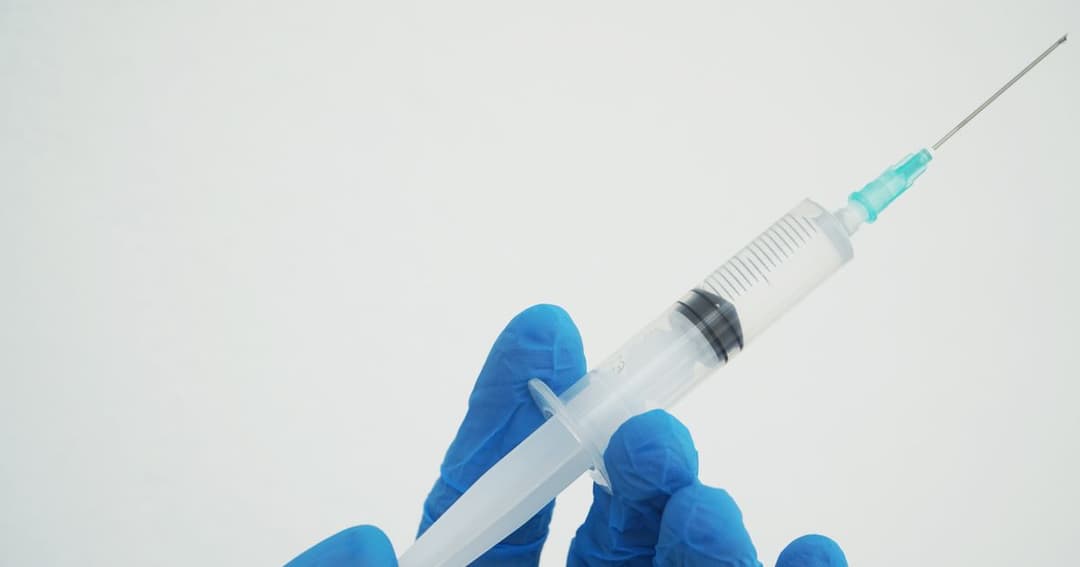
NAD+ is a subcutaneous injection, and it has a reputation for stinging more than most peptides. The good news is that the sting is almost entirely a technique problem. Where you put the needle, how slowly you push, and how you rotate all change the experience more than the molecule does. Here is the practical site-and-technique guide patients ask for after their first NAD+ vial arrives.
In this article
Key Takeaways
- NAD+ is a subcutaneous injection, not intramuscular and not IV. The needle enters the fat layer just beneath the skin at a 45 to 90 degree angle.
- Four standard sites: abdomen (at least two inches from the navel), front or outer thigh, upper outer glute, and back of the deltoid. The abdomen is the most common.
- NAD+ is known for a transient sting or warm flushing sensation during injection. This is commonly reported and usually fades within a minute or two.
- A slow push over 20 to 30 seconds, a smaller volume split across two sites, and letting the vial reach room temperature are the three biggest levers for reducing the sting.
- Rotate at least one inch from the previous injection point every time, and rotate body regions every few injections. Always follow the dose your provider prescribes.
NAD+ Injection Quick Facts
Route
Subcutaneous (under the skin, not into muscle, not IV)
Standard Sites
Abdomen, thigh, upper glute, back of deltoid
Most Common Site
Abdomen (consistent absorption, easy to see)
Needle
27-31 gauge insulin syringe, 1/2 inch length
Known Quirk
Transient sting or flushing; slow injection reduces it
Frequency
Often daily, Mon-Fri, per provider protocol
If you already have NAD+ in the refrigerator, everything below applies to any vial. If you are looking for a prescribed source, PeRx ships NAD+ from $229, prescribed by a licensed provider, compounded by a US 503A pharmacy, third-party tested, and delivered fully reconstituted with insulin syringes included, so the only thing left to learn is the technique on this page.
NAD+ Is a Subcutaneous Injection
Where to inject NAD+ is worth more thought than it is for most peptides, because site and volume are what decide how much it stings. NAD+ is a subcutaneous (subQ) injection, the same general technique as any other PeRx peptide. The needle enters the fat layer beneath the skin, not muscle, and this is not the IV drip you may have read about in celebrity coverage. The clinic IV and the at-home injection deliver the same molecule by two different routes; the injection is the version you self-administer. If subQ injection is new to you, our full guide to injecting peptides walks through the mechanics step by step, and the main NAD+ guide covers what the molecule does and why levels decline with age. This guide focuses on what is specific to NAD+: where to put it, how to keep it comfortable, and how to rotate a daily injection without wearing out a single site. Because PeRx ships NAD+ fully reconstituted and ready to use, there is no mixing or measuring before any of this; you draw the prescribed dose straight from the vial.
Where to Inject NAD+: The Four Standard Sites
There are four anatomical regions that all subQ injections, including NAD+, can use. Each has slightly different absorption characteristics and ergonomics.
1. Abdomen. The area between the lower rib cage and the hip bones, avoiding a roughly two-inch radius around the navel. This is the default site for most patients. Fat coverage is generally consistent, the area is easy to see, and absorption is reliable. Use the soft tissue on either side of the belly button rather than directly above or below it.
2. Front or outer thigh. The middle portion of the thigh, on the front (anterior) or outer (lateral) side. The fat layer is usually adequate here and the angle is comfortable for self-injection while seated. Avoid the inner thigh, which is more vascular, and stay clear of the immediate area around the knee or hip.
3. Upper outer glute. The upper outer quadrant of the buttock, the same area used for many vaccinations. It is harder to reach for self-injection without a mirror, but the fat coverage tends to be deepest here, which can make it one of the more comfortable sites for a molecule that stings. Some patients rotate this site in once or twice a week to give the abdomen a rest.
4. Back of the deltoid. The fat pad on the back of the upper arm, just behind the deltoid muscle. Fat coverage varies significantly between patients. If you can pinch a half-inch or more of skin and fat here, it works. If the skin pulls tight against muscle, choose a different region. Because NAD+ can sting and this site is often the thinnest, many patients use it least.
Which Site Is Best for NAD+?
There is no evidence that injecting NAD+ in one region produces a different systemic effect than another. Once it enters circulation through the subcutaneous fat, it distributes throughout the body and reaches cells wherever they are. NAD+ is a coenzyme central to mitochondrial energy production and cellular repair, and that machinery is everywhere, not concentrated near an injection site.
Cantó C, Menzies KJ, Auwerx J, "NAD+ metabolism and the control of energy homeostasis: a balancing act between mitochondria and the nucleus," Cell Metabolism, 2015. Canonical review on NAD+ as a central regulator of mitochondrial energy output across tissues. View study
So the choice comes down to comfort and practicality, and for NAD+ that pushes toward sites with a generous fat pad. The abdomen is the practical default: fat coverage is consistent, the angle is easy, the site is simple to see and rotate within, and the cushion of fat tends to blunt the sting. Most patients use the abdomen for the majority of injections and rotate to thigh or glute to spread the wear.
Practical Default
Use the abdomen as your primary site. Rotate to thigh or upper glute every few injections. Skip the back of the deltoid unless you have clear fat coverage there, since thinner sites tend to sting more with NAD+.
Why NAD+ Stings and How to Stop It
NAD+ has a reputation the other peptides do not. Many patients feel a transient sting, a warm burn, or a brief flushing sensation during the injection. This is commonly reported, it is dose and speed dependent, and it is not a sign that anything is wrong. It usually settles within a minute or two. The IV version is famous for the same feeling at a larger scale, which is why clinic drips are run slowly; the subcutaneous injection follows the same logic on a smaller scale.
The single biggest lever is injection speed. Push slowly, over 20 to 30 seconds rather than a quick few seconds. A fast bolus concentrates the solution in one spot and is the most common reason NAD+ stings sharply. Easing it in gives the tissue time to accommodate the volume.
Use a smaller volume per site. If your prescribed dose comes as a larger volume, ask your provider about splitting it into two smaller injections at two different sites. Lowering the amount deposited at any one spot is one of the most effective ways to keep NAD+ comfortable. Only ever divide the same total dose; never change the amount your provider prescribed.
Let the vial reach room temperature before injecting. NAD+ is stored refrigerated, and cold solution stings more. Take the vial out roughly 15 to 20 minutes before you inject, or gently roll it between your palms. Do not heat it in any other way. Choose a well-cushioned site, and consider a few seconds of firm pressure or a brief ice application to the skin beforehand if the sting still bothers you. Most patients find that speed and volume alone bring it down to a non-issue within the first week.
The Three-Step Comfort Routine
Room-temperature vial, small volume (split across two sites if needed), slow 20-30 second push. These three habits resolve the NAD+ sting for the large majority of patients. If a strong reaction persists despite them, contact your provider rather than pushing through it.
Rotation Schedule
Repeated injection in the same spot causes minor fat-tissue trauma that accumulates over weeks. The result is small palpable nodules, occasional bruising, or thickened tissue that absorbs the next injection less predictably and often stings more. Because NAD+ is frequently dosed daily rather than a few times a week, rotation discipline matters even more than it does for other peptides.
The rule most providers teach is to move at least one inch, roughly a finger-width, from your last injection point every time. Within a single body region you can subdivide into a grid. The abdomen has roughly eight usable spots if you split it into quadrants on each side of the navel. Cycle through them in order, then move to the next region.
A simple weekly pattern for a five-day schedule: Monday and Tuesday on the right abdomen, Wednesday and Thursday on the left abdomen, Friday on the thigh. Mark the previous spot with a fingernail indent or a small temporary marker if you cannot remember. After a week or two of rotating through the abdomen, give it a rest and lean on the thighs and glutes. If you split each dose across two sites for comfort, count both spots in your rotation so neither gets overused.
A Note on Dosing and Timing
This is a site-and-technique guide, not a dosing guide. Your prescribed dose, frequency, and schedule come from your provider, and NAD+ protocols are typically built around consistent daily use rather than the few-times-a-week cadence common with growth-hormone peptides. Morning injection is often preferred because NAD+ is tied to circadian rhythm, but follow your specific prescription. For the full picture on what NAD+ does, how it compares to IV and oral NMN, and what to expect over the first twelve weeks, see the main NAD+ guide.
Storage
PeRx ships NAD+ fully reconstituted and ready to use. Store it refrigerated at 36-46°F (2-8°C). Do not freeze. Keep the vial upright and away from light, and inspect it before each use; the solution should be clear, not cloudy. Letting it warm to room temperature before injecting is the storage-related step that most reduces the sting.
Common Pitfalls
Injecting cold, straight from the fridge. This is the most common self-inflicted cause of a sharp NAD+ sting. Let the vial warm up first.
Pushing the plunger fast. A quick bolus is the second most common cause. Slow down to 20 to 30 seconds.
Injecting through clothing. Even thin fabric is a contamination risk. Lift the shirt and inject into clean skin.
Using the same exact spot every day. With a daily injection this catches up fast. Within a couple of weeks you will have a palpable lump and less predictable absorption. Rotate every time.
Injecting into a tattoo, scar, mole, or visible vein. Avoid these sites entirely. Pick clean skin a few inches away.
Reusing the needle. Insulin syringes are single use. A reused needle is dull, which makes injection more painful and increases tissue trauma. PeRx ships ample syringes with each order.
If side effects are what you are weighing before starting, the peptide side effects guide covers what is common, what is rare, and what deserves a call to your provider. For where NAD+ fits alongside other longevity peptides, see the anti-aging peptides guide. Every vial is compounded in a US-based, FDA-regulated 503A pharmacy and third-party tested for purity, and it arrives overnight in refrigerated packaging.
NAD+ Injection Questions
Related Guides
Continue reading about peptides and protocols that pair well with this guide.
NAD+ Injection: The Longevity Molecule, Explained
Hollywood's most talked-about anti-aging treatment used to require a $1,000 IV drip and four hours in a clinic. The same molecule, discovered in 1906, studied by Harvard, and endorsed by half the celebrity A-list, now comes as a simple at-home injection. Here's what NAD+ actually does, why your levels are dropping every year, and whether the hype is justified.
Tirzepatide Fatigue: Causes, Fixes, and NAD+
Feeling wiped out on semaglutide or tirzepatide is common enough that a whole industry has grown up around fixing it, and NAD+ injections sit at the front of that industry. Here is what almost none of those pages will tell you: most GLP-1 fatigue has boring causes with cheap fixes, no study has ever tested NAD+ in people on these medications, and the honest move is to work through the checklist before you buy anything. This page is the checklist, and then it is the honest NAD+ evidence review, in that order.
Columbia MD Peptide Therapy: Sourcing & Telehealth
A plain guide to peptide therapy in Columbia and Howard County: what it costs across local clinics, med spas, and telehealth, who tends to use it here, and how pharmaceutical-grade peptides reach any Maryland address without a clinic visit.
Ready to get started?
Pharmaceutical-grade NAD+, prescribed by a licensed provider and shipped to your door fully reconstituted and ready to use.
Medical Disclaimer
The information provided on this website, including all articles, guides, and educational content, is for informational and educational purposes only and is not intended as medical advice, diagnosis, or treatment. Nothing on this site should be construed as a substitute for professional medical advice from a qualified healthcare provider.
The majority of peptides discussed on this site are not approved by the U.S. Food and Drug Administration (FDA) for the indications described. They are classified as bulk drug substances and are available only through a licensed prescribing provider and compounding pharmacy. All treatments require a valid prescription and provider oversight.
The majority of published research on peptide therapies has been conducted in preclinical (animal) models. While early human data is encouraging, comprehensive clinical trial data remains limited for most peptide compounds. Individual results may vary significantly based on health status, injury type, and other factors. No specific outcomes are guaranteed.
Certain peptides discussed on this site are classified as prohibited substances by the World Anti-Doping Agency (WADA) and are banned by major sports organizations including the NFL, NCAA, UFC, NBA, MLB, NHL, and PGA. If you are subject to anti-doping testing, consult your governing body before considering any peptide therapy.
Statements on this website have not been evaluated by the Food and Drug Administration. Products and therapies discussed are not intended to diagnose, treat, cure, or prevent any disease.
© 2026 Wellness MD Group PC DBA PeRx. All rights reserved.