Where to Inject Tesamorelin: Sites and Rotation
Tesamorelin is the rare peptide with FDA-approved labeling that tells you exactly where it goes: a subcutaneous injection into the abdomen, rotated. As of July 2026, that approved route is the anchor for how patients use it. Here is the practical site map, the rotation habit that keeps absorption consistent, and the technique details patients ask about after their first vial arrives.
In this article
Key Takeaways
- Tesamorelin is a subcutaneous injection, not intramuscular. The FDA-approved Egrifta labeling directs the dose into the abdomen, with the site rotated within that region.
- The abdomen is the standard site: the area between the lower ribs and the hip bones, staying at least two inches away from the navel. It has consistent fat coverage and predictable absorption.
- Rotate at least one inch from your last injection point every time. Repeated injection in one spot causes lipohypertrophy, a firm fatty lump that absorbs the next dose unpredictably.
- Use a 27 to 31 gauge insulin syringe, 1/2 inch length. The FDA reference dose is 2 mg subcutaneously once daily, but your provider prescribes the protocol that fits you.
- Inject at roughly the same time each day for consistency. PeRx ships tesamorelin fully reconstituted and ready to use; store it refrigerated at 36 to 46 degrees Fahrenheit.
Tesamorelin Injection Quick Facts
Route
Subcutaneous (under the skin, not into muscle)
Standard Site
Abdomen, per FDA-approved Egrifta labeling
Avoid
A two-inch radius around the navel
Needle
27-31 gauge insulin syringe, 1/2 inch length
Frequency
Once daily, same time each day, per provider protocol
Storage
Refrigerated 36-46 degrees F, ready to use
If you already have tesamorelin in the refrigerator, everything below applies to any vial. If you are looking for a prescribed source, PeRx ships Tesamorelin from $229, prescribed by a licensed provider, compounded by a US 503A pharmacy, third-party tested, and delivered fully reconstituted with insulin syringes included, so the only thing left to learn is the technique on this page.
Tesamorelin Is a Subcutaneous Injection
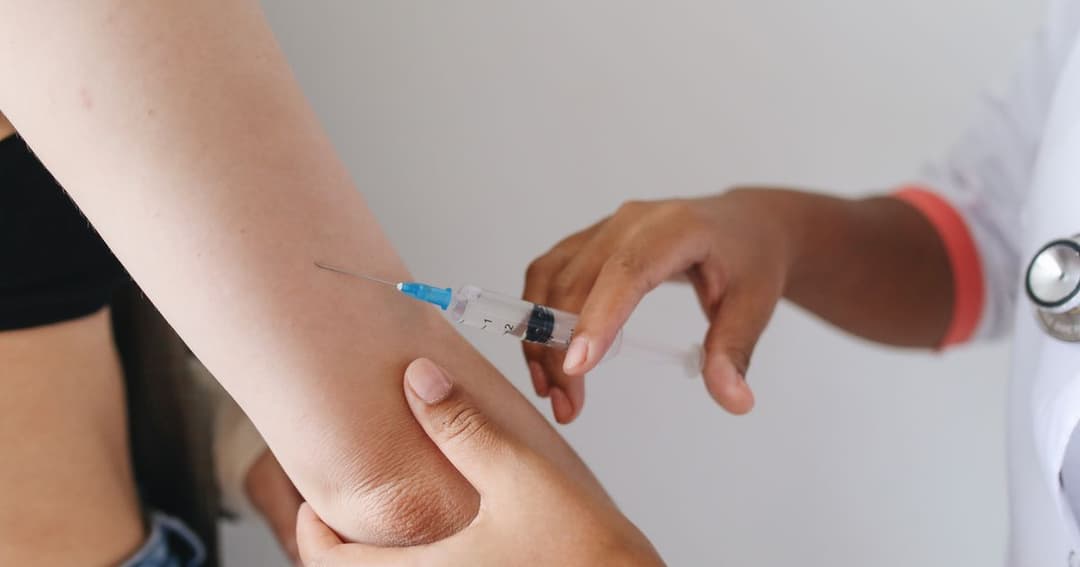
Where to inject tesamorelin has an unusually specific answer: the abdomen, and essentially only the abdomen. Tesamorelin is a subcutaneous (subQ) injection. The needle enters the fat layer just beneath the skin, not muscle. This matters because tesamorelin is one of the few peptides in this space with an FDA approval behind it: it is approved under the brand name Egrifta for HIV-associated lipodystrophy, and that approved labeling specifies subcutaneous administration into the abdomen. When patients ask where to inject tesamorelin, the answer is not guesswork; it is written into the drug label. Because PeRx ships Tesamorelin fully reconstituted and ready to use, there is no mixing or measuring before any of this; you draw the prescribed dose straight from the vial.
If subQ injections are new to you, the guide to injecting peptides walks through the general technique step by step, and what peptide therapy is covers the fundamentals. If you want the mechanism, dosing rationale, and clinical background on this specific peptide, the full tesamorelin guide is the deeper read. This page stays focused on one question: where the injection goes, and how to do it well.
Why the abdomen, specifically
The FDA-approved labeling for tesamorelin directs the injection into the abdomen and instructs rotating the site within that region. That is a labeling instruction, not a marketing claim. Tesamorelin remains FDA-approved only for HIV-associated lipodystrophy; the administration route is the same regardless of why a licensed provider prescribes it.
Where to Inject Tesamorelin: The Abdomen Is the Standard Site
The abdomen is the primary tesamorelin injection site. Use the soft tissue between the lower rib cage and the hip bones, on either side of the belly button. Stay at least two inches away from the navel itself, and pick clean skin away from any scar, stretch mark, mole, tattoo, or visible vein.
The abdomen works well for three practical reasons. Fat coverage there is generally consistent, so the needle reliably lands in the subcutaneous layer rather than muscle. The area is easy to see, which makes self-injection and rotation straightforward. And absorption from abdominal subcutaneous tissue is predictable, which is exactly what you want from a once-daily peptide that depends on steady exposure.
Can You Inject Tesamorelin in the Thigh or Arm?
Some patients ask whether the thigh or the back of the upper arm can substitute on a day the abdomen feels overused. In general practice those are recognized subcutaneous sites, but tesamorelin is different from a peptide like MOTS-c in that its approved labeling names the abdomen specifically. The cleaner approach is to keep all of your injections in the abdomen and simply rotate widely across it, rather than jumping to other body regions. If you have a reason the abdomen will not work for you, raise it with your provider rather than improvising.
Practical Default
Use the abdomen for every injection. Divide it into a grid on each side of the navel and move to a fresh square every day. Keep at least two inches of clearance from the belly button.
How to Inject Tesamorelin, Step by Step
The full subQ technique lives in the guide to injecting peptides. Here is the short version as it applies to a tesamorelin dose from the refrigerator.
1. Take the vial out and let it warm briefly. Cold solution stings more going in. A minute or two out of the fridge takes the edge off. Do not heat it; room-temperature-ish is enough.
2. Wash your hands and wipe the vial stopper. Clean the rubber top with an alcohol swab and let it dry. Inspect the solution: it should be clear and colorless. If you see particles, cloudiness, or discoloration, do not use it.
3. Draw the prescribed dose. Pull air into the syringe equal to your dose, inject that air into the vial, invert, and draw your dose to the exact mark your provider prescribed. Tap out air bubbles and push them back up until only solution remains.
4. Pick and clean a fresh abdominal spot. At least two inches from the navel, at least one inch from your last injection. Wipe with alcohol and let it dry so it does not sting.
5. Pinch, insert, inject. Pinch a fold of skin and fat, insert the needle at 45 to 90 degrees depending on how much tissue you can gather, and push the plunger slowly and steadily. Slow injection is more comfortable than fast.
6. Withdraw and apply light pressure. Pull the needle straight out, release the pinch, and press gently with clean gauze. Do not rub. Dispose of the syringe in a sharps container; insulin syringes are single use.
Tesamorelin Injection Site Rotation and Lipohypertrophy
Rotation is the single most important habit for a daily injection, and it is why the approved labeling explicitly tells you to rotate. Injecting the same spot day after day causes lipohypertrophy: firm, thickened fatty tissue that builds up under the skin from repeated needle trauma. It is common with any daily subcutaneous medication, which is why the same warning appears on insulin instructions.
Lipohypertrophy is not only a cosmetic issue. Those firm areas absorb medication erratically, so a dose delivered into a built-up spot may take up more slowly or less completely than the same dose into healthy tissue. For a peptide you take every day and rely on for steady exposure, inconsistent absorption undercuts the whole point.
The rule providers teach is simple: move at least one inch, a finger-width, from your last injection point every time. Picture the abdomen as a grid of squares on each side of the navel and work through them in order before repeating any. A workable pattern is to alternate sides day to day and step down the grid each week, so no square gets hit again for many days. If you ever feel a firm lump forming, stop using that area entirely until it softens, and tell your provider.
When to Inject Tesamorelin: Timing and Frequency
Tesamorelin is a once-daily injection. The most important variable is consistency: inject at roughly the same time every day so exposure stays even. Neither the approved labeling nor the pivotal clinical trials require a particular hour of the day.
Falutz J, Allas S, Blot K, et al. Metabolic effects of a growth hormone-releasing factor in patients with HIV. N Engl J Med. 2007;357(23):2359-2370. (Pivotal Phase 3 trial; once-daily subcutaneous tesamorelin.) View study
In practice, timing comes down to preference and provider guidance. Many patients inject in the morning, which is simple to build into a routine. Some prefer the evening on the reasoning that it aligns with the natural nocturnal growth hormone pulse. Both are reasonable, and the difference is small next to the value of taking it consistently. Follow the timing your provider prescribes rather than switching around week to week.
Tesamorelin Dose and Injection Volume
This is a where-and-how guide, not a dosing guide, but a little context helps you draw accurately. The FDA-approved reference dose for tesamorelin is 2 mg subcutaneously once daily, the dose used across the Phase 3 program. PeRx ships tesamorelin at 3 mg/mL, so a full 2 mg reference dose is a small, precise volume. Your actual dose, and the exact mark you draw to, is whatever your provider prescribes on your label. For the mechanism and full dosing rationale, see the tesamorelin guide.
Because the volume is small, precision at the syringe markings matters more than eyeballing. Draw to the exact line, clear the air bubbles, and confirm the volume before you inject. Use a 27 to 31 gauge insulin syringe, 1/2 inch length; PeRx includes appropriate syringes with each order.
Provider prescribes, you inject
Your PeRx provider determines the dose, timing, and schedule that fit your situation and prescribes accordingly. The provider prescribes the protocol; they do not coach you through daily technique. This guide fills that gap. Always follow the specific instructions on your prescription over any general figure you read online.
Tesamorelin Injection Mistakes to Avoid
Injecting too close to the navel. Keep a two-inch radius clear. The tissue right around the belly button absorbs less predictably and is more sensitive.
Favoring one comfortable spot. The easiest square on your abdomen is also the one most likely to develop lipohypertrophy. Force yourself to rotate from day one.
Injecting into a scar, mole, tattoo, or visible vein. Avoid these entirely. Pick clean, unmarked skin a few inches away.
Injecting cold, fast solution. Cold liquid injected quickly is the most common cause of stinging. Let the vial sit out a minute or two and push the plunger slowly.
Reusing needles. Insulin syringes are single use. Reusing dulls the needle, which hurts more and adds tissue trauma that speeds up lump formation. PeRx ships ample syringes with each order.
If you are weighing side effects before you start, the peptide side effects guide covers what is common, what is rare, and what deserves a call to your provider. Every vial is compounded in a US-based, FDA-regulated 503A pharmacy and third-party tested for purity, and it arrives overnight in refrigerated packaging.
Tesamorelin Injection Questions
Related Guides
Continue reading about peptides and protocols that pair well with this guide.
Tesamorelin Side Effects: What the Trials Report
The most reported tesamorelin side effects in its clinical trials were injection-site reactions, joint and muscle pain, and swelling. The ones that need a call to your doctor are allergic reactions and changes in blood sugar. Tesamorelin is FDA-approved as Egrifta for reducing excess abdominal fat in adults with HIV-associated lipodystrophy. Evidence for any other use is limited, and every number on this page comes from that label.
Tesamorelin Dosage Chart: Units, Timing, Cost
Tesamorelin dosing numbers found online disagree with each other for a reason: three different Egrifta labels say 2 mg, 1.4 mg, and 1.28 mg, and none of them describe a compounded vial. This page sorts out the three labels, converts milligrams to insulin-syringe units at the 3 mg/mL concentration PeRx ships, and covers timing, cycle length, missed doses, and what a month costs, as of August 31, 2026.
How to Store Peptides: Fridge, Travel & Shelf Life
Storing peptides is simpler than most of the internet makes it sound, especially with PeRx. Because every vial ships fully reconstituted and ready to use, there is nothing to mix and no powder to manage. Keep it cold, keep it dark, do not freeze it. Here is the complete answer, product by product.
Ready to get started?
Pharmaceutical-grade tesamorelin, prescribed by a licensed provider and shipped to your door fully reconstituted and ready to use, with insulin syringes and a step-by-step guide in the box.
Medical Disclaimer
The information provided on this website, including all articles, guides, and educational content, is for informational and educational purposes only and is not intended as medical advice, diagnosis, or treatment. Nothing on this site should be construed as a substitute for professional medical advice from a qualified healthcare provider.
The majority of peptides discussed on this site are not approved by the U.S. Food and Drug Administration (FDA) for the indications described. They are classified as bulk drug substances and are available only through a licensed prescribing provider and compounding pharmacy. All treatments require a valid prescription and provider oversight.
The majority of published research on peptide therapies has been conducted in preclinical (animal) models. While early human data is encouraging, comprehensive clinical trial data remains limited for most peptide compounds. Individual results may vary significantly based on health status, injury type, and other factors. No specific outcomes are guaranteed.
Certain peptides discussed on this site are classified as prohibited substances by the World Anti-Doping Agency (WADA) and are banned by major sports organizations including the NFL, NCAA, UFC, NBA, MLB, NHL, and PGA. If you are subject to anti-doping testing, consult your governing body before considering any peptide therapy.
Statements on this website have not been evaluated by the Food and Drug Administration. Products and therapies discussed are not intended to diagnose, treat, cure, or prevent any disease.
© 2026 Wellness MD Group PC DBA PeRx. All rights reserved.