Peptides for Brazilian Jiu-Jitsu: Joints and Skin
BJJ grinds two things at once: the joints and tendons that get torqued, cranked, and hyperextended, and the skin that lives in constant contact with mats, sweat, and other people. How BPC-157, the BPC/TB-500 combo, GHK-Cu, and Thymosin Alpha-1 fit the injuries a grappler actually collects, with honest evidence and the IBJJF testing note nobody writes down.
In this article
Key Takeaways
- BJJ punishes two systems at once. It torques and hyperextends the joints and tendons (fingers, knees, shoulders, neck), and it grinds the skin through constant mat contact, mat burn, and shared-surface infection risk.
- Four peptides come up for grapplers: BPC-157 for local tendon and soft-tissue healing, the BPC/TB-500 combo for broader or more stubborn soft-tissue work, GHK-Cu for skin barrier repair, and Thymosin Alpha-1 for immune support given constant skin exposure.
- The evidence is uneven and worth stating honestly. GHK-Cu and Thymosin Alpha-1 have real human research in their lanes (skin remodeling and immune modulation); the tendon claims for BPC-157 and TB-500 rest mostly on animal models.
- BPC-157 and TB-500 are FDA-unapproved and on the WADA Prohibited List, so they are not an option for IBJJF or any tested competition. They are prescribed for recreational grapplers who are not subject to testing.
- Some grappling problems are outside what any peptide can do. Cauliflower ear is mechanical, a torn ligament may need a surgeon, and an active staph infection needs a doctor. Peptides are a support layer, not a substitute for hygiene, rehab, or medical care.
Quick Facts
Persona
Recreational adult BJJ practitioners and hobbyist grapplers
Primary injuries
Finger and hand tendons, knees, shoulders, neck; mat-burn skin and infection risk
Peptides in scope
BPC-157, BPC/TB-500 combo, GHK-Cu, Thymosin Alpha-1
Strongest evidence
GHK-Cu (skin) and Thymosin Alpha-1 (immune); tendon claims are mostly preclinical
Delivery
All subcutaneous injection; ready to use, no reconstitution
Competition status
BPC-157 and TB-500 are WADA-prohibited, not for IBJJF-tested grapplers
The Tap You Take Too Late
The moment
You are defending a kimura from side control, buying time, telling yourself you can spin out of it. The shoulder loads past where it wants to go, you feel it before you feel pain, and you tap a half-second after you should have. The roll ends. You shake it out, tell your partner it is fine, and drive home already running the math on how many weeks this costs you. That, plus the finger you cannot straighten, the knee that clicks on the stairs, and the patch of raw skin on your forearm that has been weeping since Tuesday.
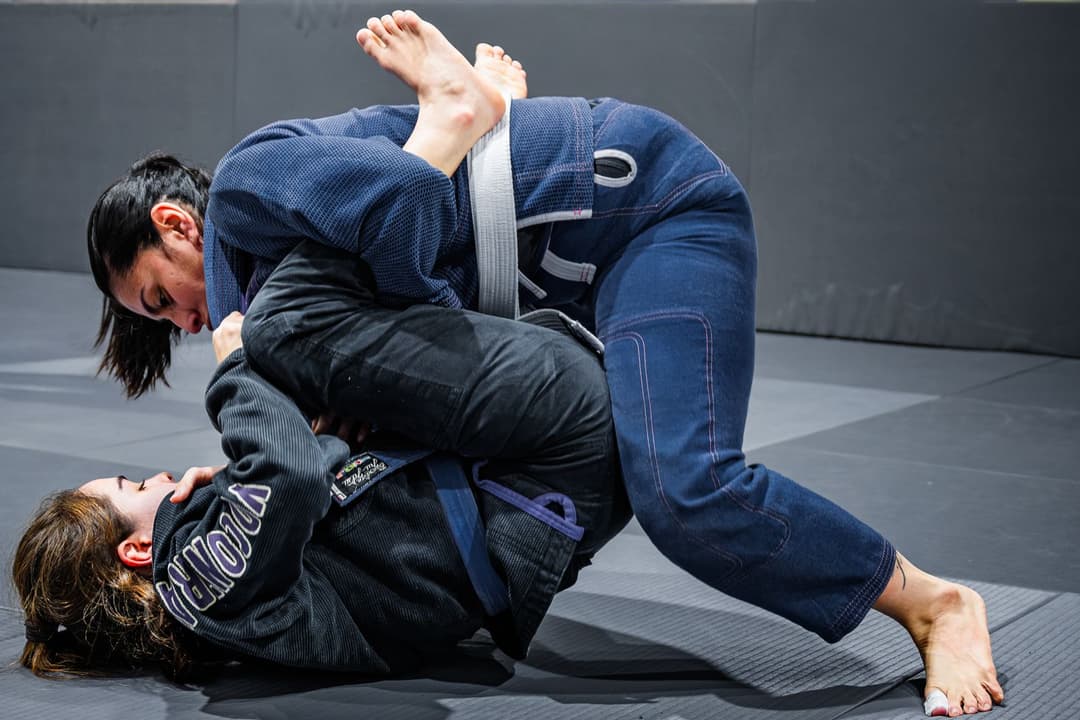
Brazilian Jiu-Jitsu is unusual in how it wears a body down. It is not the pounding of running or the maximal load of a barbell. It is torque, leverage, and friction applied to joints and skin for hours a week, by training partners whose whole goal is to bend, crank, and control you. The result is a specific collection of problems: hyperextended and jammed fingers, torqued knees, cranked shoulders and necks, and skin that is perpetually mat-burned and exposed to whatever is living on the mats. This guide is about where peptide therapy might support a grappler, organized around the injuries you actually collect, and honest about where the science is solid and where it is only hopeful. When you get a peptide through PeRx, it is prescribed by a licensed provider and compounded in a US-based, FDA-regulated 503A pharmacy, the same regulated pathway many everyday prescriptions run through.
What Grappling Actually Grinds
Most peptide content written for combat athletes stops at "BPC-157 is good for recovery" and never names the tissue. Grappling injuries are predictable from the positions, so here is the actual map, split into the two systems BJJ punishes.
| Area | What gets loaded | The named problem |
|---|---|---|
| Fingers and hands | Gripping the gi, spider guard, collar grips | Flexor tendon strain, jammed and hyperextended PIP joints, sprained finger ligaments |
| Knees | Guard retention, knee-on-belly, leg entanglements | MCL and meniscus strain, patellar tendinopathy, twisted-knee soft-tissue injury |
| Shoulders | Kimura, americana, underhook battles | Rotator cuff strain, AC joint irritation, capsule and soft-tissue overload |
| Neck and spine | Guillotines, neck cranks, stacking, posture defense | Cervical strain, facet irritation, chronic stiffness |
| Skin | Mat contact, gi friction, sweat, shared surfaces | Mat burn, ringworm, staph, chronic raw and slow-healing patches |
| Ears | Head pressure and friction in scrambles | Cauliflower ear (mechanical, not a peptide problem) |
Fingers and hands
- What gets loaded
- Gripping the gi, spider guard, collar grips
- The named problem
- Flexor tendon strain, jammed and hyperextended PIP joints, sprained finger ligaments
Knees
- What gets loaded
- Guard retention, knee-on-belly, leg entanglements
- The named problem
- MCL and meniscus strain, patellar tendinopathy, twisted-knee soft-tissue injury
Shoulders
- What gets loaded
- Kimura, americana, underhook battles
- The named problem
- Rotator cuff strain, AC joint irritation, capsule and soft-tissue overload
Neck and spine
- What gets loaded
- Guillotines, neck cranks, stacking, posture defense
- The named problem
- Cervical strain, facet irritation, chronic stiffness
Skin
- What gets loaded
- Mat contact, gi friction, sweat, shared surfaces
- The named problem
- Mat burn, ringworm, staph, chronic raw and slow-healing patches
Ears
- What gets loaded
- Head pressure and friction in scrambles
- The named problem
- Cauliflower ear (mechanical, not a peptide problem)
The right-hand column is mostly tendon, ligament, and connective-tissue strain plus a skin category all its own. That is the shape of the grappling injury profile, and it is why a single tissue-repair peptide covers so much of the joint side while the skin and immune side needs its own tools. Two persona guides overlap heavily here: the finger and skin problems are close cousins of what rock climbers deal with, and the joint-and-tendon logic mirrors the powerlifter connective-tissue guide.
Why Generic Recovery Advice Falls Short
The standard advice for a grappler is rest, ice, and maybe some collagen powder. Rest and progressive reloading are correct and non-negotiable. The weak links are what gets oversold and what gets ignored. Collagen powder is digested into amino acids and provides generic building material, useful nutrition but not a targeted signal to a specific poorly vascularized tendon or ligament telling it to heal faster. Tendons and ligaments heal slowly precisely because so little blood reaches them, which is the bottleneck an angiogenesis-promoting approach is theorized to address.
The bigger gap is that generic advice ignores half of the grappler problem entirely: the skin and the immune exposure. No lifting or running recovery plan has to account for the fact that you spend hours a week pressed against shared surfaces with your skin abraded open. A BJJ practitioner is not just recovering tendons; they are managing a barrier that is constantly breached and an immune system under constant challenge. That is a genuinely different recovery picture, and it is why this guide carries four peptides instead of one.
The Four Peptides in Scope
The peptides that come up for grapplers are BPC-157, the BPC/TB-500 combo, GHK-Cu, and Thymosin Alpha-1. All four are prescription-only in the US and delivered as subcutaneous injections, and all require evaluation by a licensed provider.
| BPC-157 | BPC/TB-500 combo | GHK-Cu | Thymosin Alpha-1 | |
|---|---|---|---|---|
| Targets | Strained tendons, ligaments, soft tissue | Broader or higher-grade soft-tissue injury | Mat-burned, raw, slow-healing skin | Immune function under constant exposure |
| Proposed mechanism | Angiogenesis, tendon-cell outgrowth and migration | Adds TB-500 cell migration and remodeling | Collagen organization and skin barrier repair | T-cell maturation and immune modulation |
| Evidence strength | Deep preclinical, limited human | Preclinical, limited human | Strong human data in skin | Real human clinical research in immunity |
| When grapplers reach for it | A specific tendon or joint strain | A stubborn or worse soft-tissue injury | Skin that will not close and heal | Frequent illness or heavy skin exposure |
Targets
- BPC-157
- Strained tendons, ligaments, soft tissue
- BPC/TB-500 combo
- Broader or higher-grade soft-tissue injury
- GHK-Cu
- Mat-burned, raw, slow-healing skin
- Thymosin Alpha-1
- Immune function under constant exposure
Proposed mechanism
- BPC-157
- Angiogenesis, tendon-cell outgrowth and migration
- BPC/TB-500 combo
- Adds TB-500 cell migration and remodeling
- GHK-Cu
- Collagen organization and skin barrier repair
- Thymosin Alpha-1
- T-cell maturation and immune modulation
Evidence strength
- BPC-157
- Deep preclinical, limited human
- BPC/TB-500 combo
- Preclinical, limited human
- GHK-Cu
- Strong human data in skin
- Thymosin Alpha-1
- Real human clinical research in immunity
When grapplers reach for it
- BPC-157
- A specific tendon or joint strain
- BPC/TB-500 combo
- A stubborn or worse soft-tissue injury
- GHK-Cu
- Skin that will not close and heal
- Thymosin Alpha-1
- Frequent illness or heavy skin exposure
The evidence line is the honest one to sit with. For BPC-157 and TB-500, the tendon and soft-tissue story is built almost entirely on animal models. For GHK-Cu and Thymosin Alpha-1, there is genuine human research in their respective lanes. That asymmetry should shape expectations: cautious optimism on the joint side, more confidence on the skin and immune side.
The Joints and Tendons
BPC-157 is a stable synthetic peptide built from a fragment of a stomach-protective protein, and it is the one most associated with tendon and soft-tissue repair. The most cited mechanistic work found that it promotes tendon healing through tendon-cell outgrowth, cell survival, and cell migration, alongside the angiogenesis (new blood vessel growth) that helps a poorly vascularized structure get the healing factors it needs. For a grappler, that maps onto the jammed finger tendon, the tweaked MCL, the cranky rotator cuff: slow-healing structures that derail training blocks.
Krivic A et al., "The promoting effect of pentadecapeptide BPC 157 on tendon healing involves tendon outgrowth, cell survival, and cell migration." J Appl Physiol (1985), 2011. PMID 21030672. View study
For a more stubborn or higher-grade soft-tissue injury, the BPC/TB-500 combo is the more aggressive option. TB-500 is a synthetic fragment related to thymosin beta-4, a protein involved in cell migration, actin regulation, and tissue repair, and its mechanism is complementary to BPC-157 rather than redundant. The combo tends to come up for the injury that has not budged in two months: the shoulder that still catches, the knee soft-tissue strain that keeps reminding you it is there. The gray market sells a "Wolverine stack" with aggressive self-dosing; the legitimate version is a single prescribed, pharmacy-sourced combination vial with a protocol set by a provider.
A peptide is not a painkiller
The most common way grapplers hurt themselves worse is treating a healing signal as a green light to roll hard again. BPC-157 does not numb a joint so you can keep training through it, and using it that way is how a strain becomes a tear. It also does not diagnose. A knee that locks or gives way, a shoulder that dislocated, or a finger that is visibly deformed is a medical evaluation, not something to self-manage with a vial. Reduce the load on the injured structure and let it heal on the tissue timeline, not on how it feels day to day.
The Skin and the Immune System
This is the half of the grappler problem that generic recovery advice ignores, and it is also where the human evidence is strongest. GHK-Cu is a copper-binding tripeptide with a real research record in skin remodeling, barrier repair, and collagen organization. For the grappler whose forearms and shins are perpetually mat-burned and whose skin never quite closes between sessions, that barrier-repair mechanism is the relevant one. An intact skin barrier is also the first line of defense against the infections that plague grappling gyms, so repairing it is not purely cosmetic.
Pickart L, Margolina A. "The human tri-peptide GHK and tissue remodeling." J Biomater Sci Polym Ed, 2008. PMID 18644225. View study
GHK-Cu is not an infection treatment
Barrier repair helps skin resist getting breached, but GHK-Cu does not treat an active ringworm or staph infection, and a copper peptide can be drying for some people initially. It works best as part of a skin routine that also includes a ceramide or hyaluronic-acid moisturizer, alongside the real infection defense: showering right after every session, washing your gi and rashguard every time, covering open cuts, and staying off the mats when you have an active skin issue.
The immune angle is the one most people never consider. Grapplers train sick, share air and surfaces in close quarters, and put an open skin barrier against everything on the mats. Thymosin Alpha-1 is a peptide naturally present in the thymus that has long been recognized for modifying, enhancing, and restoring immune function, in part by stimulating the maturation and differentiation of T cells and improving immune signaling. It has a genuine human clinical research record, mostly in infectious-disease and immune-compromised settings rather than in athletes specifically, so the honest framing is immune support, not a proven shield against catching whatever is going around the gym.
King R, Tuthill C. "Immune Modulation with Thymosin Alpha 1 Treatment." Vitam Horm, 2016. PMID 27450734. View study
Dominari A et al., "Thymosin alpha 1: A comprehensive review of the literature." World J Virol, 2020. PMID 33362999. View study
How a Grappler Actually Uses Them
The realistic way to think about timing is around the injury and the phase of healing, not as a fixed calendar. The joint peptides are typically dosed daily through the active healing window while you reduce load on the injured area; the skin and immune peptides fit into a steady daily routine. Here is how that tends to play out over a block, with the caveat that a provider sets the actual protocol.
Week 1
Deload and start the healing layer
Back off the movements that load the injured structure. If a provider has prescribed it, BPC-157 or the BPC/TB-500 combo starts daily as the connective-tissue support layer. GHK-Cu goes into the skin routine for the mat-burned areas. This is the week where discipline about staying off the injury matters more than anything in a vial.
Week 4
Rebuild through the proliferative phase
Most of the tissue-support use lives here, through the proliferative and early-remodeling window, paired with the staged reloading a physical therapist or coach prescribes. Skin that had been raw is usually closing and holding better. If constant illness is the problem, Thymosin Alpha-1 is the immune-support piece your provider may layer in.
Week 8
Return to rolling on the tissue timeline
Structural tissue remodels on a weeks-to-months timescale, so the return to hard rolling is governed by the injury grade and your progression, not by how good the joint feels. The most common re-injury is the grappler who feels fine at week four and goes straight back to competition-pace training. Ease back into resistance before you ease back into live rounds.
Feeling better is not healed
A joint that has stopped hurting is not the same as a joint that has remodeled enough to take a full scramble, a deep guard retention battle, or a defended submission again. No peptide changes how long fibrous tissue takes to organize. Return to live training on the timeline for your injury, not on the day the ache disappears.
Travel, Camps, and Testing Status
All four peptides are subcutaneous injections, the standard shallow insulin-needle technique used across peptide therapy, taking about thirty seconds. PeRx ships them fully reconstituted and ready to use, stored refrigerated at 36 to 46 degrees Fahrenheit, with no reconstitution needed on your end. For grapplers who travel to camps, seminars, or tournaments, the vials are prescription medications in labeled packaging and hold their temperature window for roughly 24 to 48 hours in a soft cooler with frozen gel packs, which covers a weekend away.
The IBJJF and WADA note
If you compete in tested jiu-jitsu, this section is the important one. The IBJJF runs anti-doping testing under WADA rules, and both BPC-157 and TB-500 (thymosin beta-4) are on the WADA Prohibited List, prohibited at all times with no therapeutic use exemption for this use. Using them can produce an anti-doping rule violation under strict liability, where "I did not know" is not a defense. They are prescribed for recreational adult grapplers and hobbyists who are not subject to testing. If you compete under IBJJF or any tested body, verify your status with your provider and against the current WADA list, which updates each January, and treat these peptides as off the table during your competitive window.
On sequencing: the tissue-support peptides work on a days-to-weeks timescale, so there is no benefit to timing an injection right before you train. Dose at a consistent time of day and let the mechanism work in the background. The thing to actually time around your rolls is the load, the rehab progression and the return to live training, not the injection.
What Peptides Will Not Do
Four honest distinctions, because a body that will not heal makes grapplers desperate, and desperation is where the overselling lives.
They will not let you train through an injury. Nothing does. The tissue needs reduced load to heal, and the single biggest determinant of recovery is whether you actually back off the aggravating position. A peptide is not a permission slip to keep rolling on a torqued knee.
They will not prevent or treat a mat infection. Ringworm and staph are stopped by hygiene, not peptides, and an active infection needs a doctor and often antibiotics. GHK-Cu supports the skin barrier and Thymosin Alpha-1 supports immune function, but neither replaces showering after class, washing your gi, and covering cuts.
They will not fix cauliflower ear. That is a mechanical injury of blood and fluid collecting against the ear cartilage, and once it calcifies it is permanent. The answer is headgear for prevention and prompt drainage by a professional for an acute swelling. No peptide reverses it.
They are not an option for tested competition. BPC-157 and TB-500 are on the WADA Prohibited List and are FDA-unapproved. If you compete under the IBJJF or any tested body, they are off the table during your season. Every batch is third-party tested for purity, and each order ships fully reconstituted and ready to use, delivered in refrigerated packaging.
The evidence, stated plainly
For the joint and tendon claims, most of the data is from animal models, and human trials on grappling injuries specifically do not exist. For the skin, GHK-Cu has genuine human research. For immune support, Thymosin Alpha-1 has real clinical research, mostly outside of athletics. The reasonable position is cautious optimism on the joint side, real confidence on the skin and immune side, and healthy skepticism toward anyone promising a torn ligament or a case of ringworm will vanish faster because of a peptide.
Questions Grapplers Ask
Related Guides
Continue reading about peptides and protocols that pair well with this guide.
BPC-157 Side Effects: What’s Real and What’s Unknown
BPC-157 has never been through a controlled human safety trial, and any honest discussion of its side effects starts there. Here is what users actually report, what three decades of animal research does and does not show, and how prescription screening changes the risk picture.
Is BPC-157 FDA Approved in 2026? The Honest Answer
No. BPC-157 has never been submitted for FDA approval and has never entered formal clinical trials. It is available as a compounded medication prescribed by licensed providers. Despite being the most widely used peptide in therapy, its entire evidence base comes from preclinical research. Here is what that means and why millions of people use it anyway.
How Long Do Peptides Take to Work?
Anywhere from the same evening to several months, depending on which peptide and which change you are watching for. PT-141 is dosed for a same-day window while GHK-Cu skin remodeling is a months-long project, and most peptides land somewhere between. This guide maps the typically reported onset windows by peptide family, explains what tends to change first for each goal, and covers why feeling nothing early is often normal rather than a sign of failure.
Ready to get started?
Peptide therapy in the US is prescription-only and requires evaluation by a licensed provider. Browse the peptides most often discussed for connective-tissue recovery, skin repair, and immune support, or read the BPC-157 guide for the full picture.
Medical Disclaimer
The information provided on this website, including all articles, guides, and educational content, is for informational and educational purposes only and is not intended as medical advice, diagnosis, or treatment. Nothing on this site should be construed as a substitute for professional medical advice from a qualified healthcare provider.
The majority of peptides discussed on this site are not approved by the U.S. Food and Drug Administration (FDA) for the indications described. They are classified as bulk drug substances and are available only through a licensed prescribing provider and compounding pharmacy. All treatments require a valid prescription and provider oversight.
The majority of published research on peptide therapies has been conducted in preclinical (animal) models. While early human data is encouraging, comprehensive clinical trial data remains limited for most peptide compounds. Individual results may vary significantly based on health status, injury type, and other factors. No specific outcomes are guaranteed.
Certain peptides discussed on this site are classified as prohibited substances by the World Anti-Doping Agency (WADA) and are banned by major sports organizations including the NFL, NCAA, UFC, NBA, MLB, NHL, and PGA. If you are subject to anti-doping testing, consult your governing body before considering any peptide therapy.
Statements on this website have not been evaluated by the Food and Drug Administration. Products and therapies discussed are not intended to diagnose, treat, cure, or prevent any disease.
© 2026 Wellness MD Group PC DBA PeRx. All rights reserved.