Longevity Peptides
Longevity peptides approach aging from the inside: the immune system that weakens, the cellular energy that declines, the repair signals that fade. PeRx prescribes them through licensed US providers as compounded medications, shipped ready to use to all 50 states. The three options here are Thymosin Alpha-1 for immune modulation, Epitalon for cellular timekeeping, and NAD+ for mitochondrial energy. Each is a prescription, written only after a provider reviews your assessment and health history.

Longevity & Immune Peptides Available at PeRx
Showing 3 peptides in Longevity & Immune
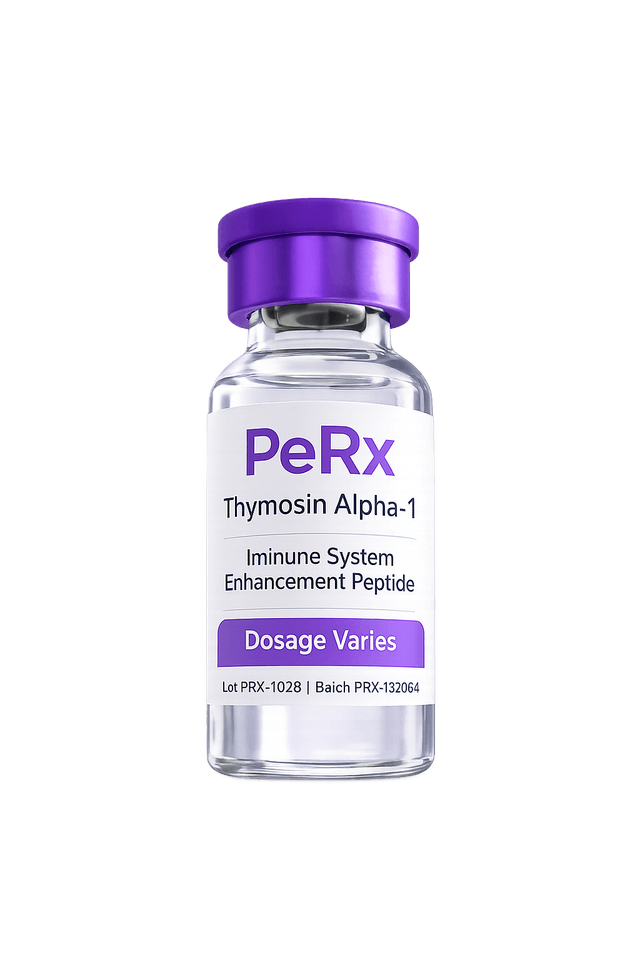
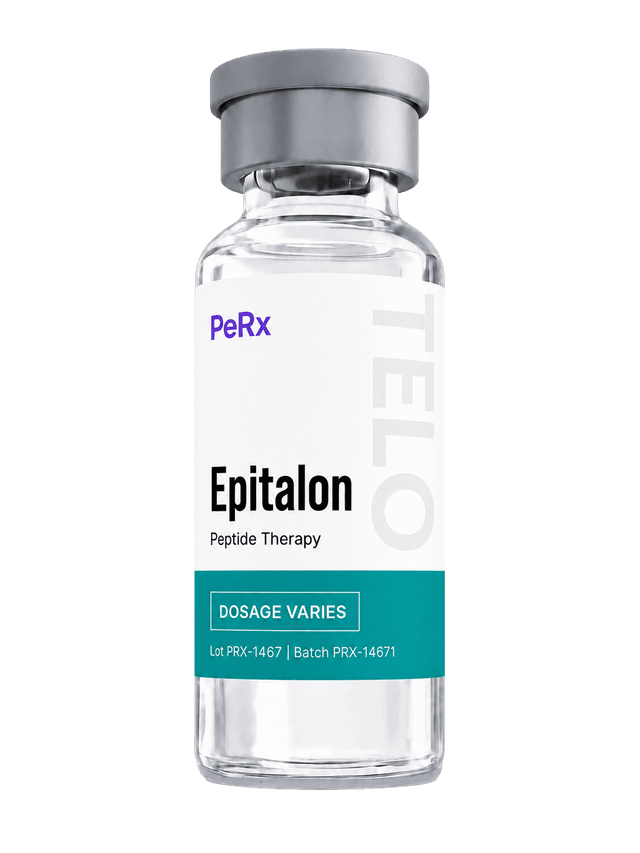
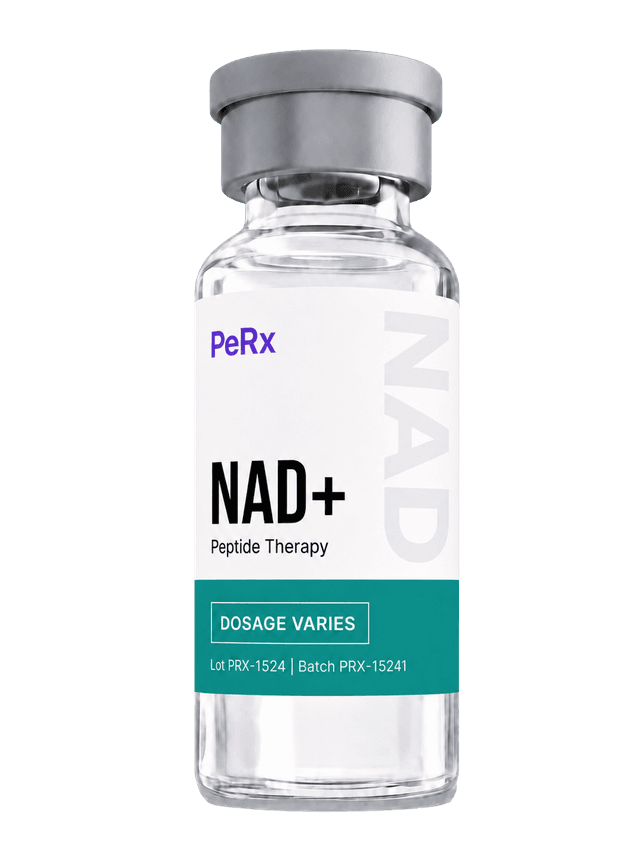
Not sure which peptide is right for you?
Take our 60-second assessment. A licensed US provider reviews and recommends a protocol if appropriate.
What Longevity and Immune Peptides Actually Do
The first thing to understand is what these are not: supplements. A supplement supplies raw material and hopes the body uses it. Peptides are signaling molecules, short chains of amino acids that carry specific instructions to specific receptors, and the peptides for longevity in this category were chosen because each one signals a system that measurably declines with age.
Three systems, three signals. The immune system ages in a process called immunosenescence: the thymus gland that trains your T-cells shrinks from puberty onward, and Thymosin Alpha-1 is the synthetic version of the hormone that gland produces. Cellular energy runs on NAD+, a coenzyme whose levels fall steadily through adulthood. And Epitalon targets the pineal and telomere machinery involved in how cells keep time.
The honest mechanistic rationale for all three is restoration rather than enhancement: putting back a signal the body made more of when it was younger. Whether restoring the signal changes how a person ages is a question the evidence answers differently for each peptide, which is exactly why the evidence section below ranks them instead of treating them as equally proven. Peptides for immune system support follow the same logic, and the same caveat.
Thymosin Alpha-1 and the Case for Immune-Modulating Peptides
Thymosin Alpha-1 has the strongest claim to clinical seriousness of anything on this page. It is a hormone your own thymus produces, and the thymus is the gland that matures every T-cell you have. From puberty onward the gland shrinks and is gradually replaced by fat, output falls, and immune responses get slower and less precise. That is immunosenescence, and it is one of the better-documented mechanisms of aging.
The synthetic version has been studied for decades: it supports T-cell maturation, trains dendritic cells, and promotes the regulatory T-cells that keep responses proportionate. Modulation is the right word rather than stimulation. It nudges the immune system toward responding appropriately, which is why researchers have studied it in both directions, underactive immunity and overactive inflammation.
The regulatory status deserves precision. Thymosin Alpha-1 is approved for medical use in more than 35 countries under the brand name Zadaxin, primarily for hepatitis B and C, and holds FDA Orphan Drug designation for hepatocellular carcinoma. It is not FDA-approved in the United States for immune or longevity use; at PeRx it is prescribed as a compounded medication by a licensed provider. Among immune system peptides it is the one with a real international clinical record, and our full TA-1 guide covers that record in depth.
Epitalon, NAD+, and Where the Longevity Evidence Actually Stands
Ranked honestly, the three products sit on different rungs. Thymosin Alpha-1 has human clinical data from its approved uses abroad, thousands of patients over decades. NAD+ sits in the middle: the biology is textbook, declining levels with age are well documented, and restoring them raises cellular energy markers, but no human trial has shown that this extends healthy lifespan. Epitalon is the most exploratory, with decades of animal work and very thin human data.
The "you are not a mouse" rule applies. Most longevity findings in this field come from animal models, and a peptide for longevity that works in rodents has not thereby been shown to work in people. We would rather say that plainly than sell certainty the literature does not contain. The deeper mechanisms, telomeres, pineal signaling, mitochondrial energy, are covered on our anti-aging page, where Epitalon and NAD+ natively live.
Targeted Immune Peptides vs. General Immune Support
The supplement aisle already sells immune support: vitamin C, zinc, elderberry. Those are nutrients and botanicals, useful for closing a deficiency, broad and blunt by design, and available to everyone precisely because they do relatively little. Immune peptides work at a different level. Thymosin Alpha-1 does not supply a raw material; it carries the specific signal a specific gland used to send, acting on the T-cell machinery itself.
That difference is why one is a grocery purchase and the other is a prescription. A targeted immunomodulator is dosed, screened, and supervised because a molecule strong enough to shift immune behavior is strong enough to matter when it should not be used. General support and targeted modulation are not competitors; they answer different questions. If your question is about the trajectory of an aging immune system rather than this winter’s cold, the targeted conversation is the relevant one.
Biomarkers, Screening & Who This Is Actually For
The right way into this category is labs first, protocol second. A provider deciding whether any of these fits will want a baseline: standard bloodwork, inflammatory markers, thyroid function, and for immune-focused patients a white-cell picture. Improvement you cannot measure is improvement you cannot verify, and biomarkers are how a longevity protocol stays honest.
Screening matters just as much. An autoimmune condition is the key conversation for Thymosin Alpha-1, because a molecule that modulates immune activity deserves caution when the immune system already misbehaves; our autoimmune-cautions guide covers this in detail. An active or recent cancer history warrants a wait for anything acting on growth and repair pathways. Pregnancy and breastfeeding are hard stops. Epitalon warrants thyroid monitoring.
Every option here is a compounded medication that requires a valid prescription, none is FDA-approved for longevity use, and a peptide for immune system support may help without being guaranteed to. Results vary, and eligibility is the provider’s call.
Starting Longevity & Immune Peptide Therapy at PeRx
Starting longevity peptides at PeRx takes three steps and no office visit.
First, take the 60-second assessment. It covers your goals, health history and the screening questions above. Choose your peptide and save a card; you are not charged yet.
Second, a licensed US provider reviews your file. If they approve, they write the prescription and set your dose and cycle, and only then is your card charged. If they do not approve, you are not charged at all.
Third, the pharmacy ships one vial, ready to use, with syringes, alcohol swabs and instructions. Refills go back through a provider rather than renewing on their own.
If you are weighing the immune track against the cellular one, take the assessment and let a provider make the call, or talk to us first.
Compare Longevity & Immune Peptides at PeRx
The three longevity and immune peptides at PeRx split by which aging system they signal, and the table shows where each fits.
| Product | Mechanism | Best for |
|---|---|---|
| Thymosin Alpha-1 | Immune modulation; T-cell function support | Immune resilience, immunosenescence |
| Epitalon | Telomere / pineal regulation | Cellular longevity, circadian rhythm |
| NAD+ | Cellular energy coenzyme | Mitochondrial energy, cellular repair |
Frequently Asked Questions
What are longevity peptides, and do they actually work?
They are signaling molecules that restore signals the body loses with age. Longevity peptides vary in evidence: Thymosin Alpha-1 has real human clinical data abroad, while Epitalon and NAD+ remain more exploratory.
What does Thymosin Alpha-1 do for the immune system?
It is the synthetic version of a thymus hormone that matures T-cells and trains immune responses. It modulates rather than stimulates, nudging an aging immune system toward responding appropriately.
Is Thymosin Alpha-1 FDA-approved?
Not in the US. It is approved in more than 35 countries as Zadaxin, mainly for hepatitis B and C. At PeRx it is prescribed as a compounded medication by a licensed provider.
How is Epitalon different from NAD+?
Different systems. Epitalon targets telomere and pineal regulation, the cellular clock. NAD+ restores the coenzyme behind mitochondrial energy production and DNA repair. Some longevity protocols pair them for that reason.
Do longevity and immune peptides require a prescription?
Yes. Every option on this page is a compounded prescription medication in the US. A licensed provider reviews your assessment and writes the prescription before anything ships, and you are only charged if approved.