Injectable Peptides: The Complete Overview
Why most therapeutic peptides are injected rather than swallowed, which injectable peptides a prescribing clinic actually carries, what daily at-home injections are like, and what a month of therapy costs.
In this article
Key Takeaways
- Injectable peptides are short chains of amino acids delivered by subcutaneous injection because the digestive system breaks most peptides apart before they can reach circulation.
- Nearly every peptide protocol uses a small insulin-type syringe and takes a few seconds at home. This is not an in-office procedure.
- PeRx currently carries 20 injectable peptides and blends across repair, growth hormone support, weight management, cognition, sleep, sexual health, immune support, and skin. Every vial ships fully reconstituted and ready to use.
- A one-off "peptide shot" at a med spa or IV lounge is a different product from a prescribed protocol. The published research on these molecules is built on repeated dosing over weeks, not single injections.
- Legitimate injectable peptide therapy runs through a licensed provider and a US 503A compounding pharmacy. At PeRx that costs $199 to $399 per month depending on the peptide.
Injectable Peptides at a Glance
Route
Subcutaneous injection with a small insulin-type syringe
Where
At home, self-administered; a few seconds per dose
Vials
Ship fully reconstituted and ready to use
Frequency
Once weekly to once daily, depending on the peptide
Prescription
Required; a licensed provider reviews every order
Catalog
20 injectable peptides and blends currently available at PeRx
Cost
$199 to $399 per month
What Are Injectable Peptides?
A peptide is a short chain of amino acids, usually somewhere between 2 and 50 links long. Your body makes thousands of them as signaling molecules: some tell the pituitary to release growth hormone, some coordinate tissue repair after injury, some regulate appetite or sleep. Therapeutic peptides are lab-made copies or close variants of these signals, prescribed to nudge a specific pathway. If the concept itself is new to you, our what is peptide therapy guide covers the foundations in depth.
"Injectable peptides" simply describes how almost all of them are delivered: a small dose injected into the fatty layer just under the skin, called a subcutaneous injection. The phrase gets used in two very different worlds, though. Research chemical websites sell peptide vials labeled "not for human use," with no prescription, no provider, and no accountability for what is actually in the vial. Licensed telehealth clinics like PeRx work the other way around: a provider reviews your health intake, decides whether a peptide is appropriate, and a regulated US pharmacy compounds and ships it. Same molecules in name, entirely different products in practice. Everything in this overview refers to the prescribed kind.
Why Peptides Are Injected Instead of Swallowed
People reasonably ask why peptides cannot just be a pill. The answer is that your digestive system is purpose-built to destroy them. Peptides are held together by the same bonds as the protein in a chicken breast, and the stomach and small intestine deploy acid and protease enzymes precisely to snap those bonds and harvest the amino acids. A swallowed peptide is dinner, not a drug. Whatever fragments survive digestion are then mostly too large and too water-loving to slip through the intestinal wall into the bloodstream.
The numbers here are stark. Even the most advanced oral peptide ever brought to market, an oral form of a GLP-1 medication co-formulated with a dedicated absorption enhancer, achieves roughly 1 percent bioavailability. About 99 percent of every swallowed dose never reaches circulation, and that is the engineering success story. Ordinary peptides taken by mouth fare worse. Subcutaneous injection skips the entire problem: the peptide is deposited in the fatty layer under the skin, absorbs into circulation intact, and dosing becomes small, consistent, and predictable.
Buckley ST, et al. Transcellular stomach absorption of a derivatized glucagon-like peptide-1 receptor agonist. Sci Transl Med. 2018;10(467):eaar7047. View study
There are narrow exceptions, and they prove the rule. BPC-157 is a fragment of a protein found in gastric juice, so it is unusually stable in the stomach, and when the goal is the gut itself a capsule that acts locally makes sense. That is why PeRx offers BPC capsules alongside the injectable vial. But for systemic goals, from tendon repair to growth hormone support to weight management, injection remains the route the research actually used and the route your provider will prescribe.
Injectable Peptides by Goal
Most people arrive at peptide therapy with a goal, not a molecule. Here is the PeRx injectable catalog organized that way. Every peptide below is prescription-only, compounded by a US 503A pharmacy, and delivered as a vial that ships fully reconstituted and ready to use.
Repair and recovery
The most searched family. BPC-157 ($229) has a large animal literature on tendon, ligament, and gut tissue repair. BPC/TB-500 ($299) pairs it with TB-500, which is studied for cell migration into damaged tissue. KLOW ($349) is a four-peptide blend of BPC-157, GHK-Cu, KPV, and TB-500 aimed at soft tissue and skin recovery. These typically run as daily injections in cycles of several weeks, followed by a break.
Growth hormone support
These peptides signal the pituitary to release more of your own growth hormone rather than adding synthetic hormone from outside. CJC-1295/Ipamorelin ($299) is the most popular pairing, Sermorelin ($229) is the longest-established option, and Tesamorelin ($229, or $299 blended with Ipamorelin) is the most studied for visceral fat. All are evening or bedtime injections, timed to the body’s natural overnight growth hormone pulse.
Weight management
Compounded semaglutide ($249 per month) and compounded tirzepatide ($399 per month) are GLP-1 receptor agonists prescribed as once-weekly subcutaneous injections on a monthly subscription. These are compounded medications prepared by a 503A pharmacy with vitamin B12; they are not the brand-name products. For metabolic support outside the GLP-1 class, MOTS-C ($229) is a mitochondrial peptide typically injected in the morning. Browse the full weight management category for details.
Cognition, sleep, and mood
Semax/Selank ($299) is a subcutaneous blend studied for focus and stress resilience. Pinealon/PE-22-28/Selank ($299) targets cognitive support with a mood component. For sleep, DSIP ($229), short for delta sleep-inducing peptide, is an evening injection; the sleep optimization category covers how it fits a broader sleep protocol.
Sexual health, immune, skin, and cellular support
PT-141 ($229) is the outlier in dosing pattern: an on-demand injection taken before intimacy rather than on a schedule. Thymosin Alpha-1 ($229) is an immune-modulating peptide with randomized human trial data in specific medical populations. For skin and longevity, GHK-Cu ($229), Epitalon ($229), and the GHK-Cu/Epitalon blend ($299) cover collagen signaling and cellular aging research. NAD+ ($229) and Glutathione ($199) round out the catalog on the cellular energy and antioxidant side.
| Goal | Injectable Peptides at PeRx | Route and Frequency Pattern |
|---|---|---|
| Repair and recovery | BPC-157 ($229), BPC/TB-500 ($299), KLOW ($349) | Daily SubQ in multi-week cycles with breaks |
| Growth hormone support | Sermorelin ($229), Tesamorelin ($229), CJC-1295/Ipamorelin ($299), Tesamorelin/Ipamorelin ($299) | Evening or bedtime SubQ, most nights per week |
| Weight management | Compounded semaglutide ($249), compounded tirzepatide ($399) | Once-weekly SubQ, monthly subscription |
| Metabolic and cellular energy | MOTS-C ($229), NAD+ ($229), Glutathione ($199) | Daily or several days per week SubQ; MOTS-C in the morning |
| Cognition and mood | Semax/Selank ($299), Pinealon/PE-22-28/Selank ($299) | Daytime SubQ per protocol |
| Sleep | DSIP ($229) | Evening SubQ |
| Sexual health | PT-141 ($229) | On-demand SubQ, taken before intimacy |
| Immune support | Thymosin Alpha-1 ($229) | SubQ several days per week per protocol |
| Skin and longevity | GHK-Cu ($229), Epitalon ($229), GHK-Cu/Epitalon ($299) | Daily SubQ; Epitalon runs in short cycles |
Repair and recovery
- Injectable Peptides at PeRx
- BPC-157 ($229), BPC/TB-500 ($299), KLOW ($349)
- Route and Frequency Pattern
- Daily SubQ in multi-week cycles with breaks
Growth hormone support
- Injectable Peptides at PeRx
- Sermorelin ($229), Tesamorelin ($229), CJC-1295/Ipamorelin ($299), Tesamorelin/Ipamorelin ($299)
- Route and Frequency Pattern
- Evening or bedtime SubQ, most nights per week
Weight management
- Injectable Peptides at PeRx
- Compounded semaglutide ($249), compounded tirzepatide ($399)
- Route and Frequency Pattern
- Once-weekly SubQ, monthly subscription
Metabolic and cellular energy
- Injectable Peptides at PeRx
- MOTS-C ($229), NAD+ ($229), Glutathione ($199)
- Route and Frequency Pattern
- Daily or several days per week SubQ; MOTS-C in the morning
Cognition and mood
- Injectable Peptides at PeRx
- Semax/Selank ($299), Pinealon/PE-22-28/Selank ($299)
- Route and Frequency Pattern
- Daytime SubQ per protocol
Sleep
- Injectable Peptides at PeRx
- DSIP ($229)
- Route and Frequency Pattern
- Evening SubQ
Sexual health
- Injectable Peptides at PeRx
- PT-141 ($229)
- Route and Frequency Pattern
- On-demand SubQ, taken before intimacy
Immune support
- Injectable Peptides at PeRx
- Thymosin Alpha-1 ($229)
- Route and Frequency Pattern
- SubQ several days per week per protocol
Skin and longevity
- Injectable Peptides at PeRx
- GHK-Cu ($229), Epitalon ($229), GHK-Cu/Epitalon ($299)
- Route and Frequency Pattern
- Daily SubQ; Epitalon runs in short cycles
Peptide Shots at a Clinic vs Prescribed At-Home Therapy
If you searched "peptide shots," you may be picturing something different from everything above: a single injection at a med spa, IV lounge, or wellness clinic, often sold in the same menu as vitamin drips. It is worth being direct about the difference, because the two products share a word and not much else.
The research on therapeutic peptides is built on repeated dosing. BPC-157 studies run daily administration for weeks. Growth hormone secretagogues work by adding a nightly pulse on top of your natural rhythm, night after night. A GLP-1 medication is dosed weekly and titrated over months. Peptides also have short half-lives, often minutes to hours, so a single shot produces a brief signal that the body clears the same day. One injection at a lounge, however professionally delivered, is a sample of the experience rather than a course of the therapy. It can also be expensive per dose: a la carte shots commonly run $35 to $100 each, which annualizes far above a monthly prescription that covers a full protocol.
There is also a sourcing question. When a shot is drawn up in front of you from an unlabeled multi-dose vial, you are trusting that facility’s supply chain. A prescription filled by a named 503A compounding pharmacy gives you a traceable chain from raw material to your refrigerator. None of this means walk-in clinics are bad actors. It means the honest comparison is not "shot vs injection" but "single dose vs supervised protocol," and everything peptides are studied for lives in the second column.
What Injections Are Actually Like
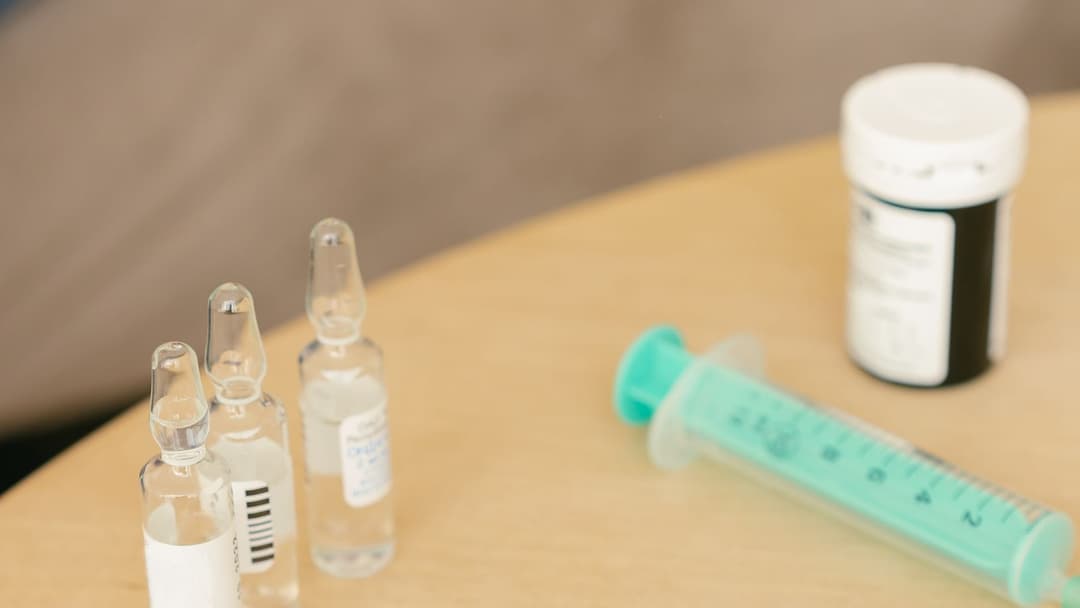
The word "injection" does a lot of unearned intimidating here. Subcutaneous peptide injections use a small insulin-type syringe, typically 29 to 31 gauge with a half-inch needle, the same equipment millions of people with diabetes use daily. The needle is fine enough that many people feel a brief pinch or nothing at all. The dose goes into the fatty layer of the abdomen or outer thigh, takes a few seconds, and you are done until tomorrow, or until next week for a GLP-1.
The day-to-day routine is short: wash your hands, wipe the vial stopper and skin with an alcohol swab, draw the prescribed dose, pinch a fold of skin, inject, and drop the used syringe in a sharps container. Because every PeRx vial ships fully reconstituted and ready to use, there is no mixing step and nothing to prepare. Our step-by-step injection guide walks the full technique with pictures, and there are site-specific walkthroughs for the popular peptides, including where to inject BPC-157, where to inject CJC-1295/Ipamorelin, and where to inject semaglutide and tirzepatide. Rotating injection sites keeps the tissue healthy and absorption consistent; that habit matters more than perfect technique on any single day.
Safety and Sourcing
Injectable peptide safety splits into two questions that deserve separate answers. The first is about the molecules. Most catalog peptides are investigational: they are not FDA-approved drugs, the human evidence base is thinner than for conventional medications, and none of them treats, cures, or prevents any disease. Reported side effects in the literature and in practice are usually mild, things like injection-site redness, temporary flushing, or nausea with GLP-1s, and our peptide side effects guide goes through them peptide by peptide. This is exactly why a licensed provider reviews your health history before anything ships and remains available throughout your protocol.
The second question is about the vial, and it is where most real-world risk lives. An injectable bypasses every defense your digestive tract provides, so purity and sterility are not nice-to-haves. Research chemical vendors sell peptides with no prescription and no enforceable quality standard; independent testing of gray-market vials has repeatedly found underdosed, contaminated, or misidentified product. The prescribed route closes that gap: PeRx peptides are compounded by a US 503A pharmacy under pharmacy regulations, with third-party testing for purity and sterility, prescribed by a licensed provider, and shipped cold to your door. If peptide legality is the question on your mind, our are peptides legal in 2026 guide covers the regulatory picture in detail.
What Injectable Peptides Cost
At PeRx, injectable peptides run $199 to $399 per month. Single peptides mostly sit at $199 to $249: Glutathione at $199, and BPC-157, Sermorelin, Tesamorelin, DSIP, PT-141, Thymosin Alpha-1, GHK-Cu, Epitalon, MOTS-C, and NAD+ at $229. Blends run $299, KLOW is $349, and the GLP-1 subscriptions are $249 for compounded semaglutide and $399 for compounded tirzepatide. The price covers the provider review, the prescription when appropriate, the compounded vial, and the injection supplies, so there is no separate clinic visit or pharmacy bill to add on top.
Two cost realities to plan around. Insurance does not cover compounded peptide therapy, so these are cash prices for everyone. And because most protocols run in cycles of one to three months followed by a break, the honest way to budget is per protocol rather than forever: a 3-month BPC-157 course is $687, not an open-ended subscription. Current prices for every peptide are on our pricing page, and if the intake review finds a peptide is not appropriate for you, you are not charged.
Injectable Peptides: Common Questions
Related Guides
Continue reading about peptides and protocols that pair well with this guide.
Peptides for Triathletes and Ironman Athletes
How peptide therapy is used for the three things long-course endurance breaks down: mitochondrial capacity, overuse tendon injury, and recovery between sessions. With an honest read on what is legal under WADA and what is not.
Ozempic & Wegovy Injection Site Irritation: Fix
Painful lumps, bruising, redness, and lingering soreness are among the most common complaints from GLP-1 patients. Here is why injection sites react the way they do, how to minimize it with technique, and which peptides providers prescribe for patients with persistent nodules or slow healing.
NAD+ vs Glutathione: Which One Do You Actually Need?
They get compared constantly, but they do almost opposite jobs. NAD+ is the cellular energy and repair coenzyme. Glutathione is the body’s master antioxidant, built for detox and cellular protection. One runs the machinery, the other protects it. Here is how to tell which one fits your goal, and when using both makes sense.
Ready to get started?
Pharmaceutical-grade injectable peptides, prescribed by a licensed provider, compounded by a US 503A pharmacy, and delivered to your door with everything you need to begin at home.
Medical Disclaimer
The information provided on this website, including all articles, guides, and educational content, is for informational and educational purposes only and is not intended as medical advice, diagnosis, or treatment. Nothing on this site should be construed as a substitute for professional medical advice from a qualified healthcare provider.
The majority of peptides discussed on this site are not approved by the U.S. Food and Drug Administration (FDA) for the indications described. They are classified as bulk drug substances and are available only through a licensed prescribing provider and compounding pharmacy. All treatments require a valid prescription and provider oversight.
The majority of published research on peptide therapies has been conducted in preclinical (animal) models. While early human data is encouraging, comprehensive clinical trial data remains limited for most peptide compounds. Individual results may vary significantly based on health status, injury type, and other factors. No specific outcomes are guaranteed.
Certain peptides discussed on this site are classified as prohibited substances by the World Anti-Doping Agency (WADA) and are banned by major sports organizations including the NFL, NCAA, UFC, NBA, MLB, NHL, and PGA. If you are subject to anti-doping testing, consult your governing body before considering any peptide therapy.
Statements on this website have not been evaluated by the Food and Drug Administration. Products and therapies discussed are not intended to diagnose, treat, cure, or prevent any disease.
© 2026 Wellness MD Group PC DBA PeRx. All rights reserved.