Which Peptide Should I Take? A Goal-by-Goal Guide
There is no single best first peptide. The right one depends on your goal, your health history and a licensed provider who reviews both. This guide shows what is commonly considered for each goal, how strong the evidence behind it is, who should not start at all, and how the PeRx assessment turns a goal into a prescription.

In this article
Key Takeaways
- There is no best first peptide. The question that works is "what is commonly considered for my goal, and how strong is the evidence," followed by a provider review of your health history.
- The evidence is uneven. Compounded semaglutide and tirzepatide sit on top of large trials of the approved brand-name drugs, which the compounded versions were not part of. BPC-157, TB-500 and DSIP rest on animal work and small human studies. Knowing which is which keeps expectations honest.
- Beginners are usually advised to start with one goal and one product so that effects and side effects are easy to read. Some PeRx products are prescribed as formulated combinations, and that is still one product.
- A licensed provider decides. At PeRx you take a 60-second assessment, a provider reviews it before anything is charged, and the pharmacy ships a vial that is ready to use. No labs are ordered and there is no separate consultation fee.
Which Peptide Should I Take: Quick Facts
Is there a best first peptide?
No. The right one depends on your goal, your health history and a provider review. Popularity is not evidence.
Commonly considered by goal
Weight loss: compounded semaglutide or tirzepatide. Recovery: BPC-157, alone or with TB-500. Sleep: DSIP. Growth hormone support: sermorelin.
Who decides
A licensed provider reviews your 60-second assessment and writes the prescription. Dose steps are decided at each renewal check-in.
Needle-free options
BPC-157 capsules and BPC/TB-500 capsules today. Sublingual semaglutide and tirzepatide are coming soon. Nothing PeRx sells is nasal or topical.
Minimum age
Adults 21 and older who complete the health assessment.
Cost
Protocols from $199 per prescription on the public pricing page; compounded semaglutide $249 and tirzepatide $399 per month. No membership, no separate consultation fee.
There is no single best first peptide, and anyone who names one without asking about you is selling something. The right peptide depends on your one main goal, on a health history that may rule some options out, and on a licensed provider who reviews both before writing anything. This page shows what is commonly considered for each goal, grades the evidence behind it, and walks through how a prescription at PeRx Peptides actually starts. If you are still working out whether peptides are for you at all, read what peptide therapy is first and come back.
One rule governs everything below. "Commonly considered" is a description of what providers see most often for a goal. It is not a recommendation, and it is not a ranking. The decision belongs to the provider who reads your assessment, which is why the fastest honest answer to "which peptide should I take" is the 60-second assessment, not a listicle.
Not sure where to start?
Take the 60-second assessment. A licensed provider reviews it before any prescription is written, and nothing is charged until they approve.
How to Choose the Best Peptides to Start With
Competitor guides rank peptides for beginners the way a magazine ranks running shoes. That gets the problem backwards. A peptide is prescribed for a person, not awarded a medal, so the useful exercise is five questions rather than a top ten.
What is your one main goal? Weight loss, tendon recovery, sleep, body composition, skin, sexual health and cognition each point to different compounds with different evidence. "Everything" is not a goal a provider can prescribe for.
Does your health history rule anything out? A thyroid cancer history closes the GLP-1 door. A cancer history makes growth hormone peptides a careful conversation. Pregnancy or breastfeeding closes most doors. This is the part of the assessment that matters most, and what providers review before prescribing explains why the questions are what they are.
Which route would you accept? Most peptides at PeRx are a subcutaneous injection with a short insulin needle, from a vial that ships fully reconstituted and ready to use. Two are capsules. The sublingual GLP-1 liquids are coming soon. If a needle is a hard no, that narrows the list before anything else does.
How strong is the evidence for that goal? This page grades every goal on a four-step scale: human trials of an approved product, limited human data, preclinical (cells and animals), and anecdotal. A peptide can be popular and still sit at the bottom of that scale.
Who will review your care? A prescription is only as good as the person writing it. At PeRx a licensed provider reviews every order, most of the time asynchronously, and can require a video visit before approving. The provider sets the prescription; dose steps are decided at each renewal check-in rather than by you between them.
One goal, one product
Beginners are usually advised to start with one goal and one compound, because cause and effect are easier to read when only one thing changed. Some PeRx products are prescribed as formulated combinations (BPC/TB-500, KLOW, CJC-1295/ipamorelin, Semax/Selank). Each counts as one product, and the provider decides whether a combination or a single peptide fits the goal.
Which Peptide Is Right for Me? Peptides for Beginners by Goal
The table lists only products PeRx offers, grouped by the goal they are most often considered for. The evidence column is the honest part: it grades the best available data for that goal, not the marketing.
| Goal | Commonly considered | Evidence level | Format at PeRx |
|---|---|---|---|
| Weight loss | Compounded semaglutide or tirzepatide, each prepared with vitamin B12 | Human trials, but of the approved brand-name drugs; the compounded versions were not in them | Once-weekly subcutaneous injection; sublingual liquid coming soon |
| Recovery and injury | BPC-157; BPC/TB-500; KLOW (BPC-157, TB-500, GHK-Cu, KPV) | Mostly preclinical, with a few small uncontrolled human reports for BPC-157 | Subcutaneous injection; BPC-157 and BPC/TB-500 also as capsules |
| Growth hormone and body composition | Sermorelin; CJC-1295/ipamorelin; tesamorelin; tesamorelin/ipamorelin | Varies by compound: human hormone-response data for sermorelin and CJC-1295; tesamorelin is FDA-approved as a brand for one HIV-related use only | Subcutaneous injection, usually in the evening |
| Sleep | DSIP | Limited: small placebo-controlled studies from the 1980s and 1990s with mixed results | Subcutaneous injection |
| Longevity and immune | Thymosin alpha-1; epitalon; GHK-Cu/epitalon; MOTS-c; SS-31 | Limited to preclinical for the longevity claims; thymosin alpha-1 has human data as an approved product abroad, not as a compounded peptide | Subcutaneous injection |
| Cognition and mood | Semax/Selank blend; Pinealon/PE-22-28/Selank | Small studies, mostly Russian, of nasal products that are not the injected blend | Subcutaneous injection |
| Skin and anti-aging | GHK-Cu; GHK-Cu/epitalon | Human data mainly for topical GHK-Cu; PeRx prescribes it as an injection | Subcutaneous injection |
| Sexual health | PT-141 | Phase 3 trials of the approved brand (bremelanotide) for one indication in women; the compounded product was not studied | Subcutaneous injection, used on demand |
| Energy and metabolism | NAD+; MOTS-c; glutathione | Limited human data; most of the energy claims are anecdotal | Subcutaneous injection |
Weight loss
- Commonly considered
- Compounded semaglutide or tirzepatide, each prepared with vitamin B12
- Evidence level
- Human trials, but of the approved brand-name drugs; the compounded versions were not in them
- Format at PeRx
- Once-weekly subcutaneous injection; sublingual liquid coming soon
Recovery and injury
- Commonly considered
- BPC-157; BPC/TB-500; KLOW (BPC-157, TB-500, GHK-Cu, KPV)
- Evidence level
- Mostly preclinical, with a few small uncontrolled human reports for BPC-157
- Format at PeRx
- Subcutaneous injection; BPC-157 and BPC/TB-500 also as capsules
Growth hormone and body composition
- Commonly considered
- Sermorelin; CJC-1295/ipamorelin; tesamorelin; tesamorelin/ipamorelin
- Evidence level
- Varies by compound: human hormone-response data for sermorelin and CJC-1295; tesamorelin is FDA-approved as a brand for one HIV-related use only
- Format at PeRx
- Subcutaneous injection, usually in the evening
Sleep
- Commonly considered
- DSIP
- Evidence level
- Limited: small placebo-controlled studies from the 1980s and 1990s with mixed results
- Format at PeRx
- Subcutaneous injection
Longevity and immune
- Commonly considered
- Thymosin alpha-1; epitalon; GHK-Cu/epitalon; MOTS-c; SS-31
- Evidence level
- Limited to preclinical for the longevity claims; thymosin alpha-1 has human data as an approved product abroad, not as a compounded peptide
- Format at PeRx
- Subcutaneous injection
Cognition and mood
- Commonly considered
- Semax/Selank blend; Pinealon/PE-22-28/Selank
- Evidence level
- Small studies, mostly Russian, of nasal products that are not the injected blend
- Format at PeRx
- Subcutaneous injection
Skin and anti-aging
- Commonly considered
- GHK-Cu; GHK-Cu/epitalon
- Evidence level
- Human data mainly for topical GHK-Cu; PeRx prescribes it as an injection
- Format at PeRx
- Subcutaneous injection
Sexual health
- Commonly considered
- PT-141
- Evidence level
- Phase 3 trials of the approved brand (bremelanotide) for one indication in women; the compounded product was not studied
- Format at PeRx
- Subcutaneous injection, used on demand
Energy and metabolism
- Commonly considered
- NAD+; MOTS-c; glutathione
- Evidence level
- Limited human data; most of the energy claims are anecdotal
- Format at PeRx
- Subcutaneous injection
Commonly considered is not a recommendation; your provider decides. Each goal has its own category page with every product PeRx offers for it: weight loss, recovery, injury recovery, growth hormone, sleep, longevity and immune, nootropic, anti-aging, skin, sexual health, energy and fat loss.
Weight Loss: What Is Commonly Considered First
What Is Commonly Considered
Semaglutide and tirzepatide are the peptides most often prescribed for weight loss, as once-weekly injections, and they are the ones with the deepest clinical record. Both are GLP-1 receptor agonists; tirzepatide also acts on a second gut hormone receptor. The weight loss page covers how they work, so this section keeps the mechanism to one sentence: they slow stomach emptying and reduce appetite, which makes a calorie deficit easier to hold. They support a deficit; they do not replace it.
What the Evidence Shows
The large randomized trials that made these drugs famous studied the FDA-approved brand-name products, Wegovy and Ozempic for semaglutide and Zepbound and Mounjaro for tirzepatide. PeRx prescribes compounded semaglutide and compounded tirzepatide prepared with vitamin B12 by a state-licensed 503A pharmacy. Compounded versions are not FDA-approved and were not the products in those trials, so nobody can tell you that a compounded vial performs like the branded pen. What the trials do establish is that the molecule, taken as approved, produces meaningful weight loss alongside diet and activity, and that the common side effects are digestive: nausea, constipation, diarrhea. What compounded semaglutide is explains the difference in detail, and how PeRx approaches weight-loss peptides explains the choices PeRx made.
Who Is a Candidate
PeRx prescribes to adults 21 and older who complete the health assessment. Providers generally consider a GLP-1 appropriate at a body mass index of 30 or above, or 27 or above with a weight-related condition such as high blood pressure, high cholesterol or sleep apnea. The hard stops are a personal or family history of medullary thyroid carcinoma or Multiple Endocrine Neoplasia type 2, pregnancy, breastfeeding, and a planned pregnancy within six months. A history of pancreatitis, gallbladder disease, gastroparesis, type 1 diabetes, severe kidney disease, bariatric surgery or an eating disorder needs a careful conversation, as does current insulin or sulfonylurea use. The assessment asks about every one of these, which is the whole point of it.
What Starting Looks Like
A provider reviews the assessment and sets the starting strength. One vial covers four weekly doses, the program renews every 28 days, PeRx emails you before each renewal, and a provider reviews every refill before it ships. Dose steps are decided at those renewal check-ins; the strength only moves when the provider moves it. You can pause or cancel at any time from your account. If you are weighing the two molecules, semaglutide vs tirzepatide lays out the differences without a verdict.
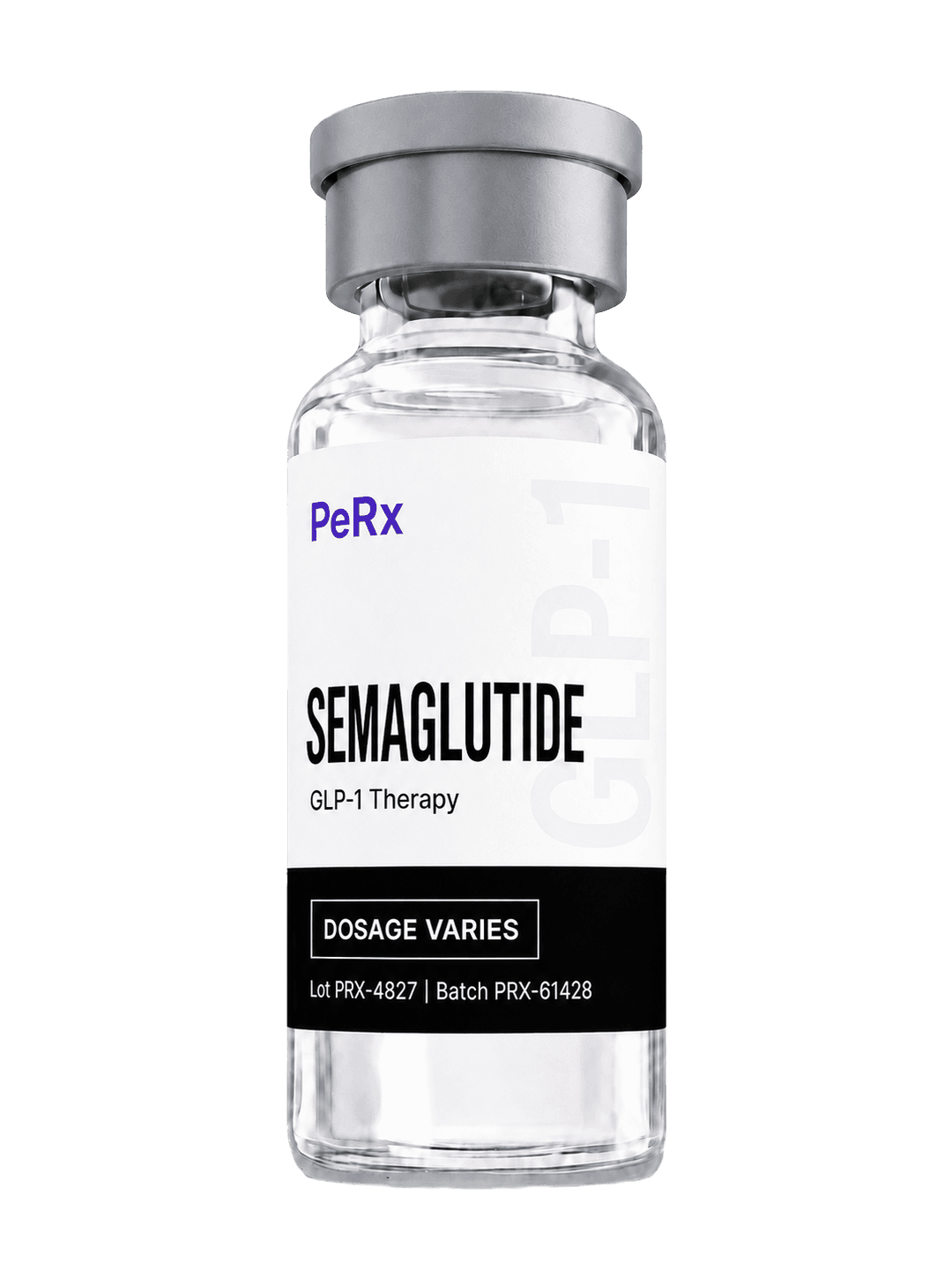
Semaglutide
Compounded semaglutide prepared with vitamin B12 by a state-licensed 503A pharmacy, as a once-weekly subcutaneous injection. One vial per 28-day cycle, shipped fully reconstituted and ready to use with supplies and FedEx Overnight included. Not Ozempic or Wegovy, and not an FDA-approved drug.
A licensed provider reviews the assessment before the first vial and before every renewal. $249 per month on the pricing page, with no membership and no separate consultation fee.
Recovery: What Is Commonly Considered First
What Is Commonly Considered
BPC-157 is the peptide most discussed for tendon, ligament, muscle and gut-related recovery, and it is the most common first peptide for people whose goal is getting a nagging injury to settle. It is often paired with TB-500 as BPC/TB-500, and it is also offered as BPC-157 capsules for readers who do not want an injection. KLOW is a prescribed four-peptide combination that adds GHK-Cu and KPV; the KLOW guide explains when a provider reaches for it. The full BPC-157 guide is the long read.
What the Evidence Shows
Say it plainly: almost all of the BPC-157 evidence is animal and laboratory work. Rodent studies of tendon, ligament, muscle and gut healing are numerous and consistent, and they are the reason the peptide has the reputation it has. The human record is thin. The most cited human report is a retrospective chart review of 16 patients who received BPC-157 injected into a painful knee, most of whom reported relief by phone survey months later, with no control group and no validated measurement. That is a reason to study it, not a result to bank on. No randomized trial of BPC-157 exists for any recovery goal. TB-500 is a fragment of thymosin beta-4, and most of the published work is on the full protein rather than the fragment. Claims online of an "exceptional safety profile" or dozens of supporting studies are describing animal work; they are not human safety data.
One sentence for drug-tested athletes: BPC-157 and TB-500 are prohibited in tested sport, and the injury recovery page carries the full disclosure.
Who Should Be Careful
People with active cancer or a cancer history, people who are pregnant or breastfeeding, and people on immune-suppressing medicines need a clinician to look first, because the growth and blood-vessel signaling these peptides act on is exactly what those situations are sensitive to. The who should not start section below has the full list.
BPC-157
The peptide most often considered first for tendon, ligament and gut-related recovery. Compounded by a state-licensed 503A pharmacy as a subcutaneous vial that ships fully reconstituted and ready to use, or as a capsule for readers who prefer no needle.
A licensed provider reviews the assessment before the pharmacy fills the prescription. Protocols start at $199 per prescription on the pricing page. BPC-157 is not an FDA-approved drug, and the evidence behind it is mostly preclinical.
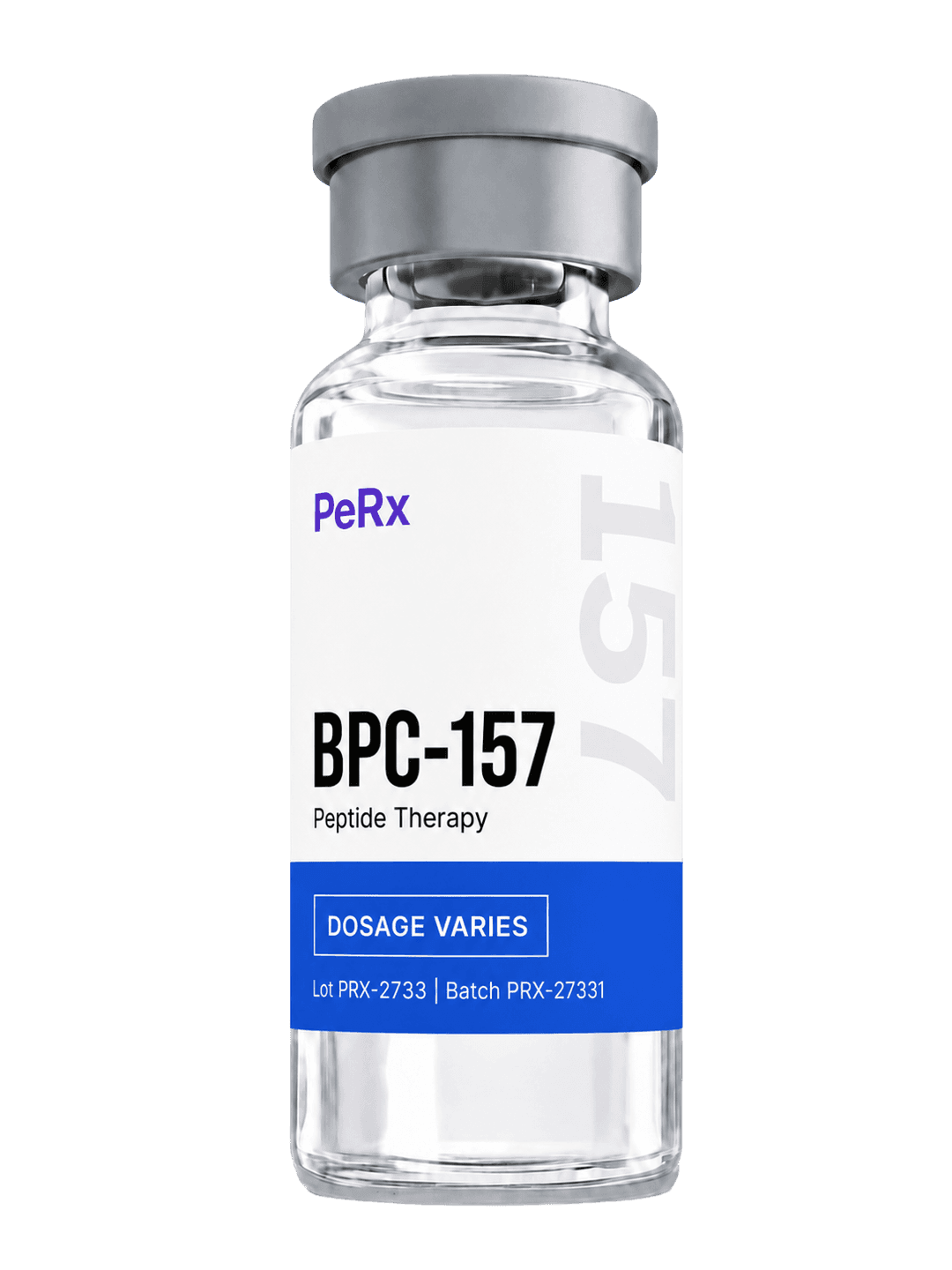
Vial or capsule. The evidence grade is the same either way: preclinical, with small human reports.
Check eligibilitySleep: What Is Commonly Considered First
The evidence for DSIP is limited, and that sentence belongs at the top of the section rather than the bottom. Delta sleep-inducing peptide was isolated in the 1970s and studied in a handful of small placebo-controlled trials in the 1980s and 1990s, mostly in people with chronic insomnia. One double-blind series in 14 middle-aged insomniacs reported better night sleep with repeated doses. A later double-blind study in 16 chronic insomniacs found the measured effects weak and concluded that short-term DSIP was unlikely to be of major benefit. A 2006 review still called the peptide an unresolved riddle. That is the record: small, old, mixed. The DSIP guide goes through each study.
Because of that, a provider considering DSIP asks about the sleep problem before the peptide. Sleep apnea, medicines that fragment sleep, alcohol timing, pain and mood are common medical causes of bad sleep, and each has its own fix that no peptide replaces. Some growth hormone peptides are also discussed for sleep quality, since growth hormone release is tied to deep sleep; the growth hormone section covers them. For a wider read, see the best peptides for sleep and the sleep category page.
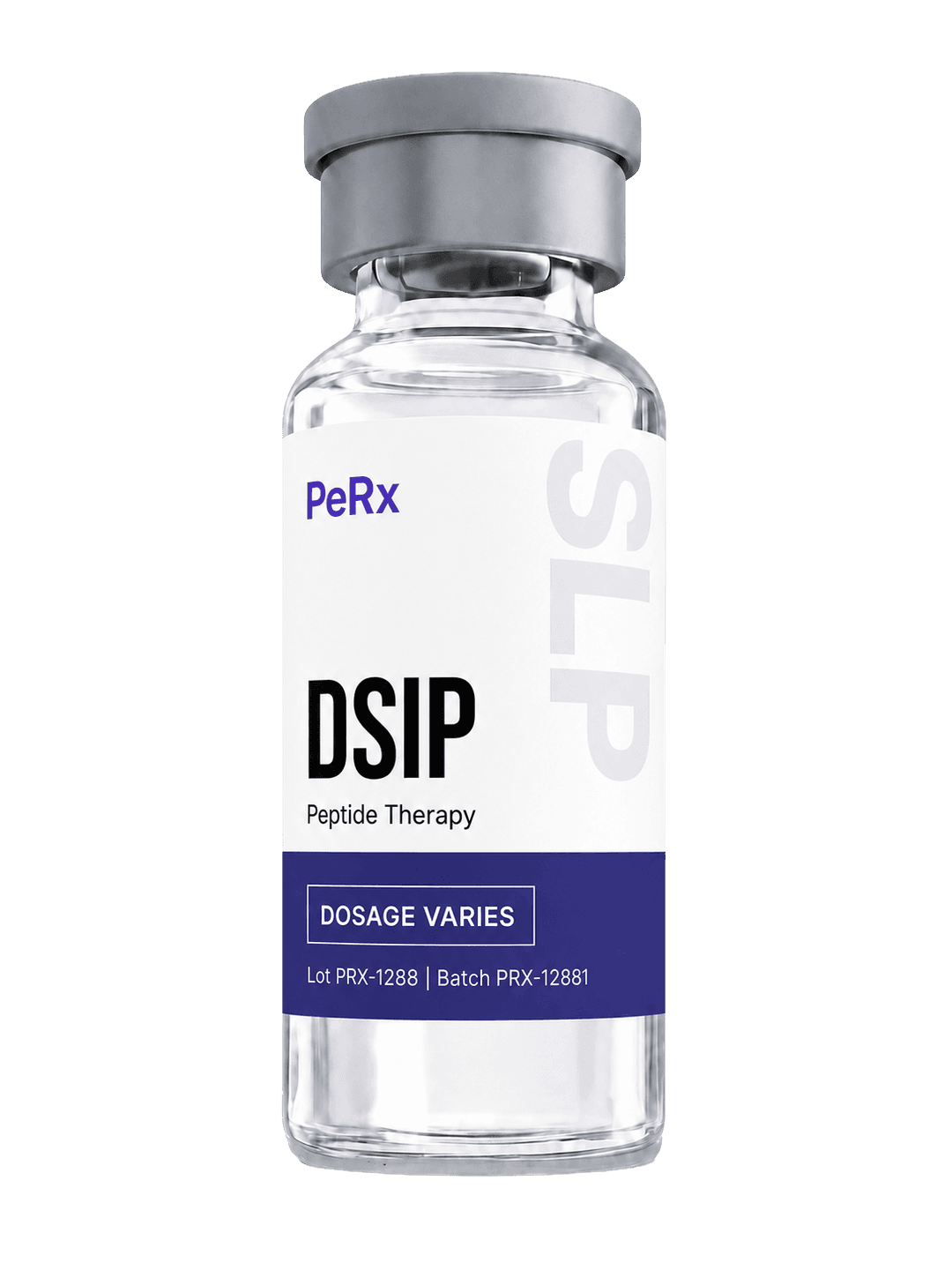
DSIP
Delta sleep-inducing peptide, compounded by a state-licensed 503A pharmacy as a subcutaneous vial that ships fully reconstituted and ready to use. Usually considered when the sleep problem has already been looked at and the common medical causes are not the explanation.
A licensed provider reviews the assessment, including your sleep history and medicines, before the pharmacy fills the prescription. Protocols start at $199 per prescription on the pricing page. DSIP is not an FDA-approved drug and its human evidence is limited.
Longevity and Growth Hormone: What Is Commonly Considered First
A growth hormone secretagogue is a peptide that prompts your own pituitary gland to release growth hormone in its natural pulses, rather than injecting growth hormone itself. That distinction is the reason this class exists: the body keeps control of the signal. Sermorelin is the compound most often described as the gentler entry point, because it mimics the first 29 amino acids of the body's own releasing hormone and has decades of human use in endocrinology. CJC-1295/ipamorelin pairs a releasing-hormone analog with a second peptide that acts on a different receptor, and tesamorelin, alone or with ipamorelin, is the third option PeRx offers.
The evidence varies by compound. Sermorelin and CJC-1295 both have human studies showing a rise in growth hormone and IGF-1; the published CJC-1295 data are for a longer-acting form than the one in the PeRx blend, which the guide explains. Tesamorelin is FDA-approved as the brand Egrifta for one condition only, excess abdominal fat in people with HIV, and the compounded tesamorelin PeRx prescribes is not Egrifta and is not approved for anything. What people report from this class, better sleep, easier recovery, a slow shift in body composition, is gradual, measured in months, and not guaranteed.
A provider checks three things before considering any of them: cancer history and any pituitary condition, because growth signaling is the wrong thing to raise in those settings; blood sugar, because growth hormone pushes it up; and, where it matters, a recent IGF-1 result. PeRx orders no labs, so if a provider wants that number they will ask you to bring a recent result from your own doctor. If you are over 40 the goal usually looks a little different, and the best peptides for men over 40, for women over 40 and peptides after 60 take that on directly. The growth hormone category page lists every option.
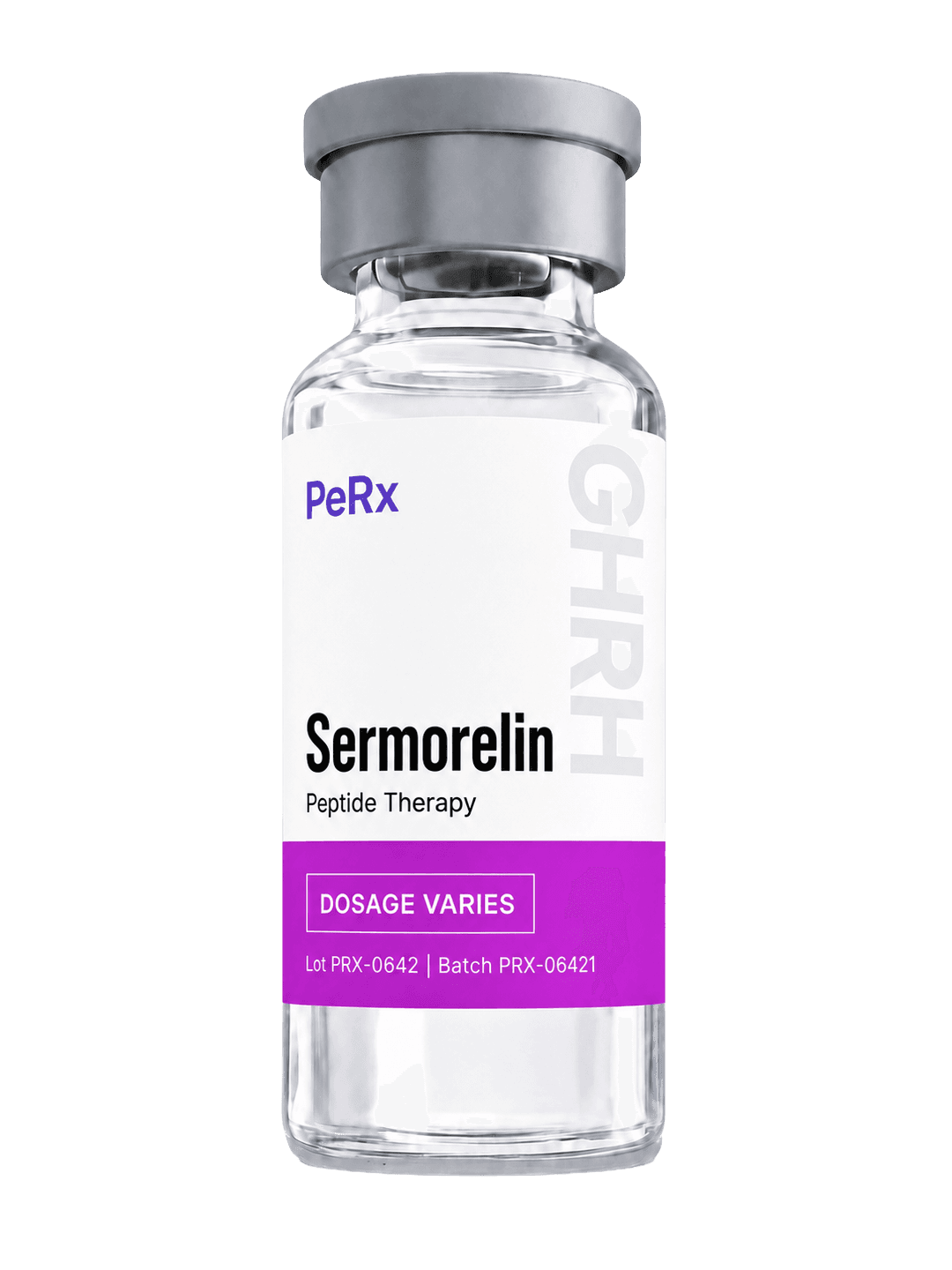
Sermorelin
The growth hormone releasing peptide most often considered as a first step, because it works through your own pituitary. Compounded by a state-licensed 503A pharmacy as a subcutaneous vial that ships fully reconstituted and ready to use, usually injected in the evening.
A licensed provider reviews cancer history, pituitary conditions and blood sugar in the assessment before the pharmacy fills the prescription. Protocols start at $199 per prescription on the pricing page. The compounded product is not an FDA-approved drug.
Prefer No Needles? Options to Ask About
Injection is the usual route for most peptides because stomach acid and digestive enzymes take peptides apart, so a swallowed dose delivers a small fraction of an injected one. That is biology, not a sales pitch. The needle-free options that exist at PeRx today are BPC-157 capsules and BPC/TB-500 capsules, which make the most sense when the goal is gut-related, where the peptide acts locally before it is broken down. Sublingual semaglutide and tirzepatide are listed as coming soon on the weight loss page. Nothing PeRx sells is a nasal spray, a cream or a topical; where you see GHK-Cu or Selank described as needle-free elsewhere, that is a different product from the injectable PeRx prescribes.
Two honest notes. First, a needle-free form has less evidence than the injection and is not an equivalent version of it; peptides without needles grades every route. Second, the needle is smaller than most people picture. Injectable vials ship ready to use, and the dose is drawn with a short insulin needle under the skin, which oral vs injectable peptides and the injection guide both walk through. Most people who dread it find the second injection boring.
Other Goals: Cognition, Skin, Sexual Health and Energy
Cognition and mood. The Semax/Selank blend is the product most often considered, and the evidence is small studies, mostly Russian, of nasal products that are not the injected blend PeRx prescribes. Nothing PeRx sells is intranasal. Nootropic peptides for brain health sorts the claims, and the nootropic category page lists the options.
Skin and anti-aging. GHK-Cu has human data mainly as a topical, in cosmetic studies; PeRx prescribes it as a subcutaneous injection, where the evidence is thinner. Treat it as limited human data for the injected route. See the skin category page and the anti-aging category page.
Sexual health. PT-141 is the compounded form of bremelanotide, which has phase 3 trial data and FDA approval as a brand for one indication, low sexual desire in premenopausal women. The compounded product was not in those trials and is not approved. See the sexual health category page.
Energy. NAD+ injections have a plausible mechanism and limited human evidence; most of the energy reports are anecdotal. MOTS-c and glutathione sit in the same bracket. See the energy category page. Not sure where your goal fits? Take the assessment and let a provider sort it.
One Peptide or a Stack?
Beginners are commonly advised to start with one compound for a plain reason: if something improves, or something goes wrong, you want to know what caused it. Add two products at once and you have given up that information. This is advice, not a rule, and the provider makes the call. Some PeRx products are prescribed as formulated combinations because the pairing has a rationale, BPC-157 with TB-500 for tissue repair, CJC-1295 with ipamorelin for growth hormone release, Semax with Selank for cognition and calm. Each peptide inside a combination carries its own evidence grade, and the combination as a whole has rarely been studied. The peptide stacking guide explains how providers think about pairing, and Glow vs KLOW vs Wolverine compares the named recovery stacks.
Who Should Not Start Peptides Without Medical Review
The assessment exists to catch these, and a provider checks every one of them. The list is not exhaustive; it is the set of situations that most often changes the answer.
Pregnancy and breastfeeding. No peptide on this page has been studied in pregnancy, and GLP-1s must stop at least two months before trying to conceive. Active or past cancer, especially for growth hormone peptides and the recovery peptides that act on growth and blood-vessel signaling. Thyroid cancer history or MEN 2 for GLP-1s, with no exceptions. Pancreatitis, gallbladder disease or severe stomach-emptying disorders for GLP-1s. Copper-handling disorders such as Wilson disease for GHK-Cu. Uncontrolled diabetes, because growth hormone peptides raise blood sugar and GLP-1s change insulin needs. Severe kidney or liver disease, which changes how most drugs are handled. Under 21, which is a PeRx rule for every product.
One more item that belongs here because it is about the products rather than the person. The FDA has raised two concerns about many compounded peptides: immune reactions to the peptide itself, and impurities in poorly made product. A prescription from a state-licensed pharmacy with batch testing addresses the second concern; it does not erase the first, which is one reason a provider stays involved. Is peptide therapy safe and the peptide side effects guide cover both in depth.
Prescription Peptides vs Research Peptides
Search any peptide name and half the results are vials labeled "research use only." Those products are not approved for human use, nobody has checked what is in them, and the label is a legal shield for the seller rather than a description of the contents. A prescription peptide is filled by a licensed pharmacy for a named patient, with batch testing behind it. The difference is not price; it is whether anyone is accountable for the vial.
Three green flags tell you which side of that line a service is on: a named licensed prescriber who reviews you, a named pharmacy type (at PeRx a state-licensed 503A pharmacy), and quality testing you can actually read. PeRx publishes what its pharmacy tests on the quality testing page, including a sample certificate of analysis. Research peptides vs prescription peptides and what pharmaceutical-grade means go further. This page does not explain how to buy or vet research chemicals, on purpose.
What to Expect: Timelines by Goal
Everything in the table below is what people report, not what a trial proved, except where the row says so. Use it to set expectations, not to grade your own progress week by week.
| Goal | What some people notice early | What takes longer | When the provider reviews |
|---|---|---|---|
| Weight loss | Smaller appetite within the first weeks on the starting strength; digestive side effects at each step up | Steady loss over months at the maintenance strength, alongside diet and activity | Before every 28-day renewal, when dose steps are decided |
| Recovery | Reports of less soreness or stiffness in the first weeks | Tendon and ligament changes are judged over weeks to months, and some people report nothing | At each renewal check-in |
| Sleep | Reports range from the first nights to no change at all | Whether the change holds is the question, and the studies are mixed | At each renewal check-in |
| Growth hormone | Reports of deeper sleep within weeks | Body composition and recovery changes are a months-long project, gradual and not guaranteed | At each renewal check-in |
Weight loss
- What some people notice early
- Smaller appetite within the first weeks on the starting strength; digestive side effects at each step up
- What takes longer
- Steady loss over months at the maintenance strength, alongside diet and activity
- When the provider reviews
- Before every 28-day renewal, when dose steps are decided
Recovery
- What some people notice early
- Reports of less soreness or stiffness in the first weeks
- What takes longer
- Tendon and ligament changes are judged over weeks to months, and some people report nothing
- When the provider reviews
- At each renewal check-in
Sleep
- What some people notice early
- Reports range from the first nights to no change at all
- What takes longer
- Whether the change holds is the question, and the studies are mixed
- When the provider reviews
- At each renewal check-in
Growth hormone
- What some people notice early
- Reports of deeper sleep within weeks
- What takes longer
- Body composition and recovery changes are a months-long project, gradual and not guaranteed
- When the provider reviews
- At each renewal check-in
What is probably hype: dramatic muscle gain without training, "systemic healing" in a couple of weeks, instant cognitive effects, and before-and-after photos that arrive without a diagnosis or a timeline. How long peptides take to work gives the realistic windows peptide by peptide.
Medical History Before You Start
The assessment asks about your goals, your health history, your current medicines and your allergies, and it asks them because each one can change which peptide is appropriate or rule peptides out. PeRx does not order lab work. For most protocols no labs are needed to start. For a few peptides the provider may ask you to bring a recent result from your own doctor, for example a growth hormone marker before a growth hormone peptide or a blood-sugar result before a GLP-1 in someone with diabetes. Lab work before starting peptides explains what a provider might want to see and why, and peptide safety monitoring covers what to watch once you have started. There is no self-start checklist here, because the point is that a provider reads your history, not that you grade your own.
Red Flags: When to Contact Your Provider
Mild nausea on a GLP-1 and a little redness at an injection site are common and usually fade. These are not: hives, swelling of the face or throat, or trouble breathing, which is an allergic reaction and an emergency; severe or persistent abdominal pain on a GLP-1, which can mean pancreatitis or a gallbladder problem; persistent vomiting; a hot, spreading injection-site reaction; vision changes; a severe headache; or chest pain. Stop the product and contact the prescriber, or emergency services if it is an emergency. The peptide side effects guide has the full list by peptide.
How to Start Peptides at PeRx: Step by Step
The process is the same for every product, and none of it needs a clinic visit. Take the 60-second assessment, which is the peptide quiz: goals, history, medicines, allergies. Choose a medication and save a card. Nothing is charged at that point. A licensed provider reviews the assessment, most of the time asynchronously; the clinician can require a video visit before approving, can decline, or can approve only part of what you requested. If a prescription is appropriate the provider writes it, and only then is the card charged. The pharmacy ships the vial, fully reconstituted and ready to use, with needles, syringes and swabs, by FedEx Overnight in cold-chain packaging. Renewals are reviewed. Peptides are ordered per prescription with no auto-renewal; the two GLP-1 programs renew every 28 days with a provider review and an email before each one, and you can pause, skip or cancel in one step from your account.
Prices are published on the pricing page: protocols from $199 per prescription, with the provider review, supplies and shipping included and no membership or separate consultation fee. Peptide therapy cost explains what that figure does and does not cover, how to get peptides prescribed online walks through the review in more detail, and the provider checklist is the list of questions to ask any service, including this one. Browse all peptides if you want to see every option before you decide. Existing patients with a question about their protocol can message the care team at any time.
Ready to see what a provider would consider for you?
New to PeRx: the assessment takes about a minute, and a licensed provider reviews it before any prescription is written. Already a patient: message your care team with questions about your protocol.
Peptides for Beginners FAQs
Related Guides
Continue reading about peptides and protocols that pair well with this guide.
Peptide Therapy for Athletes: WADA Rules & Use
Athletes were among the earliest adopters of peptide therapy, and for good reason. Faster recovery between training sessions, accelerated injury repair, and improved body composition are directly relevant to athletic performance. But there are rules, and understanding the competitive landscape matters as much as the pharmacology.
Peptides for Commercial Fishermen: Lower-Back Pain
For the people who lift for a living: deckhands, warehouse crews, movers, framers, and anyone whose lower back and shoulders take a beating every shift. How peptide therapy is used for the strain of heavy physical work.
DSIP Dosage Chart: Units, Timing, Cycle Length
Most DSIP dosage charts assume a powder and a calculator. PeRx ships DSIP in a ready-to-use vial at one fixed concentration, so the entire chart collapses into a single line of arithmetic. This page converts micrograms to insulin-syringe units at 1 mg/mL, explains the 20-unit bedtime dose, puts the 100 to 250 mcg range you see online next to what the human trials actually infused, and covers cycle length and the July 2026 FDA committee vote, as of September 8, 2026.
References and Review
Reviewed by Dr. Cory Mellon, MD. Evidence grades on this page come from the sources below; where a source studies an FDA-approved brand-name product, the page says so, because the compounded versions PeRx prescribes were not in those studies. FDA compounding status was checked against the FDA pages cited here on November 23, 2026.
Drucker DJ. Efficacy and safety of GLP-1 medicines for type 2 diabetes and obesity. Diabetes Care. 2024;47(11):1873-1888. PMID: 38843460 View study
Novo Nordisk. Wegovy (semaglutide) injection prescribing information. DailyMed, accessed November 2026. View study
U.S. Food and Drug Administration. Compounding and the FDA: questions and answers. Accessed November 2026. View study
Sikiric P, Rucman R, Turkovic B, et al. Novel cytoprotective mediator, stable gastric pentadecapeptide BPC 157. Vascular recruitment and gastrointestinal tract healing. Curr Pharm Des. 2018;24(18):1990-2001. PMID: 29879879 View study
Lee E, Padgett B. Intra-articular injection of BPC 157 for multiple types of knee pain. Altern Ther Health Med. 2021;27(4):8-13. PMID: 34324435 View study
Goldstein AL, Hannappel E, Sosne G, Kleinman HK. Thymosin beta4: a multi-functional regenerative peptide. Basic properties and clinical applications. Expert Opin Biol Ther. 2012;12(1):37-51. PMID: 22074294 View study
Walker RF. Sermorelin: a better approach to management of adult-onset growth hormone insufficiency? Clin Interv Aging. 2006;1(4):307-308. PMID: 18046908 View study
Teichman SL, Neale A, Lawrence B, Gagnon C, Castaigne JP, Frohman LA. Prolonged stimulation of growth hormone (GH) and insulin-like growth factor I secretion by CJC-1295, a long-acting analog of GH-releasing hormone, in healthy adults. J Clin Endocrinol Metab. 2006;91(3):799-805. PMID: 16352683 View study
Theratechnologies. Egrifta SV (tesamorelin for injection) prescribing information. DailyMed, accessed November 2026. View study
Schneider-Helmert D. Effects of delta-sleep-inducing peptide on 24-hour sleep-wake behaviour in severe chronic insomnia. Eur Neurol. 1987;27(2):120-129. PMID: 3622582 View study
Bes F, Hofman W, Schuur J, Van Boxtel C. Effects of delta sleep-inducing peptide on sleep of chronic insomniac patients. A double-blind study. Neuropsychobiology. 1992;26(4):193-197. PMID: 1299794 View study
Kovalzon VM, Strekalova TV. Delta sleep-inducing peptide (DSIP): a still unresolved riddle. J Neurochem. 2006;97(2):303-309. PMID: 16539679 View study
Pickart L, Vasquez-Soltero JM, Margolina A. GHK peptide as a natural modulator of multiple cellular pathways in skin regeneration. Biomed Res Int. 2015;2015:648108. PMID: 26236730 View study
Kingsberg SA, Clayton AH, Portman D, et al. Bremelanotide for the treatment of hypoactive sexual desire disorder: two randomized phase 3 trials. Obstet Gynecol. 2019;134(5):899-908. PMID: 31599840 View study
Conlon NJ. The role of NAD+ in regenerative medicine. Plast Reconstr Surg. 2022;150(4 Suppl):41S-48S. PMID: 36170435 View study
Drucker DJ. Advances in oral peptide therapeutics. Nat Rev Drug Discov. 2020;19(4):277-289. PMID: 31848464 View study
Medical Disclaimer
The information provided on this website, including all articles, guides, and educational content, is for informational and educational purposes only and is not intended as medical advice, diagnosis, or treatment. Nothing on this site should be construed as a substitute for professional medical advice from a qualified healthcare provider.
The majority of peptides discussed on this site are not approved by the U.S. Food and Drug Administration (FDA) for the indications described. They are classified as bulk drug substances and are available only through a licensed prescribing provider and compounding pharmacy. All treatments require a valid prescription and provider oversight.
The majority of published research on peptide therapies has been conducted in preclinical (animal) models. While early human data is encouraging, comprehensive clinical trial data remains limited for most peptide compounds. Individual results may vary significantly based on health status, injury type, and other factors. No specific outcomes are guaranteed.
Certain peptides discussed on this site are classified as prohibited substances by the World Anti-Doping Agency (WADA) and are banned by major sports organizations including the NFL, NCAA, UFC, NBA, MLB, NHL, and PGA. If you are subject to anti-doping testing, consult your governing body before considering any peptide therapy.
Statements on this website have not been evaluated by the Food and Drug Administration. Products and therapies discussed are not intended to diagnose, treat, cure, or prevent any disease.
© 2026 Wellness MD Group PC DBA PeRx. All rights reserved.