How to Take Peptides: Injection, Capsule, or Strip
Most prescription peptides are injected under the skin, a few are swallowed, and a small category dissolves under the tongue. This is the route-of-administration hub: why the route matters, exactly how a subcutaneous injection works, when each peptide is usually taken, what arrives in a PeRx kit, and a directory of per-peptide injection-site guides.
In this article
Key Takeaways
- Most therapeutic peptides are given by subcutaneous injection because the stomach and small intestine break peptides down before they can be absorbed; the oral bioavailability of unmodified peptides is generally below 1 to 2 percent (Drucker, Nature Reviews Drug Discovery, 2020).
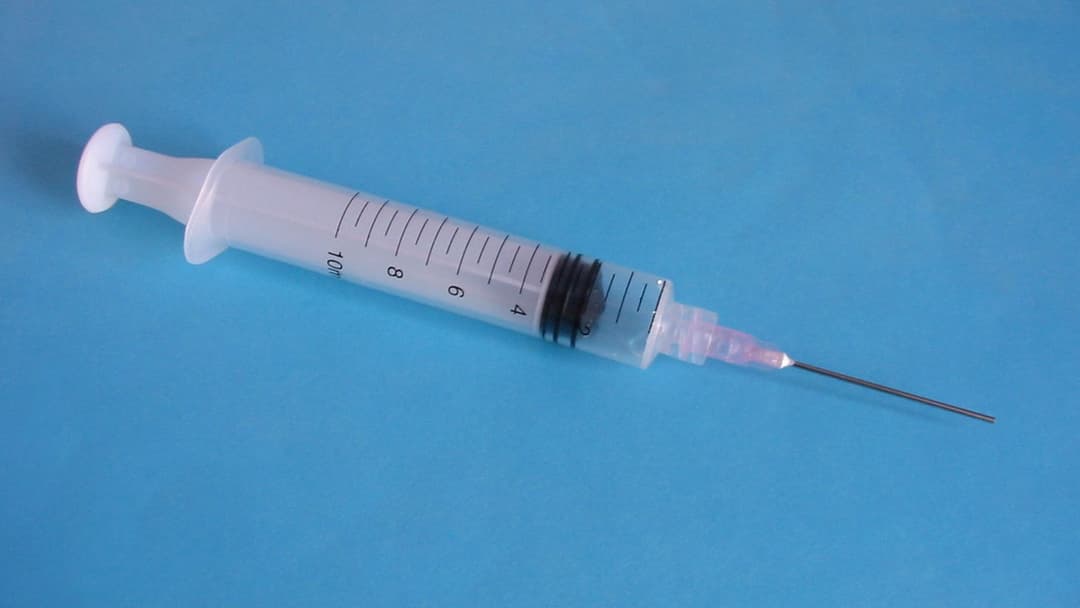
- A subcutaneous injection uses an insulin-style syringe with a 29 to 31 gauge needle, goes into the fat layer of the abdomen at least 2 inches from the navel, the outer thigh, or the back of the upper arm, and takes about ten seconds.
- Rotating injection sites matters more than which site you pick. Repeatedly injecting the same spot causes lipohypertrophy, a firm fatty lump that absorbs drug unpredictably (Frid et al., Mayo Clinic Proceedings, 2016).
- Timing follows the peptide class: growth hormone secretagogues such as sermorelin and CJC-1295/ipamorelin are taken at bedtime on an empty stomach, tesamorelin in the morning, PT-141 on demand before intimacy, and compounded GLP-1s once a week on the same day.
- Oral BPC-157 capsules are the one place where swallowing a peptide makes sense on its own terms, because BPC-157 is unusually stable in gastric juice and the gut lining is often the target. For tendon, joint, or systemic use, injection remains the standard route.
- Every PeRx injectable ships fully reconstituted and ready to use, with insulin syringes, alcohol swabs, and a step-by-step injection guide in the box. Nothing PeRx sells is a nasal spray.
Quick Facts
Most common route
Subcutaneous injection into the fat layer under the skin
Needle
Insulin syringe, 29 to 31 gauge, short needle
Sites
Abdomen (2 inches from the navel), outer thigh, back of upper arm
Oral options at PeRx
BPC Capsules and BPC/TB-500 Capsules only
Storage
Refrigerate at 36 to 46°F, never freeze, keep out of light
Last reviewed
August 24, 2026
Why the Route Matters
If you have ever wondered why peptides are injected while most drugs come as pills, the answer is digestion. A peptide is a short chain of amino acids, and the digestive tract exists to take chains of amino acids apart. Stomach acid unfolds them, pepsin cuts them, and the small intestine finishes the job with trypsin and chymotrypsin. Whatever survives that gauntlet still has to cross the intestinal wall, which is built to admit single amino acids and very small fragments, not intact peptides. That is the whole reason insulin has been injected for a century.
The numbers are stark. In a 2020 review in Nature Reviews Drug Discovery, Daniel Drucker summarized decades of work on oral peptide delivery and noted that unmodified peptides typically reach oral bioavailability well below 1 to 2 percent. The one commercially successful oral peptide of any scale, oral semaglutide, needed an absorption enhancer, a strict empty-stomach protocol, and a dose roughly 100 times the injectable dose to get roughly 1 percent of it into the bloodstream. That is how hard the problem is, and it is why the peptides PeRx prescribes are, with two exceptions, injected.
Drucker DJ, "Advances in oral peptide therapeutics," Nature Reviews Drug Discovery, 2020. Review of the barriers to oral peptide absorption and the enabling technologies behind oral semaglutide. View study
Subcutaneous injection sidesteps all of that. The peptide goes into the fat layer just under the skin, where it is absorbed into small blood and lymphatic vessels over minutes to hours. There is no acid, no protease, and no intestinal wall in the way. Absorption is more predictable, the dose needed is far smaller, and the tissue tolerates it well. It is the same route used for insulin, heparin, and the FDA-approved GLP-1 pens, and it is the route that almost every published peptide study used.
So the practical answer to "how do you take peptides" is: usually with a small insulin syringe, once a day or once a week depending on the peptide, in a spot you can reach easily. The rest of this guide covers the details, the exceptions, and the timing conventions PeRx uses for each product. If you already have your kit and want the step-by-step, the how to inject peptides guide and the injection guide walk through it with photos.
Subcutaneous Injection Basics
A subcutaneous injection is not an intramuscular shot and it is nothing like a blood draw. The needle is about as thin as a human hair and only goes a fraction of an inch deep, into fat rather than muscle. Most people describe the first one as anticlimactic. Here is what you need to know before you do it.
The three standard sites
Abdomen. The most common site, and the one most injection guides prefer, because the fat layer is consistent and absorption is reliable. Use the area at least 2 inches away from the navel in any direction, and avoid the belt line, scars, and stretch marks. Outer thigh. The middle third of the front and outer thigh, where you can pinch a fold of skin. Handy if you would rather not use your stomach or want a second zone to rotate into. Back of the upper arm. The fleshy area on the back of the arm between the shoulder and elbow. Workable, but harder to reach with one hand, so most people save it for when someone else is helping.
The choice between these sites is mostly about comfort and access. For the peptides PeRx prescribes, there is no evidence that injecting near an injured tendon or joint delivers more drug to that tissue than injecting in the abdomen; the peptide enters the bloodstream either way. Some people still prefer to inject close to a sore area with BPC-157, which is fine as long as the spot has enough subcutaneous fat, but it is a preference rather than a requirement.
Rotation
Rotation is the one technique detail that actually changes outcomes. The 2016 insulin injection technique recommendations published by Frid and colleagues in Mayo Clinic Proceedings, drawn from a survey of more than 13,000 injecting patients across 42 countries, found that failing to rotate sites is the strongest predictor of lipohypertrophy: a rubbery, sometimes visible lump of overgrown fat tissue that absorbs drug erratically. The fix is simple. Divide each site into quadrants, move at least a finger width from your last injection, and cycle through the zones so no spot gets used more than once every week or two.
Frid AH et al., "New Insulin Delivery Recommendations," Mayo Clinic Proceedings, 2016. Consensus guidance on subcutaneous injection technique, site rotation, needle length, and lipohypertrophy prevention. View study
Needle, angle, and the insulin-syringe comparison
The syringes in a PeRx kit are standard insulin syringes: 29 to 31 gauge, with a half-inch needle and a barrel marked in units. Higher gauge means a thinner needle, and 31 gauge is about 0.26 mm across. If you have watched someone inject insulin, you have seen exactly the tool and exactly the motion. Pinch a fold of skin, insert the needle at 90 degrees (45 degrees if you are lean and the fold is thin), push the plunger slowly, wait a few seconds, withdraw. The same Frid consensus found that with needles this short, a 90 degree angle without a skin fold is also safe for most adults, but the pinch is a reasonable habit for thin sites like the thigh.
Because the barrel is marked in insulin units, your dose is expressed as a number of units on the syringe. The dose card that comes with your prescription tells you how many. Draw to that line, check for large air bubbles (a tiny one is harmless in a subcutaneous shot), and inject. Do not reuse a syringe; the needle tip dulls after a single pass through the vial stopper and the skin, and a dull needle is what makes the second injection hurt more than the first.
What arrives in a PeRx kit
Every PeRx injectable ships in a cold pack by FedEx overnight with everything needed for the prescription: the vial, ready to use with no reconstitution needed; a supply of insulin syringes; alcohol swabs; and a printed step-by-step injection guide. There is no mixing step and no powder. You take the vial out of the refrigerator, wipe the stopper with a swab, draw your dose, and inject. The full procedure, including a pre-injection checklist, is at /injection-guide. What is not in the box is a sharps container, which you should buy or improvise before your first dose (more on that in the safety section).
The short version
Swab the stopper. Draw your dose in units. Swab a spot on your abdomen 2 inches from the navel. Pinch, insert at 90 degrees, push slowly, count to five, withdraw. Drop the syringe in a sharps container. Move a finger width next time. That is the entire skill.
When to Take Each Peptide
Route is the same for almost every PeRx injectable. Timing is not. The time of day is determined by what the peptide does and how the body's own rhythms interact with it. These are the conventions used in the PeRx catalog; your PeRx provider will prescribe a protocol with the exact schedule for your prescription.
| Peptide class | PeRx products | Typical timing | Why |
|---|---|---|---|
| Growth hormone secretagogues | Sermorelin, CJC-1295/Ipamorelin | Bedtime, empty stomach, 1 to 2 hours after the last meal | Lines the peptide-driven GH pulse up with the natural nighttime pulse; food and insulin blunt GH release |
| GHRH analog | Tesamorelin, Tesamorelin/Ipamorelin | Once daily, usually morning | Catalog convention for tesamorelin; some providers prefer evening dosing |
| Neuropeptide | DSIP | Evening, before bed | The intended effect is on sleep architecture |
| Nootropic and metabolic | Semax/Selank, MOTS-C | Morning or daytime | Goal is calm focus or daytime energy, not sedation |
| Melanocortin agonist | PT-141 | As needed, roughly 45 minutes to 2 hours before intimacy | Single-use timing; it is not a daily peptide |
| Compounded GLP-1 (subscription) | Semaglutide, Tirzepatide (both compounded with B12) | Once a week, same day each week, any time of day | Long half-life; consistency matters more than clock time |
| Repair, immune, longevity, antioxidant | BPC-157, BPC/TB-500, KLOW, GHK-Cu, Epitalon, Thymosin Alpha-1, Glutathione, NAD+ | Any consistent time of day | No strong circadian interaction; pick a time you will remember |
Growth hormone secretagogues
- PeRx products
- Sermorelin, CJC-1295/Ipamorelin
- Typical timing
- Bedtime, empty stomach, 1 to 2 hours after the last meal
- Why
- Lines the peptide-driven GH pulse up with the natural nighttime pulse; food and insulin blunt GH release
GHRH analog
- PeRx products
- Tesamorelin, Tesamorelin/Ipamorelin
- Typical timing
- Once daily, usually morning
- Why
- Catalog convention for tesamorelin; some providers prefer evening dosing
Neuropeptide
- PeRx products
- DSIP
- Typical timing
- Evening, before bed
- Why
- The intended effect is on sleep architecture
Nootropic and metabolic
- PeRx products
- Semax/Selank, MOTS-C
- Typical timing
- Morning or daytime
- Why
- Goal is calm focus or daytime energy, not sedation
Melanocortin agonist
- PeRx products
- PT-141
- Typical timing
- As needed, roughly 45 minutes to 2 hours before intimacy
- Why
- Single-use timing; it is not a daily peptide
Compounded GLP-1 (subscription)
- PeRx products
- Semaglutide, Tirzepatide (both compounded with B12)
- Typical timing
- Once a week, same day each week, any time of day
- Why
- Long half-life; consistency matters more than clock time
Repair, immune, longevity, antioxidant
- PeRx products
- BPC-157, BPC/TB-500, KLOW, GHK-Cu, Epitalon, Thymosin Alpha-1, Glutathione, NAD+
- Typical timing
- Any consistent time of day
- Why
- No strong circadian interaction; pick a time you will remember
A note on the GLP-1 row. PeRx's semaglutide and tirzepatide are compounded preparations, each combined with vitamin B12, prepared by a 503A pharmacy against an individual prescription. They are not the FDA-approved products Ozempic, Wegovy, Mounjaro, or Zepbound, and the compounded versions have not been reviewed by the FDA. They are also the only PeRx products sold as a subscription: one ready-to-use vial per 28 days, auto-renewing, cancel anytime. Site guidance for those two is in where to inject semaglutide and tirzepatide.
For a longer treatment of the clock question, including what happens if you take a bedtime peptide in the morning, see best time of day to take peptides.
Oral Capsules
PeRx sells two oral products: BPC Capsules and BPC/TB-500 Capsules. Both are swallowed, not injected, and they are the only non-injection peptides in the catalog as of August 2026. Given everything in the first section about digestion, why do these exist at all?
BPC-157 is a special case. It was isolated from human gastric juice, and its defining property in the Croatian literature is that it is stable in gastric acid for 24 hours or more where most peptides are destroyed in minutes. Predrag Sikiric's group, which has published on the compound since the early 1990s, gave it orally in a large share of their rodent gastrointestinal studies, and a 2020 review in Gut and Liver summarizes those models. The honest caveat: nearly all of that is animal data, and stability in the stomach is not the same thing as absorption into the bloodstream.
Sikiric P et al., "Stable Gastric Pentadecapeptide BPC 157, Robert's Stomach Cytoprotection/Adaptive Cytoprotection/Organoprotection, and Selye's Stress Coping Response," Gut and Liver, 2020. Review of predominantly rodent gastric work using oral and injected BPC-157. View study
On absorption, the best data comes from a 2022 pharmacokinetic study in Frontiers in Pharmacology by He and colleagues, who tracked labeled BPC-157 in rats and dogs. Injected BPC-157 was rapidly distributed and rapidly broken down, with a half-life measured in minutes; the peptide and its fragments still reached tissues throughout the body. That study used intravenous and intramuscular routes rather than oral, so it does not settle the oral question directly. What it does show is that even by injection, BPC-157 does not linger in the blood, which is one reason the debate about oral versus injectable is less about "which one absorbs" and more about "where you want it to act."
He L et al., "Pharmacokinetics, distribution, metabolism, and excretion of body-protective compound 157, a potential drug for treating various wounds, in rats and dogs," Frontiers in Pharmacology, 2022. View study
That framing gives a usable rule. If the target is the gut lining itself, an oral capsule puts BPC-157 in direct contact with the tissue you care about, and its acid stability means it survives the trip. That is the scenario where providers most often reach for the capsule, and it is the reasoning behind the PeRx gut health approach. If the target is a tendon, a joint, a muscle, or anything that requires the peptide to reach systemic circulation, injection remains the route with the evidence behind it. A deeper comparison, with the studies laid out, is in BPC-157 oral vs injectable bioavailability.
One more oral question comes up constantly: PT-141 pills. PT-141 in tablet form is not something PeRx sells and not something with meaningful human absorption data. PeRx's PT-141 is subcutaneous. The reasoning is in PT-141 oral vs injectable.
Sublingual Strips
The third route you will see advertised is sublingual: the peptide is placed under the tongue and absorbed through the thin, vessel-rich tissue there, which drains into the bloodstream without passing through the stomach or liver first. In peptide medicine, sublingual products are typically dissolvable strips, thin films that melt against the mucosa in a minute or two. They are not droppers or tinctures, and any vendor describing a sublingual peptide as drops is describing something else.
The appeal is obvious: no needle, no digestion. The limitation is dose. The sublingual membrane can only pass so much of a large molecule, and most published sublingual peptide bioavailability figures sit in the low single digits, well above oral but far below injection. That makes the route reasonable for peptides that work at very small doses and impractical for the ones that need a milligram or more.
As of August 2026, PeRx does not sell a sublingual strip. Sublingual liquid formulations of compounded semaglutide and tirzepatide are in development and are not yet available; they will be a liquid rather than a strip, the one exception to the strips convention, and this page will be updated when their status changes. Until then, every PeRx GLP-1 is a weekly subcutaneous injection.
What PeRx does not sell
Nothing in the PeRx catalog is a nasal spray. Semax and Selank in particular are sold elsewhere as intranasal products; the PeRx Semax/Selank blend is a subcutaneous injection, as are Pinealon/PE-22-28/Selank and every other neuropeptide in the catalog. If you are reading a nasal-spray protocol from another source, it does not apply to a PeRx prescription.
Route Comparison Table
| Subcutaneous injection | Oral capsule | Sublingual strip | Nasal spray | |
|---|---|---|---|---|
| How it enters the body | Absorbed from the fat layer into small blood and lymph vessels | Must survive stomach acid and gut proteases, then cross the intestinal wall | Absorbed through the membrane under the tongue | Absorbed through the nasal lining |
| Typical bioavailability | High and predictable | Under 1 to 2 percent for most peptides; BPC-157 is the acid-stable exception | Low single digits for most peptides | Variable; depends on the peptide and formulation |
| Best suited to | Nearly every therapeutic peptide; the route used in most published studies | Gut-targeted BPC-157 use | Very small-dose peptides | Not used by PeRx |
| PeRx products | All injectables in the catalog, including compounded semaglutide and tirzepatide | BPC Capsules, BPC/TB-500 Capsules | None as of August 2026 (GLP-1 sublingual liquids in development) | None |
| Skill required | Low: a ten-second insulin-style injection | None | None | None |
| Storage | Refrigerate the vial at 36 to 46°F | Room temperature unless the label says otherwise | Room temperature, sealed, dry | Varies |
How it enters the body
- Subcutaneous injection
- Absorbed from the fat layer into small blood and lymph vessels
- Oral capsule
- Must survive stomach acid and gut proteases, then cross the intestinal wall
- Sublingual strip
- Absorbed through the membrane under the tongue
- Nasal spray
- Absorbed through the nasal lining
Typical bioavailability
- Subcutaneous injection
- High and predictable
- Oral capsule
- Under 1 to 2 percent for most peptides; BPC-157 is the acid-stable exception
- Sublingual strip
- Low single digits for most peptides
- Nasal spray
- Variable; depends on the peptide and formulation
Best suited to
- Subcutaneous injection
- Nearly every therapeutic peptide; the route used in most published studies
- Oral capsule
- Gut-targeted BPC-157 use
- Sublingual strip
- Very small-dose peptides
- Nasal spray
- Not used by PeRx
PeRx products
- Subcutaneous injection
- All injectables in the catalog, including compounded semaglutide and tirzepatide
- Oral capsule
- BPC Capsules, BPC/TB-500 Capsules
- Sublingual strip
- None as of August 2026 (GLP-1 sublingual liquids in development)
- Nasal spray
- None
Skill required
- Subcutaneous injection
- Low: a ten-second insulin-style injection
- Oral capsule
- None
- Sublingual strip
- None
- Nasal spray
- None
Storage
- Subcutaneous injection
- Refrigerate the vial at 36 to 46°F
- Oral capsule
- Room temperature unless the label says otherwise
- Sublingual strip
- Room temperature, sealed, dry
- Nasal spray
- Varies
Storage
Because PeRx vials arrive ready to use, storage is one rule with two footnotes. The rule: keep the vial in the refrigerator at 36 to 46°F (2 to 8°C), upright, in its box or otherwise out of direct light. The first footnote: never freeze it. Ice crystals can damage the peptide and the solution should be discarded if it has frozen. The second: a few hours at room temperature, for example on a trip with an insulated bag and an ice pack, is fine; a hot car is not.
Before each injection, look at the solution. It should be clear and colorless for nearly every product (GHK-Cu and the GHK-Cu/Epitalon blend are naturally blue because of the copper). Cloudiness, particles, or a color change in a product that should be clear means stop and contact support. Capsules live at room temperature in a dry cabinet like any other capsule. The complete product-by-product breakdown, including how long an opened vial stays good, is in how to store peptides.
Where to Inject: Per-Peptide Guides
The technique above applies to every injectable, but each peptide has its own quirks: dose volume, whether people prefer to inject near an injury, how the timing interacts with meals, and what site reactions look like. These guides cover each one in detail. Start with the general how to inject peptides walkthrough if you have never done a subcutaneous injection, then open the guide for your prescription.
Repair and recovery: where to inject BPC-157, where to inject TB-500 (prescribed at PeRx only inside the BPC/TB-500 and KLOW blends), where to inject KLOW, where to inject GHK-Cu.
Growth hormone and metabolic: where to inject sermorelin, where to inject CJC-1295/ipamorelin, where to inject tesamorelin, where to inject MOTS-C, where to inject AOD-9604.
Brain, sleep, and longevity: where to inject Selank, where to inject DSIP, where to inject epitalon, where to inject NAD+.
Immune, antioxidant, and sexual health: where to inject thymosin alpha-1, where to inject glutathione, where to inject PT-141.
Weight loss: where to inject semaglutide and tirzepatide. If you are combining a GLP-1 with another peptide and wondering whether they can share a syringe, read mixing peptides in the same syringe first.
Safety Basics
Sharps disposal
Used syringes go into a sharps container, never loose in household trash. The FDA's guidance for home sharps users is practical: a purpose-made container from any pharmacy is best, and a heavy-duty plastic bottle with a screw cap (a laundry detergent bottle, for example) is an acceptable stand-in. Fill it no more than three quarters, seal it, and dispose of it according to your state's rules, which range from household trash with labeling to drop-off at a pharmacy or hospital. Never recap by hand and never put a syringe in recycling.
U.S. Food and Drug Administration, "Safely Using Sharps (Needles and Syringes) at Home, at Work and on Travel." Consumer guidance on containers and disposal. View study
Missed doses
For a daily peptide, a missed dose is a missed dose. Take the next one at the usual time and do not double up. For a bedtime GH secretagogue, taking it in the morning instead is not dangerous but works against the timing logic, so skipping is usually the better call. For a weekly GLP-1, the general convention on the approved products' labels is that a dose can be taken late if the next scheduled dose is still several days away; if it is closer than that, skip and resume the normal schedule. Because PeRx's GLP-1s are compounded, confirm the specific instruction on your prescription rather than assuming.
Site reactions
A small red bump, mild itching, or a bruise the size of a fingertip at the injection site is common and resolves within a day or two. Warmth, spreading redness, increasing pain, pus, or a fever are not normal and warrant a call to your provider. A firm lump that persists for weeks is usually lipohypertrophy from under-rotating and is a signal to move to fresh sites, not a reason to stop. Anyone with a known allergy to a component of the preparation, a bleeding disorder, or on anticoagulants should have raised it during intake; the peptide safety monitoring guide covers what lab work and check-ins normally look like.
Finally, the thing that matters more than any technique detail: take what you were prescribed, at the dose on your card, from the vial that came from a licensed pharmacy. Most of the injection-related problems that reach the FDA adverse event system for compounded GLP-1s are dosing errors, drawing the wrong number of units from a multi-dose vial. The what are peptides overview and how to get peptides prescribed online cover the rest of the process from intake to delivery.
Common Questions
Related Guides
Continue reading about peptides and protocols that pair well with this guide.
How to Inject Peptides: Subcutaneous Guide
A clear, practical walkthrough of subcutaneous peptide injections, from supply setup to sharps disposal. Written for patients new to self-injection with ready-to-use PeRx vials.
Hair Loss on Ozempic & Wegovy: Why and What Helps
The FDA added hair loss to the Wegovy label in 2023 after post-market reports exceeded 3% of users. Here is why rapid weight loss triggers telogen effluvium, which nutritional fixes actually matter, and which peptides providers prescribe for patients whose shedding is significant.
KLOW Peptide Benefits: What Each Claim Rests On
Every KLOW page promises the same five things: faster healing, less inflammation, better skin, a calmer gut, thicker hair. Almost none of them say which of the four peptides is supposed to deliver each one, or whether the study behind it was run in people, in rats, or in a dish. This page sorts every claimed benefit by component and by evidence, and checks each one against what a prescribed 20-unit dose actually contains.
Ready to get started?
Pharmaceutical-grade peptides, delivered to your door with everything you need. Every injectable ships ready to use with syringes, swabs, and a step-by-step guide in the box.
Medical Disclaimer
The information provided on this website, including all articles, guides, and educational content, is for informational and educational purposes only and is not intended as medical advice, diagnosis, or treatment. Nothing on this site should be construed as a substitute for professional medical advice from a qualified healthcare provider.
The majority of peptides discussed on this site are not approved by the U.S. Food and Drug Administration (FDA) for the indications described. They are classified as bulk drug substances and are available only through a licensed prescribing provider and compounding pharmacy. All treatments require a valid prescription and provider oversight.
The majority of published research on peptide therapies has been conducted in preclinical (animal) models. While early human data is encouraging, comprehensive clinical trial data remains limited for most peptide compounds. Individual results may vary significantly based on health status, injury type, and other factors. No specific outcomes are guaranteed.
Certain peptides discussed on this site are classified as prohibited substances by the World Anti-Doping Agency (WADA) and are banned by major sports organizations including the NFL, NCAA, UFC, NBA, MLB, NHL, and PGA. If you are subject to anti-doping testing, consult your governing body before considering any peptide therapy.
Statements on this website have not been evaluated by the Food and Drug Administration. Products and therapies discussed are not intended to diagnose, treat, cure, or prevent any disease.
© 2026 Wellness MD Group PC DBA PeRx. All rights reserved.